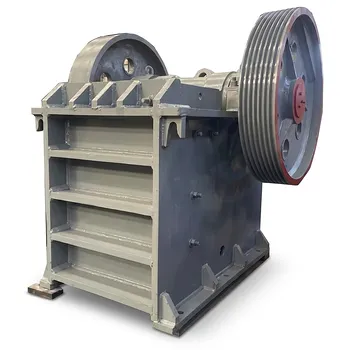
Why is it necessary to process red mud to a fineness below 250 μm? Boost Geopolymer Reactivity and Strength
Updated 5 months ago
The necessity of processing red mud to a fineness below 250 μm lies in maximizing chemical reactivity and structural integrity. Reducing particle size via high-energy crushing significantly increases the specific surface area, which exposes more reactive sites for the alkali activator. This ensures a faster, more complete geopolymerization reaction, resulting in a product with superior density and mechanical strength.
Physical refinement below 250 μm transforms red mud from a passive waste material into a highly reactive precursor. This process is essential for accelerating chemical conversion and optimizing the microscopic pore structure of the final geopolymer.
The Mechanics of Physical Activation
Increasing Micro-Specific Surface Area
High-energy crushing breaks down the coarse clusters of red mud into a fine powder. This process dramatically increases the total surface area available for chemical contact.
A larger surface area allows the alkali activator to surround and penetrate particles more effectively. This ensures that the chemical reaction is not limited to the outer shell of the material.
Exposing Internal Reactive Sites
Raw red mud often contains reactive components trapped within larger, inert crystalline structures. High-energy processing mechanically "unlocks" these sites by fracturing the particles.
By exposing these hidden reactive phases, the material can participate more fully in the geopolymerization process. This leads to a more efficient use of the raw material and less unreacted waste in the matrix.
Impact on Geopolymerization Performance
Accelerated Reaction Kinetics
The speed of the geopolymerization reaction is directly proportional to the particle fineness. Finer particles react almost immediately when they come into contact with the alkaline solution.
This rapid reaction is critical for achieving early strength development. It allows the geopolymer to set and harden within a predictable timeframe, which is vital for industrial applications.
Enhancing Structural Density
Refined particles do more than just react; they act as a high-performance physical filler. Micron-level red mud particles occupy the voids between larger aggregates.
This "filling effect" reduces the presence of micro-pores and capillary pores within the concrete or geopolymer matrix. The result is a significantly denser structure with lower permeability and higher compressive strength.
The Role of High-Energy Equipment
Precision Grinding vs. General Crushing
Standard crushing equipment often fails to reach the necessary micron-level threshold consistently. High-energy tools like planetary ball mills or disc mills are required to achieve the <250 μm target.
These machines provide the mechanical force necessary to overcome the molecular bonds of the dried red mud. This ensures a uniform particle size distribution, which is key to consistent geopolymer quality.
Impact on Early Strength
The use of high-energy equipment directly correlates to the "activity index" of the red mud. Increased activity means the chemical bonds form faster and more robustly during the initial curing phase.
This leads to a boost in early-stage mechanical properties. Projects requiring fast turnaround times or high initial load-bearing capacity rely heavily on this refined fineness.
Understanding the Trade-offs
The Energy Consumption Balance
While finer grinding increases reactivity, it also requires significantly more energy. There is a point of diminishing returns where the cost of further grinding outweighs the marginal gain in strength.
Processing below 250 μm is generally considered the "sweet spot" for balancing performance and energy expenditure. Going significantly smaller may lead to exponential increases in production costs.
Equipment Wear and Maintenance
High-energy crushing of abrasive materials like red mud leads to accelerated wear on grinding media and liners. This requires a robust maintenance schedule to prevent contamination of the raw material.
If the grinding media wears down too quickly, metallic impurities may be introduced into the geopolymer. This could potentially interfere with the chemical balance of the activator.
How to Apply This to Your Project
Making the Right Choice for Your Goal
- If your primary focus is Maximum Compressive Strength: Prioritize high-energy grinding to reach the lowest possible micron level to maximize the filling effect and reaction density.
- If your primary focus is Rapid Production Turnaround: Ensure the fineness is strictly below 250 μm to trigger the fastest possible reaction kinetics and early strength development.
- If your primary focus is Cost Efficiency: Aim for the 200–250 μm range to capture the bulk of the reactivity benefits without incurring the extreme energy costs of ultra-fine pulverization.
By precisely controlling the particle fineness of red mud, you transition from simple waste disposal to high-value material engineering.
Summary Table:
| Key Factor | Impact on Geopolymerization | Benefit to Final Material |
|---|---|---|
| Surface Area | Increases contact points for alkali activators | Faster reaction kinetics and early strength |
| Reactive Sites | Unlocks internal phases trapped in crystals | More complete chemical conversion |
| Particle Size | Filling effect reduces micro-voids | Higher structural density and lower permeability |
| Energy Level | Overcomes molecular bonds of raw waste | Uniform quality and predictable performance |
Optimize Your Geopolymer Research with Precision Sample Prep
Achieving a consistent fineness below 250 μm is the critical first step in transforming red mud into a high-value geopolymer. At [Brand Name], we provide complete laboratory sample preparation solutions for material science, specializing in high-performance powder processing and compaction equipment.
Our extensive product lines are designed to help you reach the exact micron-level threshold required for your research:
- Advanced Milling: Planetary ball mills, disc mills, and jet mills for ultra-fine grinding.
- Primary Crushing: Durable jaw and roll crushers for initial material reduction.
- Compaction & Testing: A full spectrum of hydraulic presses, including Cold/Warm Isostatic Presses (CIP/WIP), vacuum hot presses, and XRF pellet presses.
Don't let inconsistent particle size compromise your structural data. Contact our experts today to find the ideal equipment for your laboratory and enhance your material's performance!
References
- Arup Kumar Mandal. Synthesis of a two-part geopolymer from red mud and silica fume. DOI: 10.55713/jmmm.v31i2.1004
Mentioned Products
- High Speed Small Laboratory Crusher for Dry Material Sample Preparation
- Small High Speed Grinder for Laboratory Sample Preparation
- Heavy Duty Industrial Jaw Crusher for Primary Ore Crushing and High Capacity Mineral Material Size Reduction
- Heavy-Duty Jaw Crusher for Medium-Hard Ore and Industrial Mineral Crushing
People Also Ask
- What is the primary function of laboratory-scale crushers in the pre-treatment stage of iron ore bio-dephosphorization?
- Lab Crusher's Role in Banana Stem Cellulose Extraction? Enhance Your Raw Material Preparation Now
- What is the primary role of laboratory crushers in the recycling process of inorganic old sand? Essential for Sand Reuse
- What role do high-precision laboratory crushers play in mineral sample preparation? Ensure Accuracy & Feed Uniformity.
- What is the role of a laboratory crusher or grinder in activated carbon preparation? Optimize biomass for high porosity.

Tech Team · PowderPreparation
Last updated on May 14, 2026
Related Products
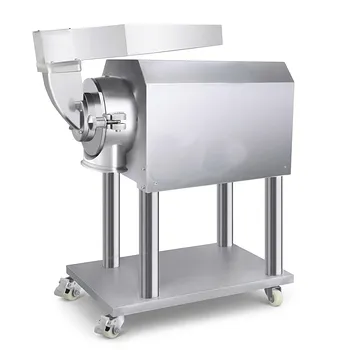
High Speed Small Laboratory Crusher for Dry Material Sample Preparation
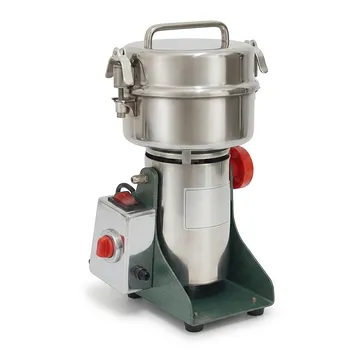
Small High Speed Grinder for Laboratory Sample Preparation
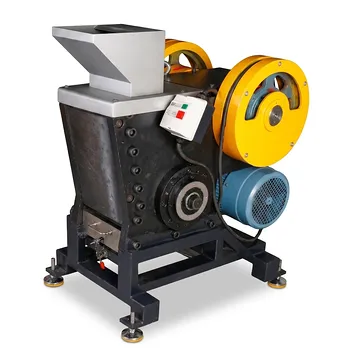
Heavy Duty Industrial Jaw Crusher for Primary Ore Crushing and High Capacity Mineral Material Size Reduction