Why is it necessary to perform planetary ball milling of coal powder under an inert argon atmosphere for detonation?
Updated 4 months ago
The use of an inert argon atmosphere during the planetary ball milling of coal powder is a critical safeguard against premature oxidation. This protective environment is necessary because the high-speed grinding process generates significant thermal energy and exposes highly reactive, freshly fractured surfaces. By displacing oxygen with argon, researchers ensure the coal's chemical stability, allowing for the precise measurement of energy release characteristics in pulse detonation engines without the interference of pre-oxidized materials.
High-purity argon serves as a chemical shield that prevents coal from reacting with oxygen or moisture during high-energy processing. This isolation is essential to maintain the raw material's integrity, ensuring that experimental data reflects the true energy potential of the coal during detonation.
Managing Thermal Energy and Surface Activity
The Genesis of Frictional Heat
High-speed planetary ball milling involves intense high-energy impacts and shear forces designed to reduce particle size. These mechanical actions generate substantial thermal energy, creating a high-temperature environment within the milling jar. In the presence of oxygen, these temperatures are often sufficient to trigger spontaneous oxidation of the coal powder.
Exposure of Active Surfaces
As the milling process fractures coal into sub-10 micrometer particles, it constantly creates "new" surfaces. These freshly exposed areas have extremely high surface activity and are chemically "hungry" to bond with available elements. Without an inert gas, these surfaces would immediately react with atmospheric oxygen or moisture, degrading the powder's quality.
Isolation via Argon
Introducing high-purity argon (Ar) creates a chemically stagnant environment that physically isolates the coal from the air. Because argon is a noble gas, it does not react with the coal even under extreme pressure or heat. This ensures that the physical transformation of the coal occurs without any unintended chemical alterations.
Ensuring Precision in Detonation Research
Impact on Detonation Efficiency
Pulse detonation engines (PDEs) require a rapid and violent release of chemical energy to function efficiently. If coal powder undergoes pre-oxidation during preparation, a portion of its chemical energy is "spent" before the experiment even begins. This leads to inaccurate assessments of the fuel's true detonation efficiency and performance.
Maintaining Chemical Stoichiometry
For detonation research to be valid, the chemical stoichiometry of the raw coal must remain unchanged during the grinding phase. Using an argon atmosphere preserves the original chemical purity of the sample. This allows researchers to isolate variables and ensure that the energy release measured during testing is a result of the detonation process itself, not prepared-material degradation.
Optimizing Particle Size and Suspension
Fine grinding aims for a specific median particle size, often a D50 of approximately 5.265 micrometers. This small size provides the massive specific surface area required for stable suspension in the air and rapid chemical reaction. Protecting these fine particles from oxidation ensures they remain highly reactive and ready for the detonation event.
Understanding the Trade-offs and Risks
The Risk of Atmosphere Leaks
The primary downside to inert milling is the technical difficulty of maintaining a perfect seal. Even trace amounts of oxygen leaking into the milling jar can cause partial oxidation, which may be difficult to detect but still significantly impacts the consistency of experimental results.
Complexity of Processing
Utilizing argon requires specialized equipment, such as vacuum-tight milling jars and glove boxes for loading and unloading. While this increases the operational complexity and cost, it is a non-negotiable requirement for high-purity applications where oxide impurities would compromise the final material’s performance.
Applying This to Your Research Project
To achieve the best results when preparing coal powder or similar reactive materials for high-energy applications, consider the following strategic focuses:
- If your primary focus is experimental accuracy: Use high-purity argon (99.99% or higher) to ensure that pre-oxidation does not skew your energy release data or efficiency assessments.
- If your primary focus is maximizing reactivity: Aim for a D50 particle size below 6 micrometers while strictly maintaining the inert atmosphere to preserve the high energy of freshly ground surfaces.
- If your primary focus is material purity: Verify the integrity of your milling jar seals and perform multiple vacuum-purge cycles with argon before initiating high-load grinding.
By neutralizing the reactive environment with argon, you isolate the true performance characteristics of the coal powder, ensuring that your detonation data is a reflection of fuel chemistry rather than preparation error.
Summary Table:
| Key Factor | Role of Argon Atmosphere | Impact on Detonation Research |
|---|---|---|
| Oxidation Control | Displaces oxygen to prevent spontaneous combustion. | Preserves raw energy potential of coal. |
| Surface Activity | Shields "chemically hungry" freshly fractured surfaces. | Ensures high reactivity for stable detonation. |
| Thermal Energy | Provides a chemically stagnant cooling environment. | Prevents pre-milling chemical degradation. |
| Data Integrity | Maintains original chemical stoichiometry. | Guarantees accurate energy release measurements. |
| Particle Size | Protects sub-10μm particles from degradation. | Optimizes fuel suspension and reaction speed. |
Optimize Your Sample Preparation with Precision Equipment
Achieving consistent results in material science requires more than just a process—it requires the right technology. At [Our Brand Name], we provide complete laboratory sample preparation solutions designed for high-performance powder processing and compaction.
Whether you are preparing reactive coal for detonation studies or developing advanced ceramics, our extensive product line supports every stage of your workflow:
- Advanced Milling: Including high-energy planetary ball mills, jet mills, and cryogenic grinders for sub-micron particle sizes.
- Sizing & Mixing: Precision sieve shakers (vibratory/air-jet) and high-efficiency powder or defoaming mixers.
- Material Compaction: A full spectrum of hydraulic presses, including Cold/Warm Isostatic Presses (CIP/WIP), vacuum hot presses, and XRF pellet presses.
Ensure your research is backed by purity and precision. Contact us today to consult with our experts on the ideal equipment solution for your laboratory’s unique requirements!
References
- Jing Guo, Shirong Ge. Preliminary study on the explosive performance of coal dust and prospects for engineering applications. DOI: 10.1038/s41598-025-85274-x
Mentioned Products
- Vertical Production Planetary Ball Mill for High Throughput Powder Processing
- 360° Rotating Omnidirectional Laboratory Planetary Ball Mill for Homogeneous Ultra-Fine Grinding and Mixing
- Vertical Semi Circular Planetary Ball Mill for Laboratory Precision Grinding
- Vertical Square Planetary Ball Mill for Laboratory Sample Preparation and Nanoscale Grinding
- Heavy Duty Horizontal Planetary Ball Mill for Efficient Industrial Grinding and Sample Preparation
People Also Ask
- What is the function of a high-performance planetary ball mill in AMZ laminates? Master Ceramic Homogenization.
- What is the role of a planetary ball mill in Al–Si3N4 nanocomposite prep? Achieve Uniform Homogenization
- What is the function of a planetary ball mill in lanthanum hexaaluminate synthesis? Master Micron-Level Homogenization
- What role does a planetary ball mill play in the synthesis of Er-doped PMN-PT ceramics? Enhancing Homogeneity & Purity
- What are the advantages of using a planetary ball mill for the fine grinding of barium silicate glass powder? Peak Results

Tech Team · PowderPreparation
Last updated on Jun 03, 2026
Related Products

Vertical Production Planetary Ball Mill for High Throughput Powder Processing
360° Rotating Omnidirectional Laboratory Planetary Ball Mill for Homogeneous Ultra-Fine Grinding and Mixing
Vertical Semi Circular Planetary Ball Mill for Laboratory Precision Grinding

Vertical Square Planetary Ball Mill for Laboratory Sample Preparation and Nanoscale Grinding

Heavy Duty Horizontal Planetary Ball Mill for Efficient Industrial Grinding and Sample Preparation
8L Planetary Ball Mill for Laboratory Grinding and Sample Preparation
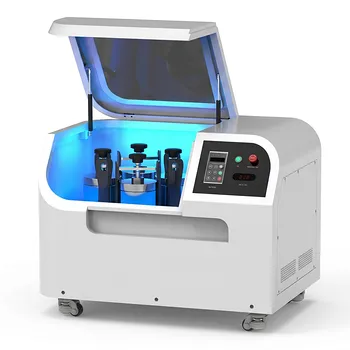
Planetary Ball Mill 12L

Miniature Planetary Ball Mill with Vacuum Grinding and High Efficiency for Laboratory Sample Preparation
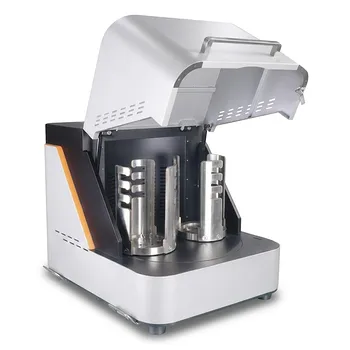
High Energy Laboratory Planetary Ball Mill for Nano Grinding and Colloidal Mixing of Hard and Brittle Materials

High Energy Omnidirectional Planetary Ball Mill 16L
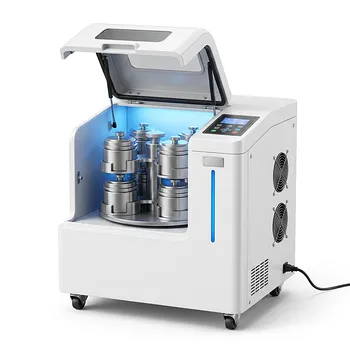
High Energy Omnidirectional Planetary Ball Mill 20L
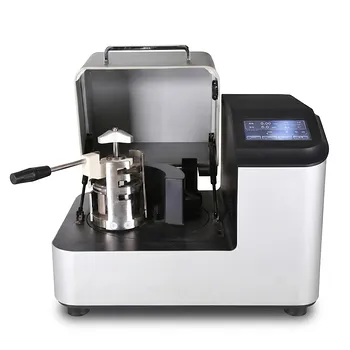
High Energy Laboratory Planetary Ball Mill for Nano Grinding and Material Science Sample Preparation
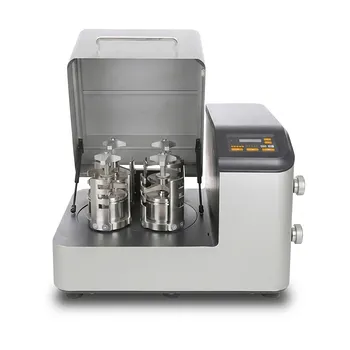
High Energy Planetary Ball Mill for Nano Scale Grinding and Colloidal Mixing in Material Science Research

High Energy Planetary Ball Mill for Nano Scale Grinding and Mechanical Alloying
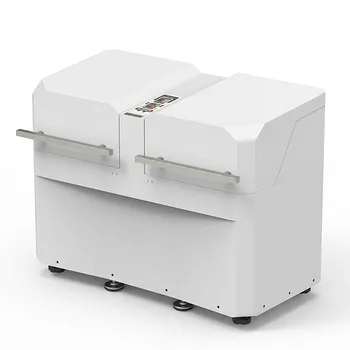
Dual Station Planetary Ball Mill 24L
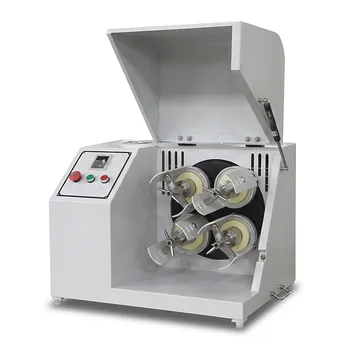
Horizontal Light Duty Planetary Ball Mill for Laboratory Sample Preparation
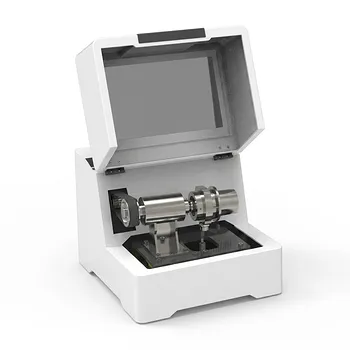
Single Tank High Energy Vibratory Ball Mill for Laboratory Grinding and Mixing
Multi-Platform Nanoscale High-Energy Vibratory Ball Mill
High Throughput Micro Ball Mill for Cryogenic Grinding and Laboratory Cell Disruption