Why is industrial-grade mixing equipment necessary for ZnO microfiltration supports? Ensure Homogeneity & Performance
Updated 4 months ago
Industrial-grade mixing equipment is indispensable for preparing ZnO microfiltration membrane supports because it provides the high shear force required to achieve molecular-level homogeneity. These systems ensure that organic binders and plasticizers are uniformly distributed throughout inorganic powders like kaolin and calcium carbonate. This precise blending is the only way to prevent material segregation and establish the specific rheological properties necessary for high-quality extrusion.
The core necessity for industrial mixing lies in its ability to apply intense mechanical shear that transforms raw powders and additives into a chemically uniform, stable ceramic paste. This homogeneity is the fundamental requirement for avoiding structural defects and ensuring consistent performance in the final filtration membrane.
Achieving Molecular-Level Homogeneity
The Role of High Mechanical Shear
Industrial mixers are designed to exert significant mechanical energy to break down powder agglomerates. This force is essential to thoroughly blend kaolin, calcium carbonate, and water into a stable state.
Without this high shear, the mixture remains a collection of localized clusters rather than a unified medium. This lack of uniformity directly leads to weak points in the finished ceramic support.
Dispersing Organic Additives
Organic additives, such as methylcellulose and starch, act as binders and plasticizers that must be distributed at a molecular level. Industrial equipment ensures these long-chain molecules coat the inorganic particles evenly.
If these binders are not perfectly dispersed, the paste will lack the internal cohesion needed for complex shaping. This often results in cracking or "tearing" during the subsequent manufacturing stages.
Optimizing Rheology for Extrusion
Preventing Material Segregation
During the extrusion process, ceramic pastes are subjected to high pressures that can force liquid components away from solid particles. High-efficiency mixing creates a homogenized slurry that resists this separation.
By ensuring the organic and inorganic phases are locked together, the equipment prevents "bleeding" or segregation. This stability is critical for maintaining the shape of the membrane support as it exits the die.
Ensuring Uniform Wall Thickness
A highly uniform suspension state results in a ceramic paste with consistent, low viscosity. This fluidity is vital for achieving uniform wall thickness in the ceramic body during casting or extrusion.
If the viscosity fluctuates due to poor mixing, the final product will suffer from structural imbalances. These imbalances often lead to premature failure under the thermal or mechanical stresses of microfiltration.
Enhancing Material Reactivity and Surface Area
Particle Refinement and Reactivity
Industrial-grade grinding and mixing can refine materials like Zinc Oxide (ZnO) and doped metal oxides into micro-particles approximately 1 micrometer in size. This refinement significantly increases the specific surface area of the powder.
Higher surface area leads to increased chemical reactivity during the firing process. This ensures that the various components achieve high chemical homogeneity, which is fundamental to the performance characteristics of the membrane.
Managing Complex Formulations
Modern ceramic supports often involve over ten types of doped materials and additives. Only industrial-grade equipment can manage the complexity of blending such diverse materials into a single, cohesive batch.
Uniformity at this scale ensures that the non-linear characteristics and filtration properties are repeatable across every unit produced.
Understanding the Trade-offs
Equipment Wear and Maintenance
The abrasive nature of ceramic powders like kaolin and ZnO causes significant wear on mixing blades and internal surfaces. Using industrial-grade equipment is a trade-off where higher initial capital expenditure is required to avoid frequent downtime and metallic contamination.
Heat Generation from High Shear
The same high shear force required for mixing also generates substantial internal friction and heat. If not managed via cooling jackets, this heat can prematurely degrade organic plasticizers, altering the paste's rheology before it reaches the extruder.
Applying This to Your Production Process
How to Optimize Your Mixing Strategy
To ensure the highest quality for ZnO microfiltration membrane supports, your equipment selection and process parameters must align with your specific material goals.
- If your primary focus is structural integrity: Prioritize high-shear mixers that guarantee the molecular distribution of binders to prevent internal voids.
- If your primary focus is filtration precision: Focus on equipment capable of refining ZnO and dopants to 1 micrometer to maximize chemical homogeneity.
- If your primary focus is production yield: Invest in cooling-jacketed industrial mixers to prevent the thermal degradation of additives during long mixing cycles.
Investing in high-shear industrial mixing is not merely a process choice, but a requirement for achieving the structural and chemical precision demanded by modern microfiltration technology.
Summary Table:
| Key Factor | Role of Industrial Mixing | Impact on Final Membrane |
|---|---|---|
| Homogeneity | Applies high mechanical shear to break agglomerates. | Eliminates structural defects and weak points. |
| Binder Dispersion | Evenly coats inorganic particles with organic additives. | Prevents cracking and tearing during extrusion. |
| Rheology Control | Creates a stable slurry that resists liquid-solid separation. | Ensures uniform wall thickness and shape stability. |
| Particle Size | Refines ZnO and dopants to ~1 micrometer level. | Increases surface area and chemical reactivity. |
| Batch Complexity | Blends 10+ additives into a single cohesive batch. | Guarantees repeatable non-linear characteristics. |
Elevate Your Material Research with Precision Sample Prep
Achieving molecular-level homogeneity in ceramic pastes requires more than just basic mixing—it demands professional-grade precision. At [Brand Name], we provide complete laboratory sample preparation solutions for material science, specializing in high-performance powder processing and compaction equipment.
Our extensive product lines are designed to help you overcome challenges in viscosity, particle refinement, and structural integrity:
- Powder Processing: Advanced mills (planetary ball, jet, sand/bead, disc, rotor), crushers (jaw/roll), and liquid nitrogen cryogenic grinders.
- Mixing & Grading: High-efficiency powder mixers, defoaming mixers, and vibratory/air-jet sieve shakers for precise particle size distribution.
- Advanced Compaction: A full spectrum of hydraulic presses, including Cold/Warm Isostatic Presses (CIP/WIP), vacuum hot presses, and XRF pellet presses.
Whether you are developing ZnO microfiltration membranes or advanced electronic ceramics, our equipment ensures the chemical homogeneity and repeatable performance your project requires. Contact our experts today to find the perfect solution for your laboratory or production line!
References
- Boukhemis Boudaira, Noureddine Karboua. Preparation and characterization of ZnO microfiltration membrane and its support using kaolin (DD3) and CaCO3. DOI: 10.1590/0366-69132016623621972
Mentioned Products
- High Speed Vacuum Planetary Centrifugal Mixer and Defoamer for Industrial Paste Processing
- Industrial Planetary Centrifugal Vacuum Defoaming Mixer for High Viscosity Paste and Advanced Material Science
- Dual Cup Vacuum Centrifugal Mixer Planetary Paste Defoaming Machine Industrial Material Processor
- Industrial Planetary Centrifugal Vacuum Defoaming Mixer for High Viscosity Paste and Powder Homogenization
- Horizontal Trough Mixer for Uniform Powder and Paste Blending
People Also Ask
- Why increase revolution radius for high-viscosity materials? Optimize Mixing Performance with Centrifugal Acceleration
- What is the function of a planetary centrifugal mixer in electrode slurry prep? Achieve high-energy, uniform dispersion.
- Why is a planetary centrifugal mixer utilized for wood powder and HPMC? Achieve uniform dispersion & rapid defoaming.
- How does a planetary centrifugal mixer contribute to the preparation of magnetic polymer composites? Expert Guide
- How does a planetary centrifugal mixer address key challenges in Tyr-CDs@EVA optical films? Ensure Optical Clarity.

Tech Team · PowderPreparation
Last updated on May 14, 2026
Related Products
High Speed Vacuum Planetary Centrifugal Mixer and Defoamer for Industrial Paste Processing
Industrial Planetary Centrifugal Vacuum Defoaming Mixer for High Viscosity Paste and Advanced Material Science
Dual Cup Vacuum Centrifugal Mixer Planetary Paste Defoaming Machine Industrial Material Processor
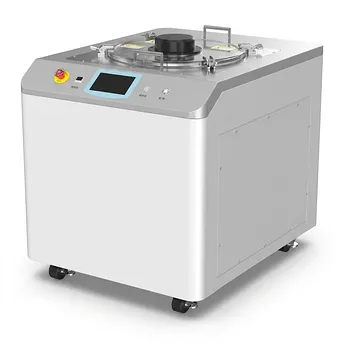
Industrial Planetary Centrifugal Vacuum Defoaming Mixer for High Viscosity Paste and Powder Homogenization
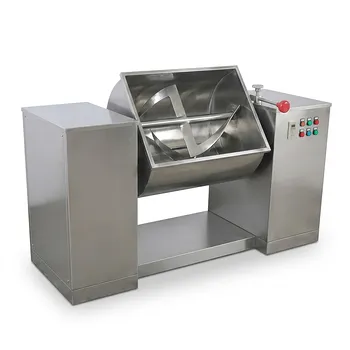
Horizontal Trough Mixer for Uniform Powder and Paste Blending
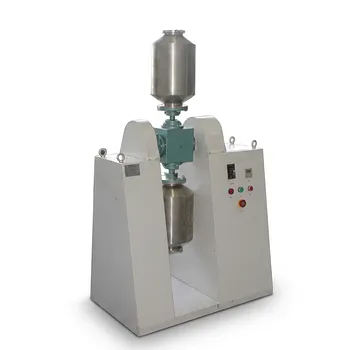
Multi Dimensional Universal Mixer for High Uniformity Powder Blending
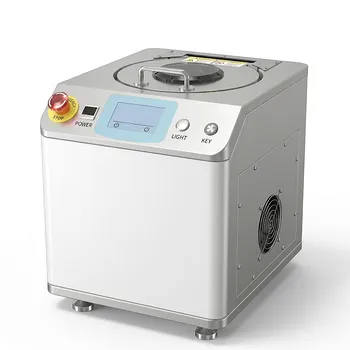
High Efficiency Vacuum Planetary Centrifugal Mixer and Defoaming Machine for Industrial Material Research and Precise Laboratory Powder Dispersion
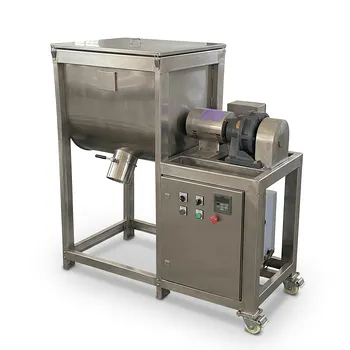
Horizontal Ribbon Mixer for Dry Powder and Slurry Blending
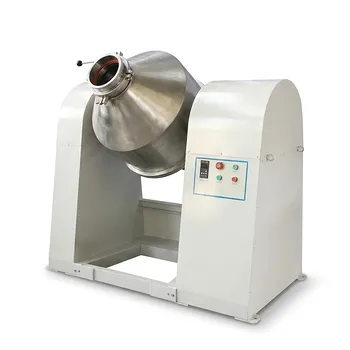
Industrial Double Cone Mixer for Powder Blending and Homogeneous Mixing
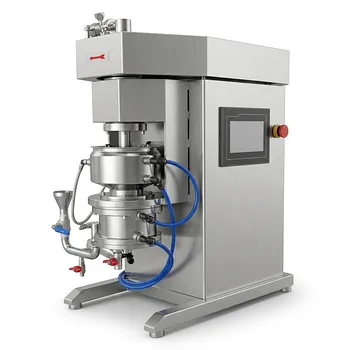
Small Ceramic Structure Laboratory Sand Mill Nanoscale Grinding Dispersion Equipment Seal-less Screen-less Design
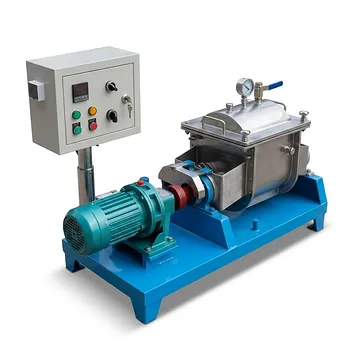
Industrial Vacuum Kneader for High-Viscosity Silicone, Rubber, and Compound Mixing
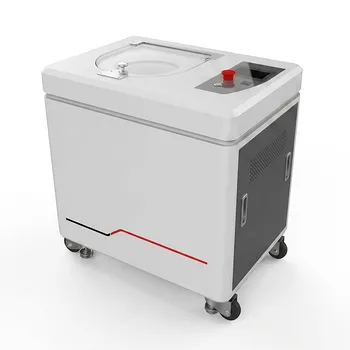
非介入式材料均质机真空脱泡行星搅拌高粘度混合设备
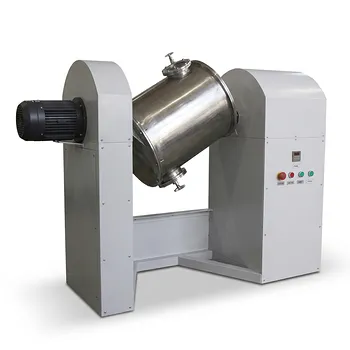
Inclined Mixer for Homogeneous Powder Blending and Grinding
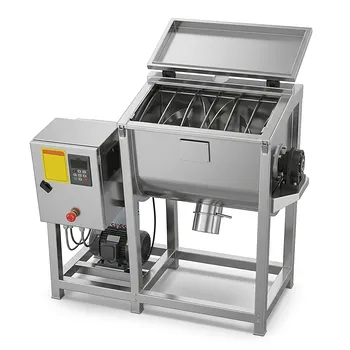
Horizontal Ribbon Mixer for Uniform Powder and Slurry Mixing
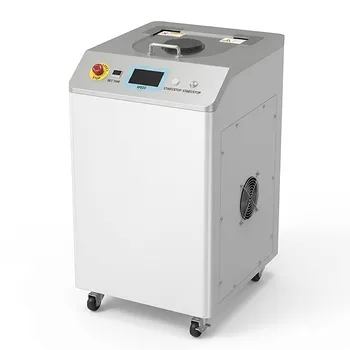
High Viscosity Planetary Centrifugal Vacuum Mixer for Material Defoaming and Uniform Mixing
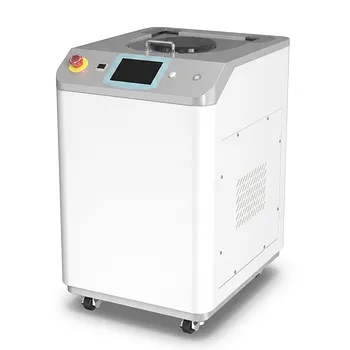
High Viscosity Planetary Centrifugal Mixing and Vacuum Defoaming Machine for Laboratory Material Preparation
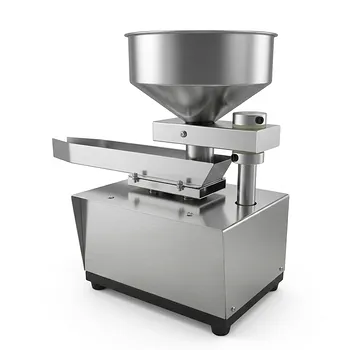
Automatic Vibrating Powder Feeder for Laboratory Material Processing Precision Vibratory Hopper Feeder for Granular and Powder Material Handling Industrial Grade Vibrating Tray Feeder for Consistent Material Sample Preparation
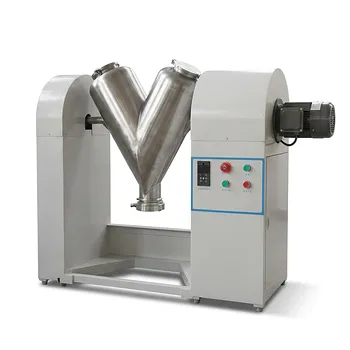
V-Type Powder Mixer for Uniform Blending of Dry Powders and Granules
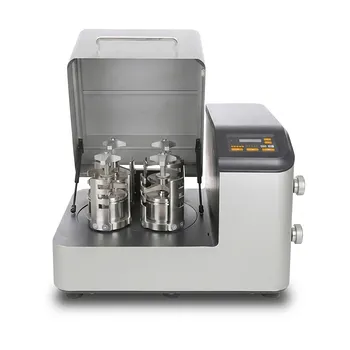
High Energy Planetary Ball Mill for Nano Scale Grinding and Colloidal Mixing in Material Science Research