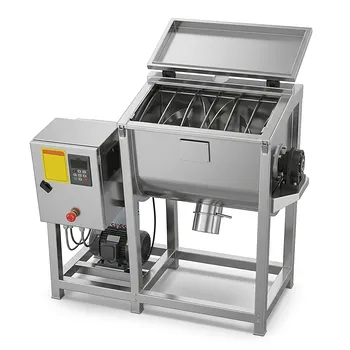
Why is high-performance mixing equipment necessary for seawater-fly ash concrete? Ensure Uniformity & Strength
Updated 4 months ago
The necessity of high-performance mixing in seawater-fly ash concrete stems from the need to synchronize rapid chemical reactions with the physical dispersion of disparate materials. High-performance equipment provides the intense shear force required to blend low-density fly ash and reactive seawater ions into a stable, dry-hard mixture. Without this mechanical energy, the slurry risks localized structural failures, inconsistent workability, and compromised durability.
High-performance mixing is the only way to ensure that the rapid hydration triggered by seawater ions and the inherent buoyancy of fly ash do not compromise the concrete's integrity. It forces a molecular-level distribution that prevents chemical "hot spots" and material segregation in low-water-ratio slurries.
Overcoming Chemical Acceleration and Physical Disparity
Managing the Impact of Seawater Ions
Seawater contains specific ions, notably sulfates and magnesium, which act as catalysts for the initial hydration of cement. This chemical acceleration means the mixture begins to set and stiffen much faster than standard concrete. High-performance mixers provide the speed necessary to achieve a homogeneous state before these chemical reactions create permanent localized structures.
Addressing the Low Density of Fly Ash
Fly ash has a significantly lower density compared to cement and aggregates, which often causes it to float or distribute unevenly. Standard mixing lacks the energy to force these lightweight particles into a uniform dispersion within the heavier cement matrix. High-speed agitation ensures that fly ash particles are locked into the matrix rather than clustering at the surface or in pockets.
Optimizing Low Water-to-Binder Ratios
Seawater-fly ash concrete often utilizes a dry-hard consistency with a low water-to-binder ratio, such as 0.33. This lack of fluid carrier makes it difficult for particles to move into place naturally. High-performance equipment provides the mechanical force required to thoroughly "wet" every particle, ensuring the limited water is distributed with absolute precision.
Enhancing Microstructural Uniformity through High-Intensity Mixing
Breaking Down Particle Agglomerates
Fine powders like fly ash tend to form clumps or agglomerates due to inter-particle forces. High-shear mixers, often operating at speeds up to 2000 rpm, generate the mechanical shear necessary to break these clusters apart. This ensures that the slurry has a uniform consistency and high plasticity, which is essential for the concrete's final strength.
Activating the Fly Ash Surface
Fly ash particles often possess an inert surface layer that can slow down beneficial chemical reactions. The continuous shear and impact forces of high-efficiency mixers help strip away this inert layer, promoting better ion exchange. This process allows the fly ash to participate more effectively in the polycondensation and hydration reactions.
Preventing Localized Structural Weaknesses
If seawater ions and fly ash are not distributed perfectly, "hot spots" of high reactivity or "cold spots" of unreacted material form. These inconsistencies lead to macroscopic defects and performance fluctuations once the concrete solidifies. High-intensity mixing ensures that the chemical environment is identical at every point within the cross-section of the pour.
Understanding the Trade-offs
Energy Consumption and Heat Generation
The primary trade-off for high-performance mixing is the significant energy requirement and the heat generated by friction. In some cases, the mechanical energy can further accelerate the hydration of seawater-based mixes by raising the slurry temperature. Producers must balance mixing intensity with temperature control to avoid "flash setting."
Equipment Wear and Maintenance
High-speed and high-shear operations increase the wear and tear on mixing blades and drum liners. The abrasive nature of fly ash, combined with the corrosive potential of seawater, requires specialized materials for equipment longevity. This results in higher initial capital expenditures and more frequent maintenance cycles compared to standard planetary mixers.
How to Apply This to Your Project
Recommendations Based on Your Goal
- If your primary focus is Maximum Compressive Strength: Invest in high-shear mixers (1500+ rpm) to ensure the fly ash inert layer is broken and ions are perfectly distributed.
- If your primary focus is Long-Term Durability in Marine Environments: Prioritize equipment that can handle very low water-to-binder ratios (below 0.35) to minimize permeability.
- If your primary focus is Cost Efficiency in Large-Scale Pours: Use high-efficiency twin-shaft mixers that offer a balance between volume throughput and the energy needed to prevent fly ash segregation.
- If your primary focus is Workability and Pumpability: Ensure the mixing sequence introduces the high-performance agitation early to fully wet the powders before the seawater ions trigger initial thickening.
Achieving the full potential of seawater-fly ash concrete requires a shift from simple stirring to high-energy mechanical homogenization.
Summary Table:
| Challenge in Concrete Mix | High-Performance Mixing Solution | Resulting Benefit |
|---|---|---|
| Rapid Hydration | High-speed agitation & rapid homogenization | Prevents "hot spots" and flash setting |
| Fly Ash Buoyancy | Intense shear force for physical dispersion | Eliminates material segregation |
| Particle Agglomeration | High-intensity mechanical shear (up to 2000 rpm) | Breaks clumps for uniform consistency |
| Low Water-Binder Ratio | Precision wetting through mechanical force | Enhances plasticity and final density |
| Inert Fly Ash Surface | Continuous impact and surface activation | Promotes better ion exchange and bonding |
Elevate Your Material Research with Precision Engineering
At [Your Brand Name], we provide complete laboratory sample preparation solutions tailored for material science. Achieving the perfect seawater-fly ash concrete slurry requires more than simple stirring—it demands the high-energy homogenization our equipment provides.
We specialize in high-performance powder mixers and defoaming mixers designed to eliminate segregation and ensure microstructural integrity. Beyond mixing, our extensive lines include:
- Advanced Milling: Planetary ball, jet, and rotor mills for particle size control.
- Crushing & Sieving: Jaw/roll crushers and vibratory sieve shakers for precise aggregate preparation.
- Compaction Excellence: A full spectrum of hydraulic presses, including Cold/Warm Isostatic Presses (CIP/WIP), vacuum hot presses, and XRF pellet presses.
Whether you are focusing on marine durability or maximum compressive strength, our tools ensure your samples meet the highest standards. Contact us today to optimize your lab workflow!
References
- Universiti Tun Hussein Onn Malaysia, 86400 Parit Raja, Johor, MALAYSIA. Preliminary Experimental Work on Concrete-Fly Ash Compressive Strength Blended with Seawater as Mixing Water. DOI: 10.30880/ijie.2023.15.06.013
Mentioned Products
- 非介入式材料均质机真空脱泡行星搅拌高粘度混合设备
- High Efficiency Vacuum Planetary Centrifugal Mixer and Defoaming Machine for Industrial Material Research and Precise Laboratory Powder Dispersion
- High Speed Vacuum Planetary Centrifugal Mixer and Defoamer for Industrial Paste Processing
- Multi Dimensional Universal Mixer for High Uniformity Powder Blending
- High Viscosity Planetary Centrifugal Vacuum Mixer for Material Defoaming and Uniform Mixing
People Also Ask
- How does a planetary vacuum defoaming mixer help magnesium calcium phosphate slurries? Achieve Flawless 3D Printed Bone
- Why is vacuum defoaming necessary for PDMS mixtures before microwave irradiation curing? Key to Structural Integrity
- What role does a vacuum defoaming mixer play in BNT MLCC slurry? Ensure High Dielectric Strength & Pinhole-Free Prep
- Why is a vacuum defoaming mixer essential for DLP 3D printing ceramic slurries? Key to Structural Integrity
- What is the purpose of using a high-vacuum defoaming mixer for SiC/Cf composites? Optimize Density and Strength

Tech Team · PowderPreparation
Last updated on Jun 03, 2026
Related Products
非介入式材料均质机真空脱泡行星搅拌高粘度混合设备
High Efficiency Vacuum Planetary Centrifugal Mixer and Defoaming Machine for Industrial Material Research and Precise Laboratory Powder Dispersion
High Speed Vacuum Planetary Centrifugal Mixer and Defoamer for Industrial Paste Processing
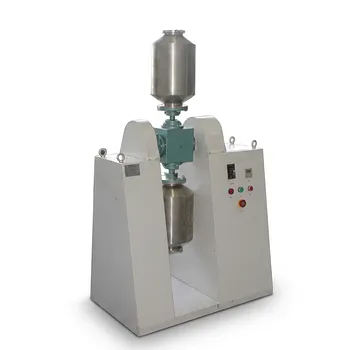
Multi Dimensional Universal Mixer for High Uniformity Powder Blending
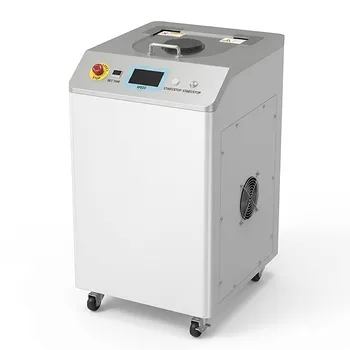
High Viscosity Planetary Centrifugal Vacuum Mixer for Material Defoaming and Uniform Mixing
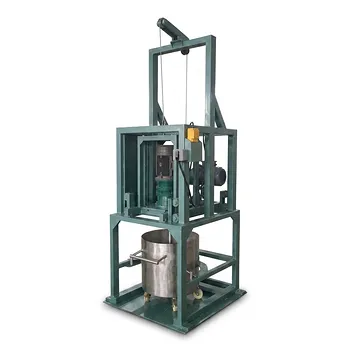
High-Speed Simple Disperser for Efficient Mixing, Dispersion, and Emulsification
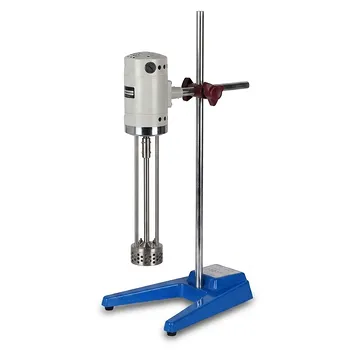
High Shear Laboratory Emulsifier for Mixing and Homogenization
Industrial Planetary Centrifugal Vacuum Defoaming Mixer for High Viscosity Paste and Advanced Material Science
Industrial Planetary Centrifugal Vacuum Defoaming Mixer for High Viscosity Paste and Powder Homogenization
High Viscosity Planetary Centrifugal Mixing and Vacuum Defoaming Machine for Laboratory Material Preparation
Dual Cup Vacuum Centrifugal Mixer Planetary Paste Defoaming Machine Industrial Material Processor
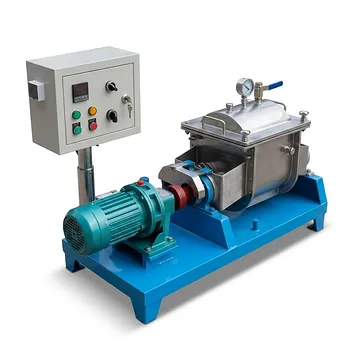
Industrial Vacuum Kneader for High-Viscosity Silicone, Rubber, and Compound Mixing
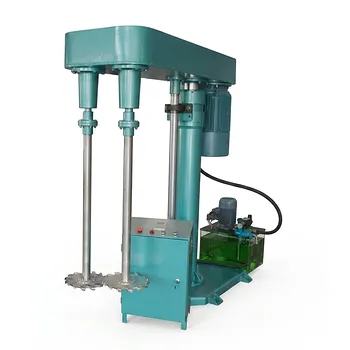
Hydraulic Double Shaft Disperser for High Viscosity Liquid Mixing and Dispersion
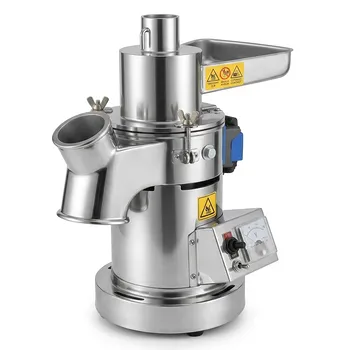
Continuous Feeding Grinder High Efficiency Pulverizer for Lab Sample Preparation
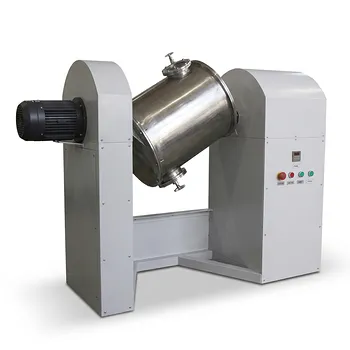
Inclined Mixer for Homogeneous Powder Blending and Grinding
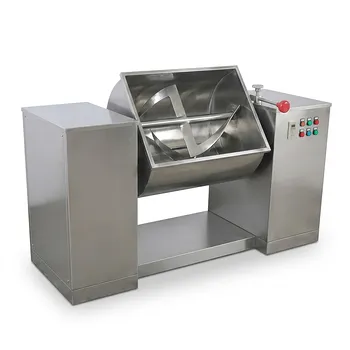
Horizontal Trough Mixer for Uniform Powder and Paste Blending
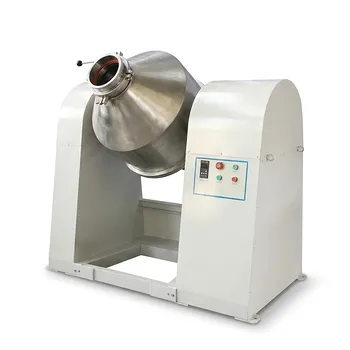
Industrial Double Cone Mixer for Powder Blending and Homogeneous Mixing
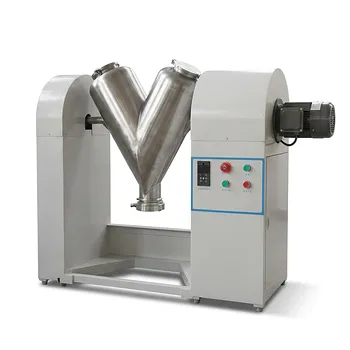
V-Type Powder Mixer for Uniform Blending of Dry Powders and Granules
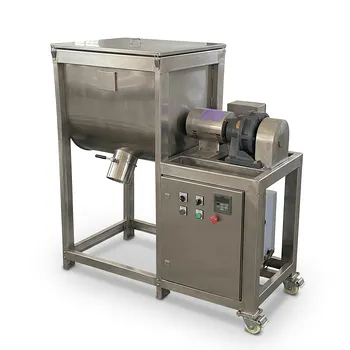
Horizontal Ribbon Mixer for Dry Powder and Slurry Blending