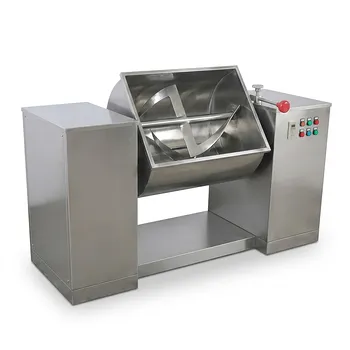
What is the role of a Planetary Centrifugal Mixer in pharmaceutical powder preparation? Improve Uniformity and Yield
Updated 4 months ago
The Planetary Centrifugal Mixer (PCM) transforms pharmaceutical powder preparation by replacing manual, labor-intensive grinding with automated, dual-axis centrifugal force. Unlike the manual mortar and pestle method, which relies on physical contact and is prone to human error, a PCM utilizes simultaneous high-speed revolution and rotation to generate intense shear forces. This bladeless technology ensures superior content uniformity, drastically reduces processing times, and eliminates the risk of cross-contamination through the use of sealed containers.
Core Takeaway: A Planetary Centrifugal Mixer provides a highly reproducible, bladeless mixing environment that eliminates operator variability and minimizes drug loss. It is the definitive solution for pharmaceutical labs requiring rapid homogenization and precise content uniformity in small-batch powder preparations.
The Mechanics of Bladeless Homogenization
The Power of Simultaneous Revolution and Rotation
A PCM operates by revolving a container around a central axis while simultaneously rotating the container on its own axis. This dual-motion mechanism creates a powerful "twist flow" that moves material from the top to the bottom and from the center to the edges.
Because there are no stirring blades, the mixing occurs through convection and shear forces generated within the material itself. This prevents the mechanical damage to particles often caused by the direct impact of physical agitators or grinding tools.
Achieving Surface Modification and De-agglomeration
The intense internal convection is particularly effective at breaking down guest particle agglomerates (such as magnesium stearate or silica). These particles are uniformly distributed and coated onto the surface of the host particles.
This process, known as surface modification, is achieved much more efficiently than in manual grinding. The result is a highly stabilized mixture where active pharmaceutical ingredients (APIs) are perfectly dispersed.
Efficiency and Yield Advantages Over Manual Methods
Drastic Reduction in Processing Time
Manual grinding and mixing can take anywhere from several minutes to two hours depending on the required uniformity. In contrast, a PCM typically achieves superior results in as little as 60 seconds to five minutes.
This efficiency is critical for small-batch production and R&D environments. The speed of the process establishes a reliable foundation for content uniformity in subsequent granulation steps.
Minimizing Material Loss and Residue
Manual methods using a mortar and pestle often lead to significant drug loss, as material adheres to the walls of the vessel and the grinding tool. A PCM utilizes disposable, sealed containers where the mixing occurs directly.
By eliminating stirring blades and minimizing contact surfaces, the PCM increases yield and reduces environmental contamination. This is especially valuable when working with expensive or highly potent pharmaceutical compounds.
Improving Safety and Consistency
Eliminating Operator Technique Variability
The quality of manual grinding is highly dependent on the skill, strength, and duration of the operator’s technique. This creates quality fluctuations that can compromise the integrity of pharmaceutical batches.
A PCM automates these variables, ensuring that every batch is subjected to the exact same centrifugal forces and durations. This repeatability is essential for meeting strict regulatory standards for drug preparation.
Enhancing Safety and Degassing
The closed-container system of a PCM supports remote operation, which protects personnel from direct contact with potentially hazardous materials. This setup significantly lowers the risk of inhalation or skin exposure compared to open-air manual grinding.
Furthermore, the centrifugal action performs simultaneous degassing, removing entrapped air bubbles that could interfere with downstream processes like extrusion. Manual grinding often introduces air into the mixture, which can lead to dosing inaccuracies.
Understanding the Trade-offs
Equipment Cost and Batch Size Limitations
While a PCM offers superior performance, the initial capital investment is significantly higher than basic manual grinding tools. Labs must weigh the cost of the equipment against the value of the time saved and the increased yield of expensive APIs.
Additionally, PCMs are primarily designed for small-dose samples, typically ranging from 10 to 100 grams. While ideal for R&D and specialized compounding, they may not be suitable for high-volume industrial manufacturing without multiple units.
Thermal Sensitivity and Material Heat
The high-speed rotation and internal shear forces can generate frictional heat within the powder mixture. For extremely heat-sensitive biological components, operators must carefully calibrate the mixing cycles to prevent degradation.
Many modern mixers address this by allowing for intermittent mixing cycles or external cooling. However, users must remain aware of the relationship between mixing intensity and temperature rise.
How to Apply This to Your Project
When deciding between a Planetary Centrifugal Mixer and traditional manual methods, your choice should be driven by your specific production goals and material requirements.
- If your primary focus is content uniformity and reproducibility: The PCM is the superior choice, as it removes human error and ensures a consistent shear environment across all batches.
- If your primary focus is maximizing yield of expensive APIs: Utilize a PCM with disposable containers to eliminate residue loss on blades and mortar walls.
- If your primary focus is rapid R&D and throughput: Transitioning to a PCM will reduce your preparation time from hours to minutes, allowing for faster iterative testing.
- If your primary focus is processing highly heat-sensitive materials: Carefully monitor cycle times or utilize manual methods if the heat generated by centrifugal shear exceeds the material's stability threshold.
The shift from manual grinding to planetary centrifugal mixing represents a critical step toward precision and safety in modern pharmaceutical powder preparation.
Summary Table:
| Feature | Manual Grinding (Mortar & Pestle) | Planetary Centrifugal Mixer (PCM) |
|---|---|---|
| Mechanism | Physical contact & friction | Bladeless dual-axis centrifugal force |
| Processing Time | Minutes to hours | 60 seconds to 5 minutes |
| Uniformity | Variable (Operator dependent) | High & highly reproducible |
| Material Loss | High (stuck to tools/walls) | Minimal (sealed, bladeless containers) |
| Contamination | Risk of exposure & cross-contamination | Sealed system; eliminates cross-contamination |
| Degassing | Introduces air bubbles | Simultaneous mixing and degassing |
Optimize Your Pharmaceutical Powder Processing
Achieving precise content uniformity and high yield is critical in pharmaceutical R&D. We provide complete laboratory sample preparation solutions tailored for material science, specializing in high-performance powder processing and compaction equipment.
Whether you need to eliminate air bubbles with our defoaming mixers, achieve ultra-fine particle sizes with our planetary ball or jet mills, or prepare high-density samples using our Cold/Warm Isostatic Presses (CIP/WIP) and vacuum hot presses, we have the expertise to enhance your lab's efficiency.
Ready to upgrade from manual methods to automated precision? Contact our technical experts today to discuss your specific application and discover how our full spectrum of hydraulic presses and specialized grinders can streamline your workflow.
References
- Yasunori Miyazaki, Yoshiyuki Kagawa. Application of Response Surface Methodology to Estimate the Design Space of Pharmaceutical Diluents for Dispensing Powdered Formulations. DOI: 10.1248/cpb.c16-00546
Mentioned Products
- High Viscosity Planetary Centrifugal Vacuum Mixer for Material Defoaming and Uniform Mixing
- High Efficiency Vacuum Planetary Centrifugal Mixer and Defoaming Machine for Industrial Material Research and Precise Laboratory Powder Dispersion
- High Speed Vacuum Planetary Centrifugal Mixer and Defoamer for Industrial Paste Processing
- Industrial Planetary Centrifugal Vacuum Defoaming Mixer for High Viscosity Paste and Powder Homogenization
- High Viscosity Planetary Centrifugal Mixing and Vacuum Defoaming Machine for Laboratory Material Preparation
People Also Ask
- What core functions does a planetary centrifugal mixer perform? Optimize Hard Carbon Anode Slurry & Degassing
- Why is a planetary centrifugal mixer recommended for geopolymer slurries? Achieve high-shear, air-free homogenization.
- Why is a planetary centrifugal mixer utilized for wood powder and HPMC? Achieve uniform dispersion & rapid defoaming.
- How does a planetary centrifugal mixer address key challenges in Tyr-CDs@EVA optical films? Ensure Optical Clarity.
- What is the role of a planetary centrifugal mixer in UHTC slurry preparation? Achieve Void-Free, High-Viscosity Mixing

Tech Team · PowderPreparation
Last updated on May 14, 2026
Related Products
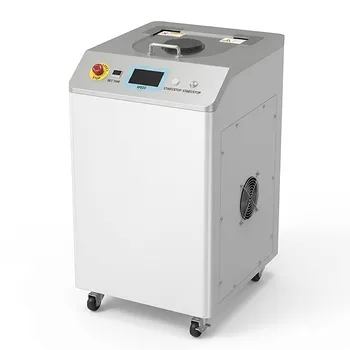
High Viscosity Planetary Centrifugal Vacuum Mixer for Material Defoaming and Uniform Mixing
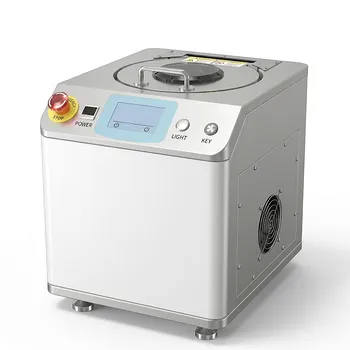
High Efficiency Vacuum Planetary Centrifugal Mixer and Defoaming Machine for Industrial Material Research and Precise Laboratory Powder Dispersion
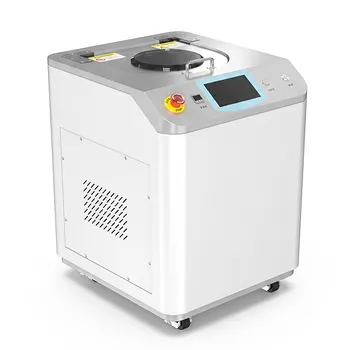
High Speed Vacuum Planetary Centrifugal Mixer and Defoamer for Industrial Paste Processing
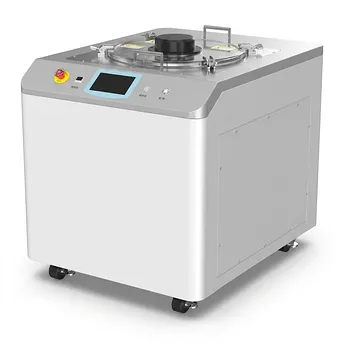
Industrial Planetary Centrifugal Vacuum Defoaming Mixer for High Viscosity Paste and Powder Homogenization
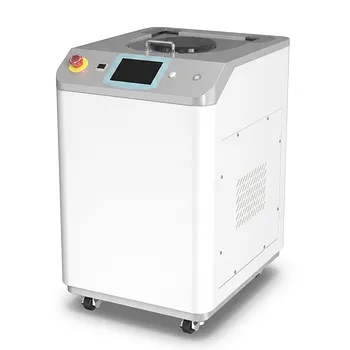
High Viscosity Planetary Centrifugal Mixing and Vacuum Defoaming Machine for Laboratory Material Preparation
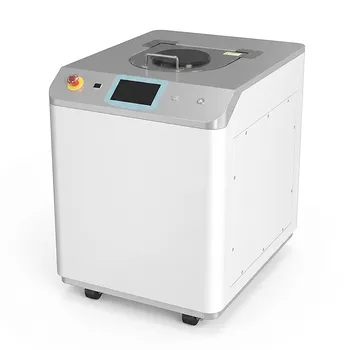
Industrial Planetary Centrifugal Vacuum Defoaming Mixer for High Viscosity Paste and Advanced Material Science
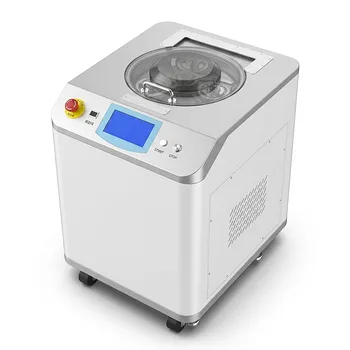
Dual Cup Vacuum Centrifugal Mixer Planetary Paste Defoaming Machine Industrial Material Processor
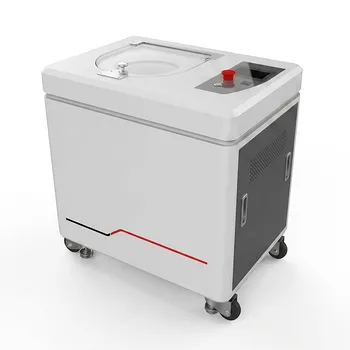
非介入式材料均质机真空脱泡行星搅拌高粘度混合设备
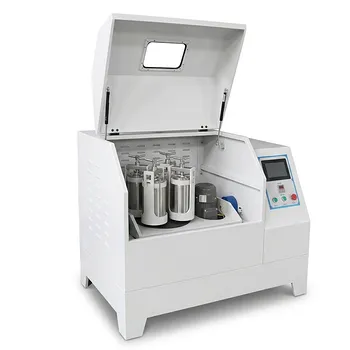
360° Rotating Omnidirectional Laboratory Planetary Ball Mill for Homogeneous Ultra-Fine Grinding and Mixing
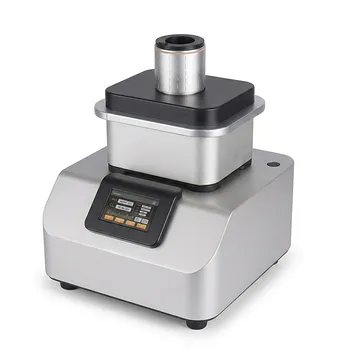
Ultra Centrifugal Mill High Speed Laboratory Grinder for Fibrous and Brittle Sample Preparation
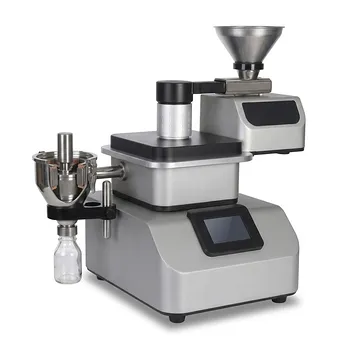
Ultra Centrifugal Mill for Rapid Laboratory Sample Preparation and Fine Powder Grinding

Heavy Duty Horizontal Planetary Ball Mill for Efficient Industrial Grinding and Sample Preparation
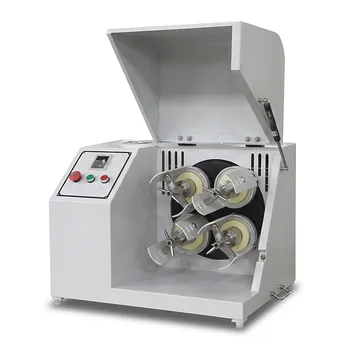
Horizontal Light Duty Planetary Ball Mill for Laboratory Sample Preparation

Vertical Production Planetary Ball Mill for High Throughput Powder Processing
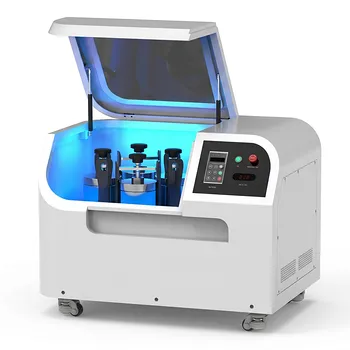
Planetary Ball Mill 12L
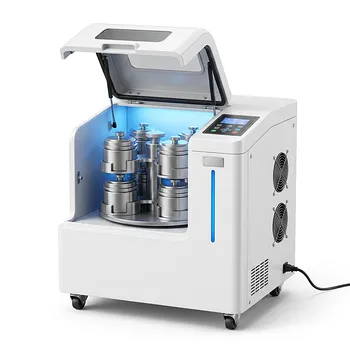
High Energy Omnidirectional Planetary Ball Mill 20L
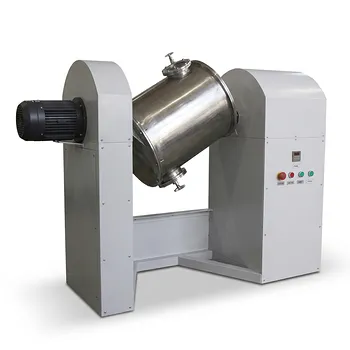
Inclined Mixer for Homogeneous Powder Blending and Grinding

Miniature Planetary Ball Mill with Vacuum Grinding and High Efficiency for Laboratory Sample Preparation

High Energy Omnidirectional Planetary Ball Mill 16L