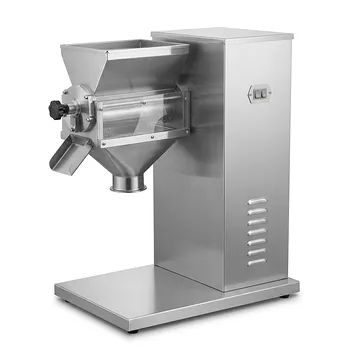
Why is electronic powder mixing equipment required for extended periods for Bi-2212? Ensuring Microscopic Uniformity
Updated 4 months ago
The requirement for extended mixing periods, typically six hours or more, is fundamental to achieving microscopic uniformity and breaking down raw material agglomerates. This duration ensures that high-purity oxides and carbonates reach the precise stoichiometry necessary for the synthesis of high-quality Bi-2212 superconducting phases. Without this intensive mechanical processing, localized phase separation occurs, leading to incomplete solid-state reactions and degraded ceramic performance.
To produce high-performance Bi-2212 superconductors, raw materials must be homogenized at a molecular level to ensure every part of the precursor powder has the exact chemical ratio required. The six-hour duration provides the cumulative mechanical energy needed to refine particle sizes and maximize surface area contact, which are the primary drivers of successful chemical synthesis.
Achieving Stoichiometric Precision
Macro versus Micro Uniformity
Electronic powder mixing equipment uses continuous mechanical motion to ensure that high-purity materials, such as Bi2.1-xBaxSr2.0Ca1.1Cu2.0Oy, achieve high uniformity. While macro-scale mixing distributes bulk materials, micro-scale uniformity ensures that individual chemical components are positioned correctly relative to one another.
Preventing Phase Separation
Precise material stoichiometry is a critical prerequisite for guaranteeing the integrity of subsequent solid-state reactions. If the mixture is not homogenized for a sufficient duration, localized phase separation occurs, resulting in "dead zones" where the superconducting phase cannot form.
Maintaining Chemical Balance
In complex raw material systems containing multiple mineral components, even slight deviations in local concentration can ruin the final product. Continuous milling for several hours ensures that components like bismuth oxide, barium carbonate, and copper oxide are perfectly dispersed.
The Role of Mechanical Energy in Particle Refinement
Breaking Down Agglomerates
Raw material powders often arrive with agglomerates, which are clusters of particles stuck together. High-intensity mechanical force is required over several hours to physically break these clusters down into a micron-level particle size distribution.
Maximizing Specific Surface Area
As the grinding equipment refines the powder, the effective specific surface area of the particles increases significantly. This increased surface area is vital because it creates more points of contact between the different chemical precursors.
Enhancing Particle Interaction
Refining the particle size distribution through physical force improves the contact between particles like Bi2O3, SrCO3, CaCO3, and CuO. This high degree of physical homogeneity is the foundation for ensuring that the solid-state reaction proceeds fully and evenly.
Establishing Optimal Kinetic Conditions
Driving Solid-State Reactions
The milling procedure provides the necessary kinetic conditions for the subsequent calcination process. By ensuring molecular-level mixing, the equipment allows for the formation of covalent bonds during thermal treatment.
Increasing Reaction Activity
Increased surface area directly leads to increased solid-state reaction activity. When the particles are smaller and more intimately mixed, the chemical transformation into the Bi-2212 phase happens more efficiently and at lower energy thresholds.
Ensuring Phase Purity
Long-term grinding serves to eliminate "impurities" that are actually just unreacted raw materials. By providing a structurally uniform ceramic matrix, the process guarantees the generation of high-purity superconducting phases without performance fluctuations.
Understanding the Trade-offs
Risk of Contamination
While longer mixing times improve homogeneity, they also increase the risk of contamination from the milling media (the balls or container). Over-milling can introduce trace elements from the equipment into the high-purity superconducting powder.
Heat Generation and Material Stability
Continuous mechanical action generates significant heat, which can occasionally trigger premature chemical shifts or physical changes in sensitive precursors. Specialized electronic equipment is often used to manage this heat while maintaining high-intensity motion.
Diminishing Returns
There is a point of diminishing returns where additional hours of mixing no longer significantly reduce particle size. Determining the optimal window—such as the six-hour mark—is essential to balance energy costs and material purity against the needs of the specific Bi-2212 stoichiometry.
How to Apply This to Your Process
Achieving the correct homogenization balance depends on your specific production goals and the purity of your starting materials.
- If your primary focus is Phase Purity: Extend the milling duration to at least six to nine hours to ensure all agglomerates are destroyed and stoichiometry is exact.
- If your primary focus is Scalability and Speed: Use high-efficiency electronic mixing equipment that maximizes mechanical impact energy to reduce the required time without sacrificing micro-level uniformity.
- If your primary focus is Minimizing Contamination: Utilize high-hardness milling media (such as zirconia) and monitor the mixture every two hours to find the minimum time required for total homogenization.
The six-hour mixing standard exists as the critical intersection where physical refinement meets chemical readiness, ensuring the reliable creation of high-temperature superconducting ceramics.
Summary Table:
| Key Factor | Mechanism | Impact on Bi-2212 Quality |
|---|---|---|
| Homogenization | Micro-scale distribution | Prevents localized phase separation and "dead zones." |
| Particle Refinement | Breaking down agglomerates | Achieves micron-level distribution for better contact. |
| Surface Area | Physical grinding | Maximizes reaction sites for solid-state synthesis. |
| Kinetic Energy | Cumulative mechanical force | Lowers energy thresholds for forming covalent bonds. |
| Phase Purity | Long-term milling | Eliminates unreacted precursors for a uniform matrix. |
Optimize Your Superconductor Synthesis with Our Precision Equipment
High-performance Bi-2212 production demands absolute stoichiometric precision and microscopic uniformity. At [Your Brand Name], we provide complete laboratory sample preparation solutions tailored for material science. We specialize in high-intensity powder processing and compaction equipment designed to eliminate agglomerates and ensure phase purity in sensitive ceramic precursors.
Our extensive product line includes:
- Advanced Milling: Planetary ball mills, jet mills, and liquid nitrogen cryogenic grinders for ultra-fine particle refinement.
- Precision Mixing: Electronic powder mixers and vacuum defoaming mixers to achieve perfect chemical dispersion.
- Compaction Solutions: A full spectrum of hydraulic presses, including Cold/Warm Isostatic Presses (CIP/WIP), vacuum hot presses, and XRF pellet presses.
Ready to enhance your lab's efficiency and material performance? Contact our technical experts today to find the ideal solution for your powder processing needs!
References
- Ali Mercan, G. Yıldırım. Examination of Load-Independent Parameters of Bi2.1-xBaxSr2.0Ca1.1Cu2.0Oy Samples Depending on Semi-Empirical Mechanical Models. DOI: 10.16984/saufenbilder.1687983
Mentioned Products
- Multi Dimensional Universal Mixer for High Uniformity Powder Blending
- V-Type Powder Mixer for Uniform Blending of Dry Powders and Granules
- Inclined Mixer for Homogeneous Powder Blending and Grinding
- Industrial Double Cone Mixer for Powder Blending and Homogeneous Mixing
- Three-Dimensional Motion Mixer for Laboratory Powder and Granule Blending
People Also Ask
- What is the role of a multi-dimensional powder mixer in the preparation of Ce-TZP ceramics? Optimize Homogenization
- What is the importance of using a high-efficiency powder mixer when preparing sand and soil mixtures? Accurate Results.
- What is the role of a powder mixer in SiC mechanical seal ring production? Ensure Homogeneity and Structural Integrity
- Why is high-uniformity powder mixing essential for antibacterial ceramic glazes? Ensure Consistent Bioactive Protection
- How do powder mixers and additives influence ZTA ceramics? Optimize microstructure for superior toughness and density

Tech Team · PowderPreparation
Last updated on May 14, 2026
Related Products
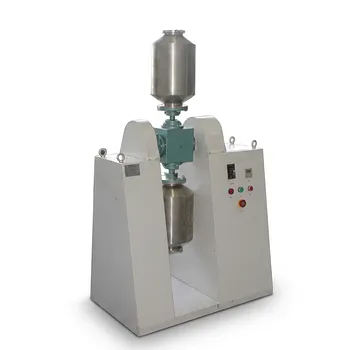
Multi Dimensional Universal Mixer for High Uniformity Powder Blending
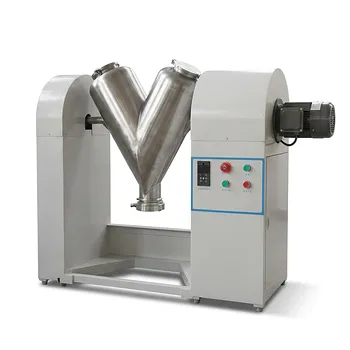
V-Type Powder Mixer for Uniform Blending of Dry Powders and Granules
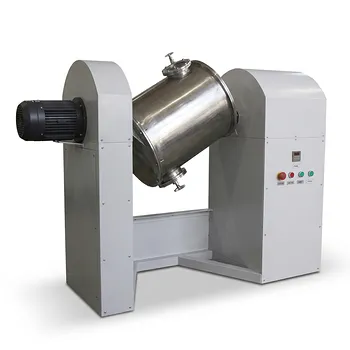
Inclined Mixer for Homogeneous Powder Blending and Grinding
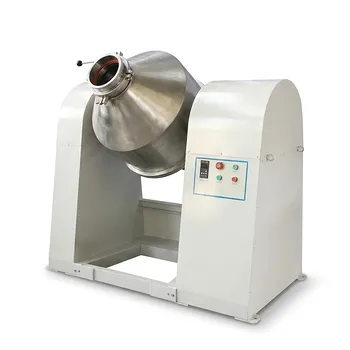
Industrial Double Cone Mixer for Powder Blending and Homogeneous Mixing
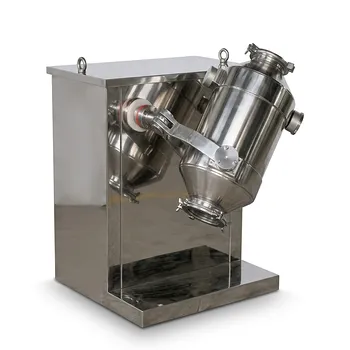
Three-Dimensional Motion Mixer for Laboratory Powder and Granule Blending
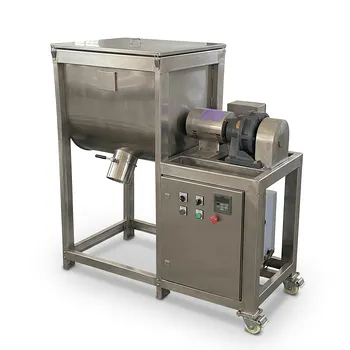
Horizontal Ribbon Mixer for Dry Powder and Slurry Blending
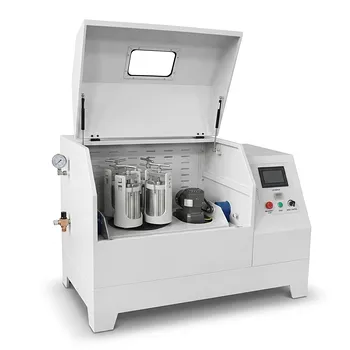
Vertical Production Planetary Ball Mill for High Throughput Powder Processing
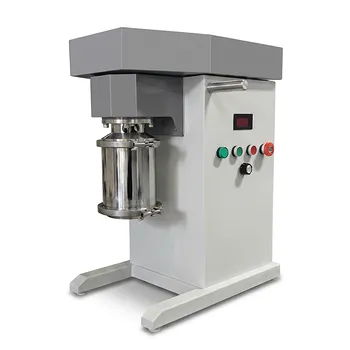
Nano Laboratory Bead Mill Desktop Sub Micron Sand Mill Screenless Seal Less Powder Grinder
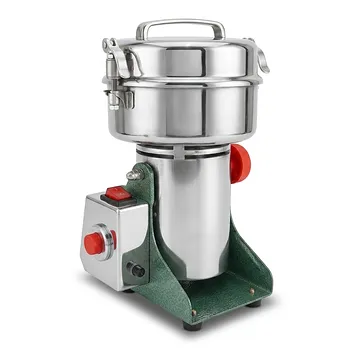
Small High-Speed Laboratory Grinder for Powder Processing
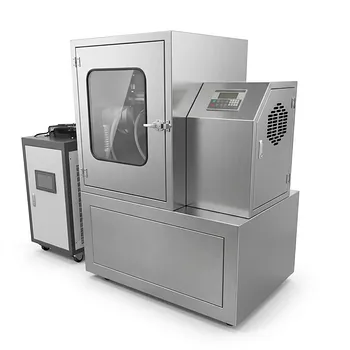
Vibratory Superfine Grinder for Ultra Fine Laboratory Powder Milling