Why is a vacuum pump required to evacuate ball milling jars for alkynyl carbon? Ensure Synthesis Safety and Purity
Updated 4 months ago
A vacuum pump is essential for evacuating ball milling jars to eliminate atmospheric moisture and oxygen, which would otherwise trigger hazardous reactions or degrade the final product. During the synthesis of alkynyl carbon materials, the primary raw material—calcium carbide ($CaC_2$)—reacts violently with moisture to produce flammable acetylene gas, while the resulting carbon materials are highly susceptible to oxidation under the high temperatures generated during milling.
Core Takeaway: Utilizing a vacuum pump creates a controlled, interference-free environment that prevents the premature decomposition of reagents and the oxidation of the synthesized carbon, ensuring both process safety and high material purity.
The Reactivity of Precursors and Intermediates
Preventing the Formation of Acetylene
The most critical reason for evacuation is the high reactivity of calcium carbide ($CaC_2$). In the presence of even trace amounts of atmospheric moisture, $CaC_2$ produces acetylene gas, which is not only a loss of raw material but also poses a significant explosion risk within the sealed milling jar.
Managing High-Energy Surface Activity
High-energy ball milling creates frequent, intense collisions that significantly increase the surface activity of the particles. As the surface area increases and active sites are exposed, the material becomes exponentially more reactive toward any remaining oxygen or water molecules in the jar.
Maintaining Chemical Integrity
Establishing a vacuum ensures that the synthesis proceeds under solvent-free and interference-free conditions. This isolation is necessary to prevent the raw powders from undergoing unwanted chemical decomposition before the intended reaction occurs.
Protecting the Synthesized Alkynyl Carbon
Preventing Thermal Oxidation
The friction and impact within a ball mill generate localized high temperatures. In an oxygen-rich environment, these temperatures would cause the newly formed alkynyl carbon materials to oxidize, effectively destroying their desired chemical structure and properties.
Ensuring High Phase Purity
A vacuum environment allows the particles to maintain a high-purity phase composition. By removing reactive gases, the technical professional ensures that the final product retains its characteristic metallic or ceramic composite properties without the interference of oxide layers.
Catalyst Protection
If iron-based catalysts are used in the process, they are exceptionally sensitive to oxygen. A vacuum prevents the formation of an oxide layer on the catalyst surface, which would otherwise "poison" active sites and hinder the chemical transformation.
Understanding the Trade-offs and Pitfalls
The Challenge of Thermal Management
While a vacuum is necessary for purity, it eliminates convective cooling inside the jar. Without air to help transfer heat, the temperature within the milling jar can rise more rapidly, potentially affecting the kinetics of the reaction or the stability of the seals.
Seal Integrity and Vacuum Retention
The effectiveness of the vacuum is entirely dependent on the quality of the vacuum ball milling jar seals. Under the mechanical stress of high-speed rotation and impact, even minor seal failures can allow oxygen to leak back in, compromising the entire batch.
Complexity of the Pre-Milling Setup
Using a vacuum pump adds a layer of complexity to the workflow, requiring a purge-and-fill sequence if an inert atmosphere (like nitrogen or hydrogen) is also required. Failure to achieve a sufficiently low base pressure before backfilling can leave enough residual oxygen to cause surface passivation.
How to Apply This to Your Synthesis
- If your primary focus is Maximum Safety: Ensure the vacuum pump achieves a deep evacuation to remove all traces of moisture, preventing the buildup of pressurized acetylene gas during the $CaC_2$ milling.
- If your primary focus is Material Purity: Use a high-quality vacuum jar with specialized valves to maintain a low-pressure environment throughout the entire duration of the high-energy milling cycle.
- If your primary focus is Catalyst Activity: Combine deep vacuum evacuation with a high-purity inert gas purge to ensure that metallic active sites remain free of oxide layers.
By strictly controlling the internal atmosphere through vacuum evacuation, you transform a potentially volatile reaction into a precise and repeatable synthesis process.
Summary Table:
| Key Requirement | Impact of Vacuum Evacuation | Main Benefit |
|---|---|---|
| Moisture Removal | Prevents $CaC_2$ from forming flammable acetylene gas | Enhanced Process Safety |
| Oxygen Elimination | Prevents thermal oxidation during high-energy impacts | High Material Phase Purity |
| Catalyst Protection | Stops oxide layer formation on sensitive metal sites | Maintained Catalytic Activity |
| Atmospheric Control | Creates an interference-free, solvent-free environment | Repeatable Synthesis Results |
| Surface Activity | Protects highly reactive fresh surfaces of particles | Consistent Chemical Integrity |
Elevate Your Material Research with Precision Engineering
Achieving the perfect synthesis of alkynyl carbon materials requires more than just a vacuum—it requires a complete, high-performance laboratory ecosystem. At our core, we provide comprehensive laboratory sample preparation solutions tailored for advanced material science.
Whether you are managing volatile reagents like calcium carbide or seeking the highest phase purity, our specialized equipment is designed to meet the most rigorous standards:
- Advanced Milling: From planetary ball mills, jet mills, and cryogenic grinders to specialized vacuum-sealed jars that ensure atmospheric integrity.
- Powder Processing: High-efficiency crushers, sieve shakers (vibratory/air-jet), and precision powder/defoaming mixers.
- Compaction Excellence: A full spectrum of hydraulic presses, including Cold/Warm Isostatic Presses (CIP/WIP), XRF pellet presses, and vacuum hot presses for high-density material consolidation.
Ready to optimize your laboratory workflow? Our experts are here to help you select the right configuration for your specific material challenges. Contact us today to explore our full range of solutions!
References
- Yingjie Li, Xiaojun He. Efficient Degradation of Hazardous Dechlorane Plus by Solvent‐Free Mechanochemical Strategy for Green Synthesis of Supercapacitive Alkynyl Carbon Material. DOI: 10.1002/cnl2.70043
Mentioned Products
- Heavy Duty Horizontal Planetary Ball Mill for Efficient Industrial Grinding and Sample Preparation
- Vertical Semi Circular Planetary Ball Mill for Laboratory Precision Grinding
- Vertical Production Planetary Ball Mill for High Throughput Powder Processing
- Vertical Square Planetary Ball Mill for Laboratory Sample Preparation and Nanoscale Grinding
- High Energy Planetary Ball Mill for Nano Scale Grinding and Mechanical Alloying
People Also Ask
- Why grind lime-pozzolan specimens for TG/DTA for 3 mins? Master sample prep for high-precision thermal analysis.
- What is the role of a planetary ball mill in the mechanical activation of ZTA powder? Boost Sintering Performance
- What is the function of a planetary ball mill in wollastonite ceramic prep? Achieve Molecular Homogenization & Reactivity
- How does a planetary ball mill contribute to the homogenization of trace elements? Achieve Sub-Micron Uniformity
- What is the function of a high-performance planetary ball mill in AMZ laminates? Master Ceramic Homogenization.

Tech Team · PowderPreparation
Last updated on Jun 03, 2026
Related Products
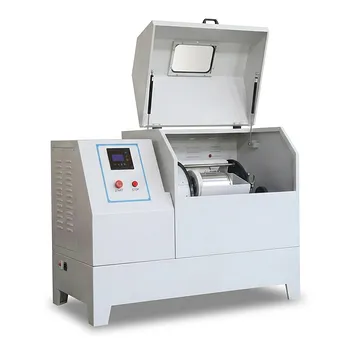
Heavy Duty Horizontal Planetary Ball Mill for Efficient Industrial Grinding and Sample Preparation
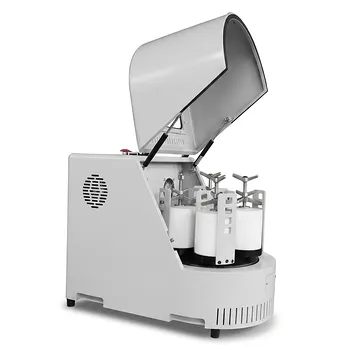
Vertical Semi Circular Planetary Ball Mill for Laboratory Precision Grinding
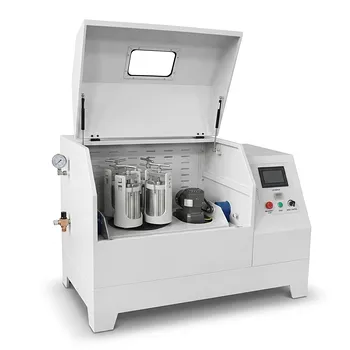
Vertical Production Planetary Ball Mill for High Throughput Powder Processing
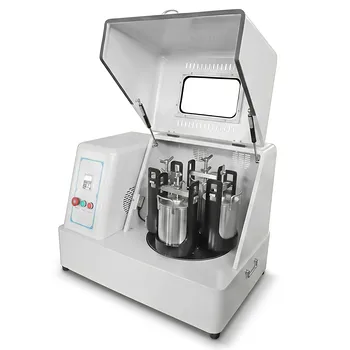
Vertical Square Planetary Ball Mill for Laboratory Sample Preparation and Nanoscale Grinding
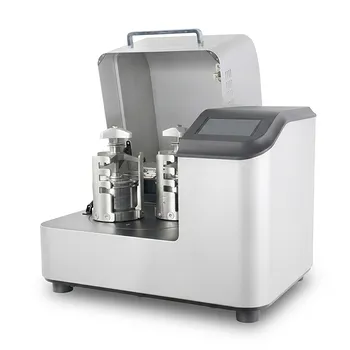
High Energy Planetary Ball Mill for Nano Scale Grinding and Mechanical Alloying
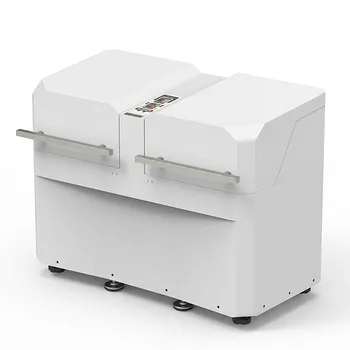
Dual Station Planetary Ball Mill 24L
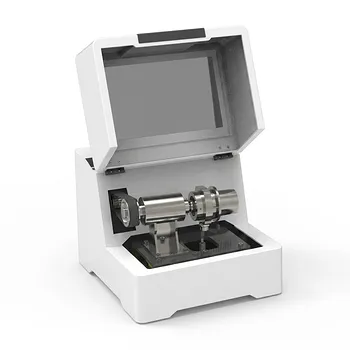
Single Tank High Energy Vibratory Ball Mill for Laboratory Grinding and Mixing
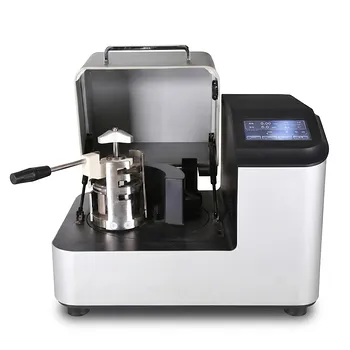
High Energy Laboratory Planetary Ball Mill for Nano Grinding and Material Science Sample Preparation
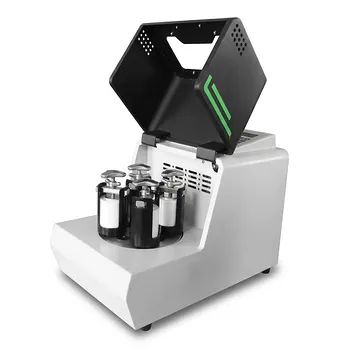
Miniature Planetary Ball Mill with Vacuum Grinding and High Efficiency for Laboratory Sample Preparation
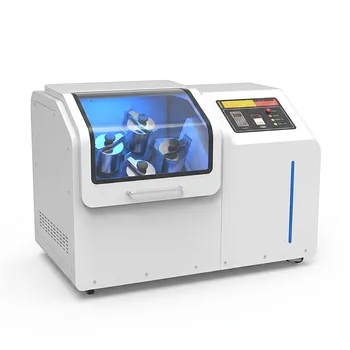
High Energy Omnidirectional Planetary Ball Mill 16L
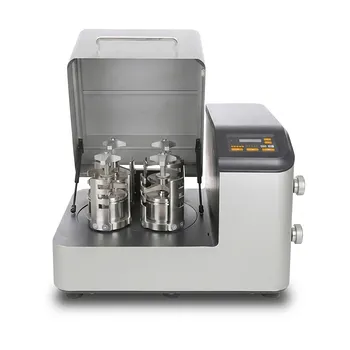
High Energy Planetary Ball Mill for Nano Scale Grinding and Colloidal Mixing in Material Science Research
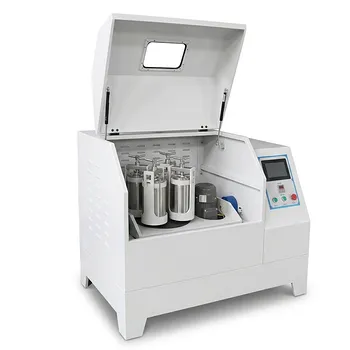
360° Rotating Omnidirectional Laboratory Planetary Ball Mill for Homogeneous Ultra-Fine Grinding and Mixing
Planetary Ball Mill 12L
High Energy Laboratory Planetary Ball Mill for Nano Grinding and Colloidal Mixing of Hard and Brittle Materials

Multi-Platform Nanoscale High-Energy Vibratory Ball Mill
Dual Jar High Energy Vibratory Ball Mill
High Energy Omnidirectional Planetary Ball Mill 20L

8L Planetary Ball Mill for Laboratory Grinding and Sample Preparation
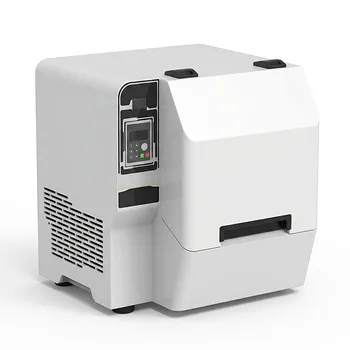
Nano High Energy Vibratory Ball Mill for Laboratory Sample Preparation