Why is a vacuum hot press or high-pressure synthesis equipment necessary? Unlock High-Stability Ternary Boron Compounds
Updated 3 months ago
The synthesis of high-stability ternary boron-based compounds requires vacuum hot pressing or high-pressure equipment to overcome the immense energy barriers created by strong covalent bonds. These systems provide the simultaneous extreme temperatures (often exceeding 2000°C) and mechanical pressures (ranging from 30 MPa to over 10 GPa) necessary to facilitate atomic diffusion and achieve full densification. Without this controlled environment, the material would suffer from incomplete bonding, oxidative degradation, and high internal porosity.
Ternary boron compounds rely on precise atomic placement and near-theoretical density to achieve their extreme hardness and modulus. Vacuum hot pressing provides the necessary thermal and mechanical driving forces to lock atoms into specific lattice sites while protecting the chemical purity of the compound from atmospheric interference.
Overcoming Atomic Diffusion Barriers
Breaking Covalent Resistance
Boron-based materials are characterized by strong covalent bonds, which result in extremely low self-diffusion rates even at high temperatures. High-pressure synthesis equipment provides the mechanical energy required to force these atoms into motion, allowing the material to transition from a powder to a solid bulk.
Ensuring Precise Lattice Occupancy
Ternary compounds involve three distinct elements that must occupy non-equivalent lattice sites to remain stable. The simultaneous application of heat and pressure ensures that metal components and boron atoms overcome individual diffusion barriers to reach their correct positions, which is critical for achieving high Young’s modulus and hardness.
Maintaining Chemical Integrity and Composition
Preventing Boron Volatilization
At the extreme temperatures required for synthesis, boron components can become volatile and escape the compound, leading to non-stoichiometric results. Pressure-assisted sintering effectively suppresses the volatilization of boron, ensuring the final material maintains the exact chemical ratio predicted by material theory.
Protecting Against Oxidation
Non-oxide ceramics, including ternary borides, are highly sensitive to oxygen and moisture at ultra-high temperatures. A high-vacuum environment (often below 10 Pa) prevents oxidative degradation and avoids unwanted chemical reactions between the powder and ambient gases or the graphite molds used in the process.
Achieving Near-Theoretical Density
Pressure-Assisted Densification
Conventional atmospheric sintering often fails to eliminate internal pores in refractory compounds. Vacuum hot pressing applies unidirectional mechanical pressure, inducing plastic flow between particles to reach near-theoretical density, which is essential for applications requiring ballistic resistance or dielectric stability.
Inhibiting Abnormal Grain Growth
Longer sintering times at high temperatures typically lead to "grain coarsening," which weakens the material. The added pressure of a hot press allows for complete densification in a shorter time frame, effectively inhibiting abnormal grain growth and preserving a fine-grained structure that enhances shear modulus.
Understanding the Trade-offs
Equipment and Tooling Limitations
While vacuum hot pressing is superior for material quality, it is often limited by graphite mold durability and the complexity of the shapes it can produce. The extreme pressures and temperatures accelerate the wear of expensive tooling, making the process more costly than traditional sintering.
Scaling and Throughput Challenges
High-pressure synthesis is typically a batch process rather than a continuous one, which can limit production throughput. Furthermore, maintaining a uniform pressure distribution across very large or complex parts is technically difficult, often restricting the size of the final ceramic blocks.
How to Apply This to Your Project
Selecting the Right Synthesis Path
The choice between vacuum hot pressing and high-pressure synthesis depends on the target properties of your boride compound.
- If your primary focus is extreme hardness (e.g., superhard materials): Utilize high-pressure synthesis equipment capable of GPa-level loads to ensure the most rigid atomic structures and maximum density.
- If your primary focus is oxidation resistance and purity: Prioritize a vacuum hot press with a high-vacuum rating (below 10 Pa) to eliminate gas-phase impurities during the heating cycle.
- If your primary focus is fine-grained microstructures: Use a pressure-assisted sintering cycle to reduce the overall "dwell time" at high temperatures, preventing grain coarsening.
By leveraging the dual action of vacuum and mechanical pressure, you can unlock the superior mechanical and thermal properties inherent in ternary boron-based material systems.
Summary Table:
| Challenge in Boron Synthesis | Vacuum Hot Press / HP Solution | Key Benefit |
|---|---|---|
| Strong Covalent Bonds | Simultaneous 2000°C+ and High Pressure | Facilitates atomic diffusion & bonding |
| Oxidative Degradation | High Vacuum Environment (< 10 Pa) | Maintains chemical purity and integrity |
| Boron Volatilization | Pressure-Assisted Sintering | Ensures precise stoichiometric ratios |
| Internal Porosity | Unidirectional Mechanical Pressure | Achieves near-theoretical density |
| Grain Coarsening | Reduced Dwell Time via Pressure | Preserves fine-grained microstructure |
Elevate Your Material Synthesis with Precision Equipment
Achieving the extreme conditions required for ternary boron-based compounds demands reliable, high-performance engineering. [Your Brand Name] provides complete laboratory sample preparation solutions for material science, specializing in advanced powder processing and compaction equipment.
From Vacuum Hot Presses and Cold/Warm Isostatic Presses (CIP/WIP) to our extensive range of planetary ball mills, jet mills, and crushers, we offer the tools you need to overcome energy barriers and achieve theoretical density. Whether you are synthesizing superhard materials or high-modulus ceramics, our equipment ensures precise control over temperature, pressure, and atmosphere.
Ready to optimize your lab's capabilities? Contact our experts today to find the perfect equipment solution for your research!
References
- Adam Carlsson, Martin Dahlqvist. When Two Becomes Three: Predicting Stable Ternary Boron‐Based Compounds by Populating Unique Lattice Sites in Binary Prototype Structures. DOI: 10.1002/adts.202400759
Mentioned Products
- 非介入式材料均质机真空脱泡行星搅拌高粘度混合设备
- Industrial Vacuum Kneader for High-Viscosity Silicone, Rubber, and Compound Mixing
- Dual Cup Vacuum Centrifugal Mixer Planetary Paste Defoaming Machine Industrial Material Processor
- High Efficiency Vacuum Planetary Centrifugal Mixer and Defoaming Machine for Industrial Material Research and Precise Laboratory Powder Dispersion
- High Speed Vacuum Planetary Centrifugal Mixer and Defoamer for Industrial Paste Processing
People Also Ask
- How does a planetary vacuum defoaming mixer help magnesium calcium phosphate slurries? Achieve Flawless 3D Printed Bone
- Why is vacuum defoaming necessary for PDMS mixtures before microwave irradiation curing? Key to Structural Integrity
- What role does a vacuum defoaming mixer play in BNT MLCC slurry? Ensure High Dielectric Strength & Pinhole-Free Prep
- Why is a vacuum defoaming mixer essential for DLP 3D printing ceramic slurries? Key to Structural Integrity
- What is the purpose of using a high-vacuum defoaming mixer for SiC/Cf composites? Optimize Density and Strength

Tech Team · PowderPreparation
Last updated on Jun 03, 2026
Related Products
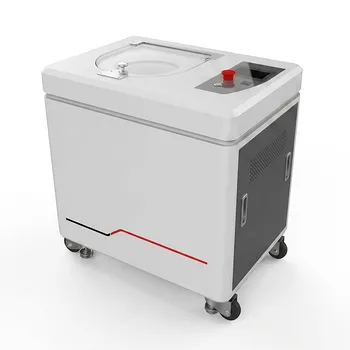
非介入式材料均质机真空脱泡行星搅拌高粘度混合设备
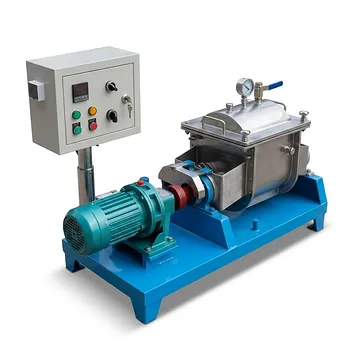
Industrial Vacuum Kneader for High-Viscosity Silicone, Rubber, and Compound Mixing
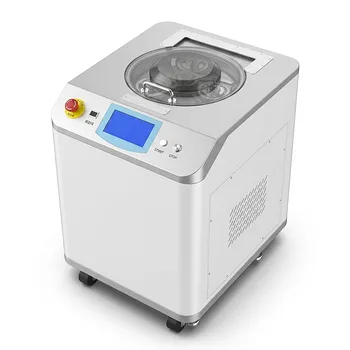
Dual Cup Vacuum Centrifugal Mixer Planetary Paste Defoaming Machine Industrial Material Processor
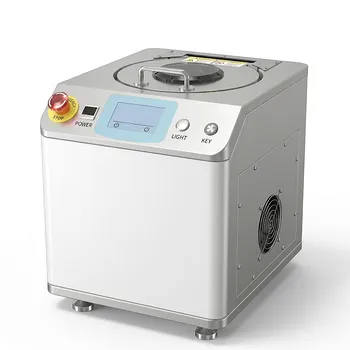
High Efficiency Vacuum Planetary Centrifugal Mixer and Defoaming Machine for Industrial Material Research and Precise Laboratory Powder Dispersion
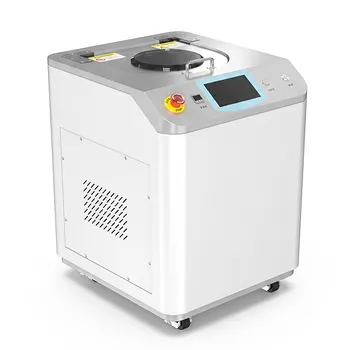
High Speed Vacuum Planetary Centrifugal Mixer and Defoamer for Industrial Paste Processing
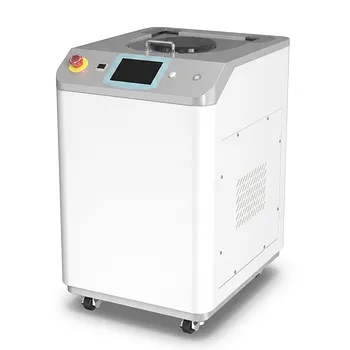
High Viscosity Planetary Centrifugal Mixing and Vacuum Defoaming Machine for Laboratory Material Preparation
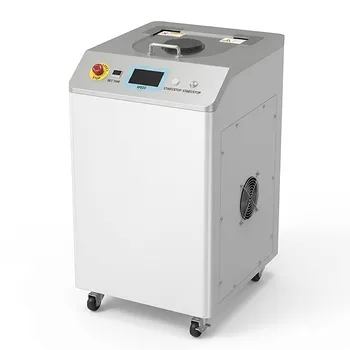
High Viscosity Planetary Centrifugal Vacuum Mixer for Material Defoaming and Uniform Mixing
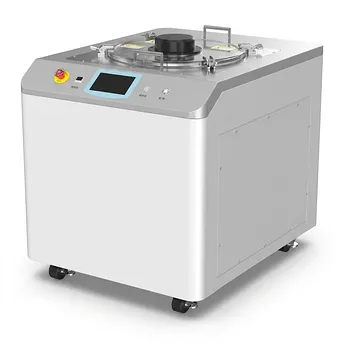
Industrial Planetary Centrifugal Vacuum Defoaming Mixer for High Viscosity Paste and Powder Homogenization