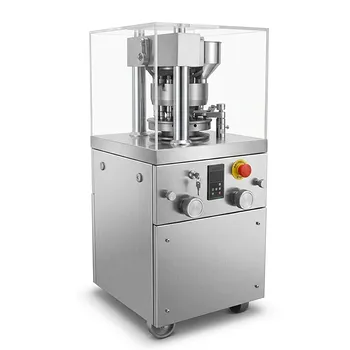
Why is a vacuum hot press important for solid-state energy materials? Optimize Density and Purity
Updated 4 months ago
The vacuum hot press (VHP) is the definitive tool for achieving near-theoretical density in sensitive solid-state energy materials. It achieves this by simultaneously applying high thermal energy and uniaxial mechanical pressure within a controlled vacuum environment. This multi-modal approach overcomes the diffusion barriers of advanced ceramics and alloys while protecting their chemical integrity from atmospheric contamination.
Vacuum hot pressing enables the production of high-density bulk materials by accelerating atomic diffusion and plastic flow at significantly lower temperatures than conventional sintering. By eliminating oxidation and internal porosity, it ensures that the resulting materials possess the intrinsic electrochemical and physical properties required for high-performance energy applications.
The Mechanics of Simultaneous Heat and Pressure
Accelerating Atomic Diffusion
The primary advantage of a vacuum hot press is its ability to apply uniaxial pressure during the heating cycle. This mechanical force increases the driving force for vacancy diffusion and grain boundary migration, allowing particles to bond more effectively. Consequently, materials can reach full densification at temperatures much lower than those required for traditional pressureless sintering.
Achieving Theoretical Density
Energy materials often require high relative density—often exceeding 95% to 99%—to function efficiently. The simultaneous application of heat and pressure forces powder particles to undergo plastic flow and diffusion creep, which effectively eliminates closed pores. This level of densification is essential for studying the intrinsic properties of a material without the interference of internal voids.
Minimizing Grain Coarsening
Because the VHP process accelerates densification, the required "soak time" at peak temperatures is often reduced. This shorter processing window helps to minimize the coarsening of nanocrystalline grains. Maintaining a fine grain structure is critical for enhancing the mechanical strength and specific electrochemical behaviors of solid-state components.
The Critical Role of the Vacuum Environment
Protecting Phase Purity and Chemical Stability
Many high-performance energy materials, such as magnesium-based thermoelectrics or non-oxide ceramics, are highly susceptible to oxidation at elevated temperatures. A high-vacuum environment removes oxygen and moisture, preventing the formation of unwanted oxide layers. This ensures that the final product maintains its phase purity and intended chemical composition.
Managing High-Entropy and Reactive Materials
For advanced materials like high-entropy composites or ultra-high temperature ceramics (UHTCs), the vacuum environment is non-negotiable. It prevents the deterioration of sensitive elements and ensures tight interfacial contact between different phases. This is vital for building efficient charge transfer channels in applications like photocatalysis or solid-state batteries.
Facilitating Solid-State Diffusion Bonding
The combination of a contamination-free vacuum and mechanical pressure facilitates diffusion bonding between dissimilar materials. This allows for the creation of metal-ceramic hybrids with strong metallurgical bonds and minimal distortion. Such joints are often stronger and more reliable than those created through traditional fusion welding.
Understanding the Trade-offs
Uniaxial vs. Isostatic Pressure
Unlike Hot Isostatic Pressing (HIP), which applies pressure from all directions, a VHP applies uniaxial (one-dimensional) pressure. While simpler to implement, this can lead to slight density gradients in very tall or complex-shaped samples. Users must carefully calibrate the length-to-diameter ratio of their molds to ensure uniform densification.
Geometric Constraints and Throughput
The vacuum hot press is generally limited to relatively simple geometries, such as discs or rectangular blocks, due to the nature of the die-and-plunger setup. Additionally, the need to pull a vacuum and the controlled cooling rates mean that cycle times are longer than atmospheric processes. This makes VHP a premium technique typically reserved for high-value materials or critical research stages.
Making the Right Choice for Your Goal
When deciding how to implement vacuum hot pressing in your project, consider the specific requirements of your material system:
- If your primary focus is intrinsic property characterization: Utilize VHP to reach near-theoretical density ( >99%) to ensure that your measurements reflect the material's true potential rather than its porosity.
- If your primary focus is oxygen-sensitive thermoelectrics: Prioritize the vacuum level to prevent the oxidation of elements like Magnesium, which is vital for maintaining a high thermoelectric figure of merit (ZT value).
- If your primary focus is nanostructured ceramics: Optimize for the lowest possible sintering temperature and highest pressure to achieve densification while halting grain growth.
- If your primary focus is joining dissimilar materials: Use the VHP's uniaxial pressure to ensure intimate atomic contact at the interface, promoting a clean, solid-state bond without the need for fillers.
By precisely controlling the synergy between thermal energy and mechanical force, the vacuum hot press remains the gold standard for synthesizing the next generation of high-performance energy materials.
Summary Table:
| Feature | Benefit for Energy Materials | Mechanism |
|---|---|---|
| Uniaxial Pressure | Near-theoretical density (>99%) | Accelerates plastic flow and eliminates internal pores. |
| Vacuum Environment | High phase purity & stability | Prevents oxidation and contamination of sensitive elements. |
| Low-Temp Sintering | Nanostructured grain control | Reduces soak time to minimize grain coarsening/growth. |
| Diffusion Bonding | Strong metal-ceramic hybrids | Facilitates intimate atomic contact without filler materials. |
Elevate Your Material Research with Expert Sample Prep Solutions
Achieving near-theoretical density in solid-state energy materials requires precision and the right equipment. At [Your Brand Name], we provide complete laboratory sample preparation solutions for material science, specializing in high-performance powder processing and compaction equipment.
Our extensive product line includes:
- Powder Processing: Crushers (jaw/roll), liquid nitrogen cryogenic grinders, and advanced mills (planetary ball, jet, sand/bead, disc, rotor).
- Classification & Mixing: Vibratory/air-jet sieve shakers and high-efficiency powder or defoaming mixers.
- Precision Compaction: A full spectrum of hydraulic presses, including Cold/Warm Isostatic Presses (CIP/WIP), standard lab presses, XRF pellet presses, and advanced Vacuum Hot Presses.
Whether you are focusing on oxygen-sensitive thermoelectrics or nanostructured ceramics, our equipment is designed to ensure maximum performance and reliability. Contact our technical experts today to discuss your specific application and find the ideal solution for your laboratory.
References
- Albin Conde Reis, Mohammadhosein Safari. Revisiting the Importance of Sulfur Electrode‐Current‐Collector Interface in Lithium‐Sulfur Batteries. DOI: 10.1002/batt.202300286
Mentioned Products
- Dual Cup Vacuum Centrifugal Mixer Planetary Paste Defoaming Machine Industrial Material Processor
- 非介入式材料均质机真空脱泡行星搅拌高粘度混合设备
- High Speed Vacuum Planetary Centrifugal Mixer and Defoamer for Industrial Paste Processing
- High Efficiency Vacuum Planetary Centrifugal Mixer and Defoaming Machine for Industrial Material Research and Precise Laboratory Powder Dispersion
- Industrial Vacuum Kneader for High-Viscosity Silicone, Rubber, and Compound Mixing
People Also Ask
- Why is a vacuum centrifugal defoaming mixer required to process ceramic slurry before 3D printing? Ensure High Density
- Why is a vacuum centrifugal de-foaming mixer required before DIW of PZT ink? Achieve Dense, Bubble-Free Piezo Ceramics
- What are the advantages of centrifugal defoaming mixers for recycled slurries? Achieve Superior Electrode Quality
- Why is centrifugal defoaming necessary for magnetic composite inks? Ensure Void-Free Extrusion for 3D Printing
- Why is vacuum defoaming necessary for PDMS mixtures before microwave irradiation curing? Key to Structural Integrity

Tech Team · PowderPreparation
Last updated on May 14, 2026
Related Products
Dual Cup Vacuum Centrifugal Mixer Planetary Paste Defoaming Machine Industrial Material Processor
非介入式材料均质机真空脱泡行星搅拌高粘度混合设备
High Speed Vacuum Planetary Centrifugal Mixer and Defoamer for Industrial Paste Processing
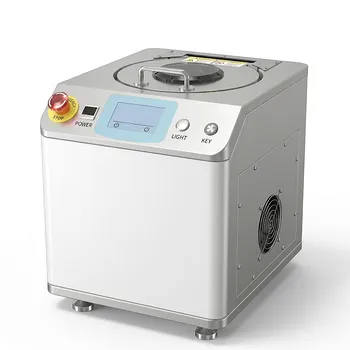
High Efficiency Vacuum Planetary Centrifugal Mixer and Defoaming Machine for Industrial Material Research and Precise Laboratory Powder Dispersion
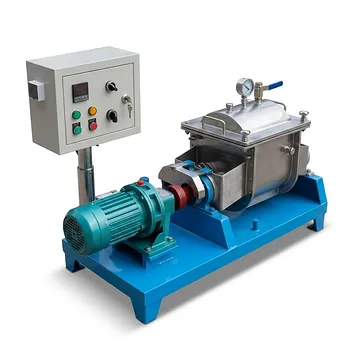
Industrial Vacuum Kneader for High-Viscosity Silicone, Rubber, and Compound Mixing
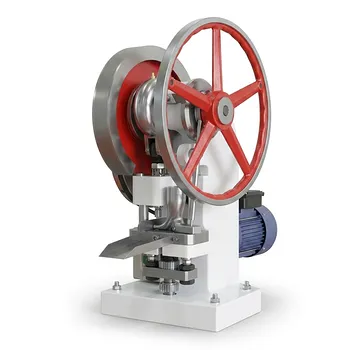
5 Ton Single Punch Tablet Press Laboratory Small Batch Production
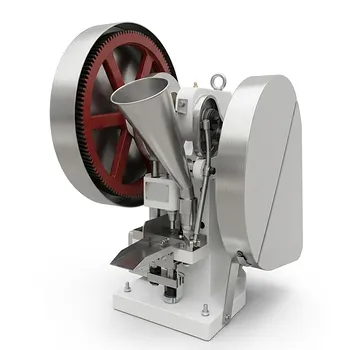
6-Ton Small Single-Punch Tablet Press — Laboratory Powder & Granule Tableting Equipment / Tablet Forming Machine

High Viscosity Planetary Centrifugal Mixing and Vacuum Defoaming Machine for Laboratory Material Preparation
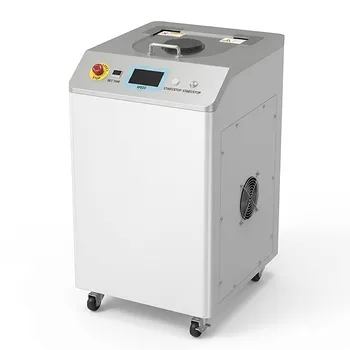
High Viscosity Planetary Centrifugal Vacuum Mixer for Material Defoaming and Uniform Mixing
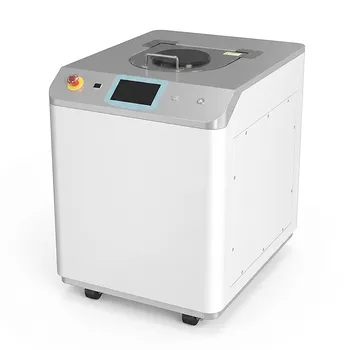
Industrial Planetary Centrifugal Vacuum Defoaming Mixer for High Viscosity Paste and Advanced Material Science
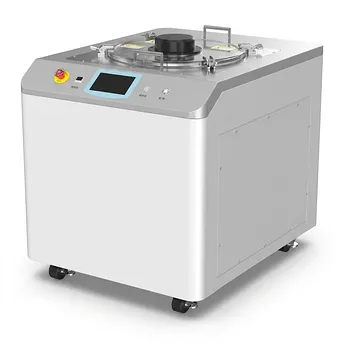
Industrial Planetary Centrifugal Vacuum Defoaming Mixer for High Viscosity Paste and Powder Homogenization
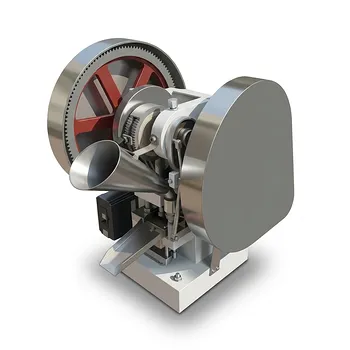
6 Ton Variable Frequency Single Punch Tablet Press