Why is a vacuum high-pressure sintering furnace required for SiC? Achieve Near-Theoretical Density and Strength
Updated 4 months ago
Achieving near-theoretical density in Silicon Carbide (SiC) requires the simultaneous application of extreme thermal energy and mechanical force. These furnaces are indispensable because they overcome SiC’s inherent resistance to sintering—caused by its incredibly strong covalent bonds—while protecting the material from oxidation. By combining temperatures often exceeding 1,800°C with axial pressures up to 60 MPa in a vacuum, these systems force the elimination of internal pores that would otherwise compromise the material's structural integrity.
Core Takeaway: High-performance SiC ceramics require a vacuum hot press to provide the thermodynamic "driving force" necessary to overcome low diffusion rates and strong atomic bonding, ensuring a fully dense, oxygen-free matrix with superior mechanical strength.
Overcoming the Intrinsic Resistance of Silicon Carbide
The Challenge of Strong Covalent Bonding
Silicon Carbide is characterized by exceptionally strong covalent bonds, which give the material its famous hardness and thermal stability.
However, these same bonds result in extremely low self-diffusion coefficients, meaning SiC particles do not naturally "flow" together or bond easily, even at high temperatures.
Standard pressureless sintering often fails to achieve full densification, leaving behind residual pores that act as stress concentrators and sites for crack initiation.
Driving Solid-Phase and Liquid-Phase Diffusion
Vacuum hot presses provide the necessary physical environment to trigger transient liquid phase sintering or enhanced solid-phase diffusion.
The high-temperature thermal field (typically 1,720°C to 1,900°C) provides the energy needed for atoms to move, while the pressure forces these particles into intimate contact.
This combination allows nano-scale particles to rearrange and bond, reaching relative densities as high as 98.1% to 99.5% of the theoretical limit.
The Role of Simultaneous Pressure in Densification
Mechanical Elimination of Porosity
Unlike traditional furnaces, a hot press applies axial pressure (ranging from 15 to 60 MPa) directly to the material during the heating cycle.
This pressure physically forces out the gas trapped between powder gaps and induces plastic deformation, causing particles to interlock tightly.
In specialized applications, this process can transform cylindrical fibers into a hexagonal columnar structure, achieving a state of "full densification" with porosity as low as 0.52%.
Enhancing Fracture Toughness and Strength
By reducing closed porosity within the composite, the equipment significantly enhances the material's density and its resistance to tensile loads.
The resulting matrix is "armor-grade" or "aerospace-grade," capable of blocking oxygen diffusion and managing the brittle-to-ductile transition temperatures effectively.
A denser matrix ensures that the final component can withstand the extreme mechanical stresses found in turbine blades, ballistic plates, and semiconductor manufacturing tools.
The Necessity of a Vacuum Environment
Preventing High-Temperature Oxidation
At the extreme temperatures required for SiC sintering, any presence of oxygen will cause the oxidation of carbon fibers or the SiC itself.
The vacuum system maintains an extremely low-pressure environment (often as low as 2 x 10⁻⁵ Torr) to eliminate air impurities before the cycle begins.
This "clean" environment ensures the chemical purity of the ceramic, preventing the formation of weak oxide layers that would degrade the material’s high-temperature performance.
Removal of Volatile Impurities
The vacuum also aids in the removal of volatile sintering additives and trapped gases that might otherwise create internal defects.
By eliminating gas interference, the vacuum allows for a more uniform thermal field, ensuring that the entire ceramic component reaches a consistent density.
This is critical for manufacturing large-scale or complex Ultra-High Temperature Ceramic (UHTC) bulk materials used in hypersonic flight applications.
Understanding the Trade-offs
Geometry and Productivity Limits
While vacuum hot pressing produces superior material properties, it is generally limited to simpler geometric shapes like plates, disks, or cylinders due to the nature of axial pressing.
The process is typically a batch operation, which results in higher production costs and longer cycle times compared to continuous pressureless sintering.
Equipment and Operational Costs
The requirement for high-vacuum systems, precision hydraulic presses, and specialized graphite tooling makes the capital investment significantly higher than standard industrial furnaces.
Furthermore, the high temperatures (up to 2,100°C) and pressures require rigorous maintenance of the heating elements and pressure rams to prevent mechanical failure.
Making the Right Choice for Your Goal
Implementation Strategies
- If your primary focus is Maximum Mechanical Strength: Utilize a vacuum hot press with axial pressures of at least 40-60 MPa to achieve near-theoretical density and a tightly interlocking microstructure.
- If your primary focus is Oxidation Resistance: Ensure your furnace is capable of maintaining a vacuum of 2 x 10⁻⁵ Torr to prevent the formation of deleterious oxide phases during the high-heat phase.
- If your primary focus is Complex Net-Shape Components: Consider alternative methods like Spark Plasma Sintering (SPS) or Hot Isostatic Pressing (HIP) if the axial limitations of a standard hot press cannot accommodate your geometry.
By integrating high-pressure mechanical force with a controlled vacuum environment, you transform Silicon Carbide from a stubborn powder into a high-performance matrix capable of surviving the world's most demanding environments.
Summary Table:
| Feature | Mechanism | Impact on SiC Matrix |
|---|---|---|
| High Temperature | Provides thermal energy for atomic movement | Overcomes strong covalent bonds to trigger diffusion |
| Axial Pressure | 15 - 60 MPa mechanical force | Eliminates internal pores; achieves 99.5% relative density |
| Vacuum Environment | Prevents oxidation & removes impurities | Ensures chemical purity and prevents material degradation |
| Simultaneous Action | Heat + Pressure + Vacuum | Creates "armor-grade" ceramics for aerospace and industry |
Elevate Your Material Research with Precision Engineering
Achieving full densification in advanced ceramics like Silicon Carbide requires equipment that can handle extreme thermal and mechanical demands. We provide complete laboratory sample preparation solutions tailored for material science, ensuring your research moves from the lab to high-performance applications seamlessly.
Our specialized equipment range includes:
- Thermal Processing: Advanced Vacuum Hot Presses, Cold/Warm Isostatic Presses (CIP/WIP), standard lab presses, and vacuum hot presses.
- Powder Processing: Planetary ball mills, jet mills, and disc mills for optimal particle size distribution.
- Sample Prep: Jaw/roll crushers, liquid nitrogen cryogenic grinders, and precision sieve shakers.
- Mixing Solutions: High-efficiency powder mixers and vacuum defoaming mixers.
Whether you are developing aerospace-grade composites or semiconductor tools, our team is ready to support your technical requirements with reliable, high-precision machinery.
Contact us today to discuss your project requirements!
References
- Aicha Metehri, Ilias-Mohammed-Amine Ghermaoui. Tensile examination of progressive damage and failure in porous ceramic composite materials using the XFEM. DOI: 10.5937/vojtehg72-50091
Mentioned Products
- Dual Cup Vacuum Centrifugal Mixer Planetary Paste Defoaming Machine Industrial Material Processor
- 非介入式材料均质机真空脱泡行星搅拌高粘度混合设备
- High Efficiency Vacuum Planetary Centrifugal Mixer and Defoaming Machine for Industrial Material Research and Precise Laboratory Powder Dispersion
- High Speed Vacuum Planetary Centrifugal Mixer and Defoamer for Industrial Paste Processing
- Industrial Vacuum Kneader for High-Viscosity Silicone, Rubber, and Compound Mixing
People Also Ask
- Why is a vacuum centrifugal defoaming mixer required to process ceramic slurry before 3D printing? Ensure High Density
- Why is a vacuum centrifugal de-foaming mixer required before DIW of PZT ink? Achieve Dense, Bubble-Free Piezo Ceramics
- What are the advantages of centrifugal defoaming mixers for recycled slurries? Achieve Superior Electrode Quality
- Why is centrifugal defoaming necessary for magnetic composite inks? Ensure Void-Free Extrusion for 3D Printing
- Why is vacuum defoaming necessary for PDMS mixtures before microwave irradiation curing? Key to Structural Integrity

Tech Team · PowderPreparation
Last updated on Jun 03, 2026
Related Products
Dual Cup Vacuum Centrifugal Mixer Planetary Paste Defoaming Machine Industrial Material Processor
非介入式材料均质机真空脱泡行星搅拌高粘度混合设备
High Efficiency Vacuum Planetary Centrifugal Mixer and Defoaming Machine for Industrial Material Research and Precise Laboratory Powder Dispersion
High Speed Vacuum Planetary Centrifugal Mixer and Defoamer for Industrial Paste Processing
Industrial Vacuum Kneader for High-Viscosity Silicone, Rubber, and Compound Mixing
5 Ton Single Punch Tablet Press Laboratory Small Batch Production
6-Ton Small Single-Punch Tablet Press — Laboratory Powder & Granule Tableting Equipment / Tablet Forming Machine
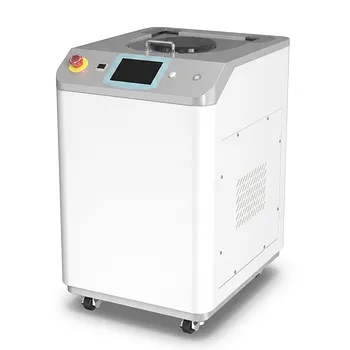
High Viscosity Planetary Centrifugal Mixing and Vacuum Defoaming Machine for Laboratory Material Preparation
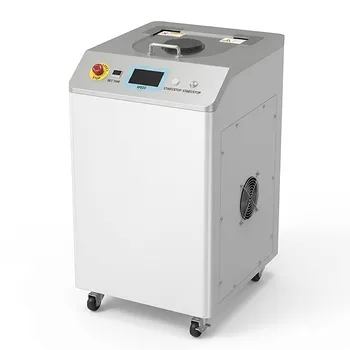
High Viscosity Planetary Centrifugal Vacuum Mixer for Material Defoaming and Uniform Mixing
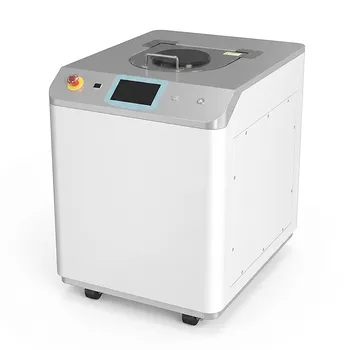
Industrial Planetary Centrifugal Vacuum Defoaming Mixer for High Viscosity Paste and Advanced Material Science
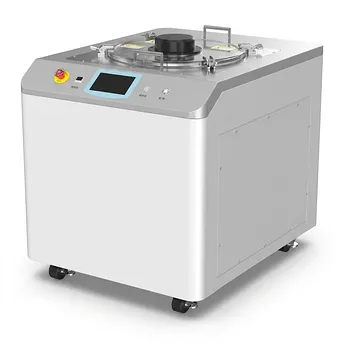
Industrial Planetary Centrifugal Vacuum Defoaming Mixer for High Viscosity Paste and Powder Homogenization
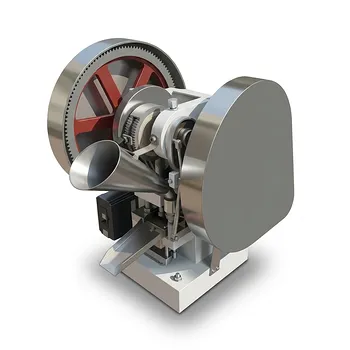
6 Ton Variable Frequency Single Punch Tablet Press