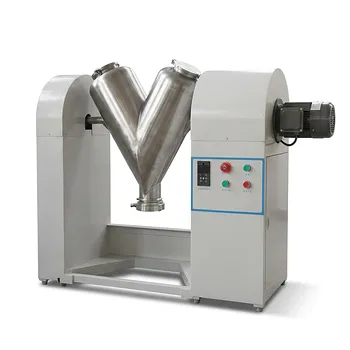
Why is a vacuum defoaming mixer essential in the slip casting process for silicon carbide ceramics? Key Benefits.
Updated 5 months ago
The necessity of a vacuum defoaming mixer stems from the extreme sensitivity of silicon carbide to microscopic air entrapment during slurry preparation. By combining high-speed mixing with a negative pressure environment, these mixers eliminate micro-bubbles from high-viscosity slurries of micro-powders and thermoplastic binders. This process ensures a uniform internal structure, which is vital for preventing macroscopic defects and surface pitting in the final sintered ceramic.
To achieve the high-density requirements of silicon carbide ceramics, slurry preparation must eliminate all internal gas. A vacuum defoaming mixer provides the dual benefit of high-intensity homogenization and total degassing, which is critical for preventing structural failure and surface degradation in the final product.
The Mechanics of Slurry Homogenization
Overcoming High-Viscosity Resistance
Silicon carbide slip casting often utilizes high solid-content slurries and thermoplastic binders, which create a thick, viscous environment. In these materials, air bubbles lack the buoyancy required to escape to the surface naturally, remaining trapped within the mixture.
The Role of Negative Pressure
A vacuum defoaming mixer utilizes centrifugal force to bring micro-bubbles to the surface while maintaining a negative pressure environment. This vacuum effectively expands and ruptures the bubbles, ensuring that even the smallest pockets of air are removed before the slurry is injected into a mold.
Achieving Chemical Uniformity
Beyond degassing, the high-speed revolution and rotation ensure that binders and micro-powders are perfectly distributed. This level of homogenization is necessary to prevent localized variations in density that could lead to warping during the sintering phase.
Why Micro-Bubbles are Catastrophic for Silicon Carbide
Impact on Structural Durability
In the final ceramic matrix, trapped air bubbles transform into internal pore defects. These pores act as stress concentration points that significantly reduce the tensile strength and structural durability of the silicon carbide component.
Prevention of Surface Pitting
For applications requiring optical surfaces, even trace amounts of air can lead to the formation of microscopic pits after sintering. Vacuum defoaming ensures the green body is sufficiently dense to allow for the high-precision polishing required for mirrors or lenses.
Mitigating Thermal and Gas Expansion Risks
During the thermal debinding stage, any entrapped gas will expand rapidly as temperatures rise. If these gases cannot escape through the dense ceramic structure, they will cause internal cracks or "bloating," leading to the total failure of the part.
Understanding the Trade-offs
Process Speed vs. Thermal Degradation
While high-speed mixing is necessary for homogenization, it generates frictional heat. If the temperature is not carefully controlled, it can prematurely degrade thermoplastic binders or alter the slurry's rheology.
Equipment Cost vs. Quality Assurance
The complexity of a high-vacuum system increases the initial capital investment compared to standard atmospheric mixers. However, the cost of scrap rates and structural failures in sintered silicon carbide usually outweighs the savings of using inferior mixing methods.
How to Apply This to Your Production
Tailoring the Process to Your Goal
The parameters of your vacuum defoaming should be adjusted based on the specific requirements of your final silicon carbide part.
- If your primary focus is optical-grade surfaces: Utilize the highest possible vacuum levels and extended defoaming cycles to ensure zero-pore density at the surface.
- If your primary focus is mechanical strength: Prioritize high-shear mixing to ensure total binder-to-powder wetting, which eliminates the microscopic voids that trigger fractures.
- If your primary focus is high-volume slip casting: Implement a dual-chamber or planetary system that allows for rapid degassing without over-heating the thermoplastic components.
Ensuring the complete removal of micro-bubbles is the single most important step in transitioning from a raw powder mixture to a high-performance silicon carbide ceramic.
Summary Table:
| Feature | Mechanism | Benefit for SiC Ceramics |
|---|---|---|
| Negative Pressure | Expands and ruptures micro-bubbles | Eliminates internal pores and surface pitting |
| Centrifugal Force | Forces trapped air to the slurry surface | Ensures high-density green body structure |
| High-Shear Mixing | Homogenizes powder and binders | Prevents warping and cracks during sintering |
| Thermal Control | Manages frictional heat during mixing | Protects thermoplastic binders from degradation |
Elevate Your Material Science Precision
Are you struggling with microscopic defects or inconsistent slurry density in your ceramic production? We provide complete laboratory sample preparation solutions tailored for material science, specializing in advanced powder processing and compaction equipment.
Our extensive product lines are designed to ensure total control over your material characteristics:
- Powder Processing: High-efficiency crushers, liquid nitrogen cryogenic grinders, and a full range of mills (planetary ball, jet, and rotor).
- Mixing & Degassing: Professional vacuum defoaming mixers and powder mixers for perfect homogenization.
- Sizing: Sieve shakers and high-precision test sieves.
- Compaction & Sintering: A full spectrum of hydraulic presses, including Cold/Warm Isostatic Presses (CIP/WIP), XRF pellet presses, and vacuum hot presses.
Don't let micro-bubbles compromise your structural integrity. Contact our experts today to discuss how our specialized equipment can optimize your workflow and improve your final product quality.
References
- P. S. Grinchuk, M. Yu. Liakh. High thermal conductivity silicon-carbide ceramics for large-size space optics. DOI: 10.29235/1561-8323-2019-63-2-223-234
Mentioned Products
- High Viscosity Planetary Centrifugal Vacuum Mixer for Material Defoaming and Uniform Mixing
- Industrial Vacuum Kneader for High-Viscosity Silicone, Rubber, and Compound Mixing
- 非介入式材料均质机真空脱泡行星搅拌高粘度混合设备
- Industrial Planetary Centrifugal Vacuum Defoaming Mixer for High Viscosity Paste and Advanced Material Science
- Dual Cup Vacuum Centrifugal Mixer Planetary Paste Defoaming Machine Industrial Material Processor
People Also Ask
- What core functions does a planetary centrifugal mixer perform? Optimize Hard Carbon Anode Slurry & Degassing
- Why is a planetary centrifugal mixer recommended for geopolymer slurries? Achieve high-shear, air-free homogenization.
- Why is a planetary centrifugal mixer utilized for wood powder and HPMC? Achieve uniform dispersion & rapid defoaming.
- How does a planetary centrifugal mixer address key challenges in Tyr-CDs@EVA optical films? Ensure Optical Clarity.
- What is the role of a planetary centrifugal mixer in UHTC slurry preparation? Achieve Void-Free, High-Viscosity Mixing

Tech Team · PowderPreparation
Last updated on May 14, 2026
Related Products
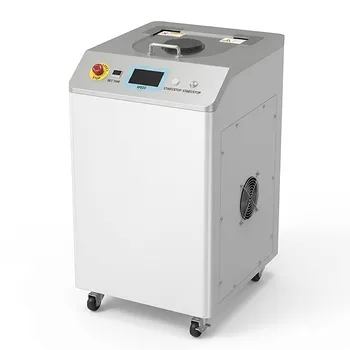
High Viscosity Planetary Centrifugal Vacuum Mixer for Material Defoaming and Uniform Mixing
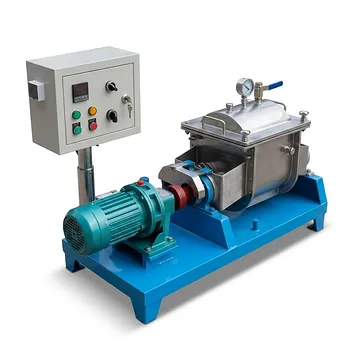
Industrial Vacuum Kneader for High-Viscosity Silicone, Rubber, and Compound Mixing
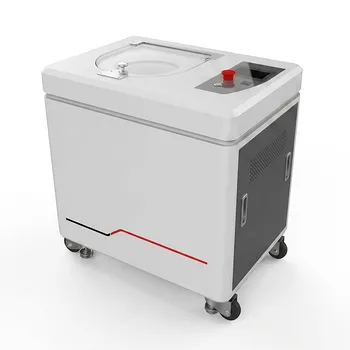
非介入式材料均质机真空脱泡行星搅拌高粘度混合设备
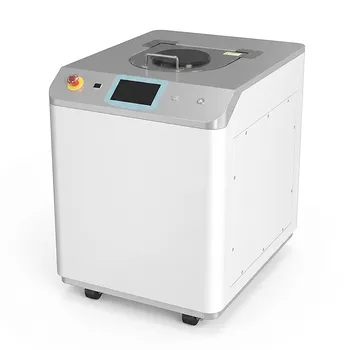
Industrial Planetary Centrifugal Vacuum Defoaming Mixer for High Viscosity Paste and Advanced Material Science
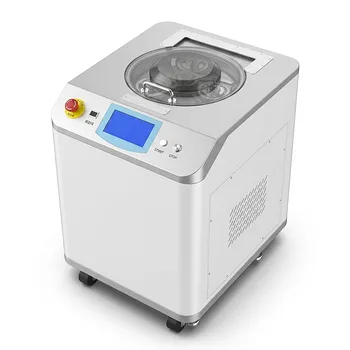
Dual Cup Vacuum Centrifugal Mixer Planetary Paste Defoaming Machine Industrial Material Processor
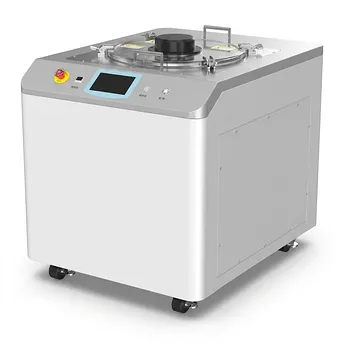
Industrial Planetary Centrifugal Vacuum Defoaming Mixer for High Viscosity Paste and Powder Homogenization
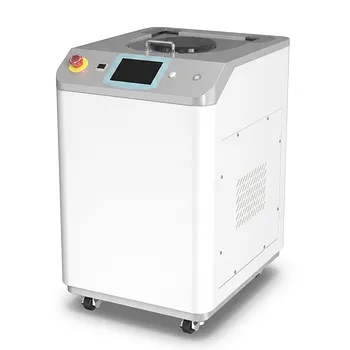
High Viscosity Planetary Centrifugal Mixing and Vacuum Defoaming Machine for Laboratory Material Preparation
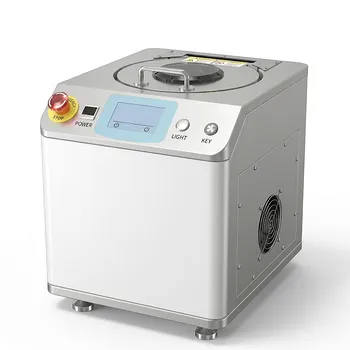
High Efficiency Vacuum Planetary Centrifugal Mixer and Defoaming Machine for Industrial Material Research and Precise Laboratory Powder Dispersion
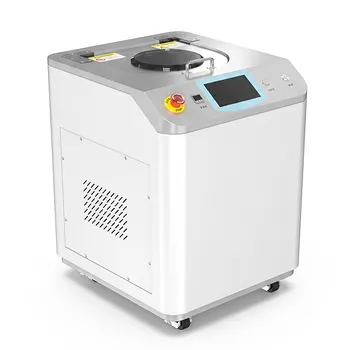
High Speed Vacuum Planetary Centrifugal Mixer and Defoamer for Industrial Paste Processing
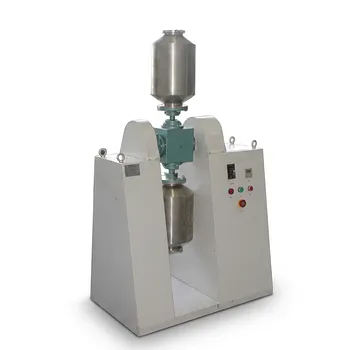
Multi Dimensional Universal Mixer for High Uniformity Powder Blending
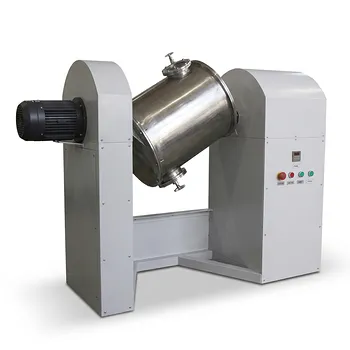
Inclined Mixer for Homogeneous Powder Blending and Grinding
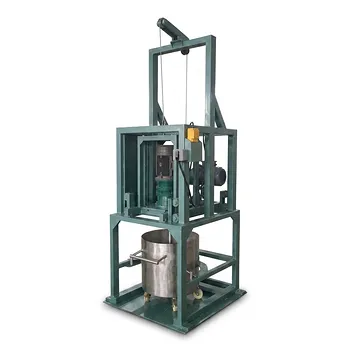
High-Speed Simple Disperser for Efficient Mixing, Dispersion, and Emulsification
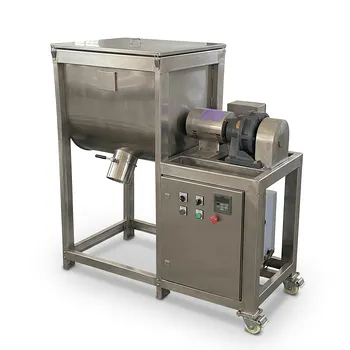
Horizontal Ribbon Mixer for Dry Powder and Slurry Blending