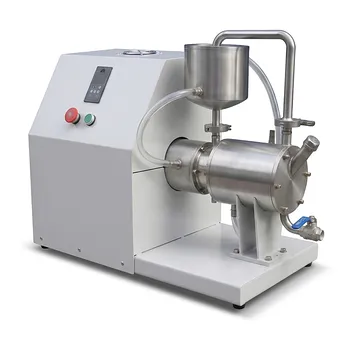
What is the function of a laboratory mill in Cassia tora L. seed analysis? Master Precision Thermal Data Prep.
Updated 4 months ago
The laboratory mill serves as the critical bridge between raw agricultural materials and precise analytical data. It transforms irregular Cassia tora L. seeds into a uniform fine powder, or "meal," which significantly increases the sample's surface area. This homogenization process is essential because it eliminates measurement errors inherent in the seeds' natural, irregular geometry, allowing for the precise calculation of thermal constants.
The primary function of a laboratory mill is to ensure consistent particle fineness, which standardizes the sample environment. This process is necessary to obtain accurate and repeatable measurements of specific heat capacity, thermal conductivity, and thermal diffusivity.
Enhancing Data Accuracy Through Homogenization
Eliminating Geometric Interference
Raw Cassia tora L. seeds possess irregular shapes that create unpredictable air gaps and contact points during testing. By grinding these seeds into a fine powder, the laboratory mill creates a uniform medium that provides consistent contact with thermal sensors.
Maximizing Surface Area for Heat Transfer
The milling process facilitates "comminution," which is the controlled reduction of solid materials into finer particles. This increase in surface area allows heat to distribute more evenly through the sample, ensuring that the measured thermal properties reflect the material itself rather than the voids between whole seeds.
Improving Specific Thermal Measurements
Specific Heat Capacity and Thermal Conductivity
A laboratory mill ensures that the sample meal is representative of the entire seed batch. This consistency is vital for measuring specific heat capacity and thermal conductivity, as it allows for a stable and repeatable path for heat flow during the analysis.
Thermal Diffusivity Analysis
Thermal diffusivity depends on how quickly heat moves through a material relative to its ability to store that heat. Grinding the seeds into a fine powder ensures that the density of the sample is controlled and uniform, which is a prerequisite for calculating accurate diffusivity rates.
Understanding the Trade-offs in Sample Comminution
The Risk of Thermal Degradation
While grinding is necessary, the mechanical action of a laboratory mill involves impact, friction, and shear. These forces generate heat, which can potentially alter the chemical or physical state of the Cassia tora L. seeds if the milling duration is not carefully controlled.
Particle Size Consistency
Achieving the correct particle fineness is a balance; samples that are too coarse may still harbor geometric errors, while excessively fine powders might behave differently under certain thermal tests. Maintaining a standardized mesh size is critical to ensuring that data remains comparable across different studies.
Optimizing Sample Prep for Your Research Goals
How to Apply This to Your Project
When preparing Cassia tora L. seeds for thermal analysis, your milling strategy should align with your specific research objectives to ensure data integrity.
- If your primary focus is thermal conductivity: Ensure the mill produces a highly homogeneous powder to minimize internal air pockets that could act as insulators.
- If your primary focus is specific heat capacity: Use a mill capable of short, pulsed bursts to prevent frictional heat from pre-stressing the seeds' thermal profile.
- If your primary focus is sub-micron analysis: Utilize a high-precision mill capable of nanoscale reduction to observe how particle size itself influences thermal energy transfer.
By meticulously controlling the milling process, you transform a variable biological specimen into a standardized technical sample ready for rigorous thermal characterization.
Summary Table:
| Milling Function | Benefit for Cassia tora L. | Impact on Thermal Data |
|---|---|---|
| Homogenization | Eliminates irregular seed geometry | Reduces measurement errors & air gaps |
| Surface Area Increase | Maximizes contact with sensors | Enhances heat transfer uniformity |
| Particle Control | Standardizes mesh/particle size | Ensures repeatable conductivity & diffusivity |
| Controlled Comminution | Regulates mechanical forces | Prevents thermal degradation during prep |
Elevate Your Research with Precision Sample Preparation
Achieving accurate thermal analysis for materials like Cassia tora L. seeds requires more than just a basic grind—it requires specialized equipment that ensures homogeneity without compromising sample integrity.
We provide complete laboratory sample preparation solutions for material science, specializing in high-performance powder processing and compaction equipment. Whether your research demands cryogenic grinders to prevent thermal degradation, planetary ball mills for ultra-fine particle reduction, or hydraulic presses (CIP/WIP/XRF) for creating uniform pellets, our extensive product line is designed to deliver repeatable results.
Our expertise covers everything from initial crushing (jaw/roll) to advanced mixing and sieving, ensuring your samples meet the most rigorous standards for thermal conductivity and diffusivity testing.
Ready to optimize your laboratory workflow? Contact us today to find the perfect milling solution for your project!
References
- Fei Peng, Dan Liu. Engineering properties of Cassia tora L. seeds and meal as a function of moisture content. DOI: 10.1038/s41598-022-12748-7
Mentioned Products
- Laboratory Disc Mill Medium Hard Material Grinding Coal Coke Ore Pulverizer
- Laboratory Hammer Mill for Coal Quality Analysis and Brittle Mineral Grinding
- Laboratory Disc Mill for Fine Sample Preparation of Hard and Brittle Materials
- Industrial Knife Mill for Food and Biological Sample Preparation High Speed Laboratory Homogenizer
- Laboratory Knife Mill for Large Volume Sample Homogenization and Food Preparation
People Also Ask
- What is the primary function of a laboratory disc mill for oyster shells? Boost Reactivity & Analytical Precision
- What is the purpose of using a laboratory mill to grind dried precipitates? Optimize TiO2/AuNRs Catalyst Homogeneity
- What role does a laboratory mill play in the study of lignite coal co-combustion? Optimizing Fuel Blends and Reactivity
- What function does a laboratory mill serve in corn starch saccharification experiments? Optimize Surface Area & Reactions
- What is the role of a disk mill in the sample preparation of natural clinoptilolite? Enhance Reactivity & Precision

Tech Team · PowderPreparation
Last updated on Jun 03, 2026
Related Products
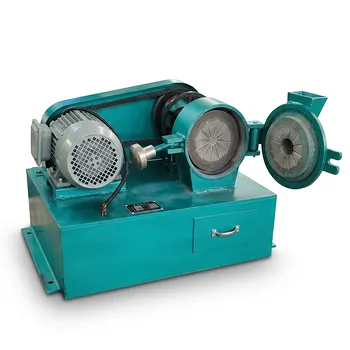
Laboratory Disc Mill Medium Hard Material Grinding Coal Coke Ore Pulverizer
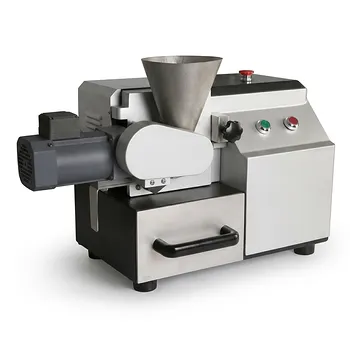
Laboratory Hammer Mill for Coal Quality Analysis and Brittle Mineral Grinding
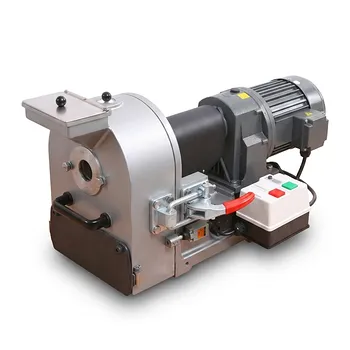
Laboratory Disc Mill for Fine Sample Preparation of Hard and Brittle Materials
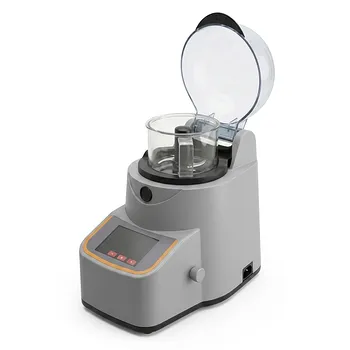
Industrial Knife Mill for Food and Biological Sample Preparation High Speed Laboratory Homogenizer
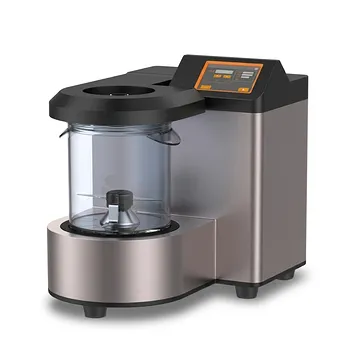
Laboratory Knife Mill for Large Volume Sample Homogenization and Food Preparation
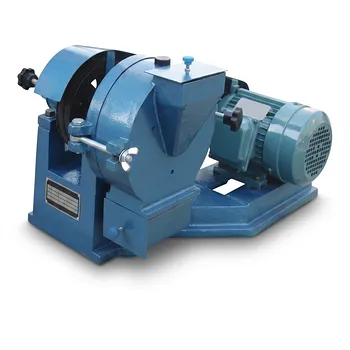
Laboratory Disc Mill for Ore and Mineral Sample Preparation
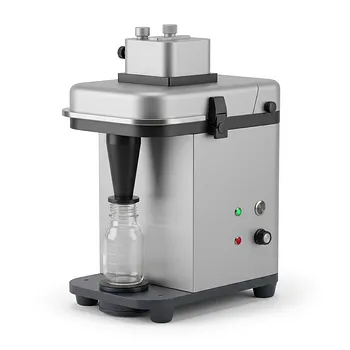
Cyclonic Laboratory Mill for NIR Spectroscopy Sample Preparation Food and Feed Grinding
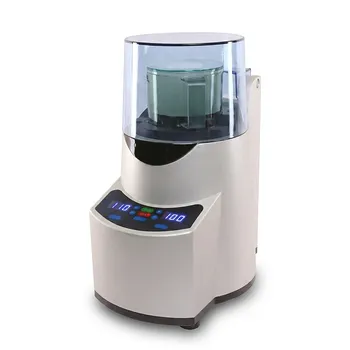
High Speed Laboratory Knife Mill for Oily Fibrous and Wet Sample Homogenization
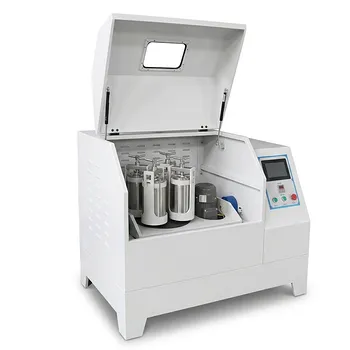
360° Rotating Omnidirectional Laboratory Planetary Ball Mill for Homogeneous Ultra-Fine Grinding and Mixing
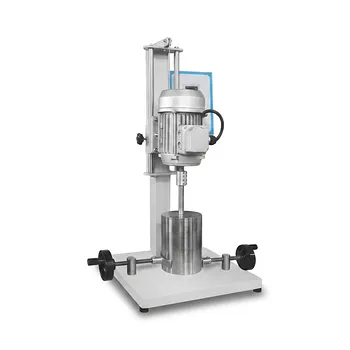
Laboratory Basket Sand Mill for Wet Grinding and Dispersion of Viscous Slurries
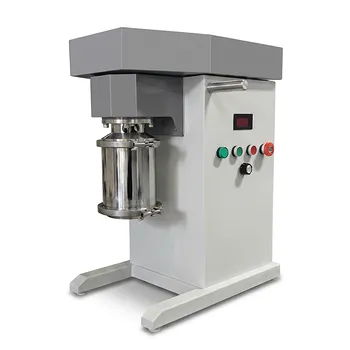
Nano Laboratory Bead Mill Desktop Sub Micron Sand Mill Screenless Seal Less Powder Grinder
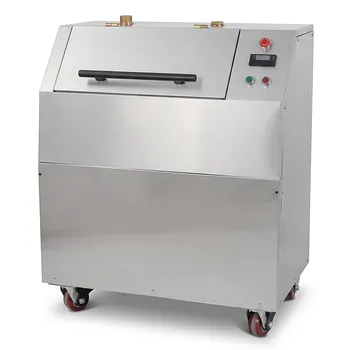
Vibratory Disc Mill for Rapid Fine Grinding and High Throughput Sample Preparation of Hard and Brittle Materials
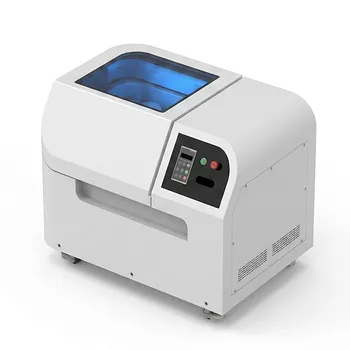
8L Planetary Ball Mill for Laboratory Grinding and Sample Preparation
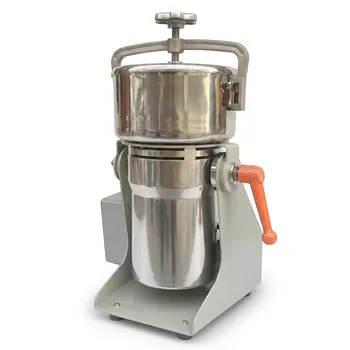
High Speed Laboratory Grinder Efficient Stainless Steel Powder Pulverizer Universal Material Science Mill for Sample Preparation
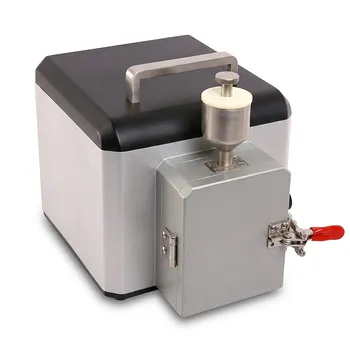
Portable Cutting Mill for Laboratory Sample Preparation and RoHS WEEE Compliance Testing
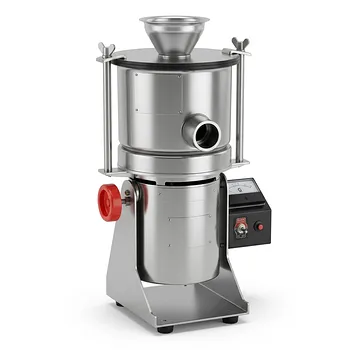
Laboratory Ultrafine Impact and Airflow Grinder for Precise Particle Size Control
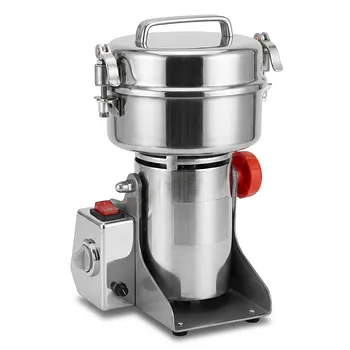
High Speed Laboratory Powder Grinder Small Batch Sample Preparation Mill
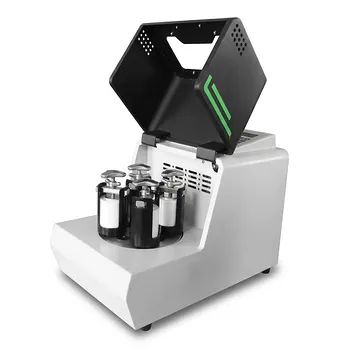
Miniature Planetary Ball Mill with Vacuum Grinding and High Efficiency for Laboratory Sample Preparation
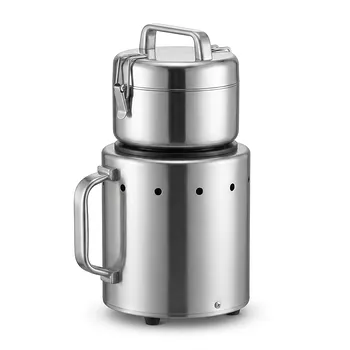
Small High Speed Grinder for Laboratory Sample Preparation