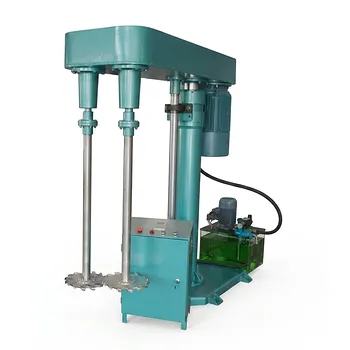
Why is a series installation of continuous mixers recommended for 1:1000 ratios? Master High-Precision Powder Blending
Updated 5 months ago
Series installations are necessary because individual mixing units have inherent mechanical limits on the component ratios they can effectively homogenize. For an extreme ratio of 1:1000, a single mixer cannot reliably distribute a tiny amount of additive into a massive bulk volume without significant risk of segregation. By connecting mixers in series, you implement a staged mixing strategy that progressively increases precision to ensure the final product meets high-standard quality requirements.
To achieve a 1:1000 ratio, manufacturers must move away from single-pass processing and adopt a multi-stage approach. By using specialized mixers in sequence, the system incrementally dilutes the minor component, ensuring uniform distribution that is physically impossible to achieve in a single vessel.
Overcoming the Limitations of Single-Stage Mixing
The Physical Limits of Standard Equipment
Most single mixing units, such as standard drum-type mixers, are designed to handle ratios between 1:40 and 1:500. Attempting to process a 1:1000 ratio in these units often results in "dead zones" where the minor component never reaches.
The Risk of Material Segregation
When the ratio is too high for a single machine, the minor component tends to clump or settle rather than disperse. This leads to an inconsistent final product that fails to meet high-standard quality requirements.
The Logic of Staged Dilution
A series installation allows for a progressive increase in mixing precision. For example, a continuous drum mixer can handle an initial 1:10 ratio, which is then fed into a second mixer to reach the final 1:1000 target.
Engineering Advantages of Series Vibratory Systems
Managing the Boiling Layer
In a series setup involving a vibratory mixer, components are added in stages across different screw grooves. This design prevents a sudden increase in the boiling layer height, which maintains the stability of the mixture throughout the process.
Stabilizing Material Flow
Adding materials in stages reduces fluctuations in conveying speed. Consistent speed is critical because it ensures that the residence time within the mixer remains uniform for all particles.
Multi-Stage Distribution Precision
By utilizing multi-stage distribution, the equipment can handle large differences in powder proportions. This specific architecture is ideal for preparing high-quality powder compositions where the additive is a fraction of a percent.
Understanding the Trade-offs
Increased System Complexity
Implementing a series installation requires more floor space and a more sophisticated control system to synchronize the mixers. If the flow rates between the two units are not perfectly matched, the system can experience bottlenecks or material overflow.
Maintenance and Cleaning Requirements
With multiple units in the line, the time required for cleaning and maintenance increases. This is particularly relevant in industries with frequent product changeovers, where cross-contamination must be strictly avoided.
Potential for Inter-stage Segregation
While the mixers themselves ensure homogeneity, the transfer points between them must be carefully engineered. If the material "drops" or vibrates excessively between stages, the components may begin to unmix or segregate before entering the second unit.
Applying Series Mixing to Your Project
Recommendations Based on Your Objectives
- If your primary focus is Maximum Homogeneity: Utilize a drum mixer for the initial pre-blend followed by a vibratory mixer with continuous dilution to ensure the minor component is perfectly dispersed.
- If your primary focus is High Throughput: Ensure that the conveying speeds of all mixers in the series are electronically synchronized to prevent material buildup and maintain a steady output.
- If your primary focus is Material Stability: Choose a vibratory mixer that adds components across multiple screw grooves to keep the boiling layer low and prevent particle damage.
By adopting a staged approach through series installation, you transform a high-risk 1:1000 mixing task into a controlled, high-precision industrial process.
Summary Table:
| Feature | Single-Stage Mixing | Series (Multi-Stage) Installation |
|---|---|---|
| Ratio Capability | Typically limited to 1:500 | Effectively handles 1:1000+ |
| Homogeneity | High risk of "dead zones" | Progressive, high-precision distribution |
| Segregation Risk | High (clumping/settling) | Low (controlled staged dilution) |
| Process Stability | Fluctuating boiling layers | Stabilized flow and conveying speed |
| Best Use Case | Simple bulk mixtures | High-standard, complex compositions |
Elevate Your Material Preparation with Precision Engineering
Achieving a 1:1000 mixing ratio requires more than just a machine—it requires a strategic processing solution. Providing complete laboratory sample preparation solutions for material science, we specialize in high-performance powder processing and compaction equipment designed to meet the most rigorous standards.
Our extensive product line includes:
- Mixing Excellence: Advanced powder mixers and defoaming mixers for perfect homogeneity.
- Size Reduction: Precision crushers (jaw/roll) and a variety of mills (planetary ball, jet, sand/bead, rotor).
- Sample Compaction: A full spectrum of hydraulic presses, including Cold/Warm Isostatic Presses (CIP/WIP), vacuum hot presses, and XRF pellet presses.
- Sieving & Classification: Vibratory and air-jet sieve shakers with specialized test meshes.
Ready to optimize your lab or production efficiency?
Contact our technical experts today to discover how our tailored equipment solutions can transform your material processing workflows.
References
- Д. М. Бородулин, С А Ратников. Simulation of Mixing Process in Drum Mixer with Different Topology of Material Flows. DOI: 10.2991/agrosmart-18.2018.128
Mentioned Products
- Continuous Feeding Grinder High Efficiency Pulverizer for Lab Sample Preparation
- Continuous Feeding Grinding Mill for Dry Fibrous Tough and Hard Materials in Laboratory and Small Production
- Water Cooled Graduated Continuous Feed Pulverizer for Industrial Powder Processing and Laboratory Material Preparation
- Industrial Planetary Centrifugal Vacuum Defoaming Mixer for High Viscosity Paste and Powder Homogenization
- Inclined Mixer for Homogeneous Powder Blending and Grinding
People Also Ask
- Why must soil samples be ground before XRD or XRF analysis? Ensure Precision & Homogeneity in Lab Results
- What is the function of a laboratory blender for mixed fuels? Achieving Microscopic Uniformity for Accurate Analysis
- What is the function of a laboratory pulverizer in Boerhavia diffusa-based adsorbent prep? Maximize Surface Area
- What are the technical advantages of using a high-speed laboratory pulverizer for grinding tablets into powders? 20K RPM
- What is the function of laboratory-scale pulverizing equipment in bio-adsorptive film prep? Maximize Surface Area

Tech Team · PowderPreparation
Last updated on May 14, 2026
Related Products
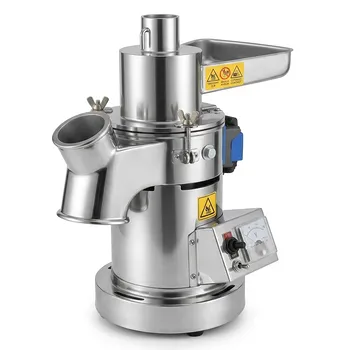
Continuous Feeding Grinder High Efficiency Pulverizer for Lab Sample Preparation
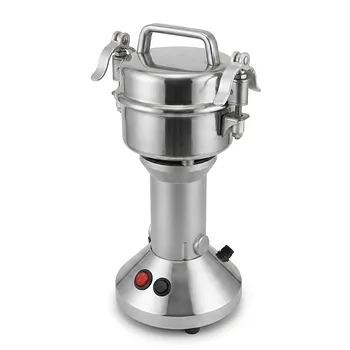
Continuous Feeding Grinding Mill for Dry Fibrous Tough and Hard Materials in Laboratory and Small Production
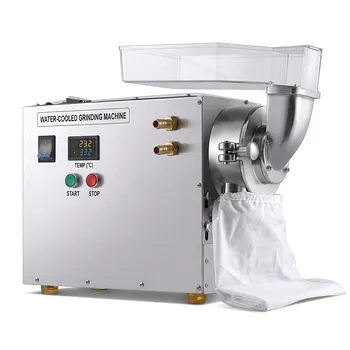
Water Cooled Graduated Continuous Feed Pulverizer for Industrial Powder Processing and Laboratory Material Preparation
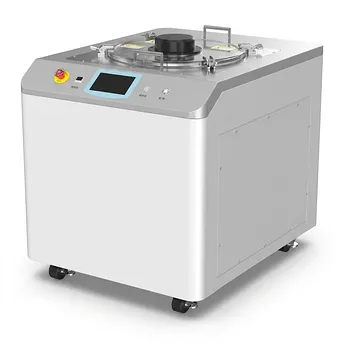
Industrial Planetary Centrifugal Vacuum Defoaming Mixer for High Viscosity Paste and Powder Homogenization
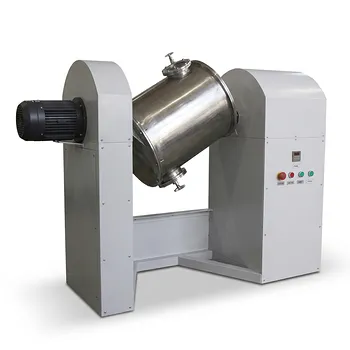
Inclined Mixer for Homogeneous Powder Blending and Grinding
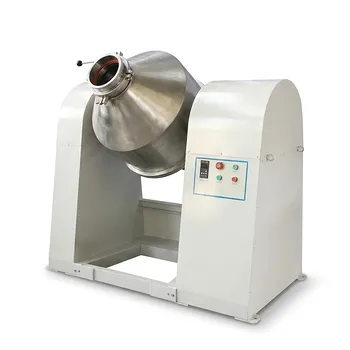
Industrial Double Cone Mixer for Powder Blending and Homogeneous Mixing
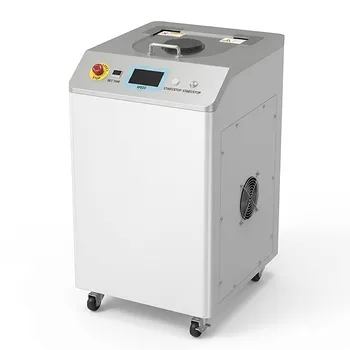
High Viscosity Planetary Centrifugal Vacuum Mixer for Material Defoaming and Uniform Mixing
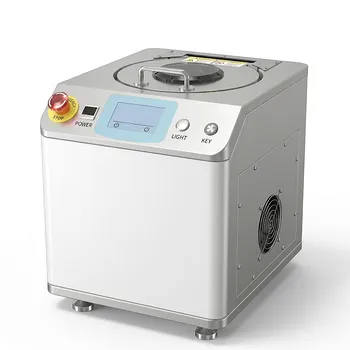
High Efficiency Vacuum Planetary Centrifugal Mixer and Defoaming Machine for Industrial Material Research and Precise Laboratory Powder Dispersion
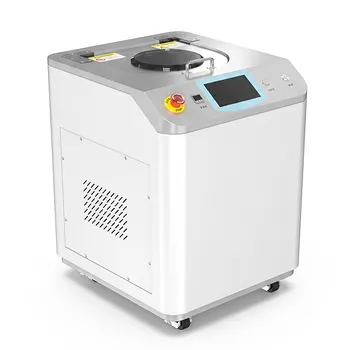
High Speed Vacuum Planetary Centrifugal Mixer and Defoamer for Industrial Paste Processing
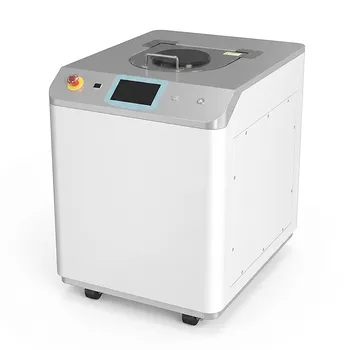
Industrial Planetary Centrifugal Vacuum Defoaming Mixer for High Viscosity Paste and Advanced Material Science
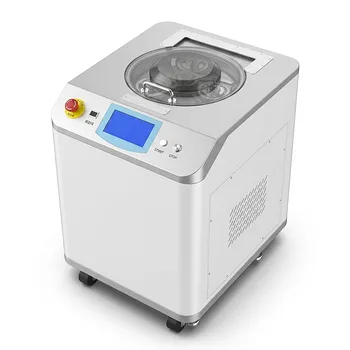
Dual Cup Vacuum Centrifugal Mixer Planetary Paste Defoaming Machine Industrial Material Processor
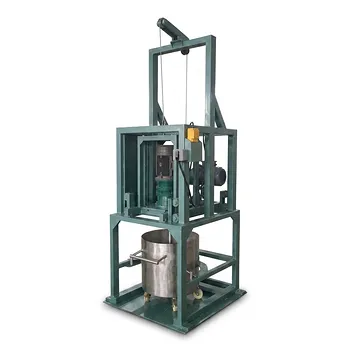
High-Speed Simple Disperser for Efficient Mixing, Dispersion, and Emulsification
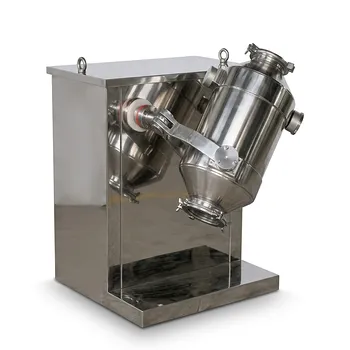
Three-Dimensional Motion Mixer for Laboratory Powder and Granule Blending
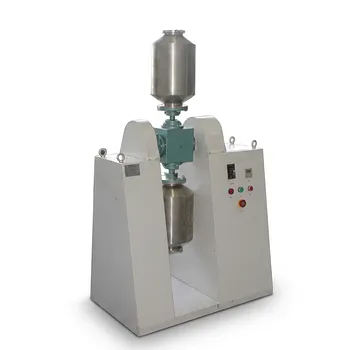
Multi Dimensional Universal Mixer for High Uniformity Powder Blending
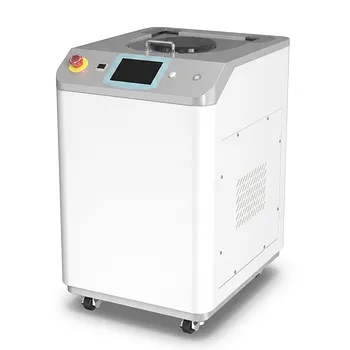
High Viscosity Planetary Centrifugal Mixing and Vacuum Defoaming Machine for Laboratory Material Preparation
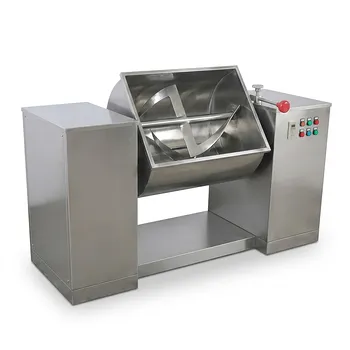
Horizontal Trough Mixer for Uniform Powder and Paste Blending
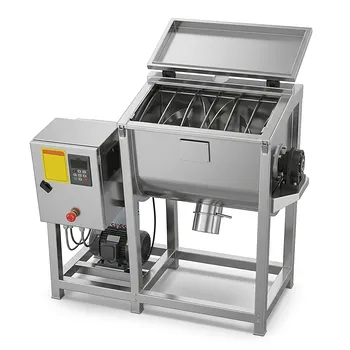
Horizontal Ribbon Mixer for Uniform Powder and Slurry Mixing
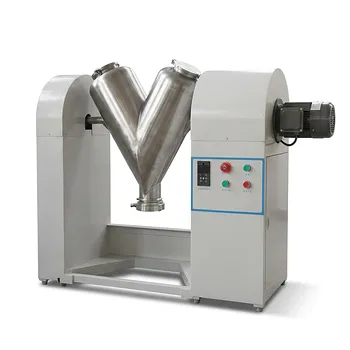
V-Type Powder Mixer for Uniform Blending of Dry Powders and Granules
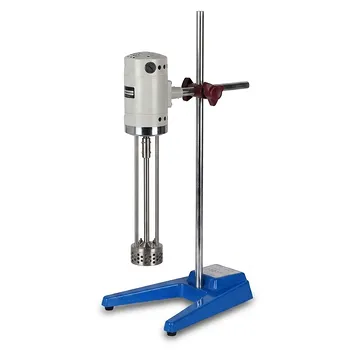
High Shear Laboratory Emulsifier for Mixing and Homogenization