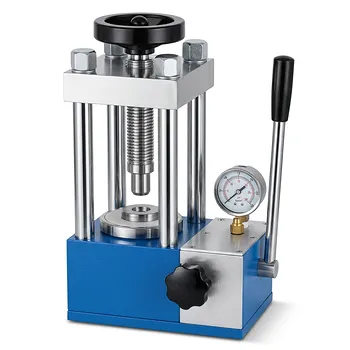
Why is a rapid pressure release strategy required after pressing composite material green bodies? Prevent Cracking
Updated 5 months ago
The necessity of a rapid pressure release strategy after pressing composite green bodies is rooted in the management of internal energy. Specifically, this strategy is designed to suppress the elastic recovery, commonly known as "spring-back," that occurs when a high-load forming pressure is removed.
A rapid pressure release strategy serves as a critical stabilization phase that prevents the stored elastic energy within a compacted powder from causing structural failure. By controlled management of this transition, manufacturers can prevent delamination and cracking while ensuring the removal of trapped gases.
The Mechanics of Elastic Recovery (Spring-Back)
Suppressing the Spring-Back Effect
During high-pressure compaction, particles undergo both plastic deformation and elastic compression. When pressure is released, the material naturally attempts to return to its original volume, a phenomenon called elastic recovery.
Preventing Internal Stress Failures
If the transition from high load to zero pressure is not managed via a specific release strategy, the sudden internal stress changes can exceed the green body's strength. This leads to immediate structural failures, such as internal delamination or visible surface cracking.
Challenges with Multi-Component Composites
This strategy is particularly vital for complex materials like Al-SiC-TiC-TiB2. These composites contain multiple hard particles with different elastic moduli, making them highly susceptible to uneven stress distribution during demolding.
Gas Discharge and Microstructural Integrity
Venting Volatile Byproducts
In hot pressing cycles, chemical reactions or residual moisture can generate internal gases. A strategic decompression interval, often around 30 seconds, provides a necessary window for these gases to be discharged safely from the matrix.
Eliminating Pore Defects
If gases are trapped by a lack of proper venting, they form internal bubbles and pore defects. A controlled release strategy ensures the continuity of the microstructure, preventing "bloating" or internal voids that would weaken the final ceramic.
Maintaining Geometric Precision
By managing the exit of air and volatiles, the strategy ensures the green body maintains its specific geometric shape. This precision is essential for parts that must undergo subsequent sintering without severe dimensional deformation.
Understanding the Trade-offs
Release Speed vs. Material Integrity
While a "rapid" strategy is used to suppress spring-back, "rapid" is a relative term that must be balanced against the material's fragility. Releasing pressure too slowly can lead to prolonged friction between the sample and the mold, while releasing too fast can cause explosive decompression of trapped gases.
Density Gradients and Friction
High-pressure compaction (up to 610 MPa) creates significant friction between powder particles and mold walls. The release strategy must account for these density gradients to ensure that the internal bonding forces created during pressing are not severed during the demolding process.
How to Apply This to Your Process
Implementation Based on Material Goals
To successfully integrate a pressure release strategy, you must align the decompression parameters with the specific characteristics of your composite mixture.
- If your primary focus is Structural Integrity of Hard Particles: Use a rapid release strategy specifically designed to counteract the high elastic modulus of ceramic reinforcements, preventing delamination.
- If your primary focus is High-Density Densification: Ensure the release strategy includes a venting pause to allow gas discharge, which prevents internal voids from forming during the transition to sintering.
- If your primary focus is Geometric Accuracy: Closely regulate the pressing force and release timing to minimize macroscopic defects and ensure consistent volume shrinkage during the final heat treatment.
A properly executed pressure release strategy transforms a fragile powder compact into a robust green body ready for high-temperature densification.
Summary Table:
| Key Factor | Role of Rapid Pressure Release Strategy | Benefit to Green Body |
|---|---|---|
| Elastic Recovery | Suppresses the "spring-back" effect after high-load forming | Prevents internal delamination and surface cracks |
| Internal Stress | Manages the transition from high load to zero pressure | Ensures bonding forces exceed internal stress |
| Gas Discharge | Provides a controlled window (e.g., 30s) for gas exit | Eliminates internal bubbles, pores, and "bloating" |
| Shape Retention | Regulates decompression to maintain specific geometry | Ensures high precision for subsequent sintering |
Optimize Your Material Densification with Precision Equipment
Achieving the perfect green body requires more than just pressure—it requires precise control over the entire compaction cycle. At KinTek, we provide complete laboratory sample preparation solutions for material science, specializing in advanced powder processing and compaction equipment.
Our extensive range includes:
- Hydraulic Presses: A full spectrum of standard lab presses, XRF pellet presses, and Vacuum Hot Presses.
- Isostatic Pressing: High-performance Cold/Warm Isostatic Presses (CIP/WIP) for uniform density.
- Powder Processing: Crushers, cryogenic grinders, and various mills (planetary ball, jet, rotor) to prepare your composite mixtures.
- Advanced Mixing: Powder and defoaming mixers to ensure microstructural homogeneity.
Whether you are working with complex composites like Al-SiC or advanced ceramics, our equipment is designed to help you manage elastic recovery and eliminate structural defects.
Contact our material science experts today to find the ideal solution for your laboratory or production line!
References
- Dawit Mekonen, Habtamu Tsegaye. Investigation of the effect of SiC, TiC and TiB2 particles on the microstructure and mechanical properties of aluminum under the local laser melting influence. DOI: 10.56975/ijsdr.v10i7.303893
Mentioned Products
- Ordinary Type Rotary Tablet Press for Pharmaceutical Chemical Food Electronic Industries
- Hydraulic Double Shaft Disperser for High Viscosity Liquid Mixing and Dispersion
- 6-Ton Small Single-Punch Tablet Press — Laboratory Powder & Granule Tableting Equipment / Tablet Forming Machine
- Enhanced 9 Punch Rotary Tablet Press for Powder Compaction
- 5 Ton Single Punch Tablet Press Laboratory Small Batch Production
People Also Ask
- Why is a laboratory hydraulic press required for FT-IR KBr pellets? Achieve Precise Sample Clarity for ZrC–SiC Analysis
- Why is a laboratory hydraulic press required to compress oyster shell powder before XRF analysis? Improve Data Accuracy.
- Why is vacuum sealing and flexible packaging necessary for Aluminum Titanate powders during CIP? Ensure Peak Density
- What are the advantages of using hardened steel molds and graphite spray for titanium powder? Ensure structural integrity
- What role does a high-strength stainless steel mold kit play in the uniaxial die compaction process? Ensuring Precision

Tech Team · PowderPreparation
Last updated on May 14, 2026
Related Products
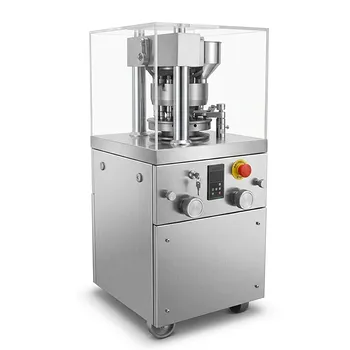
Ordinary Type Rotary Tablet Press for Pharmaceutical Chemical Food Electronic Industries
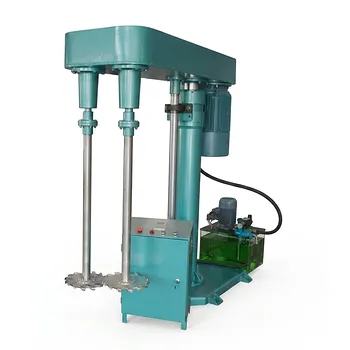
Hydraulic Double Shaft Disperser for High Viscosity Liquid Mixing and Dispersion
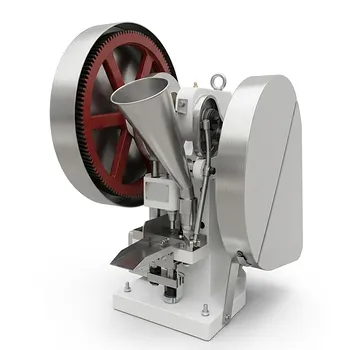
6-Ton Small Single-Punch Tablet Press — Laboratory Powder & Granule Tableting Equipment / Tablet Forming Machine
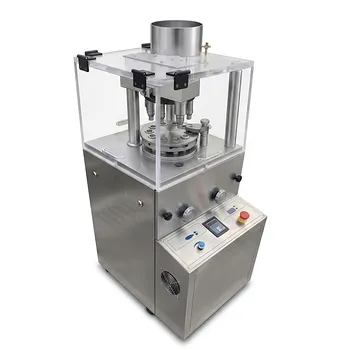
Enhanced 9 Punch Rotary Tablet Press for Powder Compaction
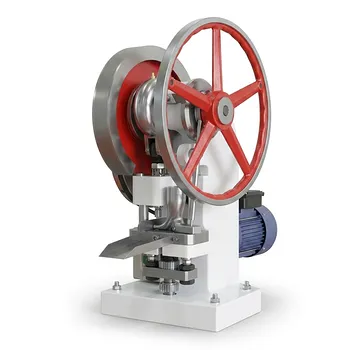
5 Ton Single Punch Tablet Press Laboratory Small Batch Production
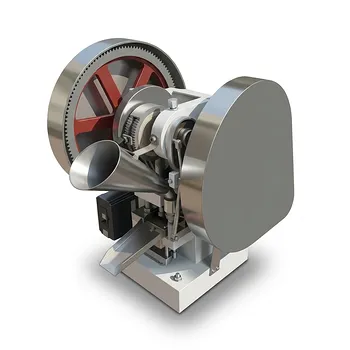
6 Ton Variable Frequency Single Punch Tablet Press