Why is a pressure release interval required during the hot pressing cycle of composite materials? Prevent Internal Voids
Updated 4 months ago
Pressure release intervals are critical for venting internal gases. These short, controlled decompression periods allow byproduct gases generated by resin curing and heated residual moisture to escape the material. Without these intervals, trapped volatiles create internal bubbles and pores that compromise the composite's structural integrity.
The primary purpose of a pressure release interval is to act as a "breathing" phase, discharging trapped volatiles and moisture to ensure a dense, defect-free microstructure. This controlled venting prevents internal voids while simultaneously mitigating the risk of delamination caused by sudden internal stress changes.
The Role of Gas Evacuation in Composite Quality
Discharging Curing Byproducts and Moisture
During the hot pressing cycle, chemical reactions within the resin matrix often release volatile byproducts. Additionally, any residual moisture in the fibers or resin expands rapidly as temperatures rise.
A specific venting interval, often around 30 seconds, provides a pathway for these gases to exit the mold. This prevents the buildup of internal pressure that would otherwise resist the compaction force of the press.
Preventing Internal Void Formation
If gases remain trapped within the laminate, they form internal bubbles or "pores" once the resin solidifies. These defects disrupt the continuity and integrity of the board's microstructure.
By implementing a decompression step, manufacturers ensure that the final product reaches its maximum theoretical density. This process is vital for maintaining the interfacial adhesion between the polymer matrix and the reinforcements.
Managing Internal Stresses and Structural Integrity
Mitigating Elastic Recovery and "Spring-Back"
Rapidly releasing pressure only at the end of a cycle can lead to "spring-back," where the material attempts to return to its original shape. This sudden shift often results in cracking or delamination, especially in complex materials containing hard particles.
A planned pressure release strategy during and immediately after high-load forming suppresses this effect. It allows the internal stresses to stabilize before the material is fully demolded.
Preventing Delamination and Warping
Internal stresses within the polymer matrix can cause the final product to warp or deform during the cooling process. A controlled release of pressure, often followed by a cold pressing step, allows the material to set while maintaining dimensional stability.
This ensures that the finished specimens maintain superior surface flatness and structural consistency. It is a necessary safeguard for producing high-precision parts, such as 3mm thick composite plates.
The Synergy of Pressure and Venting
The Necessity of Forced Compaction
While venting is crucial, it must be balanced with sustained high pressure (often ranging from 3.5 MPa to 30 MPa depending on the material). Continuous pressure is required to force air out of the mold and eliminate voids between particles.
The high-pressure environment promotes particle rearrangement and plastic flow. This ensures the matrix effectively encapsulates the fibers or fillers, maximizing thermal conductivity and mechanical strength.
Guiding Material Alignment
In specialized composites, such as those using boron nitride nanosheets, pressure does more than just compact; it guides directional alignment. The combination of heat and pressure reduces thermal resistance by forcing fillers into a specific planar orientation.
Venting intervals support this by ensuring no gas pockets disrupt the alignment of these functionalized nanosheets. The result is a more efficient path for heat or mechanical load transfer.
Understanding the Trade-offs
The Risk of Excessive Venting
While releasing pressure allows gases to escape, doing so for too long can cause the temperature of the material to drop. This loss of thermal energy can lead to incomplete resin flow or "cold spots" in the laminate.
Impact on Production Cycle Time
Integrating multiple pressure release intervals increases the total cycle time per part. Manufacturers must balance the need for radical gas evacuation with the economic requirement for high throughput in industrial settings.
Precision vs. Complexity
Implementing these intervals requires precise hydraulic control systems. Simple presses may not be able to execute rapid, short-duration decompression steps accurately, leading to inconsistent product quality across different batches.
How to Apply This to Your Project
Recommendations Based on Material Goals
- If your primary focus is eliminating internal voids: Implement a 30-second decompression interval mid-cycle to allow curing gases and moisture to vent.
- If your primary focus is preventing cracks in hard-particle composites: Use a staged, rapid pressure release strategy after high-load forming to suppress the "spring-back" effect.
- If your primary focus is dimensional stability and flatness: Follow the hot pressing cycle with a 5-minute cold pressing step to allow the material to set under controlled pressure.
- If your primary focus is maximizing material density: Ensure the press provides sustained high pressure (up to 30 MPa or more) between venting intervals to force particle rearrangement.
Incorporating a strategic pressure release interval transforms a standard pressing cycle into a precision molding process that guarantees structural and microstructural excellence.
Summary Table:
| Process Step | Primary Function | Key Benefit |
|---|---|---|
| Decompression (Venting) | Discharges trapped volatiles and moisture | Eliminates internal pores and voids |
| High-Pressure Phase | Forces particle rearrangement and flow | Maximizes density and material alignment |
| Staged Release | Suppresses elastic recovery ("spring-back") | Prevents internal cracking and delamination |
| Cold Pressing | Allows material to set under load | Ensures dimensional stability and flatness |
Elevate Your Material Research with Precision Compaction
Achieving a defect-free microstructure requires more than just heat; it requires precise control over every stage of the pressing cycle. At our company, we provide complete laboratory sample preparation solutions for material science, specializing in high-performance powder processing and compaction equipment.
Our extensive range includes:
- Advanced Mills & Grinders: Planetary ball mills, jet mills, and cryogenic grinders for perfect particle sizing.
- Precision Hydraulic Presses: Standard lab presses, XRF pellet presses, and advanced Hot Presses/Vacuum Hot Presses designed for controlled venting intervals.
- Isostatic Pressing: Cold and Warm Isostatic Presses (CIP/WIP) for uniform material density.
Whether you are developing advanced composites or functional ceramics, our equipment is engineered to provide the accuracy needed for superior interfacial adhesion and structural integrity.
Ready to optimize your production cycle? Contact us today for a tailored solution!
References
- Felipe Reis Rodrigues, Sérgio Augusto Mello da Silva. Particleboard Composite Made from Pinus and Eucalyptus Residues and Polystyrene Waste Partially Replacing the Castor Oil-Based Polyurethane as Binder. DOI: 10.1590/1980-5373-mr-2022-0594
Mentioned Products
- 5 Ton Single Punch Tablet Press Laboratory Small Batch Production
- 6-Ton Small Single-Punch Tablet Press — Laboratory Powder & Granule Tableting Equipment / Tablet Forming Machine
- 6 Ton Variable Frequency Single Punch Tablet Press
- Ordinary Type Rotary Tablet Press for Pharmaceutical Chemical Food Electronic Industries
- Manual Tablet Press with Dual Scale Pressure Gauge for Pharmaceutical Food Chemical Laboratory Sample Preparation
People Also Ask
- What is the function of a laboratory press in assessing the hydrophobic performance of modified vermiculite fillers?
- What is the core function of a laboratory press in the forming of ceramic filter element green bodies? Maximize Density.
- What is the function of a laboratory press in Cr-Ti alloy evaluation? Quantify Fracture Stress & Strength
- Why is vacuum sealing and flexible packaging necessary for Aluminum Titanate powders during CIP? Ensure Peak Density
- Why is a laboratory hydraulic press required for FT-IR KBr pellets? Achieve Precise Sample Clarity for ZrC–SiC Analysis

Tech Team · PowderPreparation
Last updated on May 14, 2026
Related Products
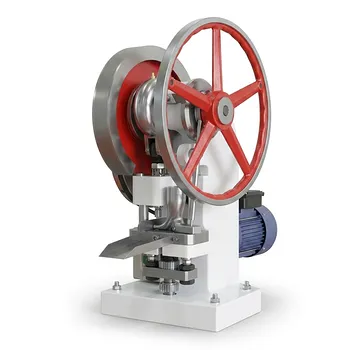
5 Ton Single Punch Tablet Press Laboratory Small Batch Production
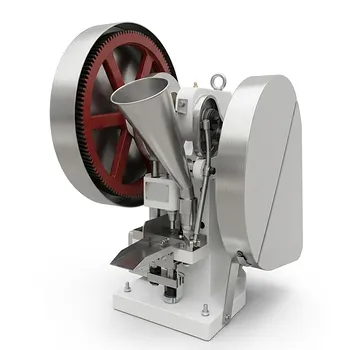
6-Ton Small Single-Punch Tablet Press — Laboratory Powder & Granule Tableting Equipment / Tablet Forming Machine
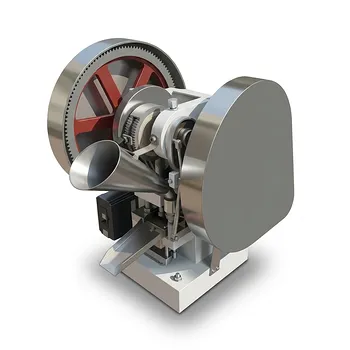
6 Ton Variable Frequency Single Punch Tablet Press
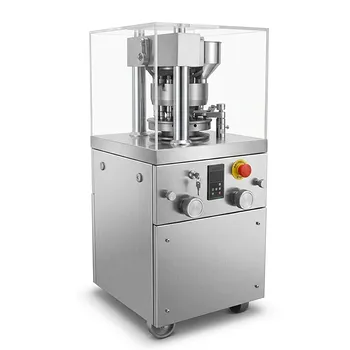
Ordinary Type Rotary Tablet Press for Pharmaceutical Chemical Food Electronic Industries
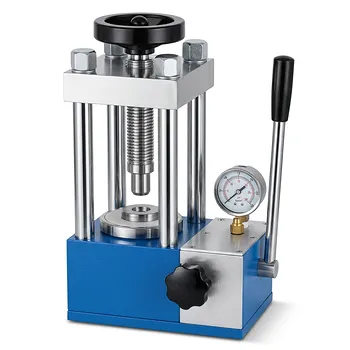
Manual Tablet Press with Dual Scale Pressure Gauge for Pharmaceutical Food Chemical Laboratory Sample Preparation
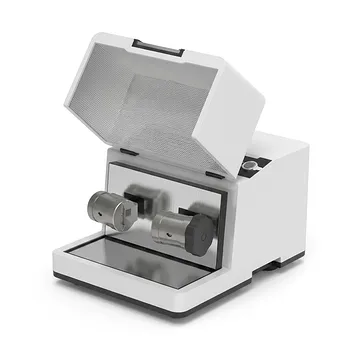
Heating Temperature Controlled High Energy Vibratory Ball Mill