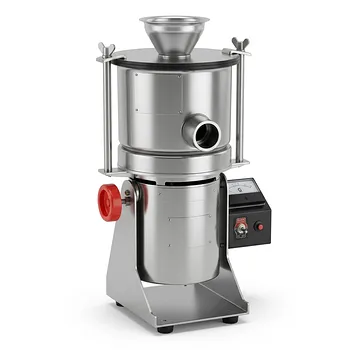
Why is a planetary ball mill required for ultrafine grinding of coal gangue? Ensure Accurate XRD/XRF Analysis Results
Updated 4 months ago
Coal gangue analysis requires extreme precision. A planetary ball mill is essential because it refines raw particles to an ultrafine level—often below 0.1 micrometers—to meet the strict sampling requirements of instruments like X-ray diffraction (XRD) and X-ray fluorescence (XRF). This process ensures high chemical uniformity and sample representativeness, which are critical for accurate mineralogical results.
The planetary ball mill is the preferred tool because it utilizes high-energy impact and shear forces to transform heterogeneous waste into a homogenous powder. This degree of refinement is necessary to eliminate grain size effects that would otherwise skew the data of precision analytical equipment.
Meeting the Rigorous Standards of Analytical Instruments
The Necessity of Sub-Micron Particle Sizes
High-precision instruments such as XRD and XRF require particles to be exceptionally fine to produce a reliable signal. Reducing coal gangue to a size below 0.1 micrometers ensures that the X-ray beam interacts with a statistically significant number of crystal orientations.
Ensuring Chemical Uniformity and Representativeness
Coal gangue is a heterogeneous material with varying mineral phases distributed inconsistently throughout the raw sample. Ultrafine grinding facilitates thorough mixing, ensuring that the tiny milligram-sized portion used in testing accurately reflects the composition of the entire bulk material.
The Mechanics of Planetary Ultrafine Grinding
Simultaneous Rotation and Revolution
The "planetary" movement involves the grinding jars rotating on their own axes while the main sun disk revolves in the opposite direction. This compound motion generates centrifugal forces that exceed gravity by many times, accelerating the grinding media to high velocities.
High-Energy Impact and Shear Forces
As the grinding balls collide with the coal gangue, they deliver intense impact and shear forces. These forces are capable of breaking down materials with high Mohs hardness (around 4.5) far more effectively than traditional vibratory or rotary mills.
Mechanochemical Activation
Beyond simple size reduction, the intense energy of a planetary mill can induce "mechanical activation" in coal gangue. This process creates micro-cracks and lattice defects, increasing the specific surface area and exposing active sites in the silicon-aluminum components.
Understanding the Trade-offs
Heat Generation and Material Transformation
The high-energy nature of planetary milling generates significant heat within the grinding jars. If not managed through timed intervals or cooling cycles, this heat can potentially alter the hydration state or mineral phases of the coal gangue before analysis.
Potential for Sample Contamination
Because the grinding process involves high-speed collisions, there is a risk of "wear-off" from the grinding balls or jar linings. Using high-hardness materials like agate or tungsten carbide is necessary to ensure the sample isn't contaminated by the equipment itself.
Energy Intensity and Processing Time
Achieving sub-micron fineness is energy-intensive and can take several hours of continuous processing. While effective, it is a slower and more expensive preparation method compared to simple coarse crushing.
Making the Right Choice for Your Goal
To achieve the best results in your mineral composition analysis, consider the following recommendations based on your specific objectives:
- If your primary focus is quantitative mineralogy (XRD): Grind the sample to below 0.1 micrometers to minimize primary extinction and micro-absorption effects.
- If your primary focus is chemical reactivity testing: Prioritize longer milling times to maximize the specific surface area and increase the exposure of reactive silicon-aluminum sites.
- If your primary focus is avoiding trace element contamination: Use agate grinding jars and balls to ensure that the milling media does not introduce heavy metals into the sample.
By properly leveraging the high-energy capabilities of the planetary ball mill, you ensure that your coal gangue analysis is built on a foundation of scientific accuracy and material homogeneity.
Summary Table:
| Key Requirement | Benefit of Planetary Ball Milling |
|---|---|
| Sub-Micron Particle Size | Reduces particles to <0.1μm to meet strict XRD/XRF sampling standards. |
| High-Energy Impact | Overcomes coal gangue's Mohs hardness (4.5) through centrifugal shear forces. |
| Material Homogeneity | Eliminates grain size effects to ensure the sample represents the bulk material. |
| Mechanical Activation | Increases specific surface area and reactivity for silicon-aluminum analysis. |
| Contamination Control | Allows use of specialized media (Agate/Tungsten) to preserve sample purity. |
Precision Sample Preparation for Accurate Mineralogical Analysis
Achieving scientific accuracy in coal gangue analysis starts with perfect sample homogeneity. As specialists in material science, we provide complete laboratory sample preparation solutions tailored to meet the rigorous demands of XRD, XRF, and chemical reactivity testing.
Our extensive product line supports your entire workflow:
- Advanced Grinding: Planetary ball mills, jet mills, liquid nitrogen cryogenic grinders, and rotor mills.
- Crushing & Sizing: High-performance jaw/roll crushers and vibratory/air-jet sieve shakers.
- Mixing & Compaction: Powder and defoaming mixers, plus a full spectrum of hydraulic presses, including Cold/Warm Isostatic Presses (CIP/WIP), vacuum hot presses, and XRF pellet presses.
Don't let grain size effects or contamination skew your research data. Contact us today to discover how our specialized powder processing and compaction equipment can enhance your laboratory’s efficiency and precision.
References
- Yingbo Wang, Mengxin Xu. Experimental Optimization Study on Pumping Pipeline Transportation Performance of Pure Gangue Slurry Filling Material. DOI: 10.3390/ma18204788
Mentioned Products
- 360° Rotating Omnidirectional Laboratory Planetary Ball Mill for Homogeneous Ultra-Fine Grinding and Mixing
- Vertical Semi Circular Planetary Ball Mill for Laboratory Precision Grinding
- 8L Planetary Ball Mill for Laboratory Grinding and Sample Preparation
- Vertical Square Planetary Ball Mill for Laboratory Sample Preparation and Nanoscale Grinding
- Heavy Duty Horizontal Planetary Ball Mill for Efficient Industrial Grinding and Sample Preparation
People Also Ask
- What role does an omni-directional planetary ball mill play in brass/cobalt antimonide pretreatment? Achieve Nano-Scale Homogeneity.
- What is the function of an omni-directional planetary ball mill? Achieve Streak-Free Glass Homogenization
- Why is an intermittent grinding process required for perovskites in a planetary ball mill? Ensure Stability & Purity
- Why is a planetary ball mill essential for SiBCN-rGO wet-spinning? Achieve Superior Dispersion and Spinnability
- What role does a planetary ball mill play in the synthesis of Li6PS5Cl (LPSCl)? Unlock High Ionic Conductivity

Tech Team · PowderPreparation
Last updated on Jun 03, 2026
Related Products

360° Rotating Omnidirectional Laboratory Planetary Ball Mill for Homogeneous Ultra-Fine Grinding and Mixing

Vertical Semi Circular Planetary Ball Mill for Laboratory Precision Grinding

8L Planetary Ball Mill for Laboratory Grinding and Sample Preparation

Vertical Square Planetary Ball Mill for Laboratory Sample Preparation and Nanoscale Grinding

Heavy Duty Horizontal Planetary Ball Mill for Efficient Industrial Grinding and Sample Preparation

High Energy Planetary Ball Mill for Nano Scale Grinding and Mechanical Alloying

High Energy Omnidirectional Planetary Ball Mill 16L

High Energy Laboratory Planetary Ball Mill for Nano Grinding and Colloidal Mixing of Hard and Brittle Materials

High Energy Laboratory Planetary Ball Mill for Nano Grinding and Material Science Sample Preparation

High Energy Omnidirectional Planetary Ball Mill 20L

High Energy Planetary Ball Mill for Nano Scale Grinding and Colloidal Mixing in Material Science Research

Miniature Planetary Ball Mill with Vacuum Grinding and High Efficiency for Laboratory Sample Preparation

Dual Station Planetary Ball Mill 24L
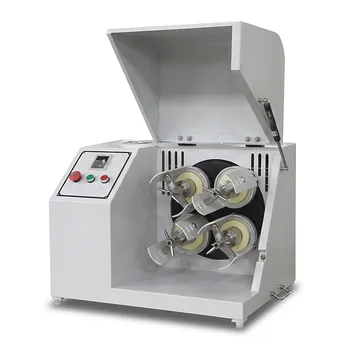
Horizontal Light Duty Planetary Ball Mill for Laboratory Sample Preparation
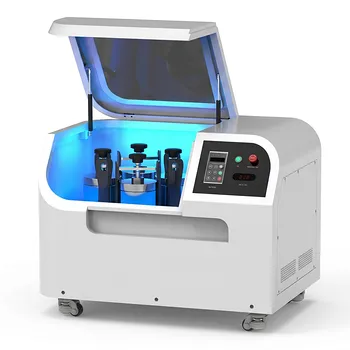
Planetary Ball Mill 12L
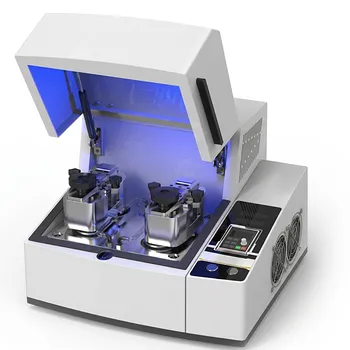
Laboratory Nano High Energy Ball Mill Ultrafine Grinding Mechanical Alloying

Vertical Production Planetary Ball Mill for High Throughput Powder Processing
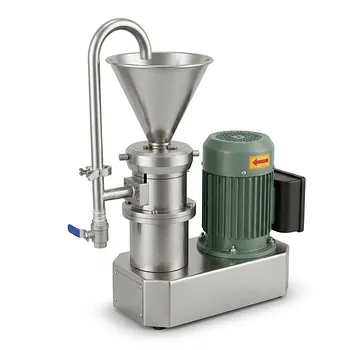
Small Laboratory Colloid Mill for Ultra-Fine Wet Grinding and Emulsification
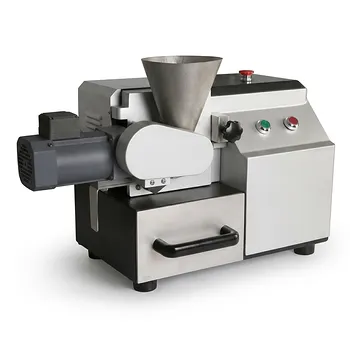
Laboratory Hammer Mill for Coal Quality Analysis and Brittle Mineral Grinding