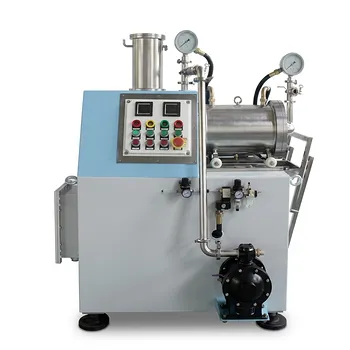
Why is a planetary ball mill essential for preparing Ag₈SiS₆ nanopowders? Achieve Precision Nanoscale Grain Reduction
Updated 5 months ago
High-energy mechanical activation is the catalyst for material transformation. A planetary ball mill is essential for preparing $\text{Ag}_8\text{SiS}_6$ nanopowders because it generates the intense centrifugal, impact, and shear forces required to break down microcrystalline structures into the nanometer range. By precisely controlling milling parameters, researchers can reduce grain sizes to specific targets, such as 48 nm or 26 nm, which directly enables the tuning of the material's optical energy gap through size effects.
The planetary ball mill serves as a high-energy reactor that overcomes the internal binding forces of $\text{Ag}_8\text{SiS}_6$ to achieve radical size reduction. This process is not merely about grinding; it is a method of mechanical activation that allows for the precise manipulation of a material's electronic and optical properties.
The Mechanics of Nanoscale Reduction
Harnessing Multi-Directional Forces
The planetary ball mill operates through the simultaneous rotation of the sun wheel and the grinding jars in opposite directions. This motion generates powerful centrifugal and Coriolis forces that launch grinding media across the jar with extreme velocity. The resulting high-energy impacts and shear actions are what successfully fragment microcrystalline $\text{Ag}_8\text{SiS}_6$ into fine nanopowders.
Overcoming Inter-Particle Binding
Standard grinding methods often fail to reach the nanometer scale because they cannot overcome the binding forces between particles. The high-frequency impact of a planetary mill provides the necessary energy to induce severe plastic deformation and fracture. This mechanical energy accumulation is what allows a material to transition from a macroscopic state to a highly active microscopic state.
Precision Control via Milling Time
One of the most critical aspects of using a planetary mill is the ability to calibrate grain size through processing duration. As milling time increases, the average particle size predictably decreases, moving from the micron level down to sub-50 nm dimensions. This level of control is vital for $\text{Ag}_8\text{SiS}_6$ because its functional performance is highly sensitive to its physical scale.
Impact on Material Performance
Tuning the Optical Energy Gap
In $\text{Ag}_8\text{SiS}_6$, the transition to the nanometer scale triggers quantum size effects. By reducing the grain size using the mill, the material's energy gap is effectively adjusted. This capability makes the planetary ball mill a primary tool for engineers looking to customize the optical characteristics of the powder for specific applications.
Increasing Specific Surface Area
As the mill refines the powder, it significantly increases the specific surface area of the particles. Smaller particles possess a higher surface-to-volume ratio, which enhances the chemical reactivity and Brownian motion of the powder. This increased activity is essential for subsequent processes, such as creating stable slurries or ensuring high-quality sintering.
Promoting Homogeneity and Activation
The high-energy environment ensures that any additives or dopants are uniformly incorporated into the matrix. This mechanical alloying effect prevents agglomeration and ensures the powder is mechanically activated. This state of activation lowers the energy required for future chemical reactions or phase transformations.
Understanding the Trade-offs
Milling Time vs. Contamination Risk
While longer milling times result in finer powders, they also increase the risk of media wear. Extended processing can introduce impurities from the grinding jars or balls (such as stainless steel or zirconia) into the $\text{Ag}_8\text{SiS}_6$ powder. Achieving the desired 26 nm size requires a careful balance between processing time and purity requirements.
Thermal Effects and Structural Integrity
The intense friction and impact within the mill generate significant heat, which can lead to unwanted phase changes or grain growth. If the temperature is not managed—either through cooling intervals or process control—the mechanical energy intended for fragmentation may instead cause amorphization. Maintaining the crystallinity of $\text{Ag}_8\text{SiS}_6$ while reducing its size is a key technical challenge.
Applying This to Your Synthesis Process
Strategic Recommendations for Implementation
- If your primary focus is optical tuning: Prioritize precise milling durations to hit specific nanometer targets, as even small deviations in size will shift the energy gap.
- If your primary focus is high purity: Utilize jars and grinding media made of the same material as your powder, or use high-hardness materials like tungsten carbide, to minimize contamination during the high-energy phase.
- If your primary focus is reactivity for sintering: Aim for the smallest possible grain size (sub-30 nm) to maximize surface area, but incorporate a liquid milling medium to prevent the nanopowder from re-agglomerating.
By mastering the high-energy dynamics of the planetary ball mill, you gain the ability to dictate the fundamental physical and electronic limits of $\text{Ag}_8\text{SiS}_6$ nanopowders.
Summary Table:
| Key Feature | Impact on Ag₈SiS₆ Synthesis | Material Benefit |
|---|---|---|
| High-Energy Impact | Breaks internal microcrystalline binding forces | Achieves grain sizes as small as 26 nm |
| Milling Duration Control | Calibrates particle size predictably | Precisely tunes the optical energy gap |
| Surface Area Expansion | Increases surface-to-volume ratio | Enhances chemical reactivity and sintering |
| Mechanical Activation | Induces severe plastic deformation | Lowers energy required for phase changes |
| Homogenization | Uniformly incorporates additives/dopants | Prevents agglomeration and ensures purity |
Elevate Your Material Synthesis with Professional Laboratory Solutions
Achieving the perfect 26nm grain size for Ag₈SiS₆ nanopowders requires equipment that balances extreme energy with absolute precision. At our facility, we provide complete laboratory sample preparation solutions for material science, specializing in high-performance powder processing and compaction equipment.
Our extensive product lines are designed to support every stage of your research:
- Advanced Milling: Planetary ball mills, jet mills, disc mills, and liquid nitrogen cryogenic grinders for heat-sensitive materials.
- Sizing & Analysis: Vibratory and air-jet sieve shakers with a full range of test sieves.
- Powder Preparation: Specialized powder mixers and defoaming mixers to ensure homogeneity.
- Compaction Excellence: A full spectrum of hydraulic presses, including Cold/Warm Isostatic Presses (CIP/WIP), vacuum hot presses, and XRF pellet presses.
Whether you are tuning optical gaps or scaling up specialized nanopowders, our experts are here to help you select the ideal configuration for your lab.
Contact us today to optimize your powder processing workflow!
References
- A.I. Pogodin, Т.О. Malakhovska. OBTAINING AND OPTICAL PROPERTIES OF Ag8SiS6 MICRO- AND NANOPOWDERS. DOI: 10.24144/2414-0260.2025.2.15-21
Mentioned Products
- Vertical Square Planetary Ball Mill for Laboratory Sample Preparation and Nanoscale Grinding
- High Energy Laboratory Planetary Ball Mill for Nano Grinding and Material Science Sample Preparation
- High Energy Planetary Ball Mill for Nano Scale Grinding and Mechanical Alloying
- Vertical Semi Circular Planetary Ball Mill for Laboratory Precision Grinding
- High Energy Laboratory Planetary Ball Mill for Nano Grinding and Colloidal Mixing of Hard and Brittle Materials
People Also Ask
- What is the function of a planetary ball mill in wollastonite ceramic prep? Achieve Molecular Homogenization & Reactivity
- How does a planetary ball mill contribute to the homogenization of trace elements? Achieve Sub-Micron Uniformity
- Why grind lime-pozzolan specimens for TG/DTA for 3 mins? Master sample prep for high-precision thermal analysis.
- What role does a planetary ball mill play in the synthesis of Li6PS5Cl (LPSCl)? Unlock High Ionic Conductivity
- What role does a planetary ball mill play in KNTO ceramic refinement? Optimize Homogeneity & Reactivity

Tech Team · PowderPreparation
Last updated on May 14, 2026
Related Products

Vertical Square Planetary Ball Mill for Laboratory Sample Preparation and Nanoscale Grinding

High Energy Laboratory Planetary Ball Mill for Nano Grinding and Material Science Sample Preparation

High Energy Planetary Ball Mill for Nano Scale Grinding and Mechanical Alloying

Vertical Semi Circular Planetary Ball Mill for Laboratory Precision Grinding

High Energy Laboratory Planetary Ball Mill for Nano Grinding and Colloidal Mixing of Hard and Brittle Materials

Vertical Production Planetary Ball Mill for High Throughput Powder Processing

High Energy Planetary Ball Mill for Nano Scale Grinding and Colloidal Mixing in Material Science Research

360° Rotating Omnidirectional Laboratory Planetary Ball Mill for Homogeneous Ultra-Fine Grinding and Mixing

8L Planetary Ball Mill for Laboratory Grinding and Sample Preparation
Planetary Ball Mill 12L

Miniature Planetary Ball Mill with Vacuum Grinding and High Efficiency for Laboratory Sample Preparation
Horizontal Light Duty Planetary Ball Mill for Laboratory Sample Preparation

Heavy Duty Horizontal Planetary Ball Mill for Efficient Industrial Grinding and Sample Preparation

High Energy Omnidirectional Planetary Ball Mill 16L

High Energy Omnidirectional Planetary Ball Mill 20L

Dual Station Planetary Ball Mill 24L
Laboratory Nano High Energy Ball Mill Ultrafine Grinding Mechanical Alloying
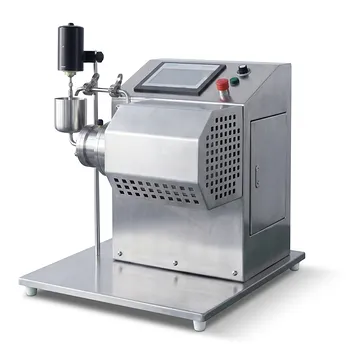
High Efficiency Laboratory Bead Mill Nano Powder Dispersion Sand Mill for Material Science Research
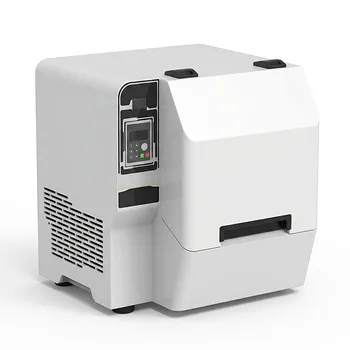
Nano High Energy Vibratory Ball Mill for Laboratory Sample Preparation