Why is a low-speed powder mixer essential when preparing agricultural waste particle-reinforced composites? Expert Guide
Updated 5 months ago
The essential role of a low-speed powder mixer lies in its ability to provide sustained, gentle mechanical force that achieves a macroscopically uniform dispersion of agricultural fillers. This process is critical because it breaks down filler agglomerates that naturally form during drying, ensuring the particles are thoroughly integrated into the matrix without damaging their delicate morphology.
Achieving high-performance composites requires a balance between intensive blending and material preservation. A low-speed mixer facilitates this by eliminating localized defects and ensuring a homogenous interface between the agricultural waste and the resin matrix.
Eliminating Particle Agglomeration and Clumping
Overcoming Post-Drying Cohesion
Agricultural waste particles often form tight clumps or agglomerates during the powder drying process. These clusters act as "stress concentrators" in a finished composite, significantly weakening the overall structure if not properly dispersed.
Restoring Material Flowability
By rotating steadily at a very low speed, the mixer applies just enough force to decouple these clusters. This restores the natural flowability of the powder, which is necessary for accurate mold filling and consistent material density.
Preserving Particle Morphology
Unlike high-shear mixing, which can fracture or degrade delicate organic fibers, low-speed mixing preserves the original shape and size of the agricultural waste. Maintaining this morphology is vital for the particles to function effectively as reinforcement within the matrix.
Ensuring Macroscopic and Microscopic Uniformity
Preventing Localized Performance Defects
A primary goal of the mixing process is to prevent component segregation, where particles settle or cluster in specific areas. A low-speed mixer provides the continuous motion needed to keep particles suspended and evenly distributed throughout the epoxy resin.
The Importance of Extended Mixing Cycles
Achieving true homogeneity often requires an intensive stirring process that can last for up to 12 hours. This duration allows the mechanical forces to penetrate the entire volume of the matrix, ensuring that every micron of material meets the required specification.
Facilitating Stable Chemical Reactions
Uniformity is vital for the chemical stability of the composite, particularly during the curing or sintering phases. Inconsistent particle distribution can lead to localized overheating or reaction failure, compromising the thermal and mechanical properties of the final product.
Understanding the Trade-offs
Processing Time vs. Production Throughput
The most significant trade-off of low-speed mixing is the extended time investment required to reach total uniformity. While high-speed mixers are faster, they risk generating excessive heat or mechanical damage that can ruin agricultural fillers.
Viscosity and Shear Limitations
Low-speed mixers may struggle with highly viscous matrices that require higher shear forces to initiate flow. In these cases, the mixer must be carefully calibrated to provide enough force to move the material without crossing the threshold of particle degradation.
Equipment Maintenance and Energy
Operating a mixer for 12 hours or more increases mechanical wear on the drive systems. However, the energy consumption per hour is generally lower than high-speed alternatives, making it a cost-effective choice for temperature-sensitive organic materials.
How to Apply This to Your Project
Selecting the Right Approach for Your Composite
Effective material preparation depends on matching your mixing strategy to the specific characteristics of your filler and matrix.
- If your primary focus is structural integrity: Prioritize extended, low-speed mixing cycles to ensure the total elimination of agglomerates that cause internal weak points.
- If your primary focus is preserving delicate organic fibers: Utilize the lowest possible RPM to maintain the original aspect ratio and morphology of the agricultural waste.
- If your primary focus is chemical reaction stability: Ensure the mixer provides enough controlled shear to facilitate total contact between the fillers and any liquid activators or resins.
By prioritizing gentle, sustained dispersion over rapid processing, you ensure that agricultural waste particles function as a true reinforcement rather than a structural liability.
Summary Table:
| Key Feature | Benefit for Agricultural Fillers | Impact on Final Composite |
|---|---|---|
| Gentle Mechanical Force | Breaks post-drying agglomerates | Eliminates internal stress concentrators |
| Low-Speed Rotation | Preserves delicate fiber morphology | Maintains high reinforcement aspect ratio |
| Extended Mixing Cycles | Ensures macroscopic uniformity | Prevents component segregation & defects |
| Controlled Shear | Facilitates stable resin contact | Improves thermal & chemical stability |
Elevate Your Material Research with Precision Mixing
Achieving the perfect interface between agricultural waste and resin matrices requires equipment that balances power with preservation. At [Insert Brand Name], we provide complete laboratory sample preparation solutions tailored for material science.
Whether you need to achieve total homogeneity with our powder mixers and defoaming mixers or require advanced compaction for your final samples, we have the expertise to support your workflow. Our extensive product line includes:
- Size Reduction: Jaw/roll crushers, liquid nitrogen cryogenic grinders, and high-energy mills (planetary ball, jet, and rotor).
- Classification: Vibratory and air-jet sieve shakers for precise particle sizing.
- Advanced Compaction: A full spectrum of hydraulic presses, including Cold/Warm Isostatic Presses (CIP/WIP), vacuum hot presses, and XRF pellet presses.
Don't let particle agglomeration compromise your composite's integrity. Contact our technical team today to find the ideal equipment solution for your laboratory's specific requirements!
References
- Emmanuel Kwaku Aidoo, Patrick Mensah. Thermomechanical Properties of Sustainable Polymer Composites Incorporating Agricultural Wastes. DOI: 10.3390/jmmp9090315
Mentioned Products
- V-Type Powder Mixer for Uniform Blending of Dry Powders and Granules
- Inclined Mixer for Homogeneous Powder Blending and Grinding
- Multi Dimensional Universal Mixer for High Uniformity Powder Blending
- Three-Dimensional Motion Mixer for Laboratory Powder and Granule Blending
- Horizontal Ribbon Mixer for Dry Powder and Slurry Blending
People Also Ask
- Why is a media-free and ball-free V-type powder mixer used for Al2O3/Inconel 718? Preserve Purity & Shape
- How does a V-type powder mixer facilitate the blending of oxidizers and catalysts? Safe & Uniform Mixing Solutions
- Why is it necessary to consider the influence of static walls in powder mixing experiment design? Optimize Uniformity.
- What role does powder mixing play in Al2O3-Er3Al5O12 ceramics? Achieve Precise Homogeneity and Phase Control
- How do powder mixers and additives influence ZTA ceramics? Optimize microstructure for superior toughness and density

Tech Team · PowderPreparation
Last updated on May 14, 2026
Related Products
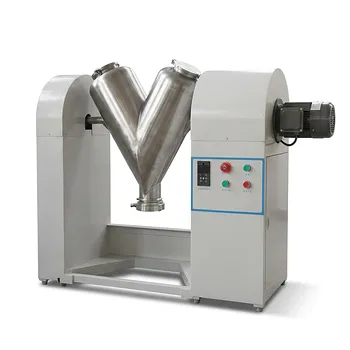
V-Type Powder Mixer for Uniform Blending of Dry Powders and Granules
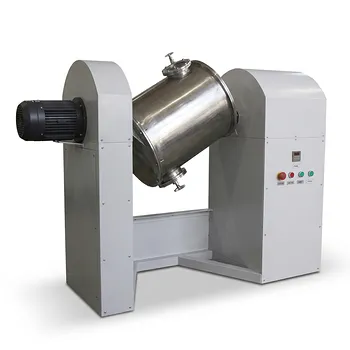
Inclined Mixer for Homogeneous Powder Blending and Grinding
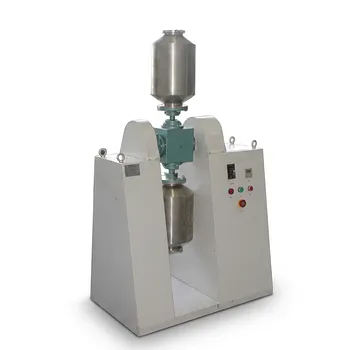
Multi Dimensional Universal Mixer for High Uniformity Powder Blending
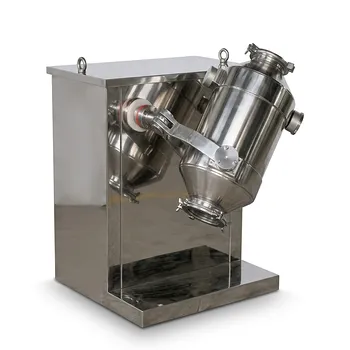
Three-Dimensional Motion Mixer for Laboratory Powder and Granule Blending
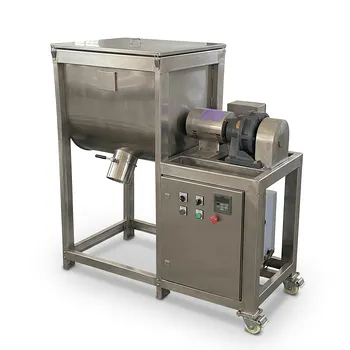
Horizontal Ribbon Mixer for Dry Powder and Slurry Blending
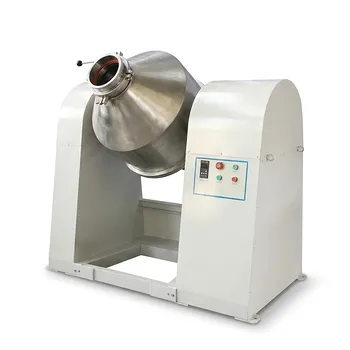
Industrial Double Cone Mixer for Powder Blending and Homogeneous Mixing
Air Guided Ultrafine Pulverizer High Speed Laboratory Powder Grinder for Chemical and Material Processing
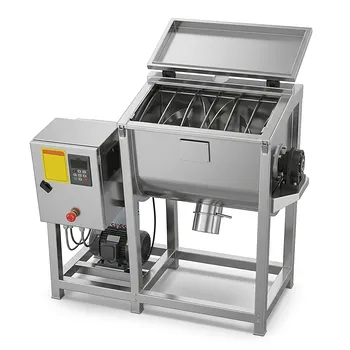
Horizontal Ribbon Mixer for Uniform Powder and Slurry Mixing
Industrial High Speed Small Sample Pulverizer Swing Type Laboratory Grinder for Powder Processing
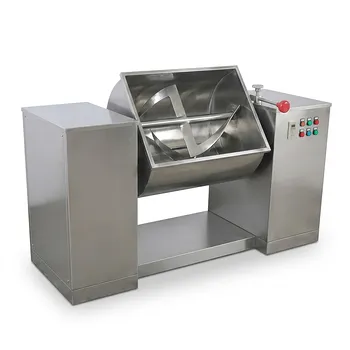
Horizontal Trough Mixer for Uniform Powder and Paste Blending
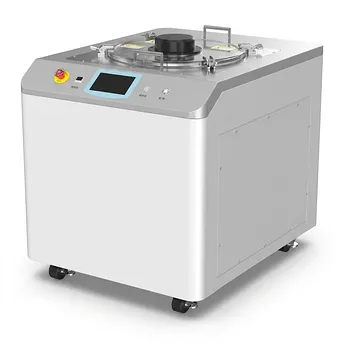
Industrial Planetary Centrifugal Vacuum Defoaming Mixer for High Viscosity Paste and Powder Homogenization
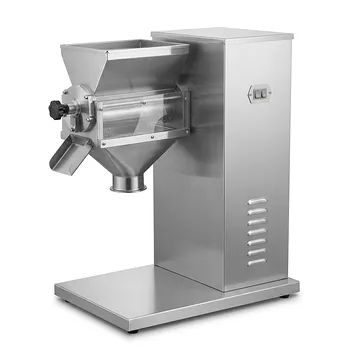
Small Swing Granulator Efficient Powder Granulation for Pharmaceutical Chemical Food Industries
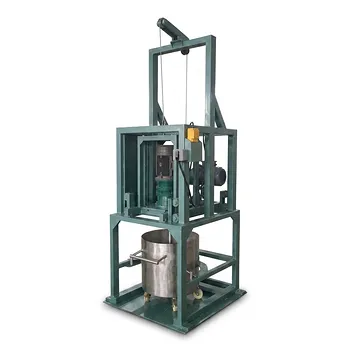
High-Speed Simple Disperser for Efficient Mixing, Dispersion, and Emulsification
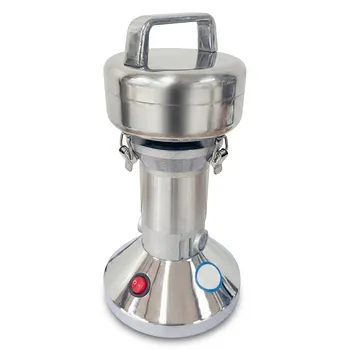
Small Trace Sample High Speed Pulverizer Grinder Laboratory Powder Mill
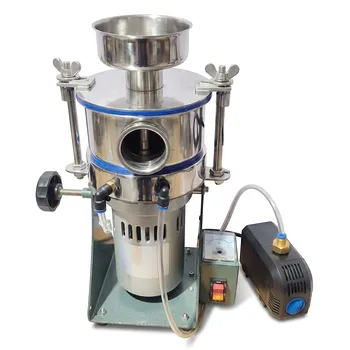
Water Cooled Airflow Ultra Fine Grinder for Low Temperature Material Processing
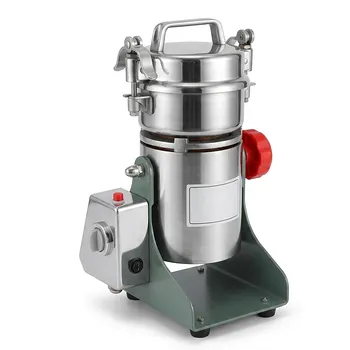
High Speed Swing Type Laboratory Pulverizer for Fine Powder Grinding and Sample Preparation
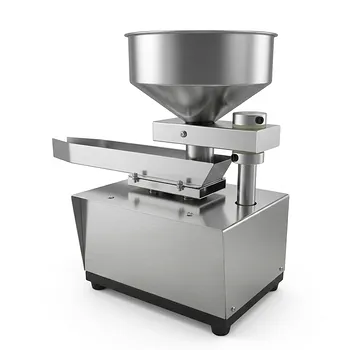
Automatic Vibrating Powder Feeder for Laboratory Material Processing Precision Vibratory Hopper Feeder for Granular and Powder Material Handling Industrial Grade Vibrating Tray Feeder for Consistent Material Sample Preparation
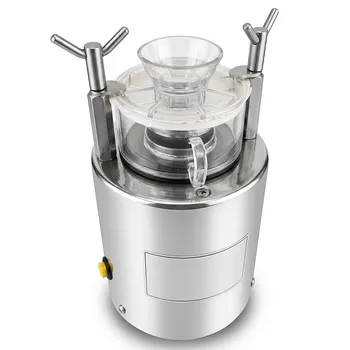
Laboratory Desktop Ultra Fine Powder Grinder High Speed Micronizing Pulverizer
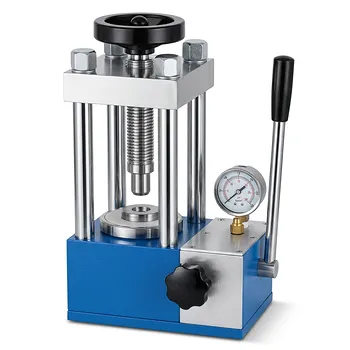
Manual Tablet Press with Dual Scale Pressure Gauge for Pharmaceutical Food Chemical Laboratory Sample Preparation