Why is a lab hydraulic press used for Mullite green bodies? Achieve High Density & Precision Compaction
Updated 5 months ago
The laboratory precision hydraulic press and steel mold system are essential for transforming loose Mullite powder into a dense, structurally sound "green body" with a precise geometric shape. This equipment provides the stable, controllable pressure—often ranging from 40 MPa to 140 MPa—required to overcome internal particle friction, expel entrapped air, and create a solid physical foundation that can survive the intense stresses of high-temperature sintering.
A laboratory hydraulic press ensures the uniform compaction and particle rearrangement of Mullite precursors, establishing the high green density and structural integrity necessary to prevent cracking and excessive shrinkage during the subsequent densification process.
The Mechanics of Powder Compaction
Overcoming Internal Friction and Rearrangement
Loose Mullite powder possesses significant internal friction that resists natural packing. The hydraulic press applies uniaxial pressure to force these particles to slide, rotate, and rearrange into a more efficient, close-packed configuration.
This rearrangement is the first step in creating a coherent solid from a granular material. Without sufficient pressure, the powder remains a loose aggregate with no mechanical strength.
Elimination of Entrapped Gases and Porosity
As the press applies load, it effectively excludes entrapped gases from the interstitial spaces between powder particles. By removing these air pockets, the press significantly increases the initial density of the green body.
Reducing this initial porosity is critical because large voids in the green body often persist through the sintering process. These voids act as structural defects that weaken the final ceramic material.
Establishing a Foundation for Sintering
Enhancing Solid-Phase Reactions
High-pressure molding (reaching levels like 80 MPa or 140 MPa) increases the contact area between individual powder particles. This intimate contact is vital for solid-phase reactions and phase transformation kinetics during heating.
When particles are tightly packed, the diffusion distances are minimized. This leads to more efficient bonding and a more uniform microstructure in the final Mullite product.
Minimizing Deformation and Cracking
A precision press ensures a consistent internal density throughout the green body. Uniform density is the primary defense against the non-uniform shrinkage that occurs at temperatures like 1550 °C.
If density gradients exist, different parts of the sample will shrink at different rates. This leads to warping, structural cracking, or severe dimensional deformation during the final densification stage.
The Role of High-Strength Steel Molds
Maintaining Geometric Precision under High Load
The use of high-strength steel molds allows the system to withstand extreme uniaxial loads without deforming. This ensures the resulting green body adheres to exact geometric dimensions, such as perfect cylinders or discs.
Steel molds also provide a smooth internal surface. This reduces wall friction, which helps maintain a more uniform pressure distribution from the top of the sample to the bottom.
Ensuring Reliable Material Properties
For complex materials like high-entropy ceramics or Mullite mixtures, uniformity is paramount. The rigid steel mold prevents lateral expansion during pressing, forcing all energy into the vertical compaction of the powder.
This constraint results in a green body with consistent pore distribution. Such consistency ensures that the final material properties—such as thermal shock resistance and mechanical strength—are predictable and reliable.
Understanding the Trade-offs
Pressure Limits and Internal Stress
While higher pressure generally increases density, exceeding the optimal limit can lead to capping or laminations. These are internal cracks formed by stored elastic energy that is released when the pressure is removed.
Wall Friction and Density Gradients
Despite the precision of steel molds, friction between the powder and the mold walls is inevitable. This can create a density gradient, where the center of the green body is less dense than the ends, potentially leading to slight "hourglassing" during sintering.
Mold Wear and Contamination
Repeated use of steel molds under high pressure can lead to surface wear. If the mold surface is compromised, it can introduce trace metallic contaminants or make sample ejection difficult, risking damage to the fragile green body.
How to Apply This to Your Project
Optimizing Your Pressing Strategy
- If your primary focus is maximizing final density: Utilize higher pressures (up to 140 MPa) and ensure your Mullite powder is properly granulated to improve flowability and packing efficiency.
- If your primary focus is geometric precision: Focus on maintaining the cleanliness of the steel mold and using a consistent, slow pressure ramp-up to ensure air is fully expelled before peak load is reached.
- If your primary focus is preventing sintering cracks: Prioritize achieving a uniform density gradient by using lubricants or double-action pressing techniques to minimize wall friction.
The precision hydraulic press acts as the critical bridge between raw powder and a high-performance ceramic, ensuring the green body possesses the structural integrity required for successful high-temperature processing.
Summary Table:
| Feature | Function in Mullite Preparation | Key Impact on Final Ceramic |
|---|---|---|
| Uniaxial Pressure | Overcomes internal particle friction | Creates a coherent, close-packed solid |
| 40 - 140 MPa Load | Eliminates entrapped air and voids | Reduces porosity and structural defects |
| Steel Mold System | Provides rigid geometric constraint | Ensures precise dimensions and uniform load |
| Uniform Compaction | Minimizes internal density gradients | Prevents warping and cracking during sintering |
| Particle Contact | Enhances solid-phase reaction kinetics | Improves bonding and microstructural uniformity |
Elevate Your Material Research with Precision Compaction Solutions
Achieving the perfect Mullite green body requires more than just pressure—it requires precision. At our core, we provide complete laboratory sample preparation solutions tailored for material science. Whether you are dealing with advanced ceramics or powder metallurgy, our equipment ensures the structural integrity and uniformity your research demands.
Our extensive product line includes:
- Powder Processing: High-efficiency crushers, liquid nitrogen cryogenic grinders, and advanced mills (planetary ball, jet, and disc).
- Sieving & Mixing: Vibratory sieve shakers and high-performance powder/defoaming mixers.
- Advanced Compaction: A full spectrum of hydraulic presses, including Cold/Warm Isostatic Presses (CIP/WIP), standard lab presses, XRF pellet presses, and vacuum hot presses.
Ready to optimize your powder processing workflow and eliminate sintering failures? Contact our technical experts today to find the ideal equipment for your laboratory!
References
- Perent GÜLER, Alpagut Kara. A Study on the Wear Behaviour of Monolithic Mullite Materials for Dental Applications. DOI: 10.35219/mms.2021.3.02
Mentioned Products
- Manual Tablet Press with Dual Scale Pressure Gauge for Pharmaceutical Food Chemical Laboratory Sample Preparation
- Laboratory Disc Mill for Ore and Mineral Sample Preparation
- High Speed Small Laboratory Crusher for Dry Material Sample Preparation
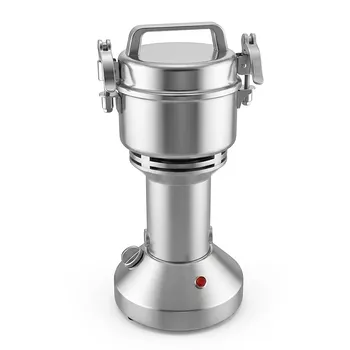
- Small High Speed Grinder for Laboratory Sample Preparation
- High Speed Swing Type Laboratory Pulverizer for Fine Powder Grinding and Sample Preparation
People Also Ask
- What is the function of a laboratory press in Cr-Ti alloy evaluation? Quantify Fracture Stress & Strength
- What is the function of a laboratory press in assessing the hydrophobic performance of modified vermiculite fillers?
- What is the core function of a laboratory press in the forming of ceramic filter element green bodies? Maximize Density.
- What is the function of a laboratory press in the preparation of ceramic feed rods? Master Density and Precision
- Why is vacuum sealing and flexible packaging necessary for Aluminum Titanate powders during CIP? Ensure Peak Density

Tech Team · PowderPreparation
Last updated on May 14, 2026
Related Products
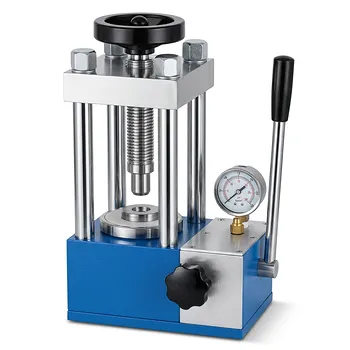
Manual Tablet Press with Dual Scale Pressure Gauge for Pharmaceutical Food Chemical Laboratory Sample Preparation
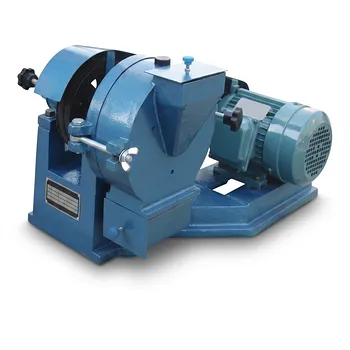
Laboratory Disc Mill for Ore and Mineral Sample Preparation
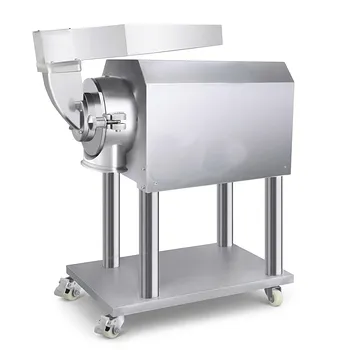
High Speed Small Laboratory Crusher for Dry Material Sample Preparation
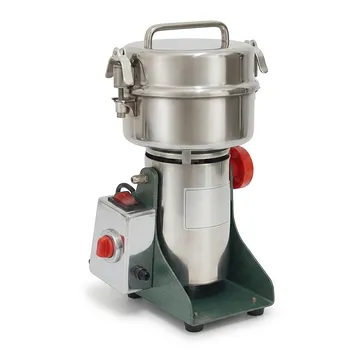
Small High Speed Grinder for Laboratory Sample Preparation
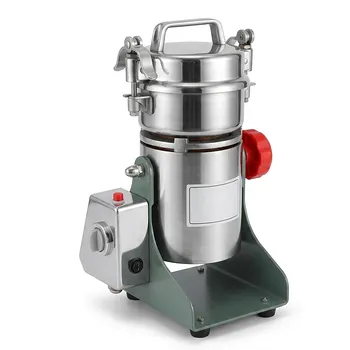
High Speed Swing Type Laboratory Pulverizer for Fine Powder Grinding and Sample Preparation