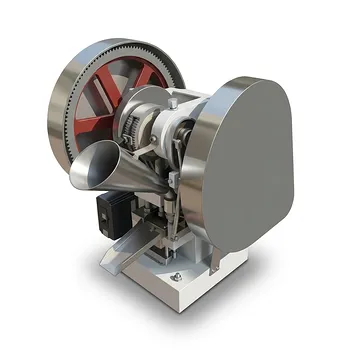
Why is a manual hydraulic press essential for FT-IR ash analysis? Achieve optical clarity and high-resolution spectra.
Updated 4 months ago
Achieving optical transparency is the primary function of a manual hydraulic press in FT-IR sample preparation. The press transforms a mixture of incinerator ash and potassium bromide (KBr) into a dense, translucent pellet. This physical transformation is necessary to minimize light scattering, allowing the infrared beam to penetrate the sample and produce a clear, high-resolution spectrum for chemical analysis.
A manual hydraulic press is indispensable because it applies the high, uniform pressure required to bond ash particles with a KBr matrix, eliminating air voids and internal scattering. This process ensures the resulting pellets have the optical clarity and density needed to accurately identify complex chemical structures like silicates, carbonates, and residual organic matter.
Overcoming the Optical Limitations of Raw Ash
The Role of the KBr Matrix
Incinerator ash is inherently opaque and irregular, making it impossible for infrared light to pass through in its raw form. By diluting a small amount of ash into a potassium bromide (KBr) matrix, the sample becomes workable. KBr is used because it is transparent in the infrared region, serving as a "window" for the spectrometer to see the ash components.
Eliminating Internal Light Scattering
If the ash-KBr mixture is simply loose powder, the air trapped between particles causes refractive index changes that scatter the infrared beam. This scattering creates a "noisy" spectrum with a sloping baseline that obscures critical data. The hydraulic press applies several tons of force to exclude air and create a solid, continuous medium that allows light to pass through linearly.
Enhancing Signal Quality for Structural Identification
Achieving Plastic Deformation and Bonding
The high pressure provided by a manual press induces plastic deformation in the KBr crystals. This causes the KBr to flow around the ash particles, binding the mixture into a single, uniform pellet. This dense bonding is what results in a high signal-to-noise ratio, which is vital for detecting subtle functional groups.
Precise Identification of Ash Components
High-quality pellets are essential for identifying the specific chemical fingerprints within incinerator ash, such as silicate structures and carbonate groups. Without the uniform thickness and density provided by the press, the absorption peaks for these components would be blurred or lost in the background noise. This level of detail is necessary to understand the residual organic matter and the environmental impact of the ash.
Understanding the Trade-offs and Pitfalls
Pressure Calibration and Pellet Integrity
Applying the correct amount of pressure is a delicate balance in the laboratory. If the pressure is too low, the pellet remains opaque and fragile; if it is too high, the pellet may crack upon release or damage the pellet die. Users must find the "sweet spot"—usually several tons—to ensure the pellet is transparent enough for light transmission but strong enough to handle.
The Impact of Atmospheric Moisture
KBr is highly hygroscopic, meaning it absorbs moisture from the air rapidly. If the pressing process is too slow or if air is not properly evacuated from the die, moisture can become trapped within the pellet. This results in broad, unwanted "water peaks" in the FT-IR spectrum that can interfere with the analysis of the ash’s actual chemical bonds.
How to Optimize Your Sample Preparation
Making the Right Choice for Your Goal
To get the most out of your FT-IR analysis, consider your specific research objectives:
- If your primary focus is detecting trace organic matter: Ensure you use a high-pressure press to maximize the signal-to-noise ratio, as these signals are often very weak.
- If your primary focus is routine mineral characterization: Focus on achieving consistent pellet thickness to allow for repeatable baseline comparisons between different ash batches.
- If your primary focus is preventing sample contamination: Use a manual press with a vacuum-capable die to remove air and moisture during the compression cycle.
The manual hydraulic press remains a cornerstone of the laboratory because it provides the controlled, high-pressure environment necessary to turn a complex waste product into a clear window of chemical information.
Summary Table:
| Feature of Preparation | Function in FT-IR Analysis | Impact on Final Result |
|---|---|---|
| High-Pressure Compaction | Eliminates air voids and internal light scattering | Produces a clear, high-resolution spectrum |
| KBr Matrix Dilution | Acts as an IR-transparent medium for the ash | Allows the IR beam to penetrate opaque samples |
| Plastic Deformation | Bonds ash and KBr into a solid, uniform pellet | Increases signal-to-noise ratio for trace detection |
| Vacuum Die Integration | Removes atmospheric moisture and trapped air | Prevents interfering water peaks in the analysis |
Elevate Your Analytical Accuracy with Professional Sample Preparation
Precise FT-IR results for complex materials like incinerator ash demand perfect pellet integrity. We provide complete laboratory sample preparation solutions tailored for material science and environmental research.
As specialists in powder processing and compaction, our extensive product line includes:
- Compaction Excellence: A full spectrum of hydraulic presses, including Standard Lab Presses, XRF Pellet Presses, Cold/Warm Isostatic Presses (CIP/WIP), and Vacuum Hot Presses for moisture-free sampling.
- Powder Processing: High-performance crushers (jaw/roll), liquid nitrogen cryogenic grinders, and versatile mills (planetary ball, jet, and rotor).
- Sieving & Mixing: Precision vibratory sieve shakers and advanced defoaming mixers for uniform sample consistency.
Ready to eliminate spectral noise and improve your lab's efficiency? Contact our experts today to find the ideal equipment for your specific material challenges.
References
- Monika Kasina, Małgorzata Wendorff-Belon. Comprehensive characterization and environmental implications of industrial and hazardous incineration ashes: insights into chemistry, mineralogy, elements’ fractionation and leaching potential. DOI: 10.1038/s41598-024-80782-8
Mentioned Products
- Manual Tablet Press with Dual Scale Pressure Gauge for Pharmaceutical Food Chemical Laboratory Sample Preparation
- 6-Ton Small Single-Punch Tablet Press — Laboratory Powder & Granule Tableting Equipment / Tablet Forming Machine
- 5 Ton Single Punch Tablet Press Laboratory Small Batch Production
- Enhanced 9 Punch Rotary Tablet Press for Powder Compaction
- Ordinary Type Rotary Tablet Press for Pharmaceutical Chemical Food Electronic Industries
People Also Ask
- What is the function of a laboratory press in Cr-Ti alloy evaluation? Quantify Fracture Stress & Strength
- What is the function of a laboratory press in assessing the hydrophobic performance of modified vermiculite fillers?
- What is the core function of a laboratory press in the forming of ceramic filter element green bodies? Maximize Density.
- What is the function of a laboratory press in the preparation of ceramic feed rods? Master Density and Precision
- Why is vacuum sealing and flexible packaging necessary for Aluminum Titanate powders during CIP? Ensure Peak Density

Tech Team · PowderPreparation
Last updated on Jun 03, 2026
Related Products
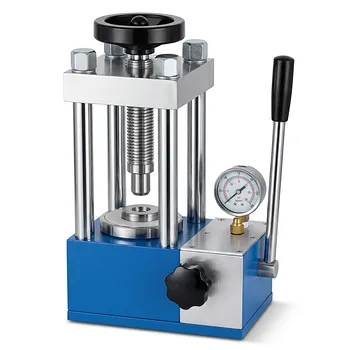
Manual Tablet Press with Dual Scale Pressure Gauge for Pharmaceutical Food Chemical Laboratory Sample Preparation
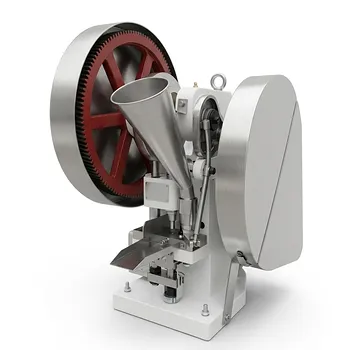
6-Ton Small Single-Punch Tablet Press — Laboratory Powder & Granule Tableting Equipment / Tablet Forming Machine
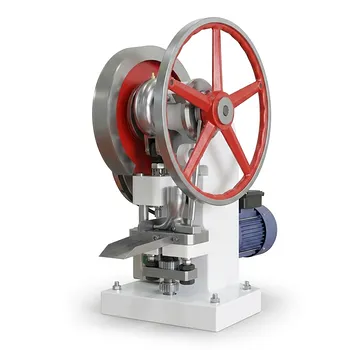
5 Ton Single Punch Tablet Press Laboratory Small Batch Production
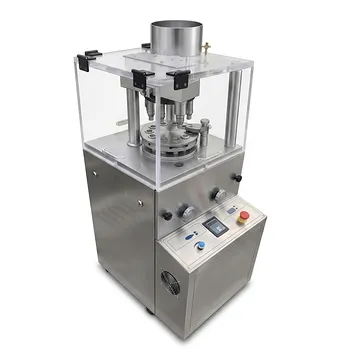
Enhanced 9 Punch Rotary Tablet Press for Powder Compaction
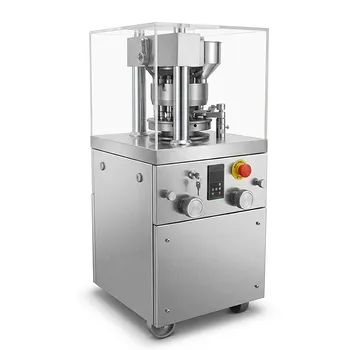
Ordinary Type Rotary Tablet Press for Pharmaceutical Chemical Food Electronic Industries