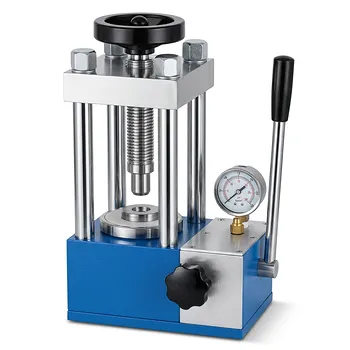
Why is a laboratory hydraulic press used to prepare powder catalysts for IR or XRF spectroscopy? Improve Signal Clarity
Updated 5 months ago
A laboratory hydraulic press is the standard tool for transforming loose catalyst powders into solid, uniform pellets required for high-resolution spectroscopy. By applying intense axial pressure, the press eliminates air gaps and creates a smooth, flat surface on the sample. This structural transformation is essential for ensuring that X-rays or infrared beams interact consistently with the material, rather than scattering off irregular particles or voids.
The core purpose of the hydraulic press is to standardize the sample’s density and geometry, effectively removing physical "noise" and matrix effects that would otherwise compromise the accuracy of chemical and structural identification.
Enhancing Spectral Clarity and Signal Quality
Minimizing Signal Scattering
In both IR and XRF spectroscopy, loose powders create uneven surfaces that cause the incident beam to scatter in unpredictable directions. A hydraulic press creates a dense, flat surface that ensures reflections and excitations are uniform across the entire sample area.
Ensuring Uniform Beam Penetration
For Infrared (IR) or FTIR analysis, the beam must pass through the sample to provide a clear spectrum. The pressing process creates uniformly thin pellets—often mixed with a transparent medium like KBr—that allow for high signal-to-noise ratios and accurate identification of functional groups.
Mapping Active Sites and Coordination
By creating a dense, transparent-to-light medium, researchers can accurately identify surface acid-base active sites. This level of detail is necessary to understand the coordination states of metal components within the catalyst, which dictate its chemical reactivity.
Standardizing Properties for Quantitative Analysis
Eliminating Porosity and Voids
Loose powder contains significant air pockets, or voids, which fluctuate in volume and distribution. The hydraulic press applies high pressure to remove this porosity, ensuring the internal density of the sample is consistent from one test to the next.
Reducing the "Matrix Effect"
In X-ray Fluorescence (XRF), the chemical environment of an element can influence its signal, a phenomenon known as the matrix effect. Standardizing the sample into a pellet with uniform element distribution minimizes these errors, allowing for the precise quantification of rare-earth dopants or mineral concentrations.
Improving Repeatability
Standardized sample preparation is the foundation of reproducible science. Using a press ensures that every sample has the same cylindrical geometry and thickness, allowing researchers to compare different catalyst batches without the interference of physical variations.
Understanding the Trade-offs and Limitations
Potential for Phase Transitions
Applying extreme pressure can occasionally alter the physical state of certain sensitive catalysts. Some microcrystalline structures may undergo pressure-induced phase changes or lose surface area, which could slightly misrepresent the catalyst's "as-synthesized" state.
The Role of Binders and Diluents
To form a stable pellet, catalysts are often mixed with binders like cellulose for XRF or KBr for IR. While these additives help create a solid disc, they also introduce potential contaminants or dilution effects that must be carefully accounted for during the final data analysis.
How to Apply This to Your Research Goals
Preparing a sample correctly is often more important than the sensitivity of the spectrometer itself. To achieve the best results, tailor your pressing technique to your specific analytical needs.
- If your primary focus is Infrared (FTIR) Spectroscopy: Use a press to create thin, transparent KBr discs to ensure the IR beam can penetrate the sample without being blocked by opaque powder clumps.
- If your primary focus is Quantitative XRF Analysis: Prioritize high-pressure molding with a binder to eliminate surface roughness and voids, which are the leading causes of error in elemental detection.
- If your primary focus is Identifying Metal Coordination: Ensure the pellet is pressed to a consistent density to allow for the precise measurement of signal intensities related to metal-active sites.
By mastering the pelletizing process, you convert a chaotic powder into a precision optical component, unlocking the full diagnostic potential of your spectroscopic instruments.
Summary Table:
| Analytical Method | Role of Hydraulic Press | Impact on Results |
|---|---|---|
| IR / FTIR | Creates thin, transparent KBr discs | High signal-to-noise; clear functional group ID |
| XRF | Eliminates surface roughness & voids | Precise quantification; reduced matrix effects |
| General Catalyst Research | Standardizes density & geometry | Superior repeatability and minimal physical 'noise' |
| Metal Coordination | Ensures uniform beam penetration | Accurate mapping of active sites and metal states |
Optimize Your Spectroscopy Results with Precision Sample Prep
Achieving high-resolution data starts with perfect sample preparation. We provide complete laboratory sample preparation solutions for material science, specializing in high-performance powder processing and compaction equipment.
Whether you are identifying metal coordination or performing quantitative XRF analysis, our extensive range of hydraulic presses—including standard lab presses, XRF pellet presses, Hot Presses, and Cold/Warm Isostatic Presses (CIP/WIP)—ensures your catalysts are transformed into uniform, high-density pellets every time.
Beyond pressing, we offer a full suite of equipment to refine your workflow, including:
- Grinding & Milling: Liquid nitrogen cryogenic grinders, planetary ball mills, and jet mills.
- Sizing & Mixing: Sieve shakers, powder mixers, and defoaming mixers.
Ready to eliminate signal noise and enhance your research accuracy? Contact us today to discuss the ideal equipment for your laboratory needs.
References
- Aryane A. Marciniak, Michael North. Heterogeneous catalysts for cyclic carbonate synthesis from carbon dioxide and epoxides. DOI: 10.1016/j.cogsc.2020.100365
Mentioned Products
- Ordinary Type Rotary Tablet Press for Pharmaceutical Chemical Food Electronic Industries
- Hydraulic Double Shaft Disperser for High Viscosity Liquid Mixing and Dispersion
- 6-Ton Small Single-Punch Tablet Press — Laboratory Powder & Granule Tableting Equipment / Tablet Forming Machine
- Enhanced 9 Punch Rotary Tablet Press for Powder Compaction
- 6 Ton Variable Frequency Single Punch Tablet Press
People Also Ask
- Why is a laboratory hydraulic press required for FT-IR KBr pellets? Achieve Precise Sample Clarity for ZrC–SiC Analysis
- Why is a laboratory hydraulic press required to compress oyster shell powder before XRF analysis? Improve Data Accuracy.
- Why is vacuum sealing and flexible packaging necessary for Aluminum Titanate powders during CIP? Ensure Peak Density
- What are the advantages of using hardened steel molds and graphite spray for titanium powder? Ensure structural integrity
- What role does a high-strength stainless steel mold kit play in the uniaxial die compaction process? Ensuring Precision

Tech Team · PowderPreparation
Last updated on May 14, 2026
Related Products
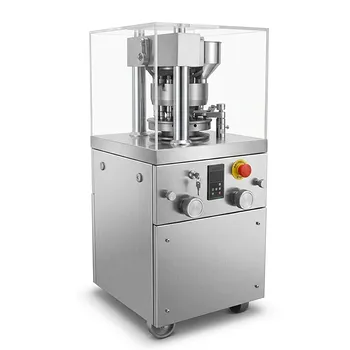
Ordinary Type Rotary Tablet Press for Pharmaceutical Chemical Food Electronic Industries
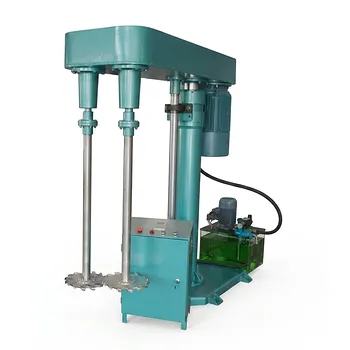
Hydraulic Double Shaft Disperser for High Viscosity Liquid Mixing and Dispersion
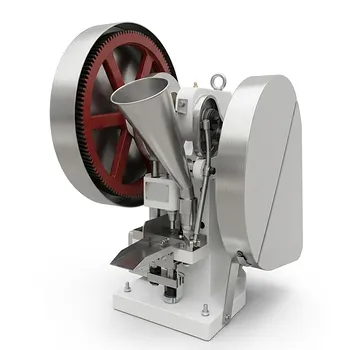
6-Ton Small Single-Punch Tablet Press — Laboratory Powder & Granule Tableting Equipment / Tablet Forming Machine
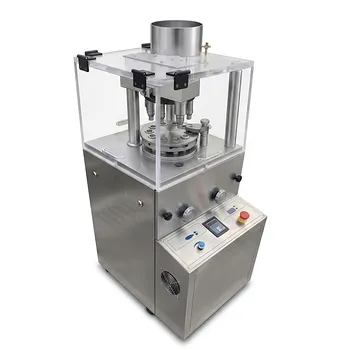
Enhanced 9 Punch Rotary Tablet Press for Powder Compaction
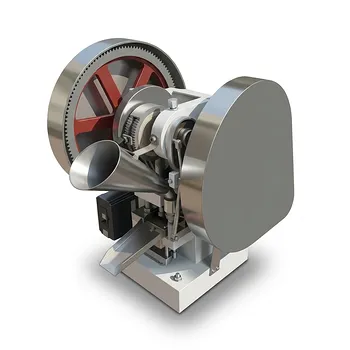
6 Ton Variable Frequency Single Punch Tablet Press
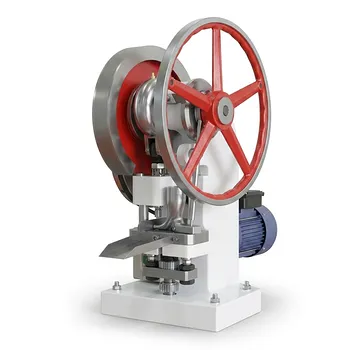
5 Ton Single Punch Tablet Press Laboratory Small Batch Production