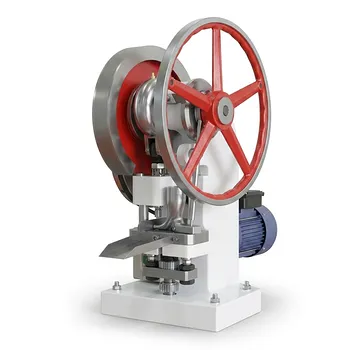
Why is a laboratory hydraulic press used for Ti-Al powder pre-pressing? Key to High-Density Bulk Composites
Updated 4 months ago
The laboratory hydraulic press serves as the critical bridge between loose powder and a solid composite. By applying precisely controlled high pressure, the press transforms Ti-Al powder mixtures into a dense "green compact," establishing the essential physical contact required for atomic diffusion and phase transformation during the subsequent sintering process.
Core Takeaway: A laboratory hydraulic press is used to eliminate interstitial voids and induce plastic deformation in Ti-Al powders, creating a high-density green body that ensures structural integrity and efficient material bonding during final heat treatment.
The Mechanism of Powder Consolidation
Achieving High Relative Density
Loose Ti-Al powders contain significant air gaps and voids that would result in high porosity if sintered directly. The hydraulic press applies uniaxial pressure (often ranging from 100 MPa to 600 MPa) to force particles into the smallest possible volume.
Inducing Plastic Deformation
Under high pressure, aluminum particles undergo plastic deformation, while titanium particles rearrange to fill remaining gaps. This physical displacement minimizes the distance between grains, which is a prerequisite for achieving a final material density of 96% or higher.
Creating Mechanical Interlocking
The press provides the mechanical energy needed to "lock" different powder components together into a cohesive shape. This mechanical interlocking gives the green compact sufficient mechanical strength to be handled and moved into a furnace without crumbling.
Prerequisites for Successful Sintering
Enhancing Atomic Diffusion
Sintering relies on atoms moving across particle boundaries to fuse the material together. The hydraulic press ensures intimate contact between Ti and Al particles, which drastically improves the efficiency of atomic diffusion and phase transformation at high temperatures.
Pre-Excluding Trapped Air
By pre-pressing the powders into a solid block, the press pre-excludes air trapped between micro-nano particles. This reduction in internal gas minimizes the risk of bloating, oxidation, or internal defects during the vacuum sintering stage.
Accelerating Densification Rates
A well-pressed green body has a much higher initial density than loose powder. This higher starting point leads to a faster densification rate and more predictable shrinkage during the final manufacturing steps.
Understanding the Trade-offs
Pressure Uniformity and Density Gradients
One primary challenge of uniaxial pressing is that pressure is not always distributed evenly throughout the mold. This can lead to density gradients, where the center of the compact is less dense than the edges, potentially causing cracks or warping during sintering.
Mold Wear and Material Limits
High-strength alloy steel molds are required to withstand the intense pressures needed for Ti-Al composites. Excessive pressure can lead to mold fatigue or "capping," where the top layer of the green body delaminates upon being ejected from the die.
Friction and Wall Effects
Friction between the powder and the mold walls can resist the downward force of the press. If not managed with proper lubricants or mold design, this can result in a non-uniform green body that exhibits inconsistent mechanical properties after the final heat treatment.
Making the Right Choice for Your Goal
How to Apply This to Your Project
- If your primary focus is maximum final density: Use higher pressures (up to 600 MPa) and high-strength steel molds to minimize initial porosity before sintering.
- If your primary focus is preventing structural cracks: Ensure your hydraulic press provides precise, incremental pressure control to avoid internal stresses within the green compact.
- If your primary focus is consistent alloy composition: Use the press to create dense blocks that prevent the separation of Ti and Al particles during handling or pulverization.
By mastering the pre-pressing stage, you ensure the physical foundation necessary for turning loose powders into high-performance bulk composites.
Summary Table:
| Process Function | Physical Mechanism | Impact on Final Composite |
|---|---|---|
| Consolidation | Uniaxial pressure (100-600 MPa) | Eliminates voids; reaches >96% relative density |
| Deformation | Plastic flow of Al particles | Ensures intimate atomic contact between grains |
| Interlocking | Mechanical bonding of particles | Creates stable green bodies that won't crumble |
| Air Exclusion | Pre-excluding trapped gases | Minimizes oxidation and bloating during sintering |
| Densification | Increasing initial green density | Accelerates sintering rates and ensures uniform shrinkage |
Elevate Your Material Research with Precision Compaction
Achieving the perfect bulk composite starts with the right foundation. At [Brand Name], we provide complete laboratory sample preparation solutions for material science, specializing in high-performance powder processing and compaction equipment.
Whether you are working with Ti-Al alloys or advanced ceramics, our extensive range of equipment is designed to ensure maximum density and structural integrity:
- Hydraulic Presses: Full spectrum including standard lab presses, XRF pellet presses, and advanced Cold/Warm Isostatic Presses (CIP/WIP).
- Thermal Processing: High-performance hot presses and vacuum hot presses for specialized sintering.
- Powder Preparation: A complete line of crushers, cryogenic grinders, and planetary ball mills, alongside vibratory sieve shakers and defoaming mixers.
Ready to optimize your Ti-Al powder pre-pressing workflow? Our experts are here to help you select the ideal pressure and mold configuration for your specific research goals.
Contact Us Today to Request a Quote or Consultation
References
- М. И. Лернер, Nikita Toropkov. Electrical Explosion Synthesis, Oxidation and Sintering Behavior of Ti-Al Intermetallide Powders. DOI: 10.3390/met11050760
Mentioned Products
- 6-Ton Small Single-Punch Tablet Press — Laboratory Powder & Granule Tableting Equipment / Tablet Forming Machine
- Enhanced 9 Punch Rotary Tablet Press for Powder Compaction
- 6 Ton Variable Frequency Single Punch Tablet Press
- Manual Tablet Press with Dual Scale Pressure Gauge for Pharmaceutical Food Chemical Laboratory Sample Preparation
- Small High-Speed Laboratory Grinder for Powder Processing
People Also Ask
- What is the function of a laboratory press in Cr-Ti alloy evaluation? Quantify Fracture Stress & Strength
- What is the function of a laboratory press in assessing the hydrophobic performance of modified vermiculite fillers?
- What is the core function of a laboratory press in the forming of ceramic filter element green bodies? Maximize Density.
- What is the function of a laboratory press in the preparation of ceramic feed rods? Master Density and Precision
- Why is vacuum sealing and flexible packaging necessary for Aluminum Titanate powders during CIP? Ensure Peak Density

Tech Team · PowderPreparation
Last updated on May 14, 2026
Related Products
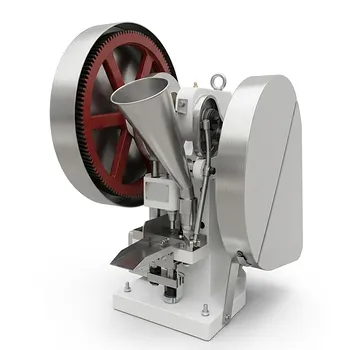
6-Ton Small Single-Punch Tablet Press — Laboratory Powder & Granule Tableting Equipment / Tablet Forming Machine
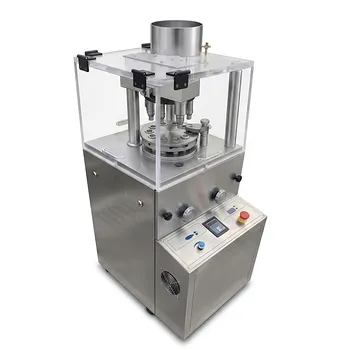
Enhanced 9 Punch Rotary Tablet Press for Powder Compaction
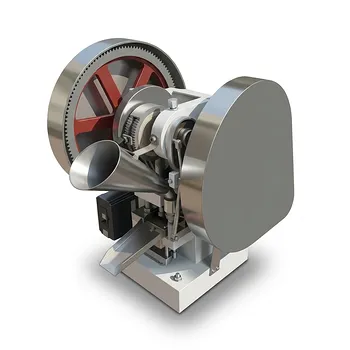
6 Ton Variable Frequency Single Punch Tablet Press
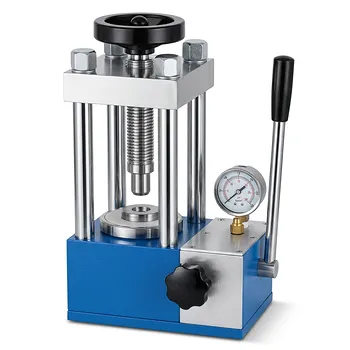
Manual Tablet Press with Dual Scale Pressure Gauge for Pharmaceutical Food Chemical Laboratory Sample Preparation
Small High-Speed Laboratory Grinder for Powder Processing
High Speed Swing Type Laboratory Pulverizer for Fine Powder Grinding and Sample Preparation
Universal Laboratory Pulverizer Grinder for Small Batch Powder Processing and Material Science Research
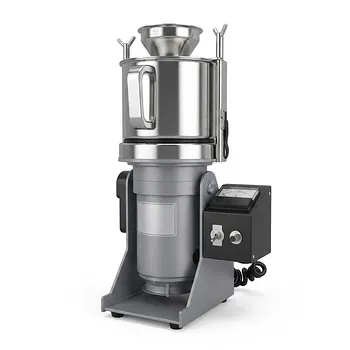
High Speed Air Induced Ultrafine Pulverizer Laboratory Superfine Powder Mill for Pharmaceutical and Material Science Sample Preparation
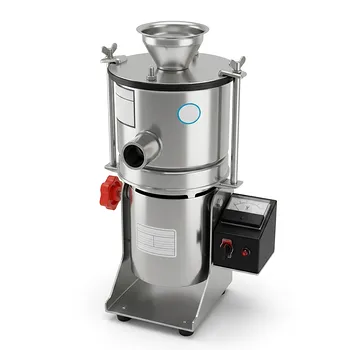
Air Guided Ultrafine Pulverizer High Speed Laboratory Powder Grinder for Chemical and Material Processing
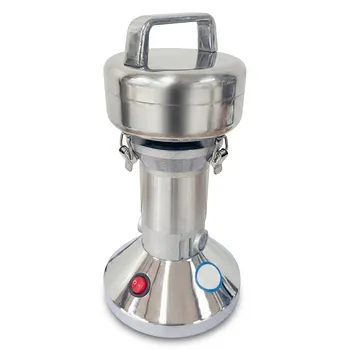
Small Trace Sample High Speed Pulverizer Grinder Laboratory Powder Mill
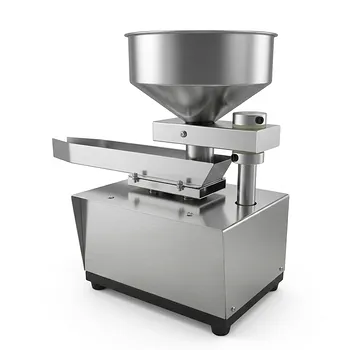
Automatic Vibrating Powder Feeder for Laboratory Material Processing Precision Vibratory Hopper Feeder for Granular and Powder Material Handling Industrial Grade Vibrating Tray Feeder for Consistent Material Sample Preparation