Why is a laboratory hydraulic press essential for ZTA ceramic preparation? Key to High-Density, Defect-Free Sintering
Updated 4 months ago
The laboratory hydraulic press is the foundational tool for Zirconia Toughened Alumina (ZTA) ceramic fabrication. It provides the precise, high-pressure environment required to transform loose ceramic powder into a cohesive "green body" with uniform density and specific geometry. This compaction process is critical because it eliminates internal voids and establishes the structural integrity needed for the ceramic to survive the intense thermal stresses of sintering.
A laboratory hydraulic press ensures ZTA green bodies achieve maximum initial packing density and internal uniformity through controlled uniaxial pressure. By facilitating particle rearrangement and eliminating large pores, it directly prevents non-uniform shrinkage, deformation, and structural failure during the high-temperature sintering phase.
The Role of Controlled Compaction in ZTA Preparation
Facilitating Particle Rearrangement
Loose ZTA powder mixtures possess significant internal friction that prevents particles from settling efficiently on their own. The hydraulic press applies a stable mechanical force—often ranging from 30 to 150 MPa—to overcome this friction and force particles into a tighter configuration. This rearrangement is the first step in creating a solid foundation for the final ceramic component.
Eliminating Internal Voids and Entrapped Air
The pressing process acts as a "de-airing" mechanism, expelling air trapped between fine powder particles. By removing these gaps, the press reduces the presence of large internal voids that would otherwise become structural weak points. This results in a higher relative density, often exceeding the threshold required for successful solid-phase reactions.
Establishing Mechanical Green Strength
Once compressed, the particles bond closely, often assisted by a binder, to form a "green body" with sufficient mechanical strength for handling. This strength allows the sample to be moved or machined into specific shapes, such as 4x4x60 mm bars or discs, without crumbling. Without this initial compaction, the ZTA powder would remain a shapeless mass incapable of maintaining its integrity.
Linking Green Body Quality to Sintering Success
Preventing Non-Uniform Shrinkage
The primary safeguard against deformation is the achievement of uniform internal density across the entire green body. If density varies, different sections of the ceramic will shrink at different rates during sintering, leading to warping or "potato-chipping." A hydraulic press provides the stable, axial loading necessary to ensure this density is consistent from the center to the edges.
Achieving High Final Density
The initial packing density established by the press directly influences the final sintered density of the ZTA ceramic. High-pressure loads (sometimes reaching 37.5 tons) allow the green body to start at a much higher relative density. This proximity to the material's theoretical density minimizes the total shrinkage required, resulting in a more predictable and dimensionally accurate final product.
Reducing the Risk of Macro-Cracking
Large pores or "nests" in a poorly compacted green body are the primary sites for crack initiation during the heating cycle. By applying precise pressure, the hydraulic press ensures that these pores are eliminated before the sintering stage begins. This pre-densification is essential for maintaining the structural integrity of the ZTA composite, which relies on a fine, uniform microstructure for its toughening properties.
Understanding the Trade-offs and Pitfalls
The Challenge of Density Gradients
While uniaxial pressing is effective, it can lead to density gradients caused by friction between the powder and the mold walls. The pressure at the top of the mold may be higher than at the bottom, which can still cause minor warping if not managed. To mitigate this, experts often use lubricants or double-action pressing techniques.
Over-Pressurization Risks
Applying excessive pressure can be as detrimental as applying too little. If the pressure exceeds the limits of the powder/binder system, it can cause lamination or "spring-back" cracks when the load is released. Finding the optimal pressure—for example, the commonly used 55 MPa for specific ZTA blends—is vital for a defect-free green body.
Mold Wear and Contamination
The high pressures required for ZTA compaction put significant stress on precision forming molds. Over time, this can lead to tool wear, which may introduce small amounts of metallic contamination into the ceramic powder. Regular maintenance and the use of hardened steel or tungsten carbide molds are necessary to maintain purity and dimensional standards.
How to Apply This to Your Project
Making the Right Choice for Your Goal
To achieve the best results with Zirconia Toughened Alumina, your pressing strategy must align with your final performance requirements.
- If your primary focus is maximum structural toughness: Use a high-pressure load (above 100 MPa) to ensure the highest possible initial density and minimal residual porosity.
- If your primary focus is dimensional precision for complex shapes: Prioritize uniform pressure application and utilize precision-ground molds to minimize post-sintering machining.
- If your primary focus is experimental material testing: Maintain a consistent, standardized pressure (such as 30 MPa) across all samples to ensure that pore structure is a controlled variable.
Effective ZTA preparation begins with the mastery of the hydraulic press, as the quality of the green body dictates the ultimate success of the finished ceramic.
Summary Table:
| Key Function | Impact on ZTA Green Body | Technical Benefit |
|---|---|---|
| Particle Rearrangement | Overcomes internal friction | Establishes a tight, stable foundation |
| Void Elimination | Removes trapped air/pores | Maximizes relative density for sintering |
| Green Strength | Provides mechanical integrity | Allows for handling and precision machining |
| Density Control | Ensures internal uniformity | Prevents warping and "potato-chipping" |
| High-Pressure Load | Minimizes total shrinkage | Leads to predictable dimensional accuracy |
Elevate Your Material Research with Precision Compaction
Achieving the perfect green body is the most critical step in Zirconia Toughened Alumina (ZTA) fabrication. At our laboratory equipment division, we provide complete sample preparation solutions designed specifically for material science.
We specialize in high-performance powder processing and compaction equipment, offering a full spectrum of hydraulic presses to meet your exact specifications:
- Advanced Pressing Solutions: Standard lab presses, XRF pellet presses, and Vacuum Hot Presses.
- Isostatic Pressing: Cold/Warm Isostatic Presses (CIP/WIP) for eliminating density gradients.
- Sample Prep Integration: A comprehensive line of crushers, cryogenic grinders, and planetary ball mills to ensure your ZTA powder is perfectly homogenized before pressing.
Whether you are focusing on maximum structural toughness or dimensional precision, our expertise ensures your lab has the tools to succeed. Contact us today to discuss your project and find the ideal pressing solution for your ZTA ceramics!
References
- <p>Dan Liu, Dongsheng Li, Ya’nan Zhang, Junyi Ma, Guisheng Liang, Huiyao Wang</p>. Research on the Influence of Additives on the Mechanical Properties of Zirconia-Toughened Alumina Ceramics. DOI: 10.25236/ijfet.2025.070105
Mentioned Products
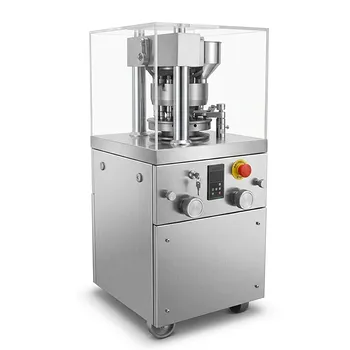
- Ordinary Type Rotary Tablet Press for Pharmaceutical Chemical Food Electronic Industries
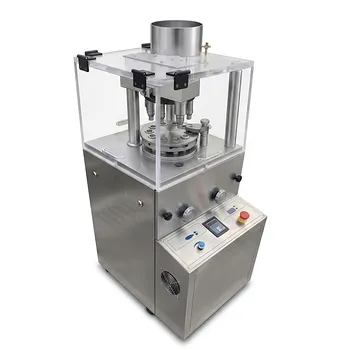
- Enhanced 9 Punch Rotary Tablet Press for Powder Compaction
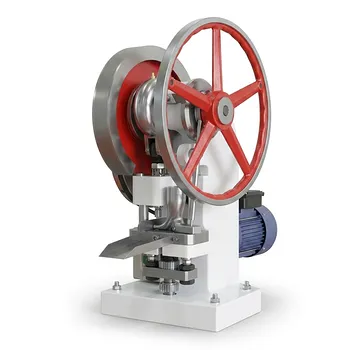
- 5 Ton Single Punch Tablet Press Laboratory Small Batch Production
- 6-Ton Small Single-Punch Tablet Press — Laboratory Powder & Granule Tableting Equipment / Tablet Forming Machine
People Also Ask
- Why is a laboratory hydraulic press required for FT-IR KBr pellets? Achieve Precise Sample Clarity for ZrC–SiC Analysis
- Why is a laboratory hydraulic press required to compress oyster shell powder before XRF analysis? Improve Data Accuracy.
- Why is vacuum sealing and flexible packaging necessary for Aluminum Titanate powders during CIP? Ensure Peak Density
- What are the advantages of using hardened steel molds and graphite spray for titanium powder? Ensure structural integrity
- What role does a high-strength stainless steel mold kit play in the uniaxial die compaction process? Ensuring Precision

Tech Team · PowderPreparation
Last updated on Jun 03, 2026
Related Products
Ordinary Type Rotary Tablet Press for Pharmaceutical Chemical Food Electronic Industries
Enhanced 9 Punch Rotary Tablet Press for Powder Compaction
5 Ton Single Punch Tablet Press Laboratory Small Batch Production