Why is a laboratory hydraulic press equipped with heated platens necessary for the biomass molding process? Lignin Binding
Updated 5 months ago
The laboratory hydraulic press with heated platens is the critical catalyst for transforming loose biomass into high-density energy carriers. By providing simultaneous pressure and thermal energy, the press allows the material to reach the glass transition point of lignin (approximately 150°C). At this temperature, the lignin softens and flows, acting as a natural binder that creates permanent structural bridges between particles upon cooling.
Core Takeaway: To achieve the mechanical integrity and density required for industrial-grade pellets, biomass must be processed at temperatures that induce plastic deformation in natural polymers like lignin. The heated hydraulic press ensures this thermal activation occurs precisely and uniformly under constant pressure.
The Role of Thermal Activation in Biomass
Reaching the Lignin Glass Transition Point
Lignin is the complex polymer responsible for the structural rigidity of wood and agricultural residues like sugarcane bagasse. At room temperature, lignin is a brittle solid; however, when heated to approximately 150°C, it undergoes a phase change known as the glass transition.
Lignin as a Natural Adhesive
Once the glass transition point is reached, the lignin becomes "plastic" and begins to flow. This allows it to act as a natural adhesive, penetrating the microscopic pores of the biomass and filling the voids between individual particles.
Formation of Solid Bridges
As the molded material cools after the pressing cycle, the softened lignin re-hardens. This creates hard solid bridges that lock the compressed particles into a stable, rigid matrix, significantly increasing the compressive strength of the resulting briquette.
The Impact of Synchronized Pressure and Heat
Densification and Void Reduction
A hydraulic press applies constant axial pressure (typically between 30 to 40 bar) to force particles into a tighter arrangement. This pressure effectively expels internal air bubbles and pores, which is essential for achieving the high apparent density required for efficient energy storage.
Enhancing Mechanical Integrity
The combination of high pressure (up to 225 kg/cm²) and heat ensures that any added binders can fully penetrate the biomass structure. This synergy promotes physical interlocking between particles, preventing the finished pellets from cracking or loosening during storage and transportation.
Standardized Sample Preparation
Precision control over both temperature and pressure allows researchers to produce pellets with exact dimensions, such as 15 mm in diameter. This level of control is necessary to accurately simulate the effects of industrial-scale pelletization in a controlled laboratory environment.
Understanding the Trade-offs
Thermal Degradation Risks
While heat is necessary for binding, excessive temperatures can lead to the thermal degradation of the biomass fibers. If the platens are too hot for too long, the material may char, which reduces the volatile content and overall energy value of the fuel.
Energy and Cycle Time
Heated pressing is more energy-intensive than cold pressing and requires additional time for the mold to reach the target temperature. Furthermore, the pellets often need a controlled cooling phase within the press to ensure the lignin bridges set correctly before the pressure is released.
Maintenance and Equipment Wear
Integrating heating elements into a hydraulic system increases the complexity of the equipment. High-temperature operation can accelerate the wear on seals and requires the use of high-strength cylindrical molds specifically designed to handle thermal expansion without losing tolerances.
Making the Right Choice for Your Project
Choosing the correct pressing parameters depends entirely on the characteristics of your raw material and your final application.
- If your primary focus is maximizing mechanical strength: Use heated platens to reach at least 150°C to ensure the lignin fully transitions and forms solid structural bridges.
- If your primary focus is high-volume screening of binders: Utilize the press to apply precise, constant pressure at lower temperatures to evaluate the physical interlocking properties of the additive alone.
- If your primary focus is simulating industrial pelletization: Set the hydraulic press to maintain a synchronized temperature and pressure profile that mimics the frictional heat generated in large-scale rotary die pellets.
By mastering the balance of heat and pressure, you can effectively turn low-density waste into a high-value, stable energy resource.
Summary Table:
| Key Feature | Requirement | Impact on Biomass Molding |
|---|---|---|
| Temperature | ~150°C | Reaches lignin glass transition point to act as a natural adhesive. |
| Pressure | 30-40 bar (Axial) | Eliminates internal voids and air bubbles for high densification. |
| Binding | Solid Bridges | Forms a rigid, stable matrix between particles upon cooling. |
| Control | Synchronized Heat/Pressure | Ensures mechanical integrity and standardized sample dimensions. |
Elevate Your Material Research with Precision Compaction
Are you looking to transform loose biomass into high-performance energy carriers? [Your Brand Name] provides complete laboratory sample preparation solutions specifically designed for material science and powder processing.
We specialize in high-precision equipment to ensure your research is accurate and repeatable. Our extensive product line includes:
- Advanced Compaction: Heated hydraulic presses, Vacuum Hot Presses, Cold/Warm Isostatic Presses (CIP/WIP), and XRF pellet presses.
- Size Reduction: Jaw/roll crushers, liquid nitrogen cryogenic grinders, and diverse mills (planetary ball, jet, sand, disc, rotor).
- Processing & Sifting: Sieve shakers (vibratory/air-jet), powder mixers, and high-efficiency defoaming mixers.
Whether you are simulating industrial pelletization or evaluating new binders, our equipment delivers the exact thermal and pressure profiles your project demands.
Ready to optimize your lab’s workflow?
Contact our specialists today for a custom solution!
References
- Ian Dominic F. Tabañag, Luis K. Cabatingan. Utilization of Lignin from Waste Degumming Liquor as Fuel Additive and Binder in Sugarcane Bagasse Briquettes. DOI: 10.4028/p-4ksdat
Mentioned Products
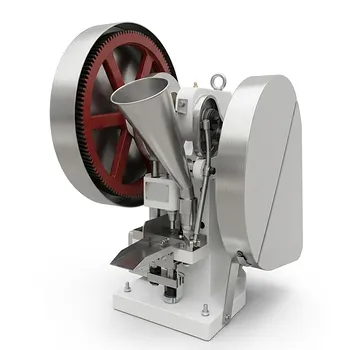
- 6-Ton Small Single-Punch Tablet Press — Laboratory Powder & Granule Tableting Equipment / Tablet Forming Machine
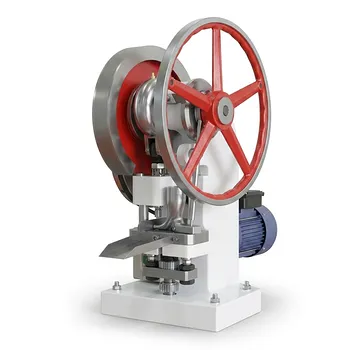
- 5 Ton Single Punch Tablet Press Laboratory Small Batch Production
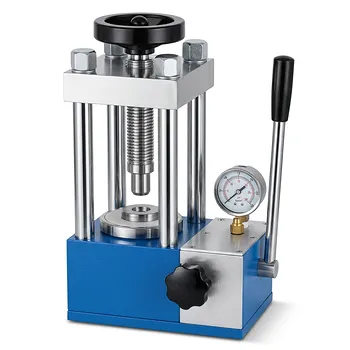
- Manual Tablet Press with Dual Scale Pressure Gauge for Pharmaceutical Food Chemical Laboratory Sample Preparation
- 6 Ton Variable Frequency Single Punch Tablet Press
- Nano High Energy Vibratory Ball Mill with Heating and Temperature Control
People Also Ask
- What is the function of a laboratory press in Cr-Ti alloy evaluation? Quantify Fracture Stress & Strength
- What is the function of a laboratory press in assessing the hydrophobic performance of modified vermiculite fillers?
- What is the core function of a laboratory press in the forming of ceramic filter element green bodies? Maximize Density.
- What is the function of a laboratory press in the preparation of ceramic feed rods? Master Density and Precision
- Why is vacuum sealing and flexible packaging necessary for Aluminum Titanate powders during CIP? Ensure Peak Density

Tech Team · PowderPreparation
Last updated on May 14, 2026
Related Products
6-Ton Small Single-Punch Tablet Press — Laboratory Powder & Granule Tableting Equipment / Tablet Forming Machine
5 Ton Single Punch Tablet Press Laboratory Small Batch Production
Manual Tablet Press with Dual Scale Pressure Gauge for Pharmaceutical Food Chemical Laboratory Sample Preparation
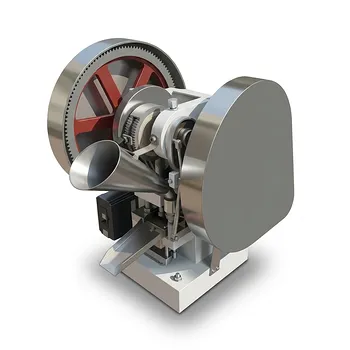
6 Ton Variable Frequency Single Punch Tablet Press

Nano High Energy Vibratory Ball Mill with Heating and Temperature Control
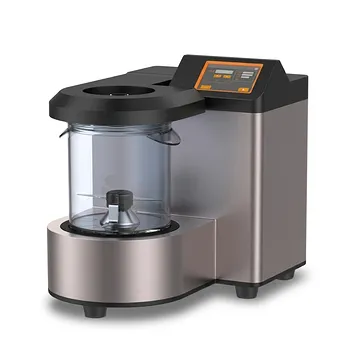
Laboratory Knife Mill for Large Volume Sample Homogenization and Food Preparation
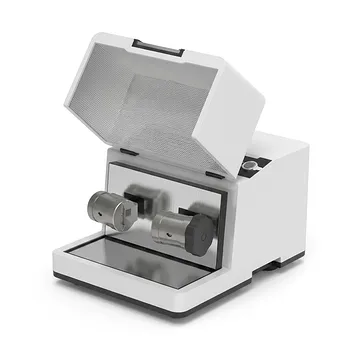
Heating Temperature Controlled High Energy Vibratory Ball Mill