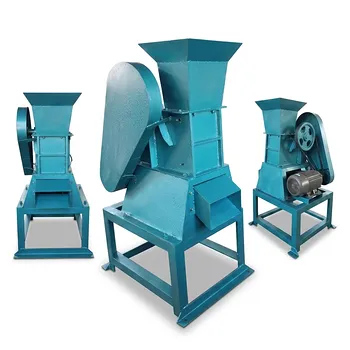
Why is a high-precision laboratory hydraulic press critical for ceramic green bodies? Ensure Density and Uniformity
Updated 5 months ago
Precision compaction is the essential first step in ceramic fabrication because it dictates the structural integrity of the final material. A high-precision laboratory hydraulic press provides the exact, repeatable pressure required to maximize particle packing density and eliminate internal density gradients, which are the primary causes of failure during the high-temperature sintering process.
Core Takeaway: By providing controlled, uniform force, a high-precision press ensures that ceramic green bodies possess the homogeneous density needed to survive sintering without warping, cracking, or developing performance-limiting physical defects.
The Mechanics of Powder Architecture
Maximizing Particle Packing Density
A high-precision press forces loose powder particles to overcome friction and undergo rearrangement and plastic deformation.
This process expels trapped air and increases the number of particle contact points, creating a dense, cohesive structure known as a green body.
A high initial "green density" is critical because it reduces the total volume of shrinkage that occurs later during the firing stage.
Defining Geometric Precision
The press utilizes specialized steel molds to shape the powder into specific geometries, such as discs or rectangular bars (e.g., 4x4x60 mm).
Consistent pressure ensures that these dimensions are accurate and that the green body has sufficient mechanical strength to be handled before sintering.
Without precise control, the sample may suffer from delamination or structural collapse before it even reaches the kiln.
Eliminating Density Gradients
The Danger of Non-Uniformity
If pressure is applied unevenly, some areas of the green body will be more compact than others, creating internal density gradients.
During sintering, areas with different densities shrink at different rates, leading to internal stress that causes the material to warp or "potato chip."
In high-performance applications, these gradients often manifest as micro-cracks that compromise the mechanical and electrical reliability of the final component.
Stability and Pressure Holding
High-precision presses are capable of maintaining a stable pressure—often reaching nearly 100 megapascals—for specific durations.
This pressure-holding capability allows the powder particles to fully settle and reach an equilibrium state within the mold.
Uniformity at this stage is the only way to ensure that the final ceramic achieves its intended geometric shape and physical density.
Impact on High-Performance Material Properties
Challenges in High-Entropy Ceramics
High-entropy ceramics involve complex mixtures of powders with varying particle sizes and hardness levels.
Because these materials exhibit sluggish diffusion effects, they require extreme uniformity in the green body to ensure atoms can migrate correctly during sintering.
Precision compaction minimizes internal porosity, ensuring that the different components react uniformly despite their varying diffusion rates.
Minimizing Dielectric Loss
In dielectric resonators, physical defects like pores or micro-cracks act as sites for energy dissipation.
By achieving high green density through precise forming, manufacturers can minimize the dielectric loss caused by these physical imperfections.
This results in materials with superior signal clarity and higher efficiency in high-frequency electronic applications.
Understanding the Trade-offs and Pitfalls
The Risk of Over-Compaction
Applying excessive pressure can lead to a phenomenon known as "capping," where the top layers of the green body shear off upon release from the mold.
This occurs when the elastic energy stored in the compressed particles exceeds the strength of the green body's internal bonds.
Finding the optimum pressure (often ranging from 3 MPa to 40+ MPa depending on the material) is a delicate balance that requires highly adjustable equipment.
Mold Wear and Contamination
High-pressure forming puts significant stress on steel molds, which can lead to wear over time.
Worn molds introduce surface irregularities into the green body, which can act as stress concentrators during sintering.
Furthermore, if the press is not calibrated correctly, uneven loading can damage the mold or lead to unbalanced stress within the ceramic sample.
How to Apply This to Your Project
Making the Right Choice for Your Goal
To achieve the best results with your laboratory hydraulic press, tailor your parameters to your specific material requirements:
- If your primary focus is High-Entropy Ceramics: Prioritize a press with exceptional pressure stability to compensate for sluggish diffusion and complex powder chemistry.
- If your primary focus is Dielectric or Electronic Components: Focus on maximizing green density to eliminate internal pores and reduce dielectric loss.
- If your primary focus is Complex Geometric Shapes: Use a press with precise displacement control to ensure uniform density across varying cross-sections.
- If your primary focus is High-Volume Research: Invest in a system with programmable cycles to ensure repeatability across hundreds of samples.
A high-precision press is not merely a forming tool; it is the fundamental guarantor of material reliability and performance.
Summary Table:
| Key Feature | Functional Benefit | Impact on Final Ceramic |
|---|---|---|
| Uniform Force Application | Eliminates internal density gradients | Prevents warping, cracking, and "potato chipping" |
| High Green Density | Maximizes particle contact points | Reduces volume shrinkage during the firing stage |
| Pressure Stability | Ensures structural homogeneity | Enhances mechanical strength and electrical reliability |
| Precise Load Control | Prevents "capping" and over-compaction | Minimizes internal porosity and dielectric loss |
Optimize Your Ceramic Fabrication with Precision Compaction
Achieving the perfect green body is the foundation of high-performance material science. At [Company Name], we provide complete laboratory sample preparation solutions tailored for advanced powder processing.
Our extensive range of equipment is designed to meet the rigorous demands of material research:
- Hydraulic Presses: A full spectrum including standard lab presses, XRF pellet presses, Hot Presses, Vacuum Hot Presses, and Cold/Warm Isostatic Presses (CIP/WIP).
- Powder Processing: High-efficiency crushers (jaw/roll), liquid nitrogen cryogenic grinders, and advanced mills (planetary ball, jet, and rotor mills).
- Sizing & Mixing: Vibratory/air-jet sieve shakers and high-performance powder or defoaming mixers.
Whether you are working with high-entropy ceramics or high-frequency electronic components, our precision tools ensure the structural integrity and repeatability your research requires.
Contact our technical team today to find your solution
References
- D. Kolář. Chemical research needed to improve high-temperature processing of advanced ceramic materials (Technical report). DOI: 10.1351/pac200072081425
Mentioned Products
- Manual Tablet Press with Dual Scale Pressure Gauge for Pharmaceutical Food Chemical Laboratory Sample Preparation
- Small High-Speed Laboratory Grinder for Rapid Sample Preparation
- High Speed Small Laboratory Crusher for Dry Material Sample Preparation
- 6-Ton Small Single-Punch Tablet Press — Laboratory Powder & Granule Tableting Equipment / Tablet Forming Machine
- Small High Speed Upright Grinder for Laboratory Sample Preparation
People Also Ask
- What is the function of a laboratory press in Cr-Ti alloy evaluation? Quantify Fracture Stress & Strength
- What is the function of a laboratory press in assessing the hydrophobic performance of modified vermiculite fillers?
- What is the core function of a laboratory press in the forming of ceramic filter element green bodies? Maximize Density.
- What is the function of a laboratory press in the preparation of ceramic feed rods? Master Density and Precision
- Why is vacuum sealing and flexible packaging necessary for Aluminum Titanate powders during CIP? Ensure Peak Density

Tech Team · PowderPreparation
Last updated on May 14, 2026
Related Products
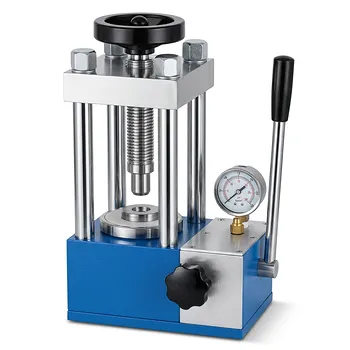
Manual Tablet Press with Dual Scale Pressure Gauge for Pharmaceutical Food Chemical Laboratory Sample Preparation
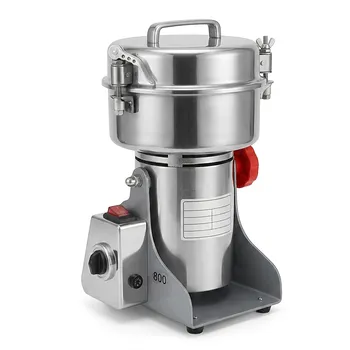
Small High-Speed Laboratory Grinder for Rapid Sample Preparation
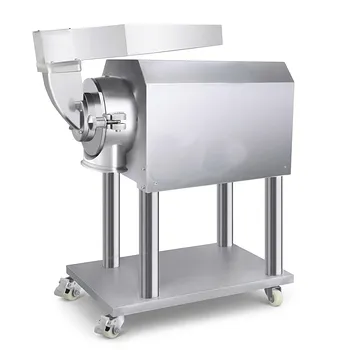
High Speed Small Laboratory Crusher for Dry Material Sample Preparation
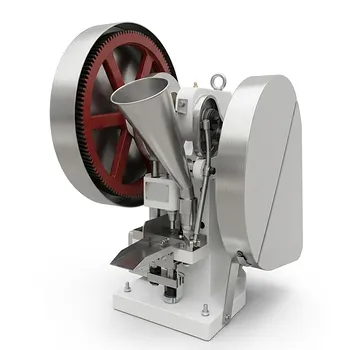
6-Ton Small Single-Punch Tablet Press — Laboratory Powder & Granule Tableting Equipment / Tablet Forming Machine
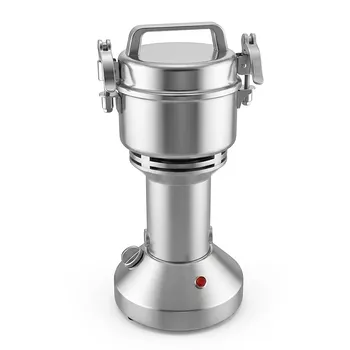
Small High Speed Upright Grinder for Laboratory Sample Preparation