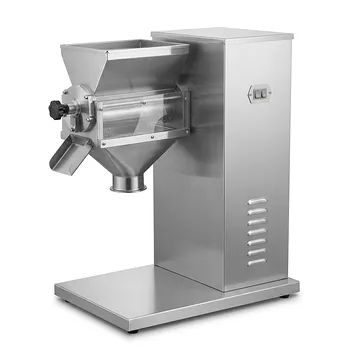
Why use a high-efficiency powder mixer for Bakelite-modified concrete? Ensure Structural Integrity & Homogeneity.
Updated 4 months ago
Achieving structural integrity in modified concrete requires more than standard agitation. When replacing traditional sand with Bakelite powder—a thermosetting resin—you are introducing a material with a radically different density and hydrophilicity. A high-efficiency powder mixer is essential because it provides the mechanical shear forces necessary to force these dissimilar materials into a uniform, microscopic blend that standard mixers simply cannot achieve.
Core Takeaway: High-efficiency mixers are the only way to overcome the physical and chemical disparities between Bakelite and cementitious matrices. Without high-intensity shearing, the resulting concrete will suffer from slurry segregation and inconsistent mechanical properties.
Overcoming Material Dissimilarity
The Challenge of Density Gradients
Bakelite powder is significantly lighter than natural sand, creating a natural tendency for the particles to float or settle unevenly during the mixing process. High-efficiency mixers use aggressive agitation to eliminate this segregation, ensuring that the lightweight resin is locked into the heavier cement paste.
Managing Hydrophilicity Disparities
Unlike mineral sand, Bakelite is a thermosetting resin with different surface wetting characteristics (hydrophilicity). High-intensity mixing ensures that the cement slurry effectively coats every Bakelite particle, facilitating a deep mix that prevents "dry spots" or weak interfaces within the concrete matrix.
The Mechanics of Microscopic Homogenization
Breaking Down Agglomerates
Fine powders, especially resins and mineral fillers, tend to clump together when they encounter moisture. High-efficiency equipment provides the necessary mechanical shear to break down these slurry agglomerates, ensuring a uniform distribution of binders and fillers throughout the structure.
Optimizing the Microstructure
By achieving homogenization at both the macroscopic and microscopic levels, these mixers ensure that subsequent hydration is uniform. This minimizes microstructural defects and ensures that the finished concrete possesses consistent durability and compressive strength across the entire batch.
Correcting Grading Deficiencies
Modified concrete often lacks the ideal particle size distribution found in natural aggregates. Industrial powder mixers allow for the forced homogenization of various components, effectively optimizing the grading curve and improving the overall density and workability of the final product.
Understanding the Trade-offs
Equipment Cost vs. Structural Risk
High-efficiency mixers represent a higher initial capital investment compared to gravity-fed or standard drum mixers. However, using substandard equipment with Bakelite results in structural inconsistency, where some sections of the concrete may meet specifications while others fail due to poor resin distribution.
Energy Consumption and Processing Time
The high-intensity shearing required for these specialized blends consumes more energy per cycle. While this increases operational costs, it is the only way to trigger the necessary adsorption and diffusion between non-standard particles and the cement matrix, which is fundamental for long-term material stability.
How to Apply This to Your Project
Making the Right Choice for Your Goal
To ensure your Bakelite-modified concrete performs as engineered, consider your primary objective:
- If your primary focus is consistent mechanical strength: Utilize a mixer capable of high-intensity mechanical shearing to prevent localized structural defects caused by resin clumping.
- If your primary focus is optimized workability: Prioritize equipment that can achieve a uniform microscopic blend, as this ensures the slurry remains stable and easy to pour without segregating.
- If your primary focus is research and material testing: Use industrial-grade powder mixing to ensure your samples are representative, providing accurate data on how Bakelite ratios truly affect concrete performance.
True structural reliability in modified concrete is impossible without the microscopic homogenization that only a high-efficiency mixer can provide.
Summary Table:
| Challenge | Standard Mixing Impact | High-Efficiency Mixer Benefit |
|---|---|---|
| Density Gradient | Bakelite floats; causes segregation | High-intensity agitation locks resin into cement |
| Hydrophilicity | Poor wetting; creates weak interfaces | Forced shear ensures complete particle coating |
| Agglomeration | Clumps form; uneven hydration | Mechanical breakdown of slurry agglomerates |
| Microstructure | Localized structural defects | Homogeneous blend for consistent durability |
Optimize Your Material Consistency with Expert Solutions
Achieving microscopic homogeneity in complex blends like Bakelite-modified concrete requires precision equipment. At [Company Name], we provide complete laboratory sample preparation solutions for material science, specializing in high-performance powder processing and compaction.
Whether you need to overcome material dissimilarity with our powder and defoaming mixers, or require precise particle size reduction using our planetary ball mills, jet mills, or crushers, we have the technology to ensure your research and production meet the highest standards. We also offer a full spectrum of hydraulic presses (CIP/WIP) and XRF pellet presses for advanced material characterization.
Ready to eliminate structural inconsistency in your samples? Contact our technical team today to find the perfect equipment for your lab!
References
- Gyandeep Gupta, Sriramkumar. BAKELITE POWDER AS AN ALTERNATIVE TO NATURAL SAND IN CONCRETE FOR IMPROVING ITS PROPERTIES. DOI: 10.56726/irjmets29977
Mentioned Products
- High Efficiency Vacuum Planetary Centrifugal Mixer and Defoaming Machine for Industrial Material Research and Precise Laboratory Powder Dispersion
- Multi Dimensional Universal Mixer for High Uniformity Powder Blending
- High Speed Laboratory Grinder Efficient Stainless Steel Powder Pulverizer Universal Material Science Mill for Sample Preparation
- High-Speed Simple Disperser for Efficient Mixing, Dispersion, and Emulsification
- Continuous Feeding Grinder High Efficiency Pulverizer for Lab Sample Preparation
People Also Ask
- Why is a planetary centrifugal mixer recommended for geopolymer slurries? Achieve high-shear, air-free homogenization.
- What core functions does a planetary centrifugal mixer perform? Optimize Hard Carbon Anode Slurry & Degassing
- Why is a planetary centrifugal mixer utilized for wood powder and HPMC? Achieve uniform dispersion & rapid defoaming.
- What role does a planetary centrifugal mixer play in flexible sensor inks? Achieve Nano-Scale Homogenization
- What is the role of a planetary centrifugal mixer in preparing DCPD resin-based matrices? Ensure Flawless Homogeneity

Tech Team · PowderPreparation
Last updated on Jun 03, 2026
Related Products
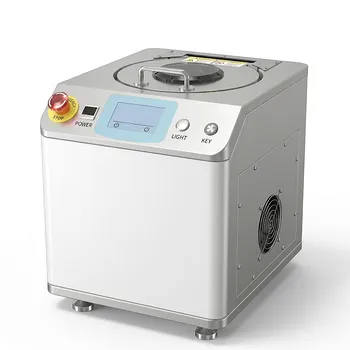
High Efficiency Vacuum Planetary Centrifugal Mixer and Defoaming Machine for Industrial Material Research and Precise Laboratory Powder Dispersion
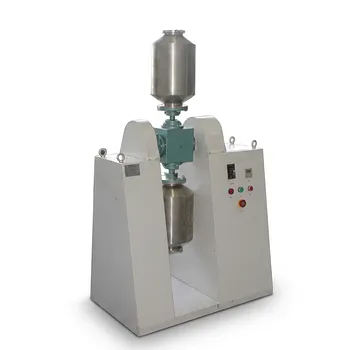
Multi Dimensional Universal Mixer for High Uniformity Powder Blending
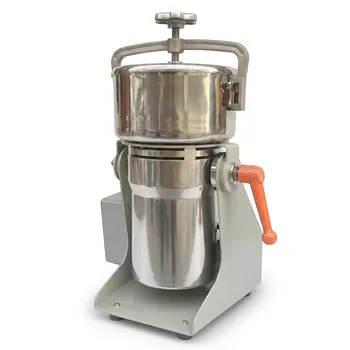
High Speed Laboratory Grinder Efficient Stainless Steel Powder Pulverizer Universal Material Science Mill for Sample Preparation
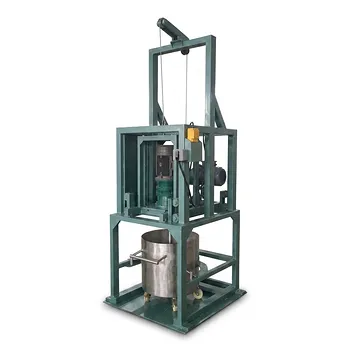
High-Speed Simple Disperser for Efficient Mixing, Dispersion, and Emulsification
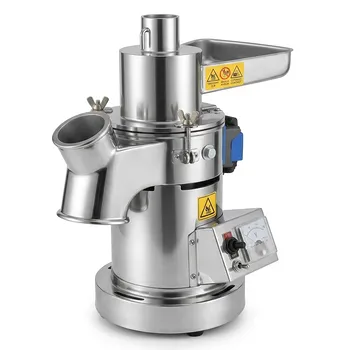
Continuous Feeding Grinder High Efficiency Pulverizer for Lab Sample Preparation
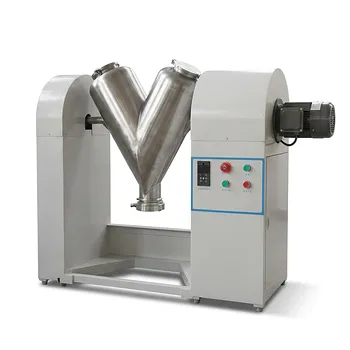
V-Type Powder Mixer for Uniform Blending of Dry Powders and Granules
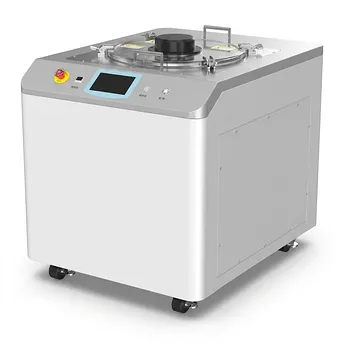
Industrial Planetary Centrifugal Vacuum Defoaming Mixer for High Viscosity Paste and Powder Homogenization
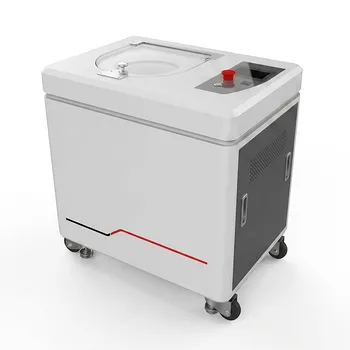
非介入式材料均质机真空脱泡行星搅拌高粘度混合设备
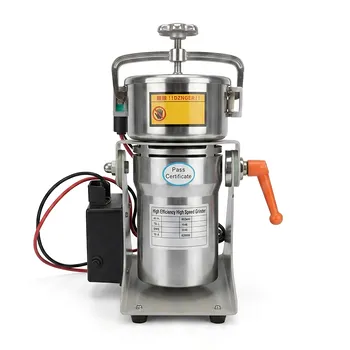
High Efficiency High Speed Grinder Laboratory Mill 1300W 25000rpm
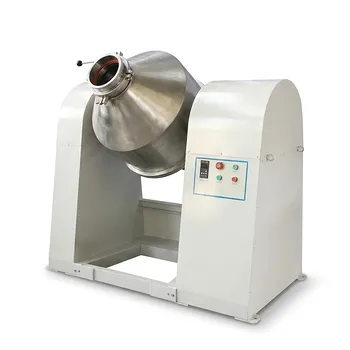
Industrial Double Cone Mixer for Powder Blending and Homogeneous Mixing
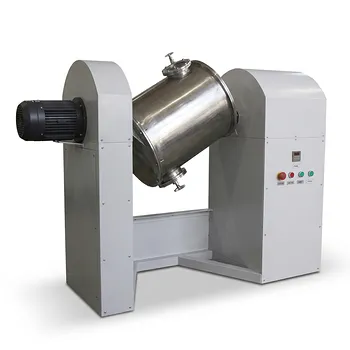
Inclined Mixer for Homogeneous Powder Blending and Grinding
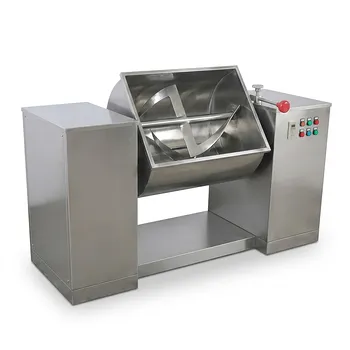
Horizontal Trough Mixer for Uniform Powder and Paste Blending
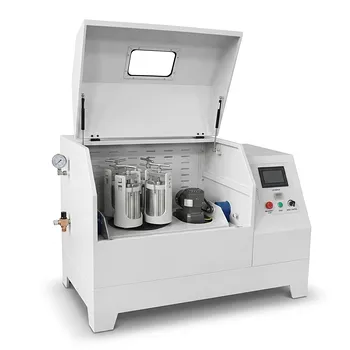
Vertical Production Planetary Ball Mill for High Throughput Powder Processing
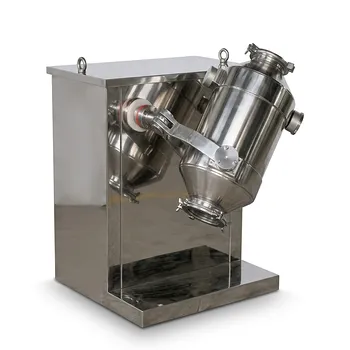
Three-Dimensional Motion Mixer for Laboratory Powder and Granule Blending
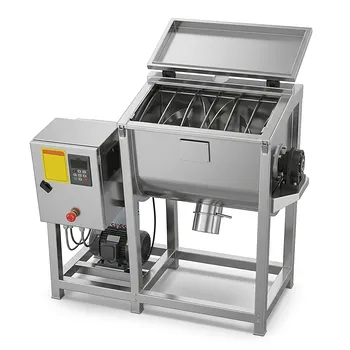
Horizontal Ribbon Mixer for Uniform Powder and Slurry Mixing
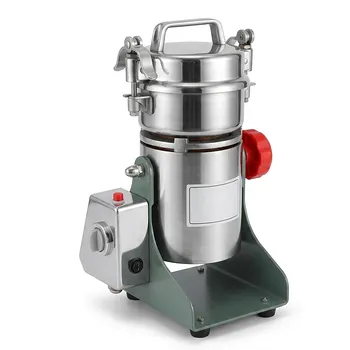
High Speed Swing Type Laboratory Pulverizer for Fine Powder Grinding and Sample Preparation
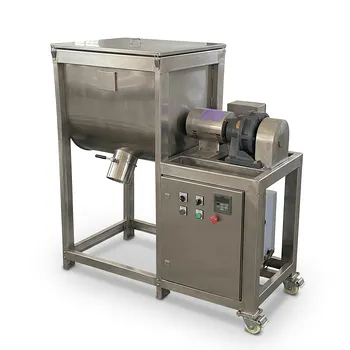
Horizontal Ribbon Mixer for Dry Powder and Slurry Blending
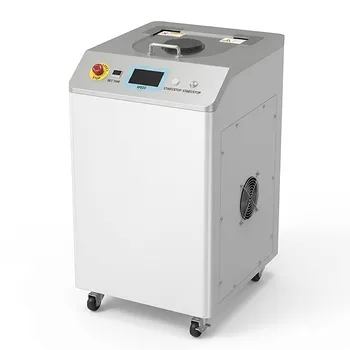
High Viscosity Planetary Centrifugal Vacuum Mixer for Material Defoaming and Uniform Mixing
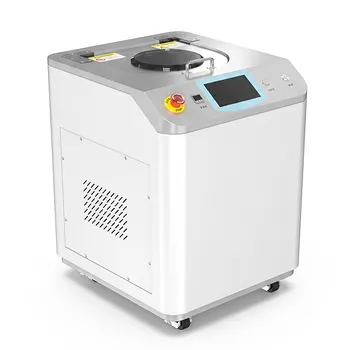
High Speed Vacuum Planetary Centrifugal Mixer and Defoamer for Industrial Paste Processing