Why is a drum mixer used for secondary processing of mixed polymer spray powders? | Boost Fluidity & Spray Quality
Updated 5 months ago
Drum mixers are essential in the secondary processing of polymer spray powders because they employ continuous tumbling motion to break down soft agglomerates and restore powder fluidity. By ensuring a uniform, free-flowing state, these mixers allow for a constant powder feed rate and minimize pressure fluctuations during the critical spraying or extrusion phases.
The primary purpose of drum mixing is to convert cohesive, clumped materials into a homogenous, fluid medium through mechanical impact and shear. This refinement is vital for preventing system instability and ensuring the structural integrity of the final processed material.
The Mechanism of Agglomerate Breakdown
Mechanical Impact and Surface Attrition
Drum mixers operate by rotating a container to induce motion within the powder bed, creating high flow velocities at the surface. This movement generates mechanical impact energy and shear forces that act directly on high-cohesion clumps or "soft agglomerates."
Through constant collisions between particles and the container walls, the mixer achieves surface attrition. This process fragments large clusters into smaller, uniform particles that can be more easily distributed throughout the mixture.
Achieving Macroscopic Homogeneity
In secondary processing, especially when dealing with mixed polymers or additives, achieving a macroscopically uniform distribution is critical. Multi-axis linkage or 3D motion trajectories ensure that different components do not settle or separate during the mixing cycle.
This high-precision distribution prevents the formation of local concentration gradients, such as zones overly rich in one specific polymer or additive. Eliminating these gradients is necessary to avoid material degradation or incomplete dissolution in subsequent thermal stages.
Impact on Downstream System Stability
Maintaining Excellent Fluidity
The secondary processing step is often the final safeguard for powder fluidity before the material enters a feeder. For cold spray systems, the powder must move like a liquid to ensure it transitions smoothly from the hopper to the nozzle.
If the powder remains clumped, it can cause "pulsing" or uneven flow, leading to inconsistent coating thickness. Drum mixing ensures the powder is de-agglomerated and ready for high-speed delivery.
Stabilizing Feed Rates and Pressure
A primary technical challenge in spray processes is maintaining a constant powder feed rate. Fluctuations in material delivery lead to pressure variations within the spray system, which can compromise the bond strength and density of the polymer layer.
By providing a consistent, free-flowing feedstock, the drum mixer helps the rotating drum feeder maintain a steady state. This stability is the foundation of a predictable, high-quality manufacturing process.
Understanding the Trade-offs
Limits of Shear Intensity
While drum mixers are excellent for breaking down "soft" agglomerates through tumbling, they may lack the shear intensity required to disperse "hard" aggregates. If the polymer particles are fused or chemically bonded, a drum mixer's gravity-based impact may be insufficient.
Processing Time vs. Material Integrity
Extended mixing times in a drum can lead to particle rounding or unwanted surface wear, which may subtly change the powder's aerodynamic properties. Users must balance the need for homogeneity with the risk of over-processing the material.
How to Optimize Your Secondary Processing
Implementation Based on Your Technical Goals
- If your primary focus is cold spray coating quality: Prioritize drum mixing to ensure maximum fluidity and prevent pressure spikes that cause coating porosity.
- If your primary focus is chemical homogeneity: Use a 3D motion drum mixer to eliminate concentration gradients and prevent localized overheating during extrusion.
- If your primary focus is high-throughput production: Ensure the drum mixer's volume and rotation speed are calibrated to prevent "dead zones" where powder remains stationary.
The strategic use of a drum mixer transforms unpredictable, cohesive powders into a reliable, high-performance feedstock for precision manufacturing.
Summary Table:
| Key Function | Processing Mechanism | Downstream Impact |
|---|---|---|
| De-agglomeration | Mechanical impact & surface attrition | Restores fluidity; prevents nozzle clogging |
| Homogenization | Multi-axis/3D motion trajectories | Eliminates concentration gradients |
| Flow Stabilization | Continuous tumbling & shear | Ensures constant feed rates & stable pressure |
Optimize Your Powder Processing with Precision Engineering
Achieving perfect powder fluidity is critical for high-quality spray coatings and material consistency. At KinTek, we provide complete laboratory sample preparation solutions for material science, specializing in advanced powder processing and compaction equipment.
Our expert-grade lineup includes:
- Advanced Mixing: Drum mixers, powder mixers, and defoaming mixers designed to eliminate soft agglomerates and ensure maximum homogeneity.
- Milling & Grinding: Jaw/roll crushers, liquid nitrogen cryogenic grinders, and mills (planetary ball, jet, sand, disc, rotor) for precise particle size control.
- Sieving & Particle Analysis: Sieve shakers (vibratory/air-jet) with various test sieves and meshes.
- Pressing Solutions: A full spectrum of hydraulic presses, including Cold/Warm Isostatic Presses (CIP/WIP), standard lab presses, XRF pellet presses, and vacuum hot presses.
Whether you are refining polymer powders or preparing complex material samples, our solutions ensure stability, reliability, and superior results. Contact our technical team today to discuss your specific application needs and find the right equipment for your lab.
References
- Tristan W. Bacha, Joseph F. Stanzione. Multipurpose Additives Toward Improving the Polymer Cold Spray Process. DOI: 10.1007/s11666-024-01745-z
Mentioned Products
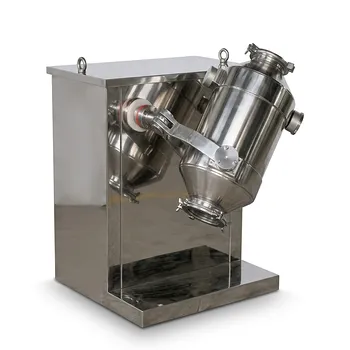
- Three-Dimensional Motion Mixer for Laboratory Powder and Granule Blending
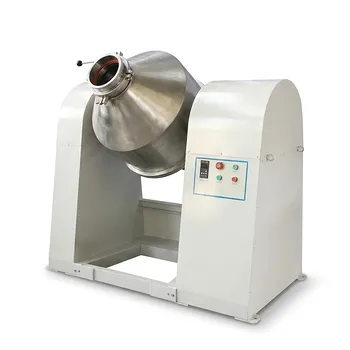
- Industrial Double Cone Mixer for Powder Blending and Homogeneous Mixing
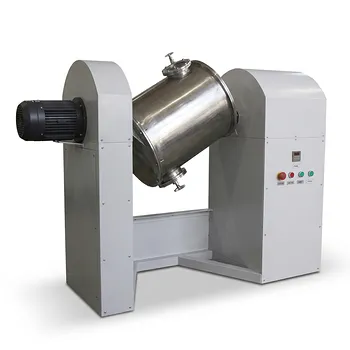
- Inclined Mixer for Homogeneous Powder Blending and Grinding
- Horizontal Ribbon Mixer for Uniform Powder and Slurry Mixing
- Horizontal Trough Mixer for Uniform Powder and Paste Blending
People Also Ask
- Why is a 3D Motion Mixer employed when preparing binary powder mixtures for tableting? Achieve Superior Homogeneity
- What role does an industrial 3D mixer play in the preparation of diamond tool segment raw materials? Achieve Homogeneity
- What is the role of a 3D mixer in Ti2SnC synthesis? Optimize Precursor Homogeneity for High-Purity MAX Phases
- How does a 3D mixer with tungsten balls contribute to magnesium composite mixing? Achieve Superior Macro-Homogeneity
- What are the advantages of using a 3D powder mixer? Boost Tablet Consistency with Advanced Mixing Technology

Tech Team · PowderPreparation
Last updated on May 14, 2026
Related Products
Three-Dimensional Motion Mixer for Laboratory Powder and Granule Blending
Industrial Double Cone Mixer for Powder Blending and Homogeneous Mixing
Inclined Mixer for Homogeneous Powder Blending and Grinding
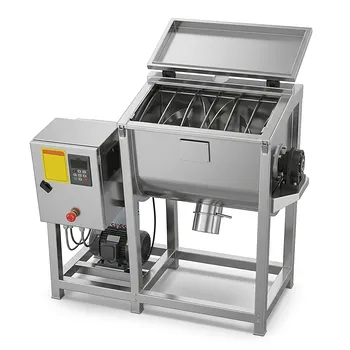
Horizontal Ribbon Mixer for Uniform Powder and Slurry Mixing
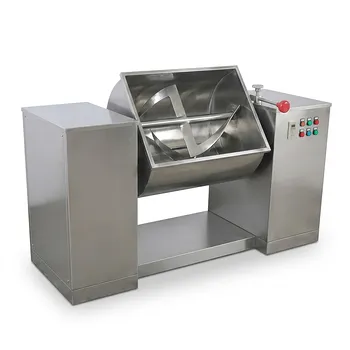
Horizontal Trough Mixer for Uniform Powder and Paste Blending
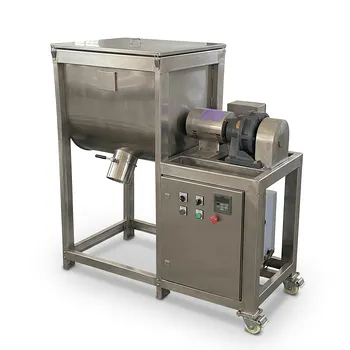
Horizontal Ribbon Mixer for Dry Powder and Slurry Blending
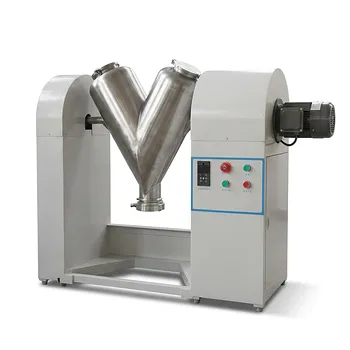
V-Type Powder Mixer for Uniform Blending of Dry Powders and Granules
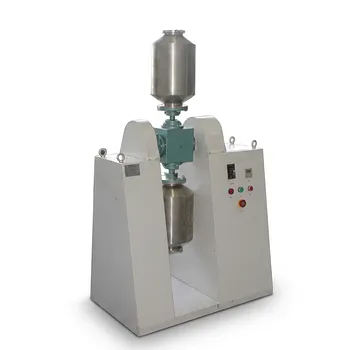
Multi Dimensional Universal Mixer for High Uniformity Powder Blending