Why is a 400-mesh (38 μm) standard test sieve required for bioactive glass 3D printing? Ensure Smooth, Clog-Free Extrusion
Updated 4 months ago
The 400-mesh (38 μm) standard test sieve is a critical quality control gate for bioactive glass powders. It strictly limits the maximum particle size to prevent clogging in precision 3D printing nozzles and ensures the rheological stability of the resulting paste. This standardized screening process is essential for producing reproducible, high-fidelity lattice structures and rod-like fibers required in biomedical applications.
The primary purpose of using a 400-mesh sieve is to eliminate oversized particles and aggregates that disrupt the extrusion process. By standardizing the particle size to 38 μm or less, researchers can guarantee ink continuity, predictable curing kinetics, and the structural integrity of the printed scaffold.
Preventing Mechanical Failure and Nozzle Clogging
Protecting Precision Extrusion Tips
Direct ink writing (DIW) and robocasting often utilize precision nozzles, such as 25G plastic needles, which have extremely narrow internal diameters. Even a small number of oversized particles can cause an immediate blockage, leading to failed prints and equipment downtime.
Eliminating Agglomerates from Processing
During the ball-milling or freeze-drying of bioactive glass, particles often form hard aggregates or remain larger than the desired threshold. The 400-mesh sieve acts as a physical interceptor, ensuring that no particle or cluster exceeds the 38 μm limit before it enters the ink formulation.
Ensuring Printing Continuity
A consistent particle size distribution is necessary to maintain a steady flow of material under constant pressure. By removing coarse particles, the sieve prevents "surging" or uneven extrusion, which is vital for maintaining a constant filament diameter throughout the printing process.
Optimizing Paste Rheology and Print Fidelity
Achieving Uniform Rheological Stability
The flow behavior, or rheology, of the bioceramic ink is highly sensitive to the size of the suspended solids. Particles filtered through a 400-mesh sieve provide the necessary fineness to ensure the ink behaves as a stable, non-Newtonian fluid during extrusion.
Improving Geometrical Reproducibility
For scaffolds to be effective in bone tissue engineering, they must have precise lattice structures. Standardizing the powder to 38 μm ensures that every printed layer has the same height and width, allowing for the high-fidelity reproduction of complex 3D models.
Enhancing Surface Smoothness
Using a high-mesh sieve significantly improves the surface finish of the printed filaments. Smaller, uniform particles result in a denser, smoother film layer after sintering, which is critical for both mechanical strength and cellular attachment.
Influence on Material Properties and Kinetics
Standardizing Specific Surface Area
The particle size directly dictates the specific surface area of the powder when it is mixed with liquid binders. A 400-mesh sieve ensures that the powder's surface area is consistent, which is necessary to regulate the curing kinetics and setting time of the paste.
Controlling Biodegradation and Strength
In biological environments, the biodegradation rate of bioactive glass is heavily influenced by its surface-to-volume ratio. By strictly controlling the particle size fraction, manufacturers can better predict how the material will break down and how much mechanical load it can support post-sintering.
Understanding the Trade-offs
Yield vs. Precision
While a 400-mesh sieve provides superior precision, it can significantly reduce the material yield if the initial milling process is inefficient. Laboratories must balance the time spent on intensive grinding with the need for the 38 μm filtration to avoid wasting expensive bioactive materials.
Handling Fine Powder Aggregation
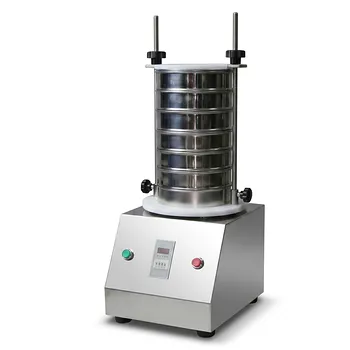
Highly fine powders (under 38 μm) have a high surface energy and can re-agglomerate quickly due to moisture or static electricity. It is often necessary to use a vibratory sieve shaker rather than manual sieving to ensure the powder actually passes through the fine mesh without blinding the screen.
Viscosity Escalation
Reducing the particle size increases the total surface area, which can lead to a dramatic increase in ink viscosity. If the powder is too fine, the paste may become too thick to extrude, requiring a recalibration of the liquid-to-powder ratio or the addition of chemical dispersants.
How to Apply This to Your Project
Recommendations for Material Preparation
- If your primary focus is nozzle longevity: Always use the 400-mesh sieve as the final step after ball-milling to ensure no stray particles larger than 38 μm reach your 25G or smaller needles.
- If your primary focus is mechanical density: Utilize the sieve to remove oversized particles that create voids, ensuring a tighter packing fraction and higher density during the sintering phase.
- If your primary focus is predictable bioactivity: Use specific mesh fractions (e.g., separating 20–32 µm from <20 µm) to achieve a highly controlled degradation rate in vivo.
Precise particle size control through high-mesh sieving is the foundation of reliable, high-performance bioactive glass 3D printing.
Summary Table:
| Feature | Benefit for 3D Printing | Impact on Scaffolds |
|---|---|---|
| <38 μm Particle Size | Prevents nozzle clogging & downtime | Continuous, high-fidelity filaments |
| Uniform Distribution | Ensures stable ink rheology | Consistent lattice structures |
| Surface Area Control | Regulates curing & setting kinetics | Predictable biodegradation rates |
| Removal of Aggregates | Smoother extrusion flow | Enhanced surface finish & cell attachment |
Elevate Your Material Research with Precision Powder Solutions
Achieving the perfect bioactive glass paste starts with uncompromising powder quality. At [Brand Name], we provide complete laboratory sample preparation solutions tailored for material science. Whether you are refining bioceramics or advanced polymers, our equipment ensures the consistency your 3D printing process demands.
Our specialized lineup includes:
- Particle Size Control: High-precision vibratory and air-jet sieve shakers with a full range of standard test sieves (including 400-mesh).
- Advanced Milling: Planetary ball mills, jet mills, and cryogenic grinders for achieving sub-micron fineness.
- Compaction & Processing: A full spectrum of hydraulic presses, including Cold/Warm Isostatic Presses (CIP/WIP) and vacuum hot presses, alongside powder and defoaming mixers.
Don't let oversized particles compromise your research fidelity. Contact our technical experts today to find the ideal equipment configuration for your laboratory needs!
References
- Jixiang SHI, Yufang Zhu. Preparation and Characterization of Bioactive Glass-Manganese Dioxide Composite Scaffolds. DOI: 10.15541/jim20210264
Mentioned Products
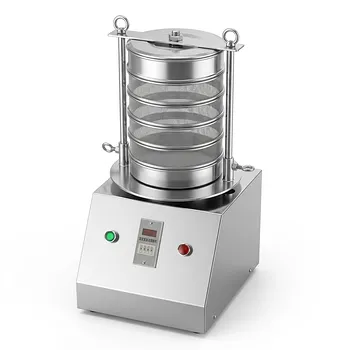
- Stainless Steel Laboratory Vibratory Test Sieve Shaker
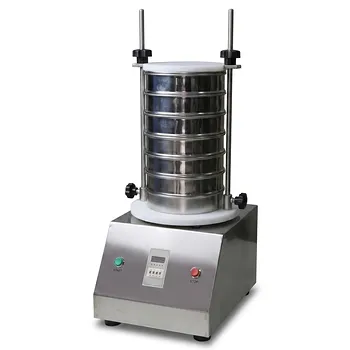
- Laboratory Vibratory Test Sieve Shaker for Precision Particle Size Analysis and Powder Grading
- Jaw Crusher with 400x600mm Feed Opening for Primary Rock Crushing in Mining and Construction
- Small Laboratory Vibrating Sieve Shaker for Precise Particle Size Analysis
- Laboratory Air Jet Sieving Machine for Fine Powder Particle Size Analysis and Deagglomeration
People Also Ask
- What function does a laboratory vibratory sieve shaker serve in the production process of metakaolin? Optimize Reactivity
- Why is a precision laboratory vibratory sieve shaker necessary for particle size control? Optimize Biomass Carbonization
- What is the function of a laboratory vibratory sieve shaker? Enhance Coal Particle Size Distribution (PSD) Analysis
- What role do laboratory vibratory sieve shakers and test sieves play before the molding of Nb-Cu composite powders?
- What is the primary function of a laboratory vibratory sieve shaker in the evaluation of sand liquefaction potential?

Tech Team · PowderPreparation
Last updated on Jun 03, 2026
Related Products
Stainless Steel Laboratory Vibratory Test Sieve Shaker
Laboratory Vibratory Test Sieve Shaker for Precision Particle Size Analysis and Powder Grading
Jaw Crusher with 400x600mm Feed Opening for Primary Rock Crushing in Mining and Construction
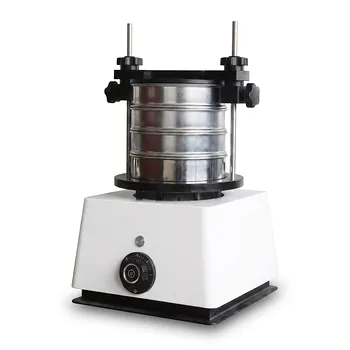
Small Laboratory Vibrating Sieve Shaker for Precise Particle Size Analysis
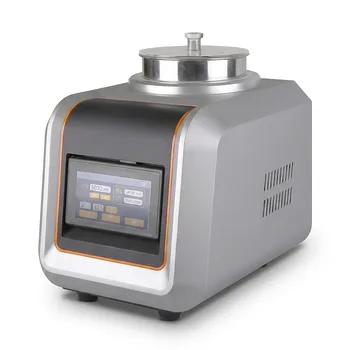
Laboratory Air Jet Sieving Machine for Fine Powder Particle Size Analysis and Deagglomeration