Why is a 212µm standard test sieve required when processing RHA and SBHA? Optimize Pozzolanic Reactivity & Strength
Updated 3 months ago
The 212µm standard test sieve is utilized in the processing of Rice Husk Ash (RHA) and Soybean Husk Ash (SBHA) primarily to ensure a specific particle fineness that maximizes chemical reactivity and physical density. By filtering out particles larger than 212 micrometers, producers guarantee a high surface-area-to-volume ratio, which is essential for the silica within the ash to react effectively with calcium hydroxide during cement hydration.
Core Takeaway: Achieving a particle size below 212µm transforms raw agricultural ash into a high-performance pozzolan by optimizing the surface area for chemical reactions and enabling the material to act as a microscopic filler within the concrete matrix.
The Role of Fineness in Pozzolanic Activity
Maximizing the Reactive Surface Area
Pozzolanic materials like RHA and SBHA rely on their silica (SiO2) content to react with the byproducts of cement hydration.
Using a 212µm sieve ensures that the pulverized ash is sufficiently fine to expose the maximum amount of reactive silica to the surrounding paste.
Finer particles accelerate the rate of the pozzolanic reaction, leading to a faster development of strength and a more stable chemical bond within the composite.
Enhancing the Micro-Filler Effect
Beyond chemical reactions, these ashes serve a vital physical purpose by filling the microscopic voids between cement grains.
Particles passed through a 212µm high-precision sieve are small enough to settle into these pores, which would otherwise remain filled with water or air.
This "filler effect" results in a significantly denser matrix, which directly improves the compressive strength and reduces the permeability of the final concrete or mortar.
Impact on Material Durability and Consistency
Improving Long-Term Durability
A denser concrete matrix, achieved through controlled particle fineness, prevents the ingress of harmful agents like chlorides and sulfates.
By ensuring the ash particles are consistently below the 212µm threshold, the material creates a more tortuous path for moisture, protecting the internal structure from corrosion and degradation.
This refinement process is fundamental to producing "high-performance" concrete that can withstand harsh environmental conditions over decades.
Ensuring Mechanical Stability
Inconsistent particle sizes can lead to "stress concentration" points where larger, unreacted clumps create weak spots in the material.
The use of a standard test sieve eliminates these oversized particles, ensuring that the mechanical properties—such as tensile and compressive strength—are uniform throughout the entire batch.
This level of classification is critical for meeting industrial standards and ensuring that the ash behaves predictably when mixed with other reactants.
Understanding the Trade-offs and Limitations
Grinding Energy vs. Reactivity
While finer particles generally lead to better reactivity, there is a point of diminishing returns regarding the energy required for pulverization.
Grinding ash to meet a 212µm standard is often a balance between achieving high pozzolanic activity and managing the electrical costs of ball milling or pulverizing.
If a project requires extreme high-early strength, even finer sieves (such as 75µm or 45µm) may be used, but this significantly increases production time and expense.
The Risk of Over-Processing
Over-processing ash into ultra-fine powders can sometimes lead to an increased water demand in concrete mixes.
If the particles are too fine, they may absorb excessive water, potentially leading to shrinkage or workability issues if not managed with chemical admixtures.
The 212µm sieve serves as a reliable middle-ground standard that ensures high reactivity without the extreme water-demand issues associated with nano-scale powders.
How to Apply This to Your Project
Selecting the right sieving protocol depends on your specific performance requirements and the intended application of the ash.
- If your primary focus is Maximum Compressive Strength: Consider secondary sieving with a 75µm or 45µm sieve to further refine the powder and maximize the pozzolanic reaction.
- If your primary focus is Cost-Effective Stabilization: Utilize the 212µm sieve as a baseline to remove coarse impurities and ensure a baseline reaction while keeping energy costs low.
- If your primary focus is Chemical Resistance: Ensure strict adherence to the 212µm limit to maximize the pore-filling effect, which is the primary defense against chemical ingress.
Properly controlled particle fineness is the single most important factor in transforming agricultural waste into a high-value engineering material.
Summary Table:
| Key Benefit | Role in RHA & SBHA Processing |
|---|---|
| Maximized Reactivity | Ensures high surface area for silica to react with calcium hydroxide. |
| Micro-Filler Effect | Fills microscopic voids between cement grains for a denser matrix. |
| Structural Durability | Lowers permeability to prevent ingress of harmful chlorides and sulfates. |
| Mechanical Stability | Eliminates oversized particles to prevent stress concentration and weak spots. |
| Process Efficiency | Balances high pozzolanic activity with manageable grinding energy costs. |
Elevate Your Material Research with Precision Sample Preparation
At [Your Brand Name], we provide complete laboratory sample preparation solutions tailored for material science. Achieving the precise 212µm threshold for RHA and SBHA requires reliable, high-precision equipment. We specialize in the full spectrum of powder processing and compaction technology to help you transform raw materials into high-performance engineering assets.
Our Specialized Solutions Include:
- Sieving & Classification: Vibratory and air-jet sieve shakers with a wide range of standard test sieves and meshes.
- Milling & Grinding: Planetary ball mills, jet mills, and disc mills for achieving optimal particle fineness.
- Sample Compaction: A full range of hydraulic presses, including Cold/Warm Isostatic Presses (CIP/WIP), hot presses, and XRF pellet presses.
- Material Preparation: Jaw and roll crushers, liquid nitrogen cryogenic grinders, and high-efficiency powder mixers.
Whether you are optimizing pozzolanic reactions or developing advanced composites, our experts are here to provide the equipment and support you need.
Contact our technical team today to discuss your project requirements!
References
- Adejoh A. Adaji, Charles A. Balami. Assessment of the Strength Properties of Biu Soil Concrete Incorporating Rice Husk Ash and Soybean Hull Ash. DOI: 10.70382/hujaeed.v9i4.008
Mentioned Products
- Stainless Steel Laboratory Vibratory Test Sieve Shaker
- Laboratory Vibratory Test Sieve Shaker for Precision Particle Size Analysis and Powder Grading
- Small Laboratory Vibrating Sieve Shaker for Precise Particle Size Analysis
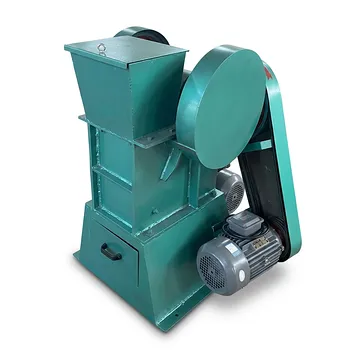
- Small Laboratory Jaw Crusher 150x200mm Feed Opening for Sample Preparation and Medium Fine Crushing
People Also Ask
- What function does a laboratory vibratory sieve shaker serve in the production process of metakaolin? Optimize Reactivity
- Why is a precision laboratory vibratory sieve shaker necessary for particle size control? Optimize Biomass Carbonization
- What is the function of a laboratory vibratory sieve shaker? Enhance Coal Particle Size Distribution (PSD) Analysis
- What role do laboratory vibratory sieve shakers and test sieves play before the molding of Nb-Cu composite powders?
- What is the primary function of a laboratory vibratory sieve shaker in the evaluation of sand liquefaction potential?

Tech Team · PowderPreparation
Last updated on Jun 03, 2026
Related Products
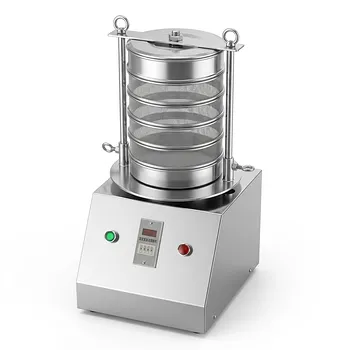
Stainless Steel Laboratory Vibratory Test Sieve Shaker
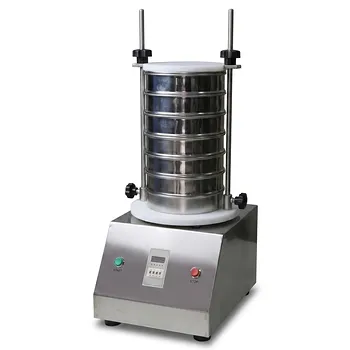
Laboratory Vibratory Test Sieve Shaker for Precision Particle Size Analysis and Powder Grading
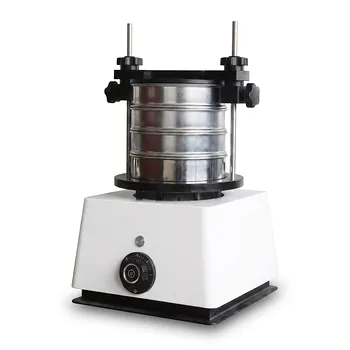
Small Laboratory Vibrating Sieve Shaker for Precise Particle Size Analysis