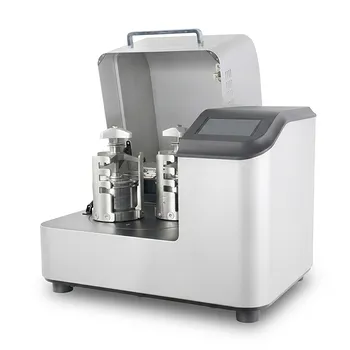
Why select Zirconia (ZrO2) for MWCNTs ball milling? Achieve High Kinetic Energy and Sample Purity
Updated 5 months ago
Zirconia ($ZrO_2$) grinding balls are selected for processing multi-walled carbon nanotubes (MWCNTs) because they provide the optimal balance of high kinetic energy and material purity. Their extreme hardness and high density generate the necessary impact force to "cut" nanotubes and refine aggregates, while their superior wear resistance ensures that the final product remains free from metallic impurities.
The selection of zirconia media is driven by the need to apply significant mechanical shear to tough carbon structures without degrading the chemical purity of the sample. This dual requirement makes zirconia superior to softer or more reactive alternatives like steel or alumina.
The Mechanics of Kinetic Energy Transfer
High Density for Forceful Collisions
Zirconia possesses a high density that translates directly into greater kinetic energy during the planetary ball milling process. This energy is essential for overcoming the strong van der Waals forces that cause MWCNTs to bundle and aggregate.
Extreme Hardness for Structural Refining
The extreme hardness of $ZrO_2$ allows the media to effectively "cut" the nanotubes and refine particle sizes. Without this hardness, the media would simply bounce off the tough carbon structures rather than deforming or breaking them into the desired lengths.
Efficient Peeling of Nanotube Bundles
Small-diameter zirconia beads (often 0.8–1.0 mm) are frequently used to provide a high frequency of impact and shear energy. This specific energy profile is necessary to "peel" apart individual tubes from dense bundles, ensuring a uniform dispersion in nanofluids.
Maintaining Sample Purity and Integrity
Superior Wear Resistance
Zirconia is characterized by an exceptionally low wear rate, which is critical during the high-energy collisions of ball milling. This prevents the introduction of metallic or non-metallic debris from the media into the MWCNTs, maintaining the performance stability of the resulting materials.
Chemical Inertness and Stability
Unlike metal media, zirconia is chemically inert and does not react with carbon fibers or nanotubes during the milling process. This ensures that the physicochemical properties of the MWCNTs remain unchanged, which is vital for applications in energetic composites or high-performance rubber.
Homogeneous Grinding Principles
In specific advanced ceramic applications, high-purity zirconia media are used to follow the "homogeneous grinding principle." This approach minimizes the risk of foreign chemical contamination, ensuring that the mechanical properties of the final composite are not compromised by stray elements.
Understanding the Trade-offs
Potential for Structural Damage
While high-energy milling is effective for refining particles, excessive milling time or RPMs can lead to over-processing. This may result in nanotubes that are too short, potentially reducing the electrical conductivity or mechanical reinforcement properties of the final composite.
Cost and Resource Intensity
Zirconia media are generally more expensive than alumina or hardened steel alternatives. However, the reduction in contamination-related failures and the increased efficiency of the milling process typically justify the higher initial investment for high-precision applications.
Heat Generation
The high kinetic energy provided by zirconia can lead to significant heat buildup within the grinding jar. If not managed through cooling cycles, this heat can potentially alter the surface chemistry of the MWCNTs or affect the stability of the dispersion medium.
Applying Media Selection to Your Project
Recommendations for Targeted Outcomes
- If your primary focus is maximizing MWCNT purity: Utilize high-purity zirconia jars and balls to eliminate the risk of metallic contamination during long-duration milling.
- If your primary focus is efficient de-agglomeration: Select smaller zirconia beads (sub-1mm) to increase the frequency of shear events and effectively separate nanotube bundles.
- If your primary focus is maintaining high aspect ratios: Optimize milling parameters to use the minimum energy required, preventing the zirconia media from over-fragmenting the nanotubes.
By leveraging the unique physical properties of zirconia, researchers and engineers can achieve the precise structural modifications required for high-performance carbon nanotube applications.
Summary Table:
| Feature | Advantage for MWCNTs | Key Benefit |
|---|---|---|
| High Density | Generates forceful collisions | Overcomes van der Waals forces |
| Extreme Hardness | Effective structural "cutting" | Efficient particle size refinement |
| Wear Resistance | Low media erosion rate | Minimal metallic contamination |
| Chemical Inertness | No reaction with carbon fibers | Maintained physicochemical properties |
Optimize Your Nanomaterial Processing with Professional Solutions
Achieving precise structural modifications in MWCNTs requires the right combination of high-energy equipment and high-purity media. We provide complete laboratory sample preparation solutions for material science, specializing in advanced powder processing and compaction technology.
Our extensive product lines include:
- High-Energy Mills: Planetary ball mills, jet mills, sand/bead mills, and liquid nitrogen cryogenic grinders perfect for zirconia media applications.
- Preparation & Analysis: Jaw/roll crushers, vibratory/air-jet sieve shakers, and various powder/defoaming mixers.
- Advanced Compaction: A full spectrum of hydraulic presses, including Cold/Warm Isostatic Presses (CIP/WIP), XRF pellet presses, and vacuum hot presses.
Whether you are refining nanotubes or developing energetic composites, our equipment ensures maximum efficiency and zero contamination. Contact our technical team today to find the perfect solution for your lab!
References
- Baasandulam Tserengombo, Se-Dong Kim. Effects of Functionalization in Different Conditions and Ball Milling on the Dispersion and Thermal and Electrical Conductivity of MWCNTs in Aqueous Solution. DOI: 10.3390/nano11051323
Mentioned Products
- Vertical Semi Circular Planetary Ball Mill for Laboratory Precision Grinding
- Vertical Square Planetary Ball Mill for Laboratory Sample Preparation and Nanoscale Grinding
- High Energy Laboratory Planetary Ball Mill for Nano Grinding and Material Science Sample Preparation
- 8L Planetary Ball Mill for Laboratory Grinding and Sample Preparation
- Heavy Duty Horizontal Planetary Ball Mill for Efficient Industrial Grinding and Sample Preparation
People Also Ask
- What role does a planetary ball mill play in the synthesis of Li6PS5Cl (LPSCl)? Unlock High Ionic Conductivity
- Why is a planetary ball mill essential for SiBCN-rGO wet-spinning? Achieve Superior Dispersion and Spinnability
- Why is an intermittent grinding process required for perovskites in a planetary ball mill? Ensure Stability & Purity
- Why is a planetary ball mill required for PET micronization? Ensure Accurate Chemical Analysis of Reprocessed PET
- How does mechanized planetary ball milling compare to manual agate grinding? Optimize sulfide standard material precision.

Tech Team · PowderPreparation
Last updated on May 14, 2026
Related Products
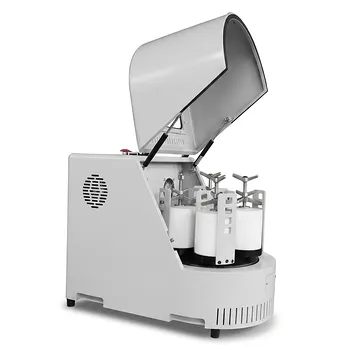
Vertical Semi Circular Planetary Ball Mill for Laboratory Precision Grinding
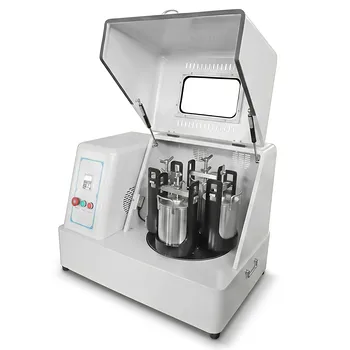
Vertical Square Planetary Ball Mill for Laboratory Sample Preparation and Nanoscale Grinding
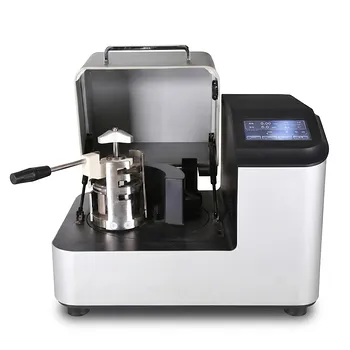
High Energy Laboratory Planetary Ball Mill for Nano Grinding and Material Science Sample Preparation
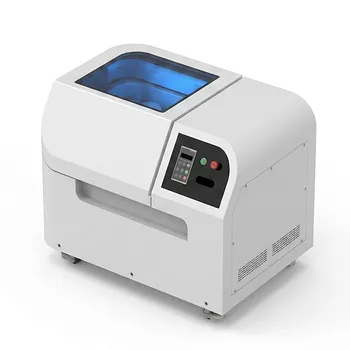
8L Planetary Ball Mill for Laboratory Grinding and Sample Preparation
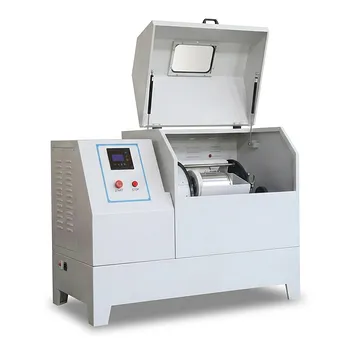
Heavy Duty Horizontal Planetary Ball Mill for Efficient Industrial Grinding and Sample Preparation
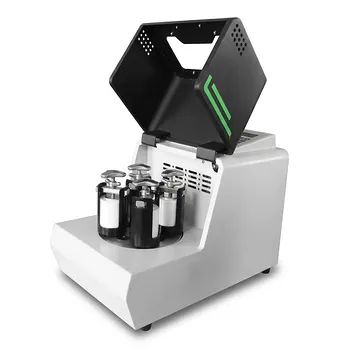
Miniature Planetary Ball Mill with Vacuum Grinding and High Efficiency for Laboratory Sample Preparation
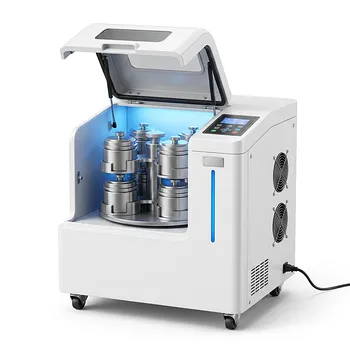
High Energy Omnidirectional Planetary Ball Mill 20L
High Energy Omnidirectional Planetary Ball Mill 16L
High Energy Hybrid Vibratory Ball Mill for Grinding Mixing and Cell Disruption