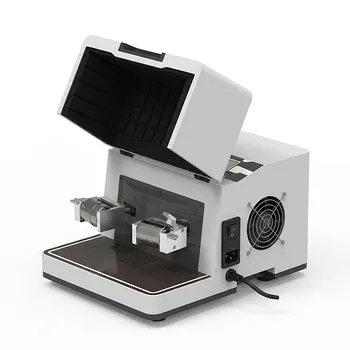
Why are zirconia balls selected for BST ball milling? Ensure High Purity & Efficiency for Thermoelectric Materials
Updated 3 months ago
Zirconia grinding balls are the industry standard for BST milling because they provide the precise balance of high-energy impact and extreme chemical purity. Their selection is driven by zirconia’s high density and hardness, which facilitate the rapid reduction of Bismuth Antimony Telluride particles to the sub-micrometer scale. Crucially, their superior wear resistance ensures that the sensitive thermoelectric properties of the BST powder are not compromised by media-induced contamination.
The core advantage of zirconia in high-energy ball milling (HEBM) lies in its ability to transfer significant kinetic energy for efficient particle refinement while maintaining chemical inertness. This dual-capability ensures the production of high-surface-area BST powder without introducing impurities that would degrade its electrical performance.
Maximizing Milling Efficiency Through Kinetic Energy
The Impact of High Density on Particle Fracture
Zirconia (ZrO2) possesses a high density that is critical for high-energy ball milling. In a planetary mill, the kinetic energy transferred to the BST powder is a direct function of the mass of the grinding media. The high mass of zirconia balls generates the significant impact energy required to fracture BST particles effectively and reach desired grain sizes quickly.
Achieving Sub-Micrometer Refinement
Refining BST powder to micrometer or sub-micrometer scales is essential for increasing its reaction activity during subsequent heat treatments. Zirconia's extreme hardness allows the media to maintain its shape and structural integrity under intense abrasive action. This consistency ensures that the energy remains focused on particle size reduction rather than deforming the grinding media itself.
Improving Throughput and Efficiency
Because zirconia balls transfer energy so effectively, they reduce the total milling time required to achieve a specific particle size distribution. This efficiency is vital for industrial processes where shorter milling cycles lead to higher throughput. The high-energy impacts facilitate a more uniform refinement across the entire powder batch.
Safeguarding Material Purity and Performance
Superior Wear Resistance Under High Stress
High-energy ball milling involves frequent, high-velocity impacts that can cause inferior media to chip or erode. Zirconia is characterized by exceptional toughness and wear resistance, allowing it to withstand long-duration milling cycles without fracturing. This durability minimizes the amount of media material that is shed into the BST powder.
Preventing Contamination of Electrical Properties
Bismuth Antimony Telluride is a high-performance thermoelectric material whose efficiency depends on precise chemical composition. Even trace amounts of metallic impurities from grinding media can act as dopants or scattering centers, significantly altering the material's electrical conductivity and Seebeck coefficient. Zirconia's chemical stability ensures that any negligible wear does not introduce reactive impurities that would compromise these properties.
Consistency in Extreme Service Environments
The chemical inertness of zirconia ensures it does not react with the BST powder or any solvents used during the milling process. This stability is critical for maintaining the high purity and consistency of the electrical properties across different production batches. By using zirconia, manufacturers can ensure that the final thermoelectric device performs according to design specifications.
Understanding the Trade-offs
Initial Procurement Costs
Zirconia grinding media typically carries a higher initial cost compared to stainless steel or alumina alternatives. However, this is often offset by the media's longevity and the reduction in "scrap" material caused by contamination. In high-precision applications like BST production, the cost of a failed batch due to impurity far outweighs the investment in quality media.
Heat Generation During Milling
The high-energy impacts facilitated by zirconia's density also generate significant heat within the milling jar. If not managed through cooling cycles or intervals, this heat can potentially lead to unwanted phase changes or oxidation in the BST powder. Operators must balance the energy input with thermal management strategies to preserve the material's crystal structure.
Media Sizing and Loading Ratios
While zirconia is highly effective, the ratio of ball size to powder volume must be carefully calibrated. Using balls that are too large may lead to excessive heat and uneven grinding, while balls that are too small may lack the individual mass needed for the initial fracture of larger BST particles.
Optimizing Your Milling Strategy
Choosing the right grinding media is a critical step in ensuring the quality of your BST thermoelectric materials. Your specific goals will dictate how you utilize zirconia media.
- If your primary focus is maximum electrical performance: Utilize high-purity zirconia media and jars to eliminate any risk of metallic contamination that could degrade thermoelectric efficiency.
- If your primary focus is rapid particle size reduction: Opt for ultra-fine zirconia balls with high density to maximize the kinetic energy transfer during the HEBM process.
- If your primary focus is long-term cost-efficiency: Invest in high-toughness Yttria-stabilized zirconia, which offers the best wear resistance and the longest operational lifespan under high-frequency impact.
By leveraging the unique physical and chemical properties of zirconia, you ensure that your Bismuth Antimony Telluride powder reaches the necessary refinement without sacrificing the purity required for advanced thermoelectric applications.
Summary Table:
| Key Feature | Performance Benefit | Impact on BST Powder |
|---|---|---|
| High Density | Maximizes kinetic energy transfer | Rapid reduction to sub-micrometer scales |
| Extreme Hardness | Resists media deformation | Focused energy for consistent grain size |
| Wear Resistance | Minimizes media-induced erosion | Prevents contamination of electrical properties |
| Chemical Inertness | Zero reaction with materials/solvents | Preserves the Seebeck coefficient and purity |
Elevate Your Thermoelectric Material Research with Precision Solutions
Achieving the perfect Bismuth Antimony Telluride (BST) powder requires equipment that balances power with purity. At [Your Brand Name], we provide complete laboratory sample preparation solutions tailored for advanced material science.
From high-energy planetary ball mills and premium zirconia grinding media for efficient refinement, to our full spectrum of hydraulic presses—including Cold/Warm Isostatic Presses (CIP/WIP), vacuum hot presses, and XRF pellet presses—we ensure your materials maintain their critical electrical properties from powder to pellet.
Ready to optimize your milling and compaction workflow?
Contact our technical team today to discover how our specialized crushers, mills, and high-pressure systems can enhance your laboratory’s productivity and material performance.
References
- Saeed Masoumi, Amir Pakdel. Flexible thermoelectric generators from spray-printed PEDOT:PSS/Bi<sub>0.5</sub>Sb<sub>1.5</sub>Te<sub>3</sub> composites. DOI: 10.1039/d4ra08450k
Mentioned Products
- Vertical Semi Circular Planetary Ball Mill for Laboratory Precision Grinding
- High Energy Laboratory Planetary Ball Mill for Nano Grinding and Material Science Sample Preparation
- Heavy Duty Horizontal Planetary Ball Mill for Efficient Industrial Grinding and Sample Preparation
- Vertical Square Planetary Ball Mill for Laboratory Sample Preparation and Nanoscale Grinding
- 8L Planetary Ball Mill for Laboratory Grinding and Sample Preparation
People Also Ask
- What role does a planetary ball mill play in the synthesis of Li6PS5Cl (LPSCl)? Unlock High Ionic Conductivity
- Why is a planetary ball mill essential for SiBCN-rGO wet-spinning? Achieve Superior Dispersion and Spinnability
- Why is an intermittent grinding process required for perovskites in a planetary ball mill? Ensure Stability & Purity
- Why is a planetary ball mill required for PET micronization? Ensure Accurate Chemical Analysis of Reprocessed PET
- How does mechanized planetary ball milling compare to manual agate grinding? Optimize sulfide standard material precision.

Tech Team · PowderPreparation
Last updated on Jun 03, 2026
Related Products
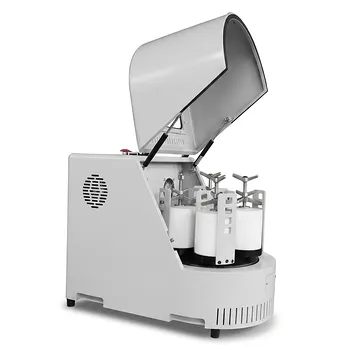
Vertical Semi Circular Planetary Ball Mill for Laboratory Precision Grinding
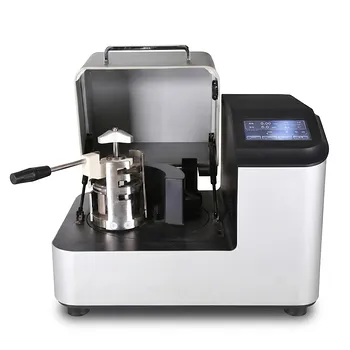
High Energy Laboratory Planetary Ball Mill for Nano Grinding and Material Science Sample Preparation
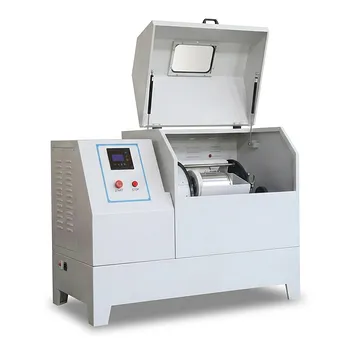
Heavy Duty Horizontal Planetary Ball Mill for Efficient Industrial Grinding and Sample Preparation
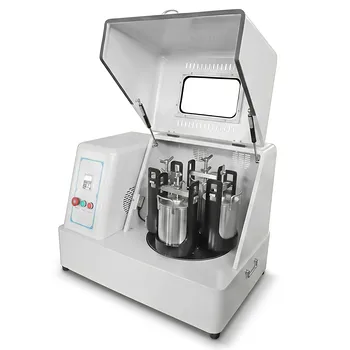
Vertical Square Planetary Ball Mill for Laboratory Sample Preparation and Nanoscale Grinding
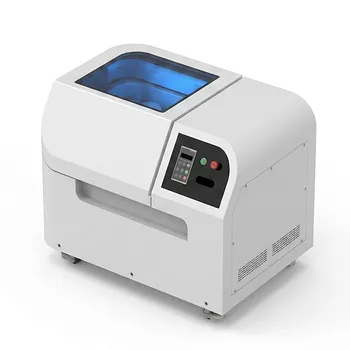
8L Planetary Ball Mill for Laboratory Grinding and Sample Preparation
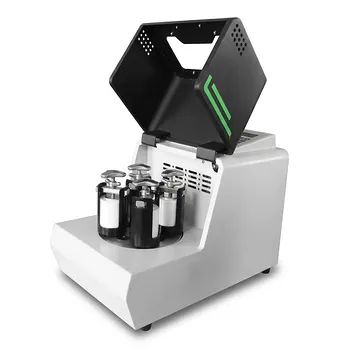
Miniature Planetary Ball Mill with Vacuum Grinding and High Efficiency for Laboratory Sample Preparation
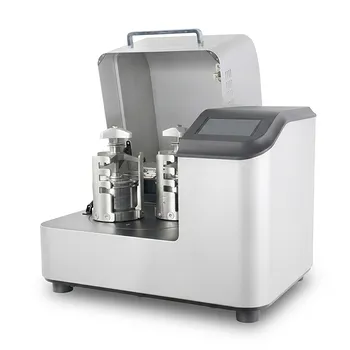
High Energy Planetary Ball Mill for Nano Scale Grinding and Mechanical Alloying

High Energy Omnidirectional Planetary Ball Mill 16L
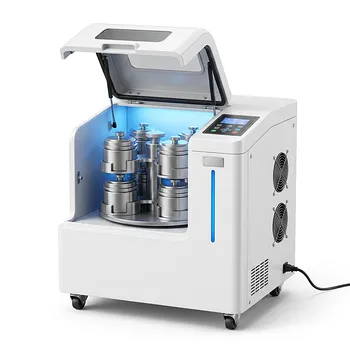
High Energy Omnidirectional Planetary Ball Mill 20L
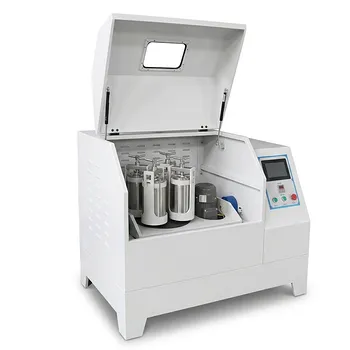
360° Rotating Omnidirectional Laboratory Planetary Ball Mill for Homogeneous Ultra-Fine Grinding and Mixing