Why are zirconia grinding balls typically selected for the ball milling and mixing process of SiCp/Al composites?
Updated 4 months ago
The selection of zirconia grinding balls for SiCp/Al composites is driven by their unique combination of extreme mechanical durability and chemical neutrality. Zirconia media provide the high kinetic energy required to mix hard Silicon Carbide (SiC) particles into an aluminum matrix while ensuring zero metallic contamination. This results in a high-purity composite with optimized particle distribution and structural integrity.
Zirconia is the preferred media because it balances high-impact energy with an exceptionally low wear rate. This allows for the efficient processing of abrasive SiC particles without compromising the chemical purity or mechanical properties of the aluminum matrix.
Superior Mechanical Performance
High Hardness and Wear Resistance
Zirconia (ZrO2) possesses extreme hardness, which is essential when processing SiC particles that are themselves highly abrasive. This hardness ensures the grinding media does not deform or wear down prematurely during high-intensity milling.
The superior wear resistance of zirconia allows for stable crushing and mixing over long periods, sometimes exceeding 24 hours of continuous operation. This durability ensures that the energy transfer remains consistent throughout the entire manufacturing cycle.
Optimal Kinetic Energy through High Density
The high density of zirconia grinding balls provides the necessary mass to generate significant kinetic energy at high rotational speeds. This energy is critical for refining powder particles and achieving a uniform distribution of the SiC reinforcement within the aluminum.
This substantial mass is particularly effective at transforming spherical aluminum powder into a flake morphology when required. The resulting increase in surface area and particle refinement improves the final mechanical properties of the composite.
Preservation of Material Integrity
Chemical Inertness and Purity
Zirconia is characterized by its excellent chemical inertness, meaning it does not react with the aluminum matrix or the SiC reinforcement. This prevents the introduction of metallic impurities, such as iron ions, which are common when using steel media.
By avoiding media-induced contamination, the spectral purity and performance stability of the Al-matrix composites are maintained. This is vital for applications where electrical insulation or specific biocompatibility standards must be met.
Maintaining Particle Morphology
Utilizing a strict 10:1 ball-to-material ratio with zirconia media achieves high mixing efficiency while minimizing damage to the original powder morphology. This precision allows for a controlled refinement process that does not "over-work" the material.
The compositional compatibility and low wear rate ensure that the final powder mixture remains free of grinding media debris. This leads to higher phase purity in the synthesized ceramic powders and master alloys.
Understanding the Trade-offs
Cost and Thermal Considerations
While zirconia offers peak performance, it is significantly more expensive than alumina or steel media. This higher initial investment must be weighed against the long-term benefits of reduced contamination and media longevity.
The high-energy impacts generated by dense zirconia can also lead to significant heat buildup during dry milling. Without proper cooling or process intervals, this heat can cause unwanted phase changes or oxidation in the aluminum powder.
Potential for Density-Driven Over-milling
The high kinetic energy that makes zirconia efficient can also lead to excessive particle fracture if rotational speeds are not carefully calibrated. If the milling intensity is too high, it may destroy the desired structural characteristics of the SiC reinforcement.
Making the Right Choice for Your Goal
How to Apply This to Your Project
To optimize your ball milling process, align your media selection with your primary production constraints and material requirements.
- If your primary focus is Maximum Purity: Use high-purity zirconia to eliminate the risk of iron or heavy metal contamination in the aluminum matrix.
- If your primary focus is Processing Speed: Leverage the high density of zirconia at elevated RPMs to reduce the time required for particle refinement and flaking.
- If your primary focus is Cost Efficiency: Reserve zirconia for the final mixing stages or high-reinforcement composites where the abrasive nature of SiC makes cheaper media non-viable.
By matching the mechanical intensity of zirconia to the specific needs of the SiCp/Al system, you ensure a high-performance composite with predictable material characteristics.
Summary Table:
| Feature | Advantage for SiCp/Al Processing |
|---|---|
| High Hardness | Resists wear from abrasive Silicon Carbide (SiC) particles |
| High Density | Delivers maximum kinetic energy for uniform matrix mixing |
| Chemical Inertness | Prevents iron/metallic contamination in the aluminum matrix |
| Low Wear Rate | Maintains material purity and consistent particle morphology |
| High Mass | Efficiently refines powders and creates desired flake morphology |
Optimize Your Material Synthesis with Professional Solutions
Ready to achieve superior purity and uniformity in your SiCp/Al composites? Contact our experts today to find the perfect equipment for your laboratory.
At our facility, we provide complete laboratory sample preparation solutions for material science. We specialize in high-performance powder processing and compaction equipment, including:
- Advanced Milling: Planetary ball mills, jet mills, disc mills, and cryogenic grinders for precise particle refinement.
- Processing & Sifting: Jaw/roll crushers, sieve shakers (vibratory/air-jet), and high-efficiency powder/defoaming mixers.
- Advanced Compaction: A full spectrum of hydraulic presses, including Cold/Warm Isostatic Presses (CIP/WIP), vacuum hot presses, and XRF pellet presses.
Let us help you streamline your workflow from raw powder to high-density finished composites.
References
- Renyu Feng, Zijuan Huang. Effects of SiC Particle Size on SiCp/Al Composite During Vacuum Hot Pressing. DOI: 10.3390/ma19010084
Mentioned Products
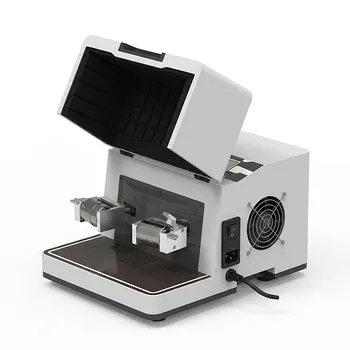
- Vertical Semi Circular Planetary Ball Mill for Laboratory Precision Grinding
- High Energy Laboratory Planetary Ball Mill for Nano Grinding and Material Science Sample Preparation
- Heavy Duty Horizontal Planetary Ball Mill for Efficient Industrial Grinding and Sample Preparation
- Vertical Square Planetary Ball Mill for Laboratory Sample Preparation and Nanoscale Grinding
- 8L Planetary Ball Mill for Laboratory Grinding and Sample Preparation
People Also Ask
- What role does a planetary ball mill play in the synthesis of Li6PS5Cl (LPSCl)? Unlock High Ionic Conductivity
- Why is a planetary ball mill essential for SiBCN-rGO wet-spinning? Achieve Superior Dispersion and Spinnability
- Why is an intermittent grinding process required for perovskites in a planetary ball mill? Ensure Stability & Purity
- Why is a planetary ball mill required for PET micronization? Ensure Accurate Chemical Analysis of Reprocessed PET
- How does mechanized planetary ball milling compare to manual agate grinding? Optimize sulfide standard material precision.

Tech Team · PowderPreparation
Last updated on Jun 03, 2026
Related Products
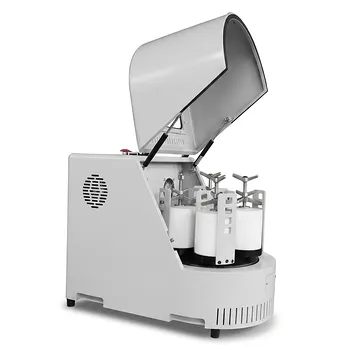
Vertical Semi Circular Planetary Ball Mill for Laboratory Precision Grinding

High Energy Laboratory Planetary Ball Mill for Nano Grinding and Material Science Sample Preparation
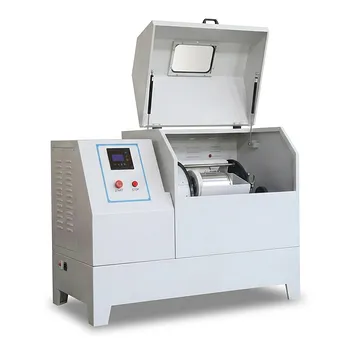
Heavy Duty Horizontal Planetary Ball Mill for Efficient Industrial Grinding and Sample Preparation

Vertical Square Planetary Ball Mill for Laboratory Sample Preparation and Nanoscale Grinding
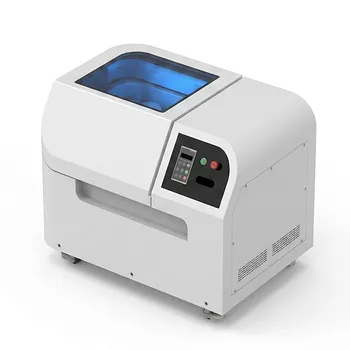
8L Planetary Ball Mill for Laboratory Grinding and Sample Preparation

Miniature Planetary Ball Mill with Vacuum Grinding and High Efficiency for Laboratory Sample Preparation

High Energy Planetary Ball Mill for Nano Scale Grinding and Mechanical Alloying

High Energy Omnidirectional Planetary Ball Mill 16L

High Energy Omnidirectional Planetary Ball Mill 20L
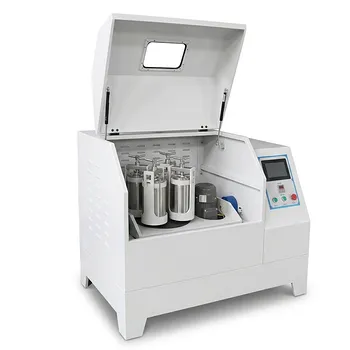
360° Rotating Omnidirectional Laboratory Planetary Ball Mill for Homogeneous Ultra-Fine Grinding and Mixing