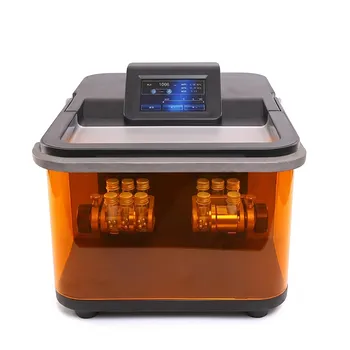
Why are zirconia grinding balls selected as the preferred media for the milling of halloysite-rich kaolin? High Purity
Updated 4 months ago
Zirconia grinding balls are the industry standard for processing halloysite-rich kaolin because they provide an ideal combination of high impact energy and chemical purity. Their extreme hardness and high density allow for the rapid structural breakdown and mechanical activation of clay minerals without introducing foreign contaminants that could compromise the accuracy of chemical analyses or the performance of the final material.
To maintain the integrity of halloysite-rich kaolin during high-energy milling, zirconia media is utilized to ensure efficient energy transfer and prevent cross-contamination caused by media wear. This choice is critical for preserving the precise elemental ratios and physical properties required for advanced material applications.
Preventing Chemical Contamination
Exceptional Wear Resistance
Zirconia is renowned for its superior wear resistance, which is vital during prolonged high-energy ball milling. Because the media does not easily degrade, it prevents the halloysite samples from being "salted" with debris from the grinding balls themselves.
Chemical Inertness and Purity
The high chemical inertness of zirconia ensures that even if microscopic wear occurs, the media does not react with the halloysite-rich soil. This maintains the purity of the sample, which is essential for researchers performing detailed chemical or structural characterization.
Maintaining Elemental Ratios
In technical applications where specific aluminum-to-silicon ratios are critical, using non-reactive media like zirconia is mandatory. It ensures that the dielectric properties and chemical stability of the resulting ceramic or composite remain unaffected by external impurities.
Maximizing Milling Efficiency
High Density for Energy Transfer
Zirconia possesses a high material density, which directly correlates to the impact energy generated during the milling process. This allows for the effective mechanical activation of the kaolin structure within a significantly compressed timeframe.
Rapid Particle Refinement
Due to its density and hardness, zirconia media can achieve the target particle size and structural breakdown in as little as 30 to 60 minutes. This efficiency reduces the energy consumption of planetary ball mills and increases laboratory throughput.
Hardness for Structural Breakdown
Halloysite-rich kaolin requires significant force to undergo structural refinement. The extreme hardness of zirconia allows it to withstand high-frequency impacts without fracturing, ensuring consistent performance throughout the milling cycle.
Understanding the Trade-offs
Initial Investment Costs
Zirconia media is significantly more expensive than alumina or steel alternatives. While the long-term value is high due to its durability, the initial procurement cost can be a barrier for lower-budget operations.
Media Sizing and Loading
Selecting the incorrect size of zirconia balls can lead to inefficient milling or "dead zones" in the grinding jar. Proper media-to-powder ratios must be strictly maintained to capitalize on the high density of the material without causing excessive heat buildup.
Compatibility with Jar Materials
Using high-density zirconia balls in jars made of softer materials, such as plastic or low-grade alumina, will cause the jar itself to wear prematurely. It is best practice to pair zirconia balls with zirconia-lined grinding jars to ensure a completely homogeneous and wear-resistant environment.
How to Apply This to Your Project
Recommendations Based on Your Objectives
- If your primary focus is analytical precision: Use high-purity zirconia media to ensure that no foreign elements interfere with your chemical or mineralogical assays.
- If your primary focus is high-throughput production: Leverage the high density of zirconia to reduce milling times to the 30-minute range, maximizing the utilization of your equipment.
- If your primary focus is mechanical activation: Ensure you are using a planetary mill with zirconia media to provide the necessary impact energy to alter the crystalline structure of the halloysite.
Selecting zirconia media transforms halloysite processing from a high-risk contamination bottleneck into a precise, repeatable, and highly efficient technical procedure.
Summary Table:
| Feature | Benefit | Impact on Halloysite Milling |
|---|---|---|
| High Density | Increased impact energy | Rapid particle refinement (30-60 mins) |
| Extreme Hardness | Superior wear resistance | Prevents sample contamination from media debris |
| Chemical Inertness | Non-reactive surface | Maintains precise Al:Si ratios and purity |
| Durability | Long-term performance | High durability despite intense mechanical activation |
Optimize Your Material Preparation with Expert Solutions
Achieving precise structural breakdown in halloysite-rich kaolin requires equipment and media that prioritize both power and purity. Our company provides complete laboratory sample preparation solutions tailored for material science.
We specialize in high-performance powder processing and compaction equipment, including:
- Advanced Milling: Planetary ball mills, jet mills, and disc mills optimized for zirconia media.
- Compaction Excellence: A full spectrum of hydraulic presses, featuring Cold/Warm Isostatic Presses (CIP/WIP) and standard lab presses.
- Preparation Tools: High-purity mixers, sieve shakers, and cryogenic grinders.
Whether you are focused on analytical precision or high-throughput production, our expert team is ready to help you select the ideal setup for your research goals. Contact us today to enhance your lab's efficiency and ensure the integrity of your materials!
References
- Siavash Davoodi, Ravi Naidu. Carbon Capture Efficiency of Mechanically Activated Australian Halloysite-Rich Kaolin with Varying Iron Impurities and Its Potential Reuse for Removing Dyes from Water. DOI: 10.3390/min15040399
Mentioned Products
- Vertical Semi Circular Planetary Ball Mill for Laboratory Precision Grinding
- 8L Planetary Ball Mill for Laboratory Grinding and Sample Preparation
- Heavy Duty Horizontal Planetary Ball Mill for Efficient Industrial Grinding and Sample Preparation
- Vertical Square Planetary Ball Mill for Laboratory Sample Preparation and Nanoscale Grinding
- High Energy Laboratory Planetary Ball Mill for Nano Grinding and Colloidal Mixing of Hard and Brittle Materials
People Also Ask
- What role does a planetary ball mill play in the synthesis of Li6PS5Cl (LPSCl)? Unlock High Ionic Conductivity
- Why is a planetary ball mill essential for SiBCN-rGO wet-spinning? Achieve Superior Dispersion and Spinnability
- Why is an intermittent grinding process required for perovskites in a planetary ball mill? Ensure Stability & Purity
- Why is a planetary ball mill required for PET micronization? Ensure Accurate Chemical Analysis of Reprocessed PET
- How does mechanized planetary ball milling compare to manual agate grinding? Optimize sulfide standard material precision.

Tech Team · PowderPreparation
Last updated on Jun 03, 2026
Related Products
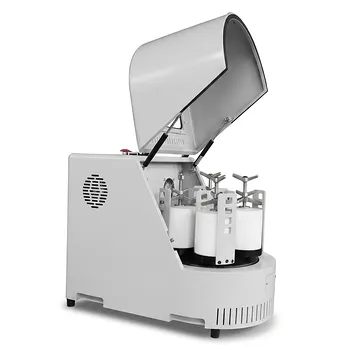
Vertical Semi Circular Planetary Ball Mill for Laboratory Precision Grinding
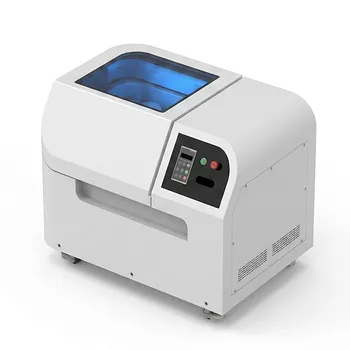
8L Planetary Ball Mill for Laboratory Grinding and Sample Preparation
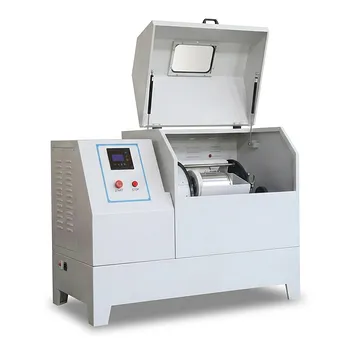
Heavy Duty Horizontal Planetary Ball Mill for Efficient Industrial Grinding and Sample Preparation

Vertical Square Planetary Ball Mill for Laboratory Sample Preparation and Nanoscale Grinding
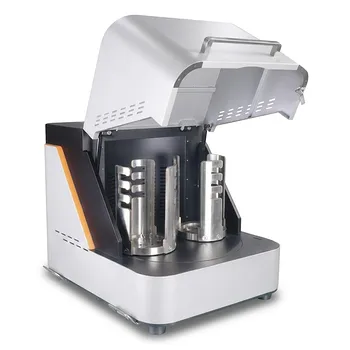
High Energy Laboratory Planetary Ball Mill for Nano Grinding and Colloidal Mixing of Hard and Brittle Materials
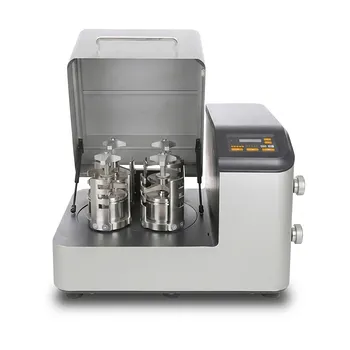
High Energy Planetary Ball Mill for Nano Scale Grinding and Colloidal Mixing in Material Science Research

High Energy Laboratory Planetary Ball Mill for Nano Grinding and Material Science Sample Preparation
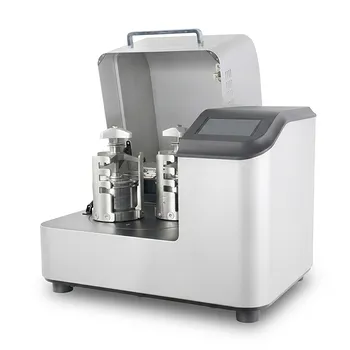
High Energy Planetary Ball Mill for Nano Scale Grinding and Mechanical Alloying
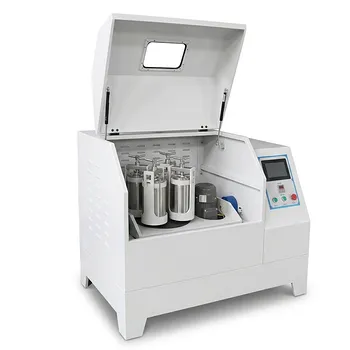
360° Rotating Omnidirectional Laboratory Planetary Ball Mill for Homogeneous Ultra-Fine Grinding and Mixing
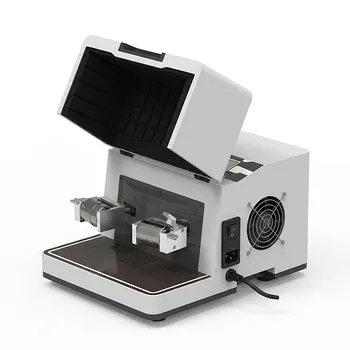
High Energy Hybrid Vibratory Ball Mill for Grinding Mixing and Cell Disruption

Miniature Planetary Ball Mill with Vacuum Grinding and High Efficiency for Laboratory Sample Preparation