Why are the cascade cone angles designed to increase sequentially in the rotor of a centrifugal mixer? Optimize Flow
Updated 5 months ago
The sequential increase of cascade cone angles is a deliberate engineering strategy to optimize material flow dynamics within the rotor. By varying these angles, the mixer manages the transition of material from a stationary state to high-velocity motion, ensuring a continuous "thin-layer" state that prevents internal splashing and maximizes discharge efficiency.
Core Takeaway: Increasing cone angles balance the need for smooth material intake with the requirement for rapid centrifugal transport. This progression ensures that material moves efficiently through the rotor stages without clogging or erratic splashing, directly improving mixing consistency and throughput.
The Mechanics of Material Flow Optimization
Facilitating Smooth Intake at the Rotor Center
The first stage of the rotor features a smaller cone angle specifically to accommodate the feed hopper. This shallow geometry allows material to enter the center of the rotor smoothly, minimizing the risk of "blowback" or air resistance.
By keeping the initial angle narrow, the design ensures the material is captured by the centrifugal forces before it has a chance to splash back toward the intake. This creates a stable foundation for the rest of the mixing cycle.
Leveraging Centrifugal Inertia for Transport
As material moves from the center to the outer stages, the cone angles increase to harness centrifugal inertia more effectively. These larger angles provide the necessary slope to "push" the material toward the next stage of the cascade.
This progressive steepening prevents material from accumulating in the middle of the rotor. It ensures a constant, pressurized flow that keeps the system from reaching a "dead zone" where material might stagnate.
Maintaining the Thin-Layer State
A critical goal of centrifugal mixing is maintaining a continuous thin-layer state of the material. The increasing angles facilitate this by spreading the material thinner as it moves outward toward the discharge point.
This thin-layer state is essential for achieving uniform heat distribution and high-shear interaction. It also ensures that the final product can be discharged rapidly and cleanly once the mixing process is complete.
Understanding the Trade-offs and Limitations
Balancing Residence Time vs. Discharge Speed
While increasing angles improve discharge efficiency, there is a technical trade-off regarding residence time. If the angles increase too aggressively, material may pass through the rotor too quickly, potentially reducing the thoroughness of the mix.
Engineers must calibrate these angles based on the specific viscosity and density of the materials being processed. A design optimized for low-viscosity resins may not perform identically when processing high-viscosity pastes.
Complexity in Rotor Maintenance and Cleaning
The multi-angled cascade design increases the internal surface area and creates "steps" within the rotor geometry. This can make the rotor more difficult to clean compared to a single-angle or flat-wall design.
In industries requiring high purity or frequent material changeovers, these transitions require specialized cleaning protocols. Failure to properly clean the angled junctions can lead to cross-contamination or material buildup.
Applying This Knowledge to Your Process
How to Evaluate Your Mixing Requirements
Understanding why these angles exist helps in selecting the right equipment for your specific material characteristics. The geometry of the rotor should align with your goals for throughput and material sensitivity.
- If your primary focus is maximizing throughput: Ensure the rotor design utilizes a significant angular increase in the final stages to facilitate rapid discharge.
- If your primary focus is handling sensitive, low-viscosity fluids: Look for designs that prioritize a very shallow initial cone angle to prevent splashing and air entrapment during intake.
- If your primary focus is de-agglomeration of fine powders: Prioritize rotors that maintain the thin-layer state through sequential angles, as this maximizes the shear forces applied to the filler particles.
By aligning rotor geometry with material flow requirements, you ensure a stable, efficient, and highly repeatable mixing process.
Summary Table:
| Design Feature | Primary Function | Key Operational Benefit |
|---|---|---|
| Small Initial Angle | Facilitate smooth intake at center | Minimizes material blowback and air resistance |
| Increasing Middle Angles | Harness centrifugal inertia | Prevents accumulation and eliminates "dead zones" |
| Large Final Angles | Accelerate discharge speed | Maintains a continuous thin-layer for uniform shear |
| Sequential Progression | Balance residence time vs. flow | Optimizes mixing consistency for various viscosities |
Elevate Your Material Processing Precision
Achieving the perfect mix requires equipment engineered for complex fluid dynamics. We provide complete laboratory sample preparation solutions for material science, specializing in high-performance powder processing and compaction technology. Whether you are dealing with low-viscosity resins or high-viscosity pastes, our equipment is designed to ensure maximum uniformity and efficiency.
Our extensive product lines include:
- Advanced Mixing: Centrifugal defoaming mixers and powder mixers.
- Milling & Grinding: Planetary ball mills, jet mills, and cryogenic grinders.
- Compaction Excellence: A full spectrum of hydraulic presses, including Cold/Warm Isostatic Presses (CIP/WIP), vacuum hot presses, and XRF pellet presses.
- Sizing & Prep: Jaw/roll crushers and vibratory sieve shakers.
Ready to optimize your laboratory's throughput? Contact our experts today to find the ideal solution tailored to your specific material requirements.
References
- Andrey Globin, A. M. Kurgansky. Theoretical studies of the process of mixing feed with a centrifugal mixer. DOI: 10.51419/202145504.
Mentioned Products
- High Viscosity Planetary Centrifugal Vacuum Mixer for Material Defoaming and Uniform Mixing
- High Speed Vacuum Planetary Centrifugal Mixer and Defoamer for Industrial Paste Processing
- High Efficiency Vacuum Planetary Centrifugal Mixer and Defoaming Machine for Industrial Material Research and Precise Laboratory Powder Dispersion
- Dual Cup Vacuum Centrifugal Mixer Planetary Paste Defoaming Machine Industrial Material Processor
- Industrial Planetary Centrifugal Vacuum Defoaming Mixer for High Viscosity Paste and Powder Homogenization
People Also Ask
- What core functions does a planetary centrifugal mixer perform? Optimize Hard Carbon Anode Slurry & Degassing
- Why is a planetary centrifugal mixer recommended for geopolymer slurries? Achieve high-shear, air-free homogenization.
- Why is a planetary centrifugal mixer utilized for wood powder and HPMC? Achieve uniform dispersion & rapid defoaming.
- How does a planetary centrifugal mixer address key challenges in Tyr-CDs@EVA optical films? Ensure Optical Clarity.
- What is the role of a planetary centrifugal mixer in UHTC slurry preparation? Achieve Void-Free, High-Viscosity Mixing

Tech Team · PowderPreparation
Last updated on May 14, 2026
Related Products
High Viscosity Planetary Centrifugal Vacuum Mixer for Material Defoaming and Uniform Mixing
High Speed Vacuum Planetary Centrifugal Mixer and Defoamer for Industrial Paste Processing
High Efficiency Vacuum Planetary Centrifugal Mixer and Defoaming Machine for Industrial Material Research and Precise Laboratory Powder Dispersion
Dual Cup Vacuum Centrifugal Mixer Planetary Paste Defoaming Machine Industrial Material Processor
Industrial Planetary Centrifugal Vacuum Defoaming Mixer for High Viscosity Paste and Powder Homogenization
High Viscosity Planetary Centrifugal Mixing and Vacuum Defoaming Machine for Laboratory Material Preparation
Industrial Planetary Centrifugal Vacuum Defoaming Mixer for High Viscosity Paste and Advanced Material Science
非介入式材料均质机真空脱泡行星搅拌高粘度混合设备
Ultra Centrifugal Mill High Speed Laboratory Grinder for Fibrous and Brittle Sample Preparation
Ultra Centrifugal Mill for Rapid Laboratory Sample Preparation and Fine Powder Grinding
Inclined Mixer for Homogeneous Powder Blending and Grinding
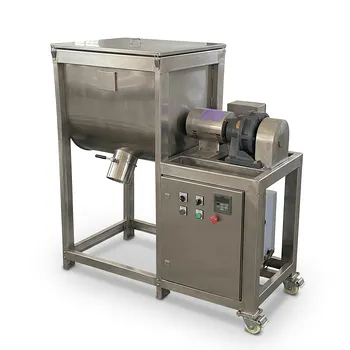
Horizontal Ribbon Mixer for Dry Powder and Slurry Blending
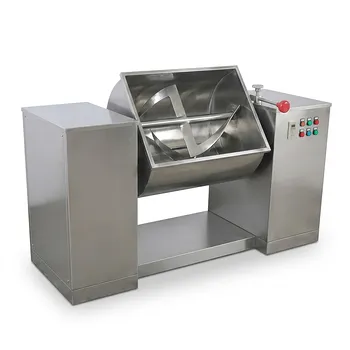
Horizontal Trough Mixer for Uniform Powder and Paste Blending
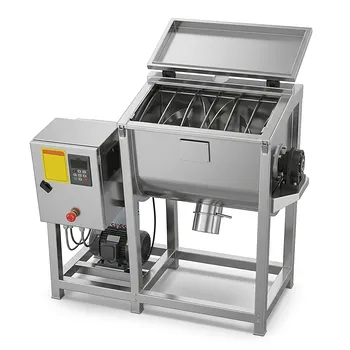
Horizontal Ribbon Mixer for Uniform Powder and Slurry Mixing
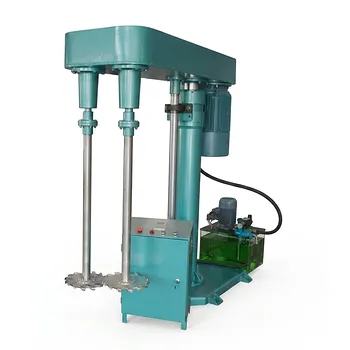
Hydraulic Double Shaft Disperser for High Viscosity Liquid Mixing and Dispersion
Industrial Double Cone Mixer for Powder Blending and Homogeneous Mixing
Multi Dimensional Universal Mixer for High Uniformity Powder Blending

Stainless Steel Rotary Vibrating Sieve High Precision Circular Vibratory Separator Industrial Powder Grading Machine Multi Layer Sifting Equipment

360° Rotating Omnidirectional Laboratory Planetary Ball Mill for Homogeneous Ultra-Fine Grinding and Mixing