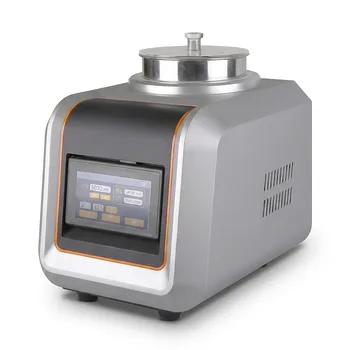
Why are standard test sieves and vibratory sieve shakers required before preparing multi-layer adsorption beds? Guide
Updated 4 months ago
Precise particle sizing is the foundational requirement for effective adsorption bed design. Standard test sieves and vibratory sieve shakers are used to categorize raw materials into specific, uniform particle size ranges, such as 425 µm to 600 µm. This mechanical classification ensures a controlled balance between the available surface area for chemical reactions and the fluid resistance encountered as liquids pass through the multi-layer column.
Sieve systems allow researchers to eliminate kinetic variations and physical inconsistencies by standardizing particle dimensions. This uniformity is essential for ensuring the repeatability of breakthrough curves and maximizing the efficiency of heavy metal removal.
Balancing Surface Area and Fluid Dynamics
Maximizing Specific Surface Area
The adsorption process relies heavily on the available surface area of the adsorbent material. Smaller particles generally offer a higher specific surface area, which increases the number of available sites for heavy metal ions to bind.
Managing Fluid Resistance
While smaller particles improve adsorption capacity, they also increase fluid resistance within the column. Using a vibratory shaker to select a precise range ensures that the bed does not become clogged, maintaining a steady flow rate while still providing enough surface area for efficient reactions.
Optimizing Column Efficiency
Research indicates that maintaining a specific particle fineness, often around 54%, optimizes the removal of contaminants. This specific calibration ensures that the adsorption reaction occurs uniformly across the entire depth of the multi-layer bed.
Ensuring Kinetic Stability and Data Accuracy
Eliminating Kinetic Variations
Inconsistent grain sizes lead to kinetic variations, where different parts of the bed react at different speeds. By using standard test sieves (such as 140 µm or 300 µm), researchers can homogenize the material to ensure the adsorption rate is consistent throughout the experiment.
Improving Breakthrough Curve Repeatability
Accurate grading is critical for obtaining repeatable breakthrough curves in fixed-bed experiments. When particle dimensions are strictly controlled, the data accurately reflects how the material performs, rather than reflecting anomalies caused by uneven packing.
Reducing Experimental Error
Mechanical sieving eliminates the human error associated with manual sorting. High-precision vibratory shakers ensure that every batch of adsorbent is physically identical, which is a prerequisite for comparing results across different experimental runs.
Controlling Bed Physicality and Porosity
Managing Bed Tortuosity
The path a fluid takes through the adsorbent—known as tortuosity—is determined by the arrangement of particles. Uniform particles created by precise sieving prevent "short-circuiting," where fluid bypasses the adsorbent through large gaps.
Stabilizing Void Ratios
Uneven particle distribution creates fluctuations in void ratios, or the empty spaces between grains. Using a vibratory sieve shaker to achieve a consistency grade (e.g., 63–150 μm) ensures that the packing density remains stable, preventing structural shifts during the adsorption process.
Ensuring Physical Separation
Vibratory shakers provide the mechanical energy necessary to separate fine powders that might otherwise clump together. This physical separation ensures that every particle contributes its full surface area to the adsorption task.
Understanding the Trade-offs
Surface Area vs. Pressure Drop
The primary trade-off in particle sizing is between adsorption kinetics and hydraulic conductivity. Finer particles (high mesh numbers) accelerate the removal of ions but significantly increase the pressure required to move fluid through the bed.
Sorting Precision vs. Material Waste
Achieving a very narrow particle size distribution (e.g., exactly 300 µm) provides the most accurate data but often results in higher material waste. Researchers must balance the need for extreme precision with the volume of raw material available for the project.
Mechanical Stress on Adsorbents
Aggressive vibratory sieving can sometimes degrade fragile natural adsorbents into even smaller "fines" during the process. It is vital to calibrate the shaking intensity to achieve separation without physically breaking down the material structure.
How to Apply This to Your Project
Selecting the Right Sizing Strategy
- If your primary focus is maximizing removal capacity: Use smaller mesh sizes (e.g., 150–300 µm) to increase the total surface area available for ion exchange.
- If your primary focus is high-flow industrial processing: Select a larger, uniform particle range (e.g., 600 µm+) to minimize pressure drop and prevent column clogging.
- If your primary focus is scientific repeatability: Utilize a high-precision vibratory shaker with a full stack of standard test sieves to isolate a very narrow particle size distribution.
By strictly controlling particle size distribution, you transform a raw material into a predictable, high-performance engineering component for adsorption.
Summary Table:
| Requirement Factor | Role in Adsorption Bed Preparation | Key Benefit |
|---|---|---|
| Particle Sizing | Categorizes materials into uniform ranges (e.g., 425–600 µm) | Maximizes specific surface area for ion binding |
| Fluid Dynamics | Manages the balance between flow rate and resistance | Prevents column clogging and stabilizes pressure drop |
| Kinetic Stability | Homogenizes grains to eliminate reaction variations | Ensures consistent adsorption rates and repeatability |
| Bed Porosity | Stabilizes void ratios and arrangement of particles | Prevents "short-circuiting" and structural shifts |
| Data Accuracy | Eliminates manual sorting and human error | Improves the reliability of breakthrough curves |
Elevate Your Material Research with Precise Sample Preparation
Achieving repeatable results in adsorption studies starts with the right equipment. At [Company Name], we provide complete laboratory sample preparation solutions tailored for material science. Whether you are refining powders for multi-layer beds or developing new composites, our expert-grade machinery ensures total control over your material properties.
Our Specialized Equipment Includes:
- Powder Processing: High-precision vibratory and air-jet sieve shakers, test sieves, and a wide range of mills (planetary ball, jet, and cryogenic grinders).
- Material Compaction: A full spectrum of hydraulic presses, including Cold/Warm Isostatic Presses (CIP/WIP), vacuum hot presses, and XRF pellet presses.
- Preparation Tools: Industrial-grade jaw and roll crushers, powder mixers, and high-efficiency defoaming mixers.
Ready to optimize your laboratory workflow and enhance your data accuracy?
Contact Our Technical Team Today to find the perfect solution for your specific application!
References
- L. M. Lalitha, S. Mohan. PERFORMANCE EVALUATION OF MULTIBED ADSORBENT ON REMOVAL OF HEXAVALENT CHROMIUM THROUGH VARIOUS KINETIC MODELS. DOI: 10.3846/jeelm.2018.6269
Mentioned Products
- Stainless Steel Laboratory Vibratory Test Sieve Shaker
- Laboratory Vibratory Test Sieve Shaker for Precision Particle Size Analysis and Powder Grading
- Small Laboratory Vibratory Sieve Shaker for Powder Gradation and Particle Size Analysis
- Vibratory Sieve Shaker Electromagnetic 3D Motion Powder Particle Size Analyzer for Dry and Wet Sieving
- Small Laboratory Vibrating Sieve Shaker for Precise Particle Size Analysis
People Also Ask
- What function does a laboratory vibratory sieve shaker serve in the production process of metakaolin? Optimize Reactivity
- Why is a precision laboratory vibratory sieve shaker necessary for particle size control? Optimize Biomass Carbonization
- What is the function of a laboratory vibratory sieve shaker? Enhance Coal Particle Size Distribution (PSD) Analysis
- What role do laboratory vibratory sieve shakers and test sieves play before the molding of Nb-Cu composite powders?
- What is the primary function of a laboratory vibratory sieve shaker in the evaluation of sand liquefaction potential?

Tech Team · PowderPreparation
Last updated on Jun 03, 2026
Related Products
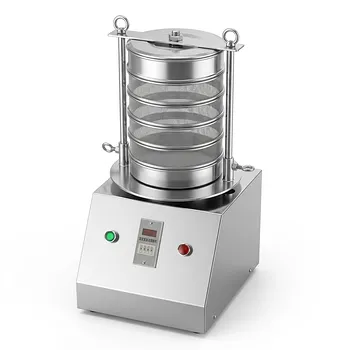
Stainless Steel Laboratory Vibratory Test Sieve Shaker

Laboratory Vibratory Test Sieve Shaker for Precision Particle Size Analysis and Powder Grading
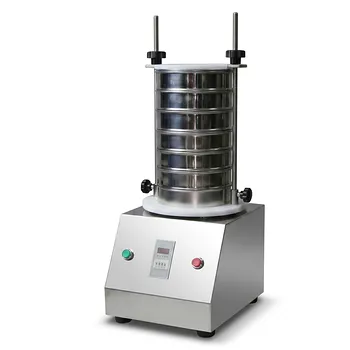
Small Laboratory Vibratory Sieve Shaker for Powder Gradation and Particle Size Analysis
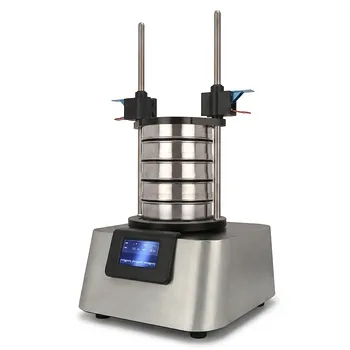
Vibratory Sieve Shaker Electromagnetic 3D Motion Powder Particle Size Analyzer for Dry and Wet Sieving
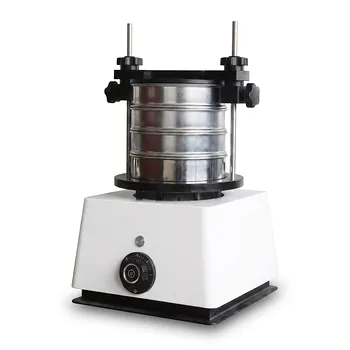
Small Laboratory Vibrating Sieve Shaker for Precise Particle Size Analysis
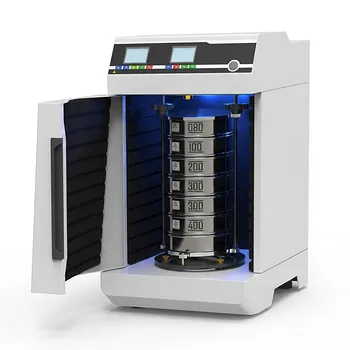
Laboratory Dry and Wet Three Dimensional Vibratory Sieve Shaker for Particle Analysis

Dry Three Dimensional Vibratory Sieve Shaker

Heavy Duty Dry Three Dimensional Vibratory Sieve Shaker for Particle Separation
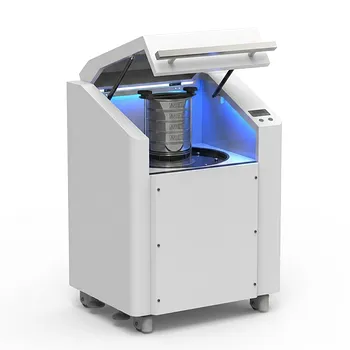
High Frequency Cabinet Type Three-Dimensional Rotary Vibrating Sieve Shaker for Dry Sieving and Particle Classification
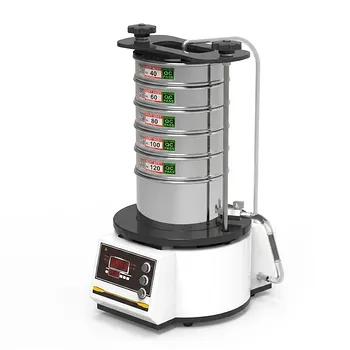
High Frequency Wet Three-Dimensional Vibrating Sieve Shaker for Dry and Wet Particle Size Analysis
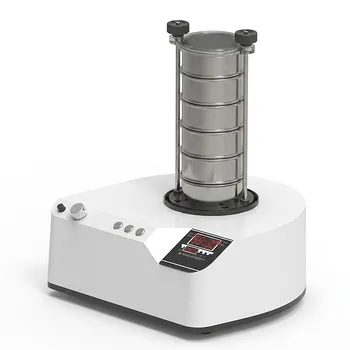
三维电磁微量振动筛分仪
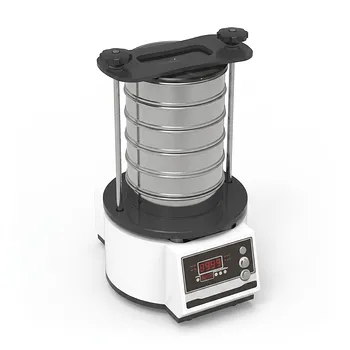
Tapping Oscillating Sieve Shaker for Dry and Wet Particle Size Analysis

Stainless Steel Rotary Vibrating Sieve High Precision Circular Vibratory Separator Industrial Powder Grading Machine Multi Layer Sifting Equipment
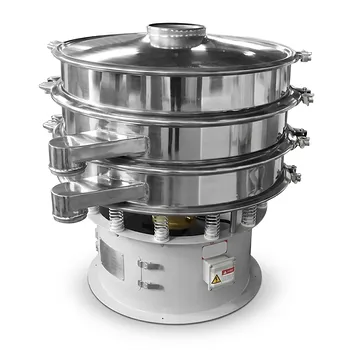
Three Dimensional Rotary Vibrating Sieve
Vibratory Superfine Grinder for Ultra Fine Laboratory Powder Milling
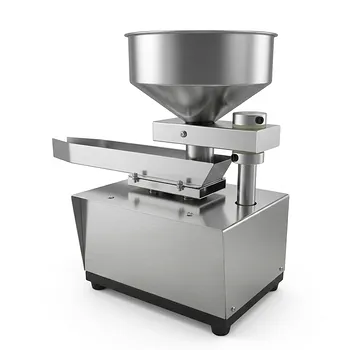
Automatic Vibrating Powder Feeder for Laboratory Material Processing Precision Vibratory Hopper Feeder for Granular and Powder Material Handling Industrial Grade Vibrating Tray Feeder for Consistent Material Sample Preparation
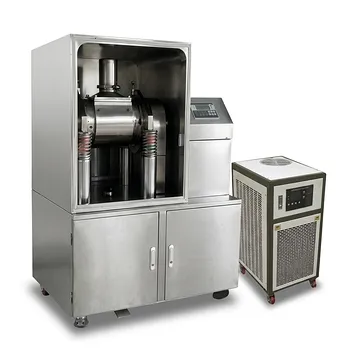
Small Vibrating Ultrafine Grinder for Traditional Chinese Medicine