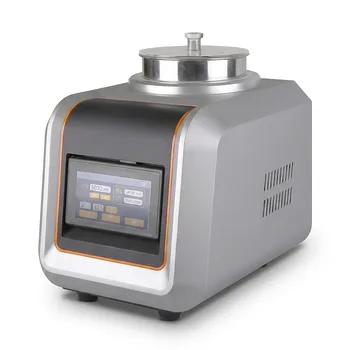
Why are standard test sieves and vibratory sieve shakers necessary for gradation analysis? Optimize Density & Strength
Updated 4 months ago
Precision gradation analysis is the fundamental requirement for transforming raw copper slag or recycled aggregates into viable engineering materials. Standard test sieves and vibratory shakers are used to determine particle size distribution and calculate the fineness modulus (FM). This data allows technicians to optimize mixtures, reducing the void ratio and significantly increasing the compressive strength and durability of the final product.
The synergy between standardized apertures and mechanical vibration eliminates human error and provides the empirical data necessary to meet strict engineering specifications. By controlling gradation, you ensure that recycled materials behave predictably and achieve the density required for high-performance concrete or pavement.
Maximizing Material Density and Structural Strength
Reducing the Void Ratio
Accurate sieving allows for the selection of a "nesting" range of particles where smaller grains fill the gaps between larger ones. This optimization increases the density of the mixture, which is critical for impermeability and long-term durability.
Enhancing Compressive Strength
By ensuring a balanced gradation, the internal structure of the concrete becomes more robust. This directly translates to higher compressive strength in both copper slag and recycled aggregate applications by creating a tighter skeletal matrix.
Optimizing Mixture Design
In the preparation of concrete, these tools accurately separate sand and stone based on size. This ensures that the particle distribution meets the specific requirements for workability and structural integrity in the final pour.
Ensuring Scientific Rigor in Recycled Materials
Variable Control in Research
When comparing Recycled Coarse Aggregate (RCA) to natural materials, these tools ensure both share the same gradation curve. This eliminates particle size as a variable, allowing researchers to accurately evaluate the mechanical properties of the recycled material itself.
Meeting Pavement Specifications
For pavement base and sub-base layers, precise separation into intervals (ranging from 80mm down to 0.075mm) is required. This analysis determines if the recycled material meets the gradation specifications necessary for high-load infrastructure.
Evaluating Reclaimed Asphalt (RAP)
In asphalt recycling, accurate gradation data is critical for determining how much new aggregate is required. This ensures the final mixture maintains its integrity and meets the rigorous standards of the Reclaimed Asphalt Concrete process.
The Necessity of Mechanical Vibration
Consistency vs. Manual Error
Vibratory shakers provide high-frequency, cyclic motion that ensures particles penetrate the mesh rapidly and fully. This eliminates the inconsistencies and "human interference" inherent in manual sieving, leading to repeatable, scientific results.
Economic Liberation in Copper Slag
For copper ore and slag processing, mechanical sieving helps determine the economic liberation particle size. This identifies how metal content is distributed across sizes, allowing for the optimization of separation parameters to maximize metal recovery.
Efficiency and Stratification
Mechanical shakers ensure that recycled aggregates are fully and rapidly stratified according to particle size. This speed is essential in industrial laboratory settings where high volumes of material must be processed daily without sacrificing accuracy.
Common Pitfalls in Gradation Analysis
Sieve Overloading
Putting too much material on a single sieve can prevent proper stratification, a phenomenon known as "blinding." When smaller particles are trapped on top of larger ones, the resulting data suggests a coarser gradation than actually exists.
Mechanical Wear and Calibration
Standard sieves are precision instruments that degrade over time through friction and material impact. Without regular calibration and inspection for mesh distortion, the "standardized" results become invalid, leading to failed engineering tests downstream.
Inadequate Sieve Duration
If the vibratory shaker is not run for a sufficient duration, the particles do not have enough "flicks" at the mesh to pass through. This results in an incomplete analysis that can skew the fineness modulus calculation.
How to Apply This to Your Project
Making the Right Choice for Your Goal
- If your primary focus is concrete strength: Use the sieving data to minimize the void ratio, which reduces the amount of cement paste required while increasing density.
- If your primary focus is material comparison: Ensure that your recycled and natural aggregates are sieved to the exact same gradation curve to isolate material performance as your only variable.
- If your primary focus is economic recovery in mining: Use mechanical shakers to identify the specific size fraction where metal concentration is highest to refine your extraction process.
- If your primary focus is infrastructure compliance: Verify that your material passes through the critical 0.075mm to 53mm aperture range to meet pavement sub-base standards.
By utilizing standardized equipment and mechanical vibration, you move from guesswork to empirical certainty in material performance.
Summary Table:
| Application | Key Benefit | Critical Measurement |
|---|---|---|
| Concrete Preparation | Reduces void ratio & increases density | Fineness Modulus (FM) |
| Recycled Aggregates | Ensures structural rigor & predictability | Gradation Curve Comparison |
| Mining & Copper Slag | Maximizes metal recovery efficiency | Economic Liberation Size |
| Pavement Engineering | Meets strict infrastructure standards | Particle Size Intervals (0.075-80mm) |
| Asphalt Recycling | Optimizes new aggregate requirements | Reclaimed Asphalt (RAP) Analysis |
Elevate Your Material Analysis with Professional Laboratory Solutions
Precision in gradation analysis is the foundation of high-performance engineering. At [Company Name], we provide complete laboratory sample preparation solutions tailored for material science and industrial recycling. Whether you are optimizing copper slag recovery or ensuring the structural integrity of recycled aggregates, our equipment is designed for accuracy and repeatability.
Our extensive product line includes:
- Size Reduction: Heavy-duty crushers (jaw/roll), liquid nitrogen cryogenic grinders, and high-energy mills (planetary ball, jet, sand/bead, disc, rotor).
- Particle Characterization: Advanced vibratory and air-jet sieve shakers with a full range of precision test sieves and meshes.
- Sample Preparation: High-performance powder mixers, defoaming mixers, and a full spectrum of hydraulic presses, including Cold/Warm Isostatic Presses (CIP/WIP), XRF pellet presses, and vacuum hot presses.
Ready to move from guesswork to empirical certainty? Contact our technical experts today to find the perfect equipment configuration for your material testing needs.
References
- Agnimesh Singh Tomar, Pratiksha Malviya. Review Paper on Properties of Concrete of by Partial Replacement of Sand and Cement with Copper Slag and Rice Ask Ash. DOI: 10.31142/ijtsrd23538
Mentioned Products
- Stainless Steel Laboratory Vibratory Test Sieve Shaker
- Laboratory Vibratory Test Sieve Shaker for Precision Particle Size Analysis and Powder Grading
- Vibratory Sieve Shaker Electromagnetic 3D Motion Powder Particle Size Analyzer for Dry and Wet Sieving
- Small Laboratory Vibrating Sieve Shaker for Precise Particle Size Analysis
- Small Laboratory Vibratory Sieve Shaker for Powder Gradation and Particle Size Analysis
People Also Ask
- What function does a laboratory vibratory sieve shaker serve in the production process of metakaolin? Optimize Reactivity
- Why is a precision laboratory vibratory sieve shaker necessary for particle size control? Optimize Biomass Carbonization
- What is the function of a laboratory vibratory sieve shaker? Enhance Coal Particle Size Distribution (PSD) Analysis
- What role do laboratory vibratory sieve shakers and test sieves play before the molding of Nb-Cu composite powders?
- What is the primary function of a laboratory vibratory sieve shaker in the evaluation of sand liquefaction potential?

Tech Team · PowderPreparation
Last updated on Jun 03, 2026
Related Products
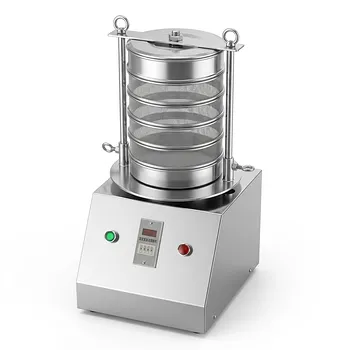
Stainless Steel Laboratory Vibratory Test Sieve Shaker
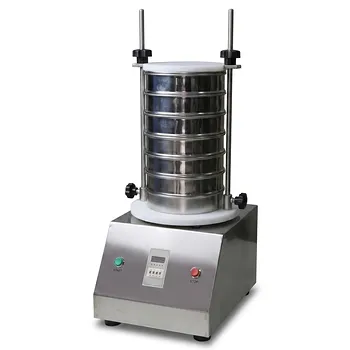
Laboratory Vibratory Test Sieve Shaker for Precision Particle Size Analysis and Powder Grading
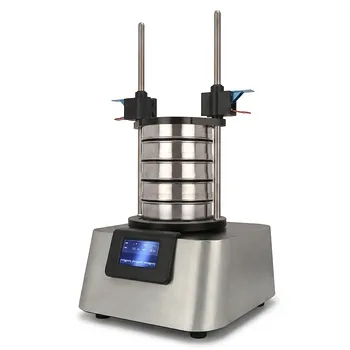
Vibratory Sieve Shaker Electromagnetic 3D Motion Powder Particle Size Analyzer for Dry and Wet Sieving
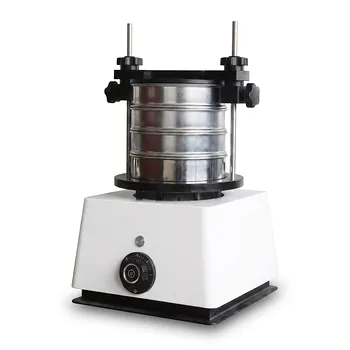
Small Laboratory Vibrating Sieve Shaker for Precise Particle Size Analysis
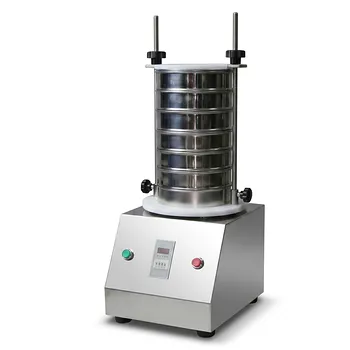
Small Laboratory Vibratory Sieve Shaker for Powder Gradation and Particle Size Analysis
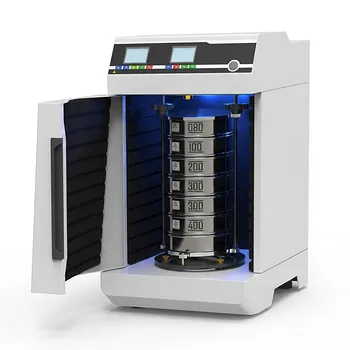
Laboratory Dry and Wet Three Dimensional Vibratory Sieve Shaker for Particle Analysis
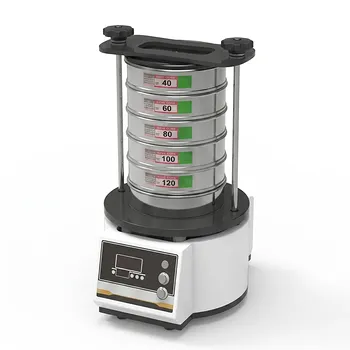
Dry Three Dimensional Vibratory Sieve Shaker
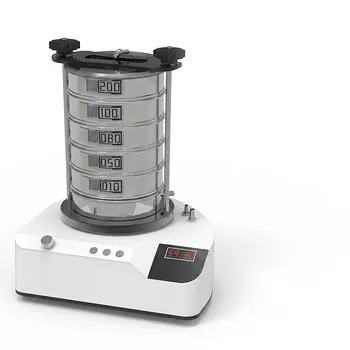
Heavy Duty Dry Three Dimensional Vibratory Sieve Shaker for Particle Separation
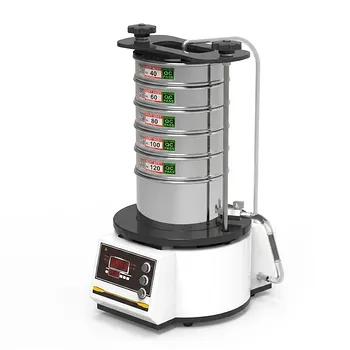
High Frequency Wet Three-Dimensional Vibrating Sieve Shaker for Dry and Wet Particle Size Analysis
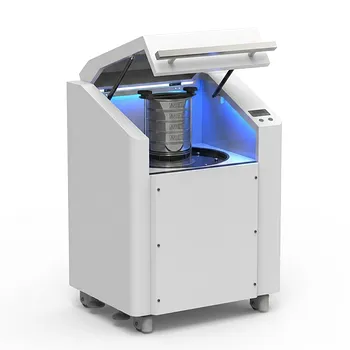
High Frequency Cabinet Type Three-Dimensional Rotary Vibrating Sieve Shaker for Dry Sieving and Particle Classification
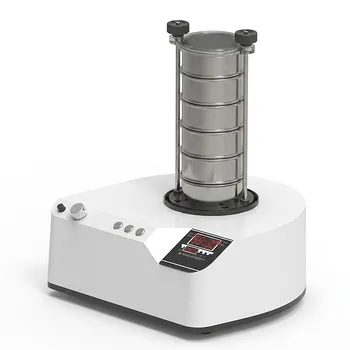
三维电磁微量振动筛分仪
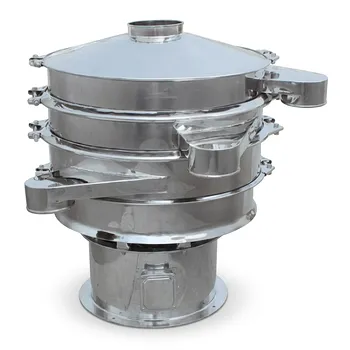
Stainless Steel Rotary Vibrating Sieve High Precision Circular Vibratory Separator Industrial Powder Grading Machine Multi Layer Sifting Equipment
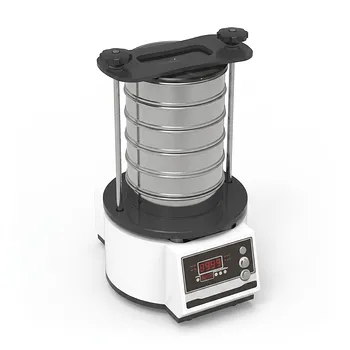
Tapping Oscillating Sieve Shaker for Dry and Wet Particle Size Analysis
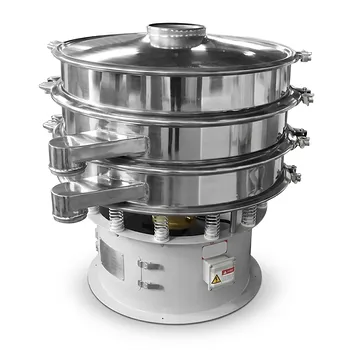
Three Dimensional Rotary Vibrating Sieve
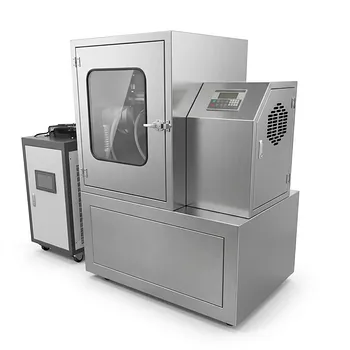
Vibratory Superfine Grinder for Ultra Fine Laboratory Powder Milling
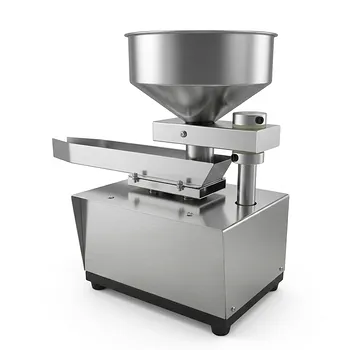
Automatic Vibrating Powder Feeder for Laboratory Material Processing Precision Vibratory Hopper Feeder for Granular and Powder Material Handling Industrial Grade Vibrating Tray Feeder for Consistent Material Sample Preparation