Why are small-diameter zirconia grinding beads preferred for nanomilling Li1.27Cr0.2Mn0.53O2? Achieve Nano-Scale Purity
Updated 4 months ago
Small-diameter zirconia grinding beads are preferred because they maximize the frequency of effective collisions and energy transfer density required to reach nanometer-scale fineness. For $Li_{1.27}Cr_{0.2}Mn_{0.53}O_2$ precursors, this high contact frequency ensures a uniform particle size distribution while the inherent hardness of zirconia prevents metallic contamination, preserving the electrochemical purity of the cathode material.
Small-diameter zirconia media optimize the nanomilling process by balancing high-intensity kinetic energy with an increased number of contact points. This combination is essential for achieving the specific surface area needed for high-performance battery precursors without introducing impurities that degrade battery life.
Maximizing Grinding Efficiency through Surface Area
Increased Collision Frequency
Using beads with diameters such as 0.4 mm or 0.3 mm significantly increases the number of individual grinding units within the milling chamber. This results in a much higher frequency of effective collisions and contact points between the media and the precursor particles.
Enhanced Energy Transfer Density
Smaller beads provide a higher specific surface area, which allows for more efficient energy transfer during the milling process. This high-density interaction is what enables the $Li_{1.27}Cr_{0.2}Mn_{0.53}O_2$ particles to break down from bulk precursors into nano-scale powders.
Uniform Stress Distribution
At the nanometer scale, uniform stress distribution is critical to prevent a wide variance in particle size. Small beads apply more refined shear forces and impacts, facilitating a more consistent fracture of the material along its crystalline slip planes.
The Role of Zirconia Material Properties
High Kinetic Momentum
Zirconia is characterized by a high density (6.0–6.06 g/cm³), which is vital when using small-diameter media. Despite their small size, the high mass of zirconia ensures that each bead carries sufficient kinetic energy to pulverize tough cathode precursors upon impact.
Exceptional Hardness and Wear Resistance
With a hardness often exceeding 1200 HV, zirconia resists the abrasive forces present during high-intensity milling. This low wear rate is essential because it minimizes the amount of media material that sheds into the precursor during processing.
Chemical and Electrochemical Purity
For lithium-ion battery materials, preventing metallic impurities is a non-negotiable requirement. Zirconia is chemically stable and non-metallic, ensuring that the final $Li_{1.27}Cr_{0.2}Mn_{0.53}O_2$ product maintains the high electrochemical purity necessary for stable cycling and safety.
Understanding the Trade-offs
Handling and Separation Challenges
As bead size decreases, the technical difficulty of separating the media from the finished slurry increases. Standard mesh screens may clog or require specialized centrifugal separation systems to handle beads as small as 0.1 mm.
Viscosity and Heat Generation
Small beads create significantly more friction, which can lead to rapid heat buildup and increased slurry viscosity. If the temperature is not strictly controlled via cooling jackets, it can alter the chemical properties of the sensitive cathode precursors.
Cost vs. Performance
High-purity, micro-diameter zirconia beads are more expensive to manufacture than larger media. Users must balance the incremental gains in fineness against the increased capital expenditure and energy costs associated with longer milling times.
Applying Media Selection to Your Project
Recommendations for Nanomilling Success
- If your primary focus is reaching the smallest possible particle size: Utilize 0.1 mm to 0.3 mm zirconia beads to maximize the surface area and shear forces for rapid pulverization.
- If your primary focus is maximizing electrochemical stability: Prioritize high-purity yttria-stabilized zirconia to eliminate the risk of foreign metal or ceramic contamination.
- If your primary focus is production throughput: Select the largest bead size (e.g., 0.4 mm to 0.6 mm) that still achieves your target fineness to reduce the risk of screen clogging and overheating.
By strategically leveraging the high collision frequency of small-diameter media and the durability of zirconia, manufacturers can produce the high-performance, ultra-pure precursors required for modern lithium-ion batteries.
Summary Table:
| Feature | Benefit for Li1.27Cr0.2Mn0.53O2 Nanomilling | Why Zirconia? |
|---|---|---|
| Small Diameter (0.1-0.4mm) | Maximizes collision frequency and energy transfer density. | High density (6.0g/cm³) maintains impact momentum. |
| High Surface Area | Ensures uniform stress distribution for nano-scale fineness. | Resists high-intensity abrasive forces (1200 HV). |
| Material Purity | Prevents metallic contamination in cathode precursors. | Chemically stable and non-metallic for battery safety. |
| Wear Resistance | Minimizes media shedding into the slurry. | Exceptional durability lowers long-term operational costs. |
Optimize Your Battery Material Processing with Professional Solutions
Are you looking to achieve perfect nano-scale fineness for your cathode precursors? At [Brand Name], we provide complete laboratory sample preparation solutions tailored for material science.
Whether you require high-energy planetary ball mills or jet mills for efficient nanomilling, or need to compact your powders using our Cold/Warm Isostatic Presses (CIP/WIP) and vacuum hot presses, we have the expertise to elevate your research. Our extensive range also includes:
- Size Reduction: Jaw/roll crushers and cryogenic grinders.
- Classification: Vibratory and air-jet sieve shakers.
- Mixing: High-precision powder and defoaming mixers.
- Compaction: Standard lab presses and XRF pellet presses.
Ensure electrochemical purity and consistent results—contact our experts today to find the ideal equipment for your laboratory!
References
- Chengkang Chang, Dongyun Zhang. Enhanced Electrochemical Performance of Li1.27Cr0.2Mn0.53O2 Layered Cathode Materials via a Nanomilling-Assisted Solid-state Process. DOI: 10.3390/ma12030468
Mentioned Products
- Horizontal Bead Mill for Nanoscale Grinding and Advanced Material Powder Processing
- Laboratory Horizontal Bead Mill for Nanomaterial Wet Grinding and Material Science Research
- Vertical Nano Bead Mill for Ceramic Materials with Permanent Magnet Motor and High Efficiency Grinding
- Nano Laboratory Bead Mill Desktop Sub Micron Sand Mill Screenless Seal Less Powder Grinder
- Laboratory Small Horizontal Sand Mill for Nano Materials Wet Grinding
People Also Ask
- How does the bead filling rate affect the grinding performance and equipment wear in a bead mill? Optimization Guide
- Why is it necessary to precisely control the grinding media loading ratio? Master Nanosuspension Yield & API Stability
- Why is a ceramic lining preferred over stainless steel for a bead mill? Protect Enzymes and Ensure Biomass Purity
- Why is an external cooling circulation system necessary during the high-speed operation of a bead mill? Protect Integrity
- Why is the filling rate of grinding beads strictly controlled during the material milling process? Optimize Efficiency.

Tech Team · PowderPreparation
Last updated on Jun 03, 2026
Related Products
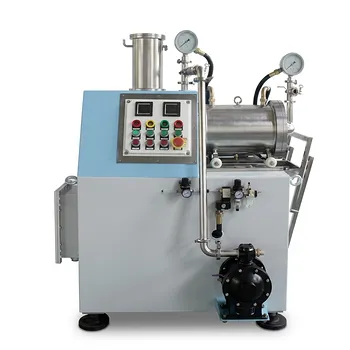
Horizontal Bead Mill for Nanoscale Grinding and Advanced Material Powder Processing
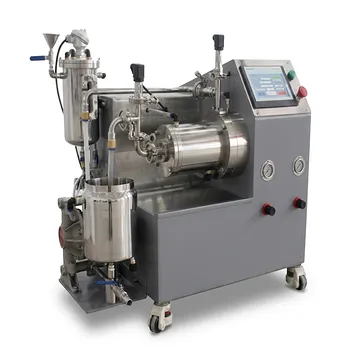
Laboratory Horizontal Bead Mill for Nanomaterial Wet Grinding and Material Science Research
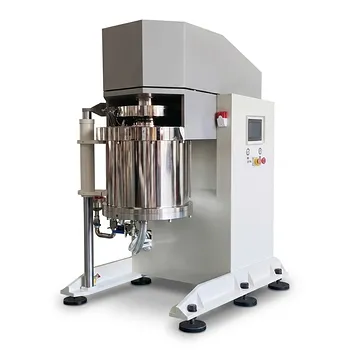
Vertical Nano Bead Mill for Ceramic Materials with Permanent Magnet Motor and High Efficiency Grinding
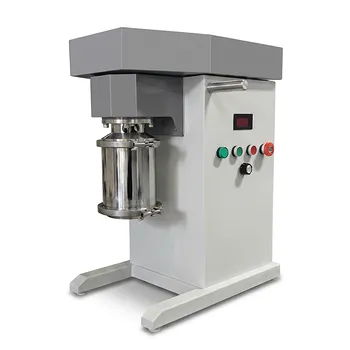
Nano Laboratory Bead Mill Desktop Sub Micron Sand Mill Screenless Seal Less Powder Grinder