Why are polymer containers recommended over metal for Strontium Titanate milling? Ensure High Purity and Performance
Updated 5 months ago
The use of high-purity polymer containers for milling Strontium Titanate is primarily driven by the need to eliminate metal ion contamination. Because Strontium Titanate is an electronic ceramic, its functional performance is highly sensitive to trace metal impurities. Polymer containers ensure that any wear debris generated during the high-energy grinding process does not permanently degrade the material's chemical purity or electrical properties.
Core Takeaway: Polymer containers act as a sacrificial barrier that prevents heavy metal contamination; unlike metal residues, polymer wear particles are easily removed through volatilization during high-temperature processing, preserving the material's integrity.
The Sensitivity of Strontium Titanate
Electronic Performance and Impurity Control
Strontium Titanate ($SrTiO_3$) is a precision electronic ceramic where even parts-per-million (ppm) levels of foreign ions can shift its dielectric constant. Metal ion contamination from steel or alloy containers introduces unwanted conductive paths or lattice defects. These defects can lead to unpredictable electrical behavior and catastrophic failure in finished components.
Maintaining Chemical Homogeneity
Achieving a high-purity final product requires strict control over the milling environment. Using polymer containers ensures that the stoichiometric balance of the Strontium Titanate remains undisturbed by external metallic elements. This level of control is essential for applications in capacitors, varistors, and substrate materials.
Comparing Contamination Profiles: Metal vs. Polymer
The Permanent Impact of Metal Ions
When metal containers are used, the friction of the grinding media against the walls releases microscopic metal flakes into the powder. These metals become a permanent part of the ceramic matrix during sintering. Because they do not evaporate, they create inclusions that compromise the material’s structural and electronic uniformity.
The Volatile Nature of Polymer Residues
High-purity polymers are selected because their wear residues behave differently under heat. During the subsequent calcination or sintering stages, these organic residues typically volatilize—turning into gas and leaving the ceramic body. This "clean burn" ensures that the final ceramic is free of the grinding environment's physical footprint.
Inert Characteristics of Trace Residue
In cases where polymer fragments do not fully volatilize, they generally remain chemically inert. They do not react with the Strontium Titanate lattice in the same aggressive manner as transition metals. This provides a safety margin that maintains the high chemical purity required for high-end electronic applications.
Understanding the Trade-offs
Wear Rates and Processing Time
Polymer containers generally have a lower hardness than hardened steel or tungsten carbide. This can lead to higher wear rates of the container itself, potentially requiring more frequent replacements. Furthermore, the heat dissipation of polymers is lower than metals, which may necessitate shorter milling cycles to prevent melting or deformation.
Structural Integrity Under High Energy
While polymers excel at purity, they may lack the mechanical rigidity required for extremely large-scale industrial batches. In high-energy planetary milling, the thermal expansion of the polymer must be carefully managed. Failure to account for these thermal properties can lead to container warping or seal failure during extended runs.
Making the Right Choice for Your Goal
When selecting a milling environment for Strontium Titanate, your decision should align with the specific requirements of your end product.
- If your primary focus is Maximum Electronic Performance: Utilize high-purity polymer containers to ensure zero metal ion interference with the dielectric properties.
- If your primary focus is Scalable Industrial Throughput: Consider polymer-lined metal containers to combine the structural strength of metal with the purity benefits of a polymer interface.
- If your primary focus is Research and Development: Opt for high-purity polymers like PEEK or PTFE to eliminate variables and ensure the highest possible material consistency.
By prioritizing the elimination of metallic impurities through polymer containment, you ensure that the intrinsic properties of Strontium Titanate remain the sole driver of your component's performance.
Summary Table:
| Feature | Metal Containers | Polymer Containers |
|---|---|---|
| Contamination Type | Permanent heavy metal ions | Volatile organic wear debris |
| Electronic Impact | Disrupts dielectric constant | Maintains stoichiometric purity |
| Sintering Behavior | Remains as conductive inclusions | Volatilizes (clean burn-off) |
| Durability | High mechanical rigidity | Lower; prone to thermal wear |
| Primary Application | Large-scale structural batches | High-end electronic ceramics |
Elevate Your Material Synthesis with Precision Sample Prep Solutions
Achieving superior performance in electronic ceramics like Strontium Titanate requires zero-contamination processing. [Company Name] specializes in providing complete laboratory sample preparation solutions for material science, focusing on high-purity powder processing and precision compaction.
Our extensive equipment line is designed to protect your material integrity at every stage:
- Milling & Grinding: High-energy planetary ball mills, jet mills, and liquid nitrogen cryogenic grinders compatible with high-purity polymer containment.
- Powder Processing: Specialized crushers (jaw/roll), sieve shakers (vibratory/air-jet), and advanced powder or defoaming mixers.
- Advanced Compaction: A full spectrum of hydraulic presses, including Cold/Warm Isostatic Presses (CIP/WIP), vacuum hot presses, and XRF pellet presses.
Don't let trace metallic impurities compromise your dielectric research or component reliability. Contact our experts today to discover how our milling and compaction solutions can optimize your laboratory workflow and enhance your material performance.
References
- Jan‐Helmut Preusker, Wolfgang Rheinheimer. Impact of AC and DC Electric Fields on the Microstructure Evolution in Strontium Titanate. DOI: 10.1002/adem.202201848
Mentioned Products
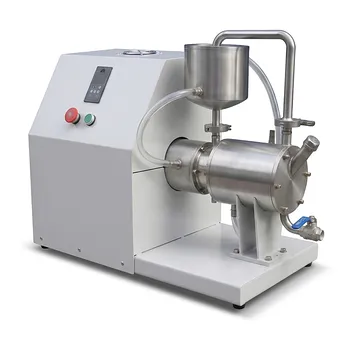
- Mass Production Nano Sand Mill for Industrial Nanomaterial Grinding and Dispersion
- Heavy Duty Horizontal Planetary Ball Mill for Efficient Industrial Grinding and Sample Preparation
- High Speed Laboratory Grinder Efficient Stainless Steel Powder Pulverizer Universal Material Science Mill for Sample Preparation
- Laboratory Disc Mill for Fine Sample Preparation of Hard and Brittle Materials
- Vibratory Disc Mill for Rapid Fine Grinding and High Throughput Sample Preparation of Hard and Brittle Materials
People Also Ask
- What is the significance of the stirring speed in Budesonide nano-milling? Master Kinetic Energy for Drug Refinement
- How does an industrial grinding mill contribute to groundnut shell powder preparation? Enhance Polymer Filler Performance
- Why is a sand mill used to process solid carbon-forming agents like PPVA and PER? Enhance Dispersion & Flame Retardancy
- Why Silicon Nitride Media is Superior to Zirconia for Si-B-C-N Ceramics? Ensure Purity & Nanostructure Integrity
- What is the purpose of using a 50 µm fine nylon sieve to filter ceramic slurries? Optimize Your DLP 3D Printing Results

Tech Team · PowderPreparation
Last updated on May 14, 2026
Related Products
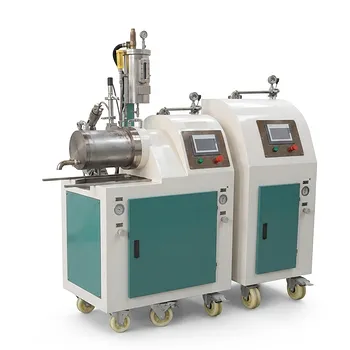
Mass Production Nano Sand Mill for Industrial Nanomaterial Grinding and Dispersion

Heavy Duty Horizontal Planetary Ball Mill for Efficient Industrial Grinding and Sample Preparation
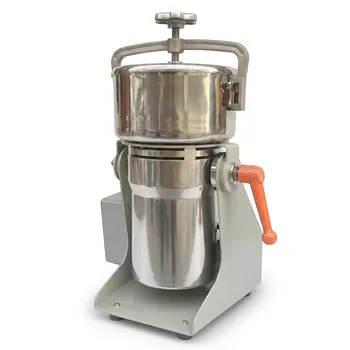
High Speed Laboratory Grinder Efficient Stainless Steel Powder Pulverizer Universal Material Science Mill for Sample Preparation
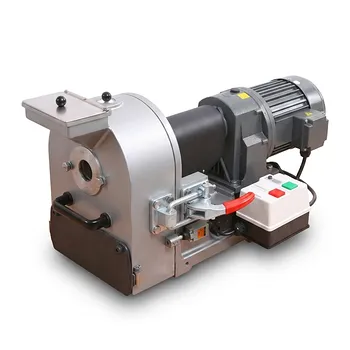
Laboratory Disc Mill for Fine Sample Preparation of Hard and Brittle Materials
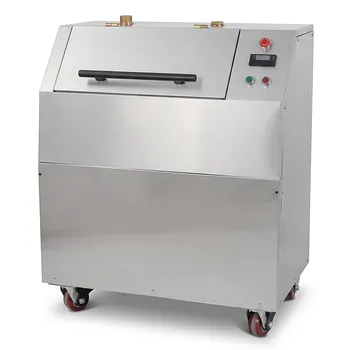
Vibratory Disc Mill for Rapid Fine Grinding and High Throughput Sample Preparation of Hard and Brittle Materials
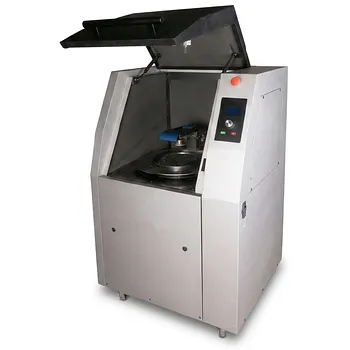
High Speed Vibratory Disc Mill for Spectral Analysis Sample Preparation and Rapid Powder Grinding
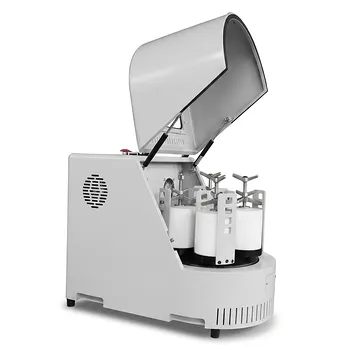
Vertical Semi Circular Planetary Ball Mill for Laboratory Precision Grinding

Miniature Planetary Ball Mill with Vacuum Grinding and High Efficiency for Laboratory Sample Preparation
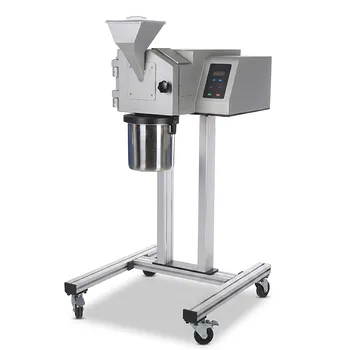
Cross Beater Mill for Brittle Material Grinding and Continuous Fine Crushing Industrial Sample Preparation

High Energy Laboratory Planetary Ball Mill for Nano Grinding and Material Science Sample Preparation
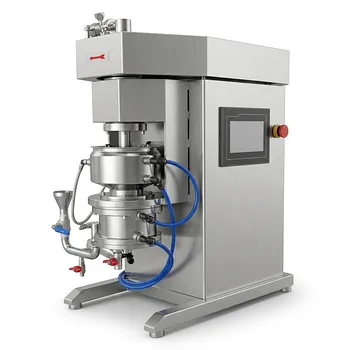
Small Ceramic Structure Laboratory Sand Mill Nanoscale Grinding Dispersion Equipment Seal-less Screen-less Design
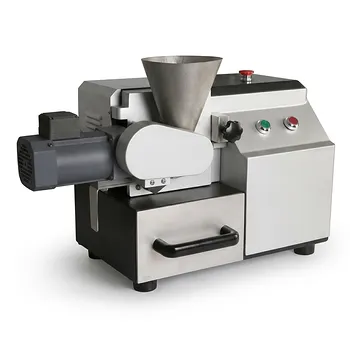
Laboratory Hammer Mill for Coal Quality Analysis and Brittle Mineral Grinding

360° Rotating Omnidirectional Laboratory Planetary Ball Mill for Homogeneous Ultra-Fine Grinding and Mixing

Vertical Square Planetary Ball Mill for Laboratory Sample Preparation and Nanoscale Grinding

High Energy Planetary Ball Mill for Nano Scale Grinding and Mechanical Alloying
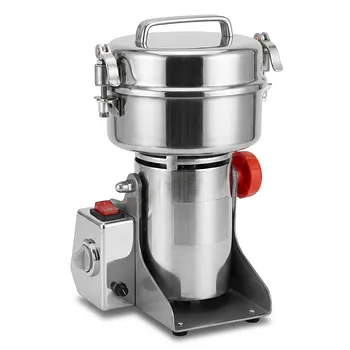
High Speed Laboratory Powder Grinder Small Batch Sample Preparation Mill
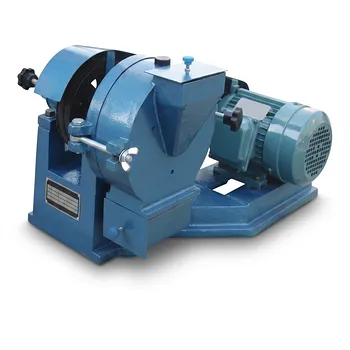
Laboratory Disc Mill for Ore and Mineral Sample Preparation
Small Vibrating Ultrafine Grinder for Traditional Chinese Medicine
Ultra Centrifugal Mill High Speed Laboratory Grinder for Fibrous and Brittle Sample Preparation