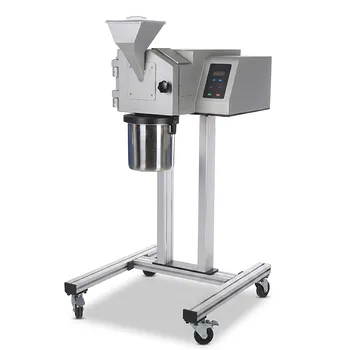
Why are mechanical mixers recommended for preparing large volumes of GRAM? Achieve Precise Microscopic Homogeneity
Updated 4 months ago
Mechanical mixers are the industry standard for preparing large-scale Granular Rock-Analog Material (GRAM) because they achieve microscopic-level homogeneity that manual methods cannot match. For experimental models exceeding 80kg, these machines ensure that components like quartz sand and hemihydrate powder are distributed with perfect uniformity to prevent structural anomalies.
Mechanical mixers provide the high-intensity shear force required to overcome particle interlocking and ensure every aggregate is uniformly coated with binder. This process eliminates unintended weak points, ensuring that the resulting simulation data accurately reflects the behavior of the entire fault zone.
Achieving Microscopic Homogeneity in Large Volumes
The 80kg Threshold
In geomechanical simulations, the scale of the model directly impacts the complexity of material preparation. Once a project requires more than 80kg of material, manual mixing becomes physically incapable of maintaining a consistent ratio of quartz sand to hemihydrate powder throughout the mass.
Eliminating Unintended Weak Points
Inconsistencies in the mixture create localized areas of lower density or poor binder distribution. These unintended weak points can lead to uneven deformation during the experiment, which compromises the reliability of the simulation results for the entire fault zone.
Ensuring Experimental Reliability
The goal of using GRAM is to simulate real-world geological conditions with high precision. Mechanical mixing ensures that the material properties remain compositionally uniform, allowing researchers to trust that the observed failures are a result of the experimental variables rather than flaws in material preparation.
Overcoming Mechanical Interlocking Forces
The Role of High-Intensity Shear
Aggregates used in GRAM often contain angular, flaky, or elongated particles that naturally resist movement. Mechanical mixers utilize powerful rotating blades to provide high-intensity shear mixing, which is necessary to overcome these mechanical interlocking forces.
Uniform Particle Coating
To achieve consistent specimen strength, the cement or binder paste must be uniformly coated on the surface of every single aggregate particle. Mechanical power ensures this coating is even, maintaining a consistent color and consistency throughout the entire volume.
Reducing Experimental Errors
Uneven mixing is a primary driver of experimental errors in specimen strength testing. By automating the mixing process, researchers minimize the human error associated with fatigue and ensure that the mixture's physical properties are identical from the first kilogram to the last.
Understanding the Trade-offs and Limitations
Risk of Particle Degradation
While high-intensity shear is necessary for mixing, excessive mixing times or speeds can lead to the physical degradation of fragile aggregate particles. This can slightly alter the grain size distribution, potentially shifting the mechanical behavior of the GRAM away from the intended design.
Heat Generation and Moisture Loss
Mechanical mixing generates friction, which can increase the temperature of the mixture. In systems using hemihydrate powder or cementitious binders, this heat can accelerate the setting time or cause premature moisture evaporation, requiring careful monitoring of the mixing duration.
Equipment Maintenance and Residue
Large-scale mixers require rigorous cleaning and maintenance to prevent cross-contamination between batches. Any dried material left on the blades or the drum can introduce "clumps" into subsequent batches, negating the benefits of microscopic homogeneity.
How to Apply This to Your Project
Choosing the Right Mixing Strategy
Selecting the appropriate mixing method depends on the scale of your simulation and the specific geometry of your aggregate particles.
- If your primary focus is microscopic uniformity in massive models: Prioritize a high-torque mechanical mixer with adjustable blade speeds to handle volumes over 80kg.
- If your primary focus is minimizing particle breakage: Use a mixer with rubber-tipped blades or lower RPM settings to protect the integrity of angular or fragile aggregates.
- If your primary focus is maximizing binder efficiency: Ensure the mixer is capable of high-intensity shear to guarantee that every particle is fully and evenly coated.
By standardizing your preparation with mechanical mixing, you ensure that your physical simulations are built on a foundation of scientific accuracy and repeatable data.
Summary Table:
| Key Feature | Benefit for GRAM Preparation | Impact on Simulation |
|---|---|---|
| High-Intensity Shear | Overcomes particle interlocking of angular aggregates | Ensures every particle is uniformly coated with binder |
| Automated Consistency | Maintains ratio uniformity across volumes >80kg | Eliminates unintended weak points and structural anomalies |
| Scalable Power | Handles large masses that manual mixing cannot | Minimizes human error and physical fatigue |
| Precision Control | Adjustable speeds to balance mixing vs. degradation | Guarantees repeatable material properties and data |
Elevate Your Material Preparation Precision
Are you struggling with material consistency in your geomechanical simulations? At our company, we specialize in providing complete laboratory sample preparation solutions for material science, ensuring your research is built on a foundation of scientific accuracy.
Whether you are preparing Granular Rock-Analog Material (GRAM) or advanced technical ceramics, our extensive equipment line is designed to meet the most rigorous standards:
- Advanced Mixing: Powder mixers and defoaming mixers for perfect homogeneity.
- Precision Milling: Planetary ball mills, jet mills, and cryogenic grinders for particle size control.
- Advanced Compaction: A full spectrum of hydraulic presses, including Cold/Warm Isostatic Presses (CIP/WIP), hot presses, and XRF pellet presses.
- Processing & Sizing: Jaw/roll crushers and vibratory/air-jet sieve shakers.
Don't let manual mixing errors compromise your simulation data. Contact us today to discuss how our specialized powder processing and compaction equipment can enhance your lab's efficiency and results!
References
- Luigi Massaro, Yasuhiro Yamada. New granular rock-analogue materials for simulation of multi-scale fault and fracture processes. DOI: 10.1017/s0016756821001321
Mentioned Products
- Three-Dimensional Motion Mixer for Laboratory Powder and Granule Blending
- V-Type Powder Mixer for Uniform Blending of Dry Powders and Granules
- Industrial Double Cone Mixer for Powder Blending and Homogeneous Mixing
- Automatic Vibrating Powder Feeder for Laboratory Material Processing Precision Vibratory Hopper Feeder for Granular and Powder Material Handling Industrial Grade Vibrating Tray Feeder for Consistent Material Sample Preparation
- Inclined Mixer for Homogeneous Powder Blending and Grinding
People Also Ask
- Why is a 3D Motion Mixer employed when preparing binary powder mixtures for tableting? Achieve Superior Homogeneity
- What role does an industrial 3D mixer play in the preparation of diamond tool segment raw materials? Achieve Homogeneity
- What is the role of a 3D mixer in Ti2SnC synthesis? Optimize Precursor Homogeneity for High-Purity MAX Phases
- How does a 3D mixer with tungsten balls contribute to magnesium composite mixing? Achieve Superior Macro-Homogeneity
- What are the advantages of using a 3D powder mixer? Boost Tablet Consistency with Advanced Mixing Technology

Tech Team · PowderPreparation
Last updated on Jun 03, 2026
Related Products
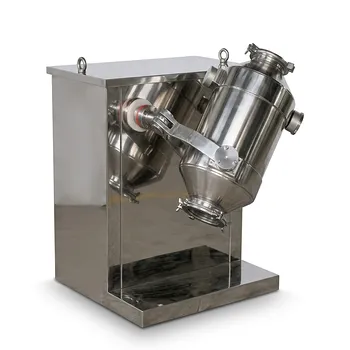
Three-Dimensional Motion Mixer for Laboratory Powder and Granule Blending
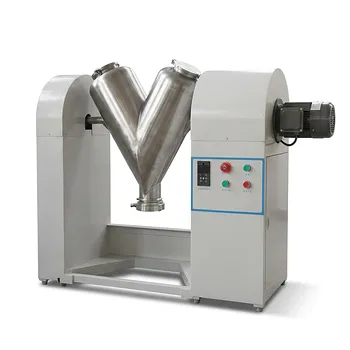
V-Type Powder Mixer for Uniform Blending of Dry Powders and Granules
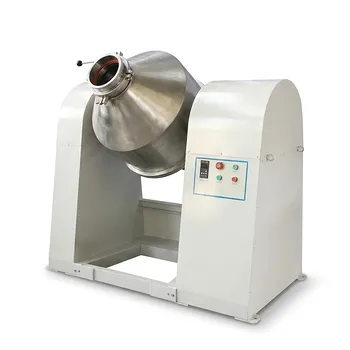
Industrial Double Cone Mixer for Powder Blending and Homogeneous Mixing
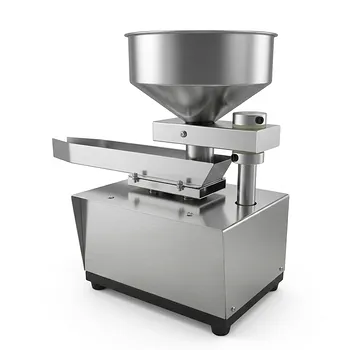
Automatic Vibrating Powder Feeder for Laboratory Material Processing Precision Vibratory Hopper Feeder for Granular and Powder Material Handling Industrial Grade Vibrating Tray Feeder for Consistent Material Sample Preparation
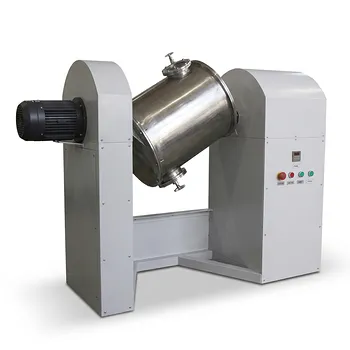
Inclined Mixer for Homogeneous Powder Blending and Grinding
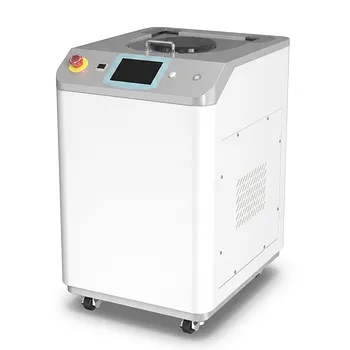
High Viscosity Planetary Centrifugal Mixing and Vacuum Defoaming Machine for Laboratory Material Preparation
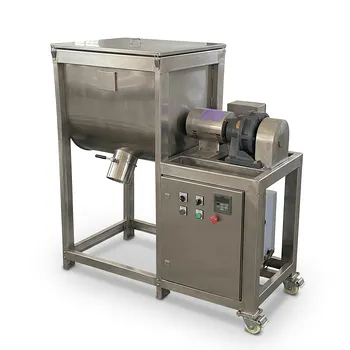
Horizontal Ribbon Mixer for Dry Powder and Slurry Blending
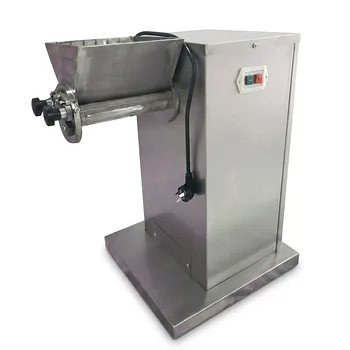
Small Laboratory Oscillating Granulator for Wet and Dry Granulation Processing
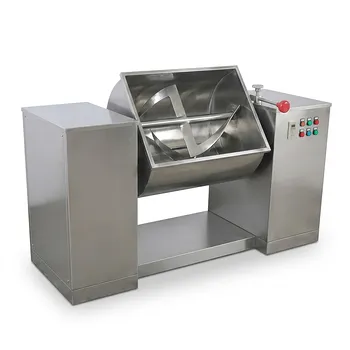
Horizontal Trough Mixer for Uniform Powder and Paste Blending
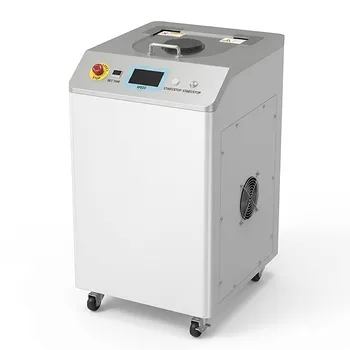
High Viscosity Planetary Centrifugal Vacuum Mixer for Material Defoaming and Uniform Mixing
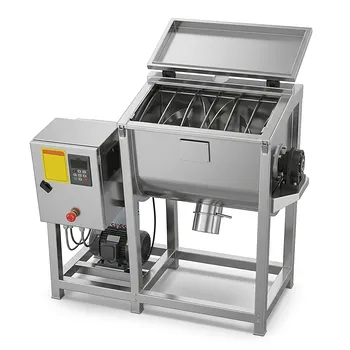
Horizontal Ribbon Mixer for Uniform Powder and Slurry Mixing
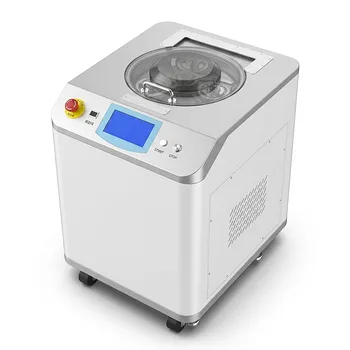
Dual Cup Vacuum Centrifugal Mixer Planetary Paste Defoaming Machine Industrial Material Processor
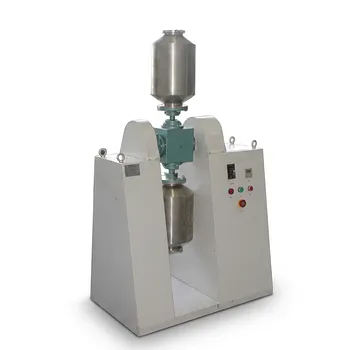
Multi Dimensional Universal Mixer for High Uniformity Powder Blending
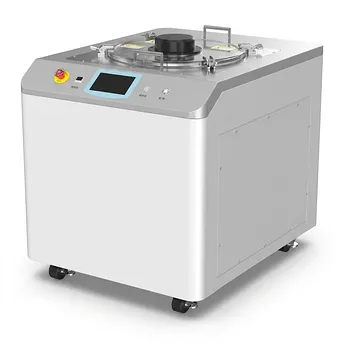
Industrial Planetary Centrifugal Vacuum Defoaming Mixer for High Viscosity Paste and Powder Homogenization
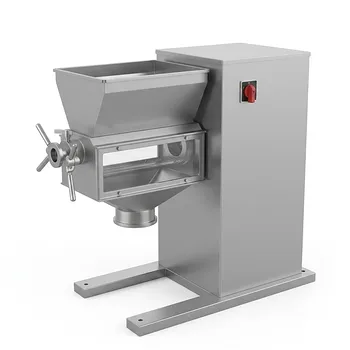
Industrial Swing Granulator for Powder Processing in Pharma Food and Chemical Industries
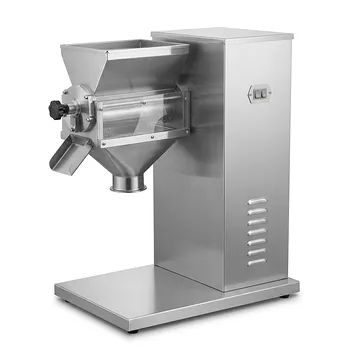
Small Swing Granulator Efficient Powder Granulation for Pharmaceutical Chemical Food Industries