How does a 3D mixer with tungsten balls contribute to magnesium composite mixing? Achieve Superior Macro-Homogeneity
Updated 4 months ago
A 3D mixer combined with tungsten balls provides the macro-homogeneity essential for high-quality magnesium matrix composites. By utilizing a combination of translation and rotation movements at a 10:1 ball-to-powder ratio, this process ensures that the magnesium powder and reinforcement phases are uniformly distributed in a dry environment. This initial stage is critical because it eliminates "dead zones" and prepares a stable powder mixture for subsequent mechanical alloying or thermal processing.
The primary role of a 3D mixer with tungsten balls is to achieve a uniform macroscopic distribution of powder components without altering their original grain size. This creates a balanced starting material that ensures reinforcement phases are evenly dispersed before high-energy processing begins.
The Mechanics of Three-Dimensional Mixing
Synergy of Translation and Rotation
Unlike traditional mixers that rely on a single axis of motion, 3D mixers utilize complex spatial movements. By combining translation and rotation, the mixer subjects the powder to a constantly changing acceleration environment.
This motion pattern is designed specifically to eliminate dead zones. These are areas in a container where powder typically remains stagnant, which can lead to clusters of reinforcement particles and a weakened final composite.
The Role of Tungsten Balls
Tungsten balls are added to the mixture at a 10:1 weight ratio to facilitate the blending process. Because tungsten is significantly denser than magnesium, these balls provide the necessary kinetic energy to break up soft agglomerates during dry mixing.
The balls act as mechanical agitators that ensure the magnesium powder and the reinforcement phases are forced into contact. This interaction occurs without the high-impact forces that would typically deform the powder particles at this early stage.
Enhancing Macro-Homogeneity in Composite Fabrication
Establishing Uniform Distribution
The goal of initial 3D mixing is to reach high macro-homogeneity. This means that any sample taken from the mixture will have the same proportion of matrix and reinforcement as the whole batch.
Establishing this uniformity early is vital for the success of mechanical alloying. If the powders are not well-mixed initially, the secondary high-energy milling processes may result in localized variations in composition and inconsistent material properties.
Preserving Original Powder Integrity
One of the most significant advantages of using a 3D mixer (such as a rocking mixer) for initial blending is that it does not alter the original grain size. Unlike mechanical alloying, which intentionally fractures and welds powders, 3D mixing is a non-destructive process.
This allows researchers and engineers to maintain control over the starting morphology of the powders. It is particularly useful for comparative studies where the goal is to observe the effects of distribution without the interference of mechanical activation.
Understanding the Trade-offs
Macro vs. Micro Homogeneity
While a 3D mixer is excellent for macro-homogeneity, it rarely achieves micro-homogeneity. The reinforcement particles are distributed across the batch, but they may not yet be embedded or coated onto the magnesium surfaces.
Limitations of Dry Mixing
Because this is a dry mixing process, there is a risk of oxidation if the environment is not strictly controlled. Additionally, without the addition of specific process control agents, some very fine reinforcement powders may still exhibit minor clumping due to electrostatic forces.
Comparison with Planetary Milling
Planetary ball milling is often used for secondary mixing because it provides the energy required to coat reinforcement particles with alloying elements, such as aluminum. While 3D mixing organizes the "where" of the particles, planetary milling handles the "how" they bond together.
How to Apply This to Your Project
Making the Right Choice for Your Goal
- If your primary focus is preserving grain structure: Utilize 3D mixing as your standalone blending method to ensure uniformity without inducing mechanical deformation or grain refinement.
- If your primary focus is high-energy alloying: Use 3D mixing with tungsten balls as a mandatory pre-processing step to prevent segregation before moving the powder into a planetary ball mill.
- If your primary focus is gradient architecture: Ensure the 3D mixing phase is long enough to achieve total macro-homogeneity, as this allows secondary coating processes to occur evenly across all particles.
Starting with a high-homogeneity 3D mix ensures that your final magnesium matrix composite possesses the consistent mechanical properties required for demanding technical applications.
Summary Table:
| Feature | Mechanism/Parameter | Key Benefit |
|---|---|---|
| Motion Pattern | Translation + Rotation (3D) | Eliminates "dead zones" & ensures uniform flow |
| Mixing Media | Tungsten Balls (10:1 ratio) | High-density kinetic energy breaks agglomerates |
| Process Environment | Dry Mixing | Preserves original grain morphology and size |
| Primary Outcome | Macro-Homogeneity | Creates a stable base for mechanical alloying |
| Equipment Type | Rocking/3D Mixer | Non-destructive blending for sensitive powders |
Optimize Your Composite Fabrication with Precision Equipment
Achieving perfect macro-homogeneity is the critical first step in developing high-performance magnesium matrix composites. At [Your Brand Name], we provide complete laboratory sample preparation solutions tailored for material science and advanced powder processing.
Our extensive product line is designed to support every stage of your workflow:
- Advanced Mixing: Precision 3D powder mixers and defoaming mixers to ensure uniform distribution.
- High-Energy Milling: Planetary ball mills, jet mills, and cryogenic grinders for fine particle refinement.
- Compaction Excellence: A full spectrum of hydraulic presses, including Cold/Warm Isostatic Presses (CIP/WIP), vacuum hot presses, and XRF pellet presses.
- Material Preparation: Industrial-grade crushers, sieve shakers, and specialized test meshes.
Whether you are focusing on preserving grain structure or preparing powders for high-energy alloying, our experts are here to provide the right tools for your research.
Contact our technical team today to find your solution!
References
- Olugbenga Ogunbiyi, Michael O. Daramola. Empirical Prediction of Optimum Process Conditions of Spark Plasma-Sintered Magnesium Composite (AZ91D-Ni-GNPs) Using Response Surface Methodology (RSM) Approach. DOI: 10.1007/s13369-022-07012-z
Mentioned Products
- Three-Dimensional Motion Mixer for Laboratory Powder and Granule Blending
- Multi Dimensional Universal Mixer for High Uniformity Powder Blending
- Dry Three Dimensional Vibratory Sieve Shaker
- Heavy Duty Dry Three Dimensional Vibratory Sieve Shaker for Particle Separation
- Laboratory Dry and Wet Three Dimensional Vibratory Sieve Shaker for Particle Analysis
People Also Ask
- Why is a 3D Motion Mixer employed when preparing binary powder mixtures for tableting? Achieve Superior Homogeneity
- What role does an industrial 3D mixer play in the preparation of diamond tool segment raw materials? Achieve Homogeneity
- What is the role of a 3D mixer in Ti2SnC synthesis? Optimize Precursor Homogeneity for High-Purity MAX Phases
- What are the advantages of using a 3D powder mixer? Boost Tablet Consistency with Advanced Mixing Technology
- What role does a 3D powder mixer play in alumina fiber ceramic cores? Achieve Precise Homogeneity for 3D Printing

Tech Team · PowderPreparation
Last updated on Jun 03, 2026
Related Products
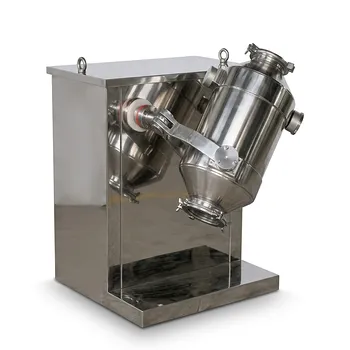
Three-Dimensional Motion Mixer for Laboratory Powder and Granule Blending
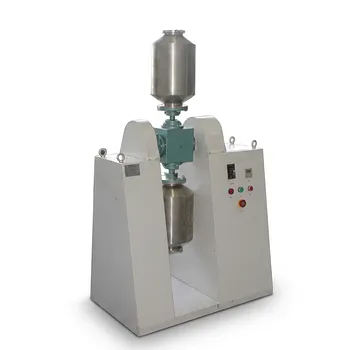
Multi Dimensional Universal Mixer for High Uniformity Powder Blending

Dry Three Dimensional Vibratory Sieve Shaker
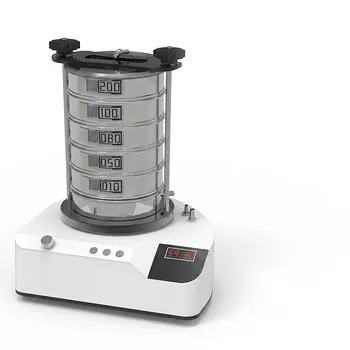
Heavy Duty Dry Three Dimensional Vibratory Sieve Shaker for Particle Separation
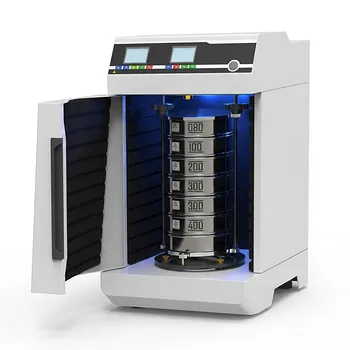
Laboratory Dry and Wet Three Dimensional Vibratory Sieve Shaker for Particle Analysis
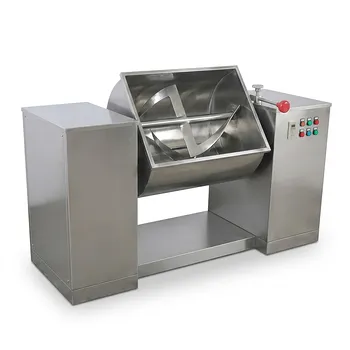
Horizontal Trough Mixer for Uniform Powder and Paste Blending
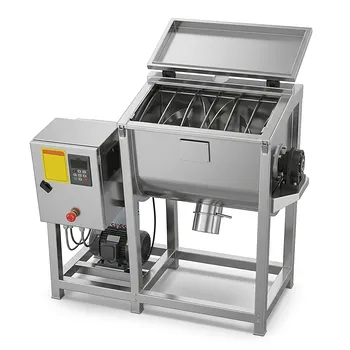
Horizontal Ribbon Mixer for Uniform Powder and Slurry Mixing
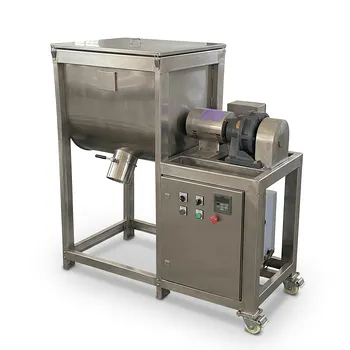
Horizontal Ribbon Mixer for Dry Powder and Slurry Blending
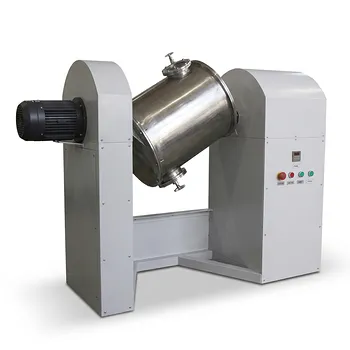
Inclined Mixer for Homogeneous Powder Blending and Grinding
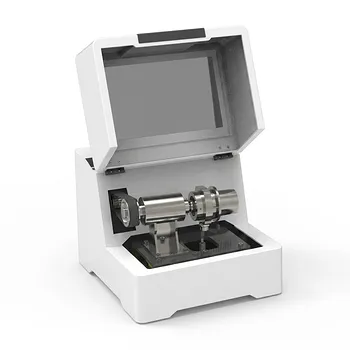
Single Tank High Energy Vibratory Ball Mill for Laboratory Grinding and Mixing
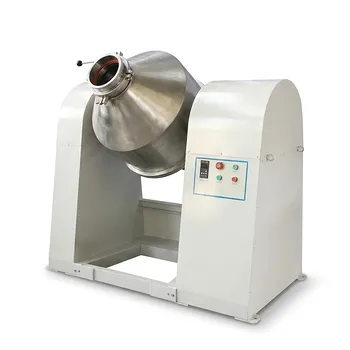
Industrial Double Cone Mixer for Powder Blending and Homogeneous Mixing
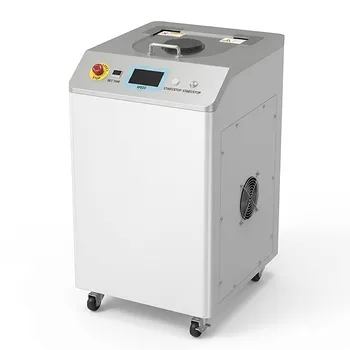
High Viscosity Planetary Centrifugal Vacuum Mixer for Material Defoaming and Uniform Mixing
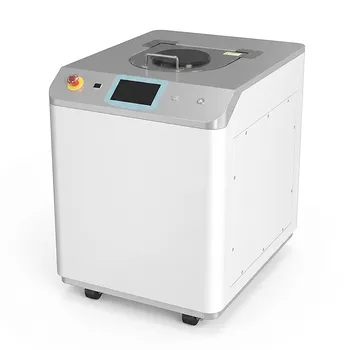
Industrial Planetary Centrifugal Vacuum Defoaming Mixer for High Viscosity Paste and Advanced Material Science
Industrial Planetary Centrifugal Vacuum Defoaming Mixer for High Viscosity Paste and Powder Homogenization
非介入式材料均质机真空脱泡行星搅拌高粘度混合设备

Dual Cup Vacuum Centrifugal Mixer Planetary Paste Defoaming Machine Industrial Material Processor
V-Type Powder Mixer for Uniform Blending of Dry Powders and Granules
High Efficiency Vacuum Planetary Centrifugal Mixer and Defoaming Machine for Industrial Material Research and Precise Laboratory Powder Dispersion

High Viscosity Planetary Centrifugal Mixing and Vacuum Defoaming Machine for Laboratory Material Preparation