Why are KBr & Pellet Pressing Key for Mortar IR Spectroscopy? Enhance Clarity in Historical Material Analysis
Updated 5 months ago
The use of KBr powder and the pellet pressing process is essential because KBr is transparent to infrared light, acting as an invisible "matrix" for the sample. Historical building mortar is an opaque solid that would naturally block or scatter an infrared beam. By diluting a tiny amount of mortar into KBr and compressing it into a thin, transparent pellet, researchers ensure the infrared light can penetrate the material to identify specific chemical signatures like calcium carbonate (CaCO3) and quartz (SiO2).
Core Takeaway: KBr pelletizing transforms opaque mortar samples into IR-transparent windows. This process is the only way to minimize light scattering and achieve the high-resolution spectra required to distinguish between the various binders and aggregates used in historical construction.
The Optical Necessity of KBr
Infrared Transparency
Potassium Bromide (KBr) is a halide salt that does not absorb infrared radiation in the primary mid-IR range.
This property allows it to serve as a neutral carrier, meaning any signals detected by the spectrometer belong solely to the mortar sample and not the KBr itself.
Eliminating Light Scattering
Raw mortar powder is composed of irregular crystals that reflect and scatter light in all directions.
Mixing the powder with KBr and applying high pressure creates a solid, uniform medium that allows the IR beam to pass through the sample in a straight path rather than bouncing off the surface.
The Role of the Pellet Pressing Process
Achieving Sample Uniformity
A laboratory hydraulic press applies several tons of pressure to the mortar-KBr mixture within a specialized die.
This force eliminates air pockets and creates a homogeneous, ultra-thin pellet of uniform thickness, which is a physical prerequisite for accurate light transmission.
Signal Enhancement
By creating a flat, smooth surface, the pressing process significantly increases the signal-to-noise ratio.
This clarity allows the equipment to capture the distinct absorption peaks of calcium carbonate at 712 cm⁻¹, 874 cm⁻¹, and 1437 cm⁻¹, which are the "fingerprints" of the mortar's lime binder.
Characterizing Historical Mortar Components
Identifying Binders and Aggregates
Historical mortars are complex mixtures of carbonated lime and various mineral aggregates.
The KBr method allows for the precise detection of silica (SiO2) vibrations, helping conservators determine the type and ratio of sand or volcanic ash (pozzolans) used in the original mix.
Assessing Degradation and Cleaning
Beyond simple identification, this process helps analyze how environmental factors have altered the mortar over centuries.
Clear spectra allow experts to see changes in functional groups, such as the presence of sulfates or nitrates, which indicate chemical weathering or the impact of past restoration efforts.
Understanding the Trade-offs
The Risk of Moisture Absorption
KBr is highly hygroscopic, meaning it naturally absorbs moisture from the air.
If the KBr is not kept perfectly dry, water peaks will appear in the spectrum, potentially masking important signals from the mortar’s own hydroxyl (OH) groups.
Sample Destructivity and Preparation Time
Unlike some modern non-destructive techniques, the KBr pellet method is destructive because the mortar sample must be ground into a fine powder.
Additionally, the process is labor-intensive, requiring precise weighing, thorough mixing, and careful handling of the fragile pellets to avoid cracking or contamination.
How to Apply This to Your Analysis
Making the Right Choice for Your Goal
To ensure the highest quality results when characterizing historical materials, follow these guidelines based on your specific analytical needs:
- If your primary focus is Binder Identification: Use the KBr pellet method to clearly isolate the carbonate peaks at 712 and 874 cm⁻¹, as these are essential for distinguishing between hydraulic and non-hydraulic limes.
- If your primary focus is Aggregate Analysis: Ensure the mortar is ground to a very fine consistency before mixing with KBr to prevent large quartz grains from causing "shadows" or uneven light transmission in the pellet.
- If your primary focus is Weathering Studies: Take extra precautions to dry your KBr in an oven before pressing to ensure that any "water" signals detected are actually bound within the mortar’s mineral structure and not just atmospheric humidity.
Mastering the KBr pelletizing process is the definitive way to unlock the chemical history hidden within the solid walls of historical structures.
Summary Table:
| Process Component | Role in IR Characterization | Analytical Benefit |
|---|---|---|
| KBr Powder | Acts as an IR-transparent "matrix" | Eliminates background noise/interference |
| Hydraulic Pressing | Creates thin, uniform pellets | Minimizes light scattering and air pockets |
| Signal Enhancement | Flattens sample surface | Increases signal-to-noise ratio for clear peaks |
| Sample Dilution | Disperses opaque mortar particles | Enables IR beam penetration for fingerprinting |
Unlock High-Resolution Material Insights with Precision Sample Preparation
Achieving accurate IR spectroscopy results for historical mortar requires more than just a spectrometer—it requires the right preparation. At our core, we provide complete laboratory sample preparation solutions tailored for material science. We specialize in the high-performance powder processing and compaction equipment necessary to transform opaque samples into analytical-grade pellets.
Our extensive product lines include:
- Grinding & Milling: Crushers (jaw/roll), liquid nitrogen cryogenic grinders, and planetary ball, jet, or rotor mills for achieving ideal particle fineness.
- Sizing & Mixing: Vibratory sieve shakers and high-efficiency powder or defoaming mixers.
- Compaction Excellence: A full spectrum of hydraulic presses, including standard lab presses, XRF pellet presses, and specialized Cold/Warm Isostatic Presses (CIP/WIP) or vacuum hot presses.
Whether you are a researcher identifying ancient binders or a conservator analyzing environmental weathering, our equipment ensures your samples are uniform, transparent, and ready for high-resolution characterization.
Elevate your laboratory’s efficiency today—Contact our experts here to find the perfect solution for your application!
References
- John Carlo A. Mangay, Jan-Michael C. Cayme. Characterization of Mortar from Church Ruins in Barangay Budiao, Daraga, Albay. DOI: 10.1051/matecconf/201821302001
Mentioned Products
- 6-Ton Small Single-Punch Tablet Press — Laboratory Powder & Granule Tableting Equipment / Tablet Forming Machine
- Manual Tablet Press with Dual Scale Pressure Gauge for Pharmaceutical Food Chemical Laboratory Sample Preparation
- Ordinary Type Rotary Tablet Press for Pharmaceutical Chemical Food Electronic Industries
- Enhanced 9 Punch Rotary Tablet Press for Powder Compaction
- 6 Ton Variable Frequency Single Punch Tablet Press
People Also Ask
- What is the function of a laboratory press in Cr-Ti alloy evaluation? Quantify Fracture Stress & Strength
- What is the function of a laboratory press in assessing the hydrophobic performance of modified vermiculite fillers?
- What is the core function of a laboratory press in the forming of ceramic filter element green bodies? Maximize Density.
- What is the function of a laboratory press in the preparation of ceramic feed rods? Master Density and Precision
- Why is vacuum sealing and flexible packaging necessary for Aluminum Titanate powders during CIP? Ensure Peak Density

Tech Team · PowderPreparation
Last updated on May 14, 2026
Related Products
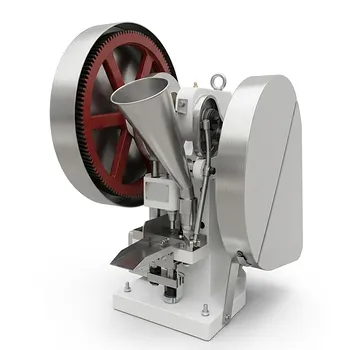
6-Ton Small Single-Punch Tablet Press — Laboratory Powder & Granule Tableting Equipment / Tablet Forming Machine
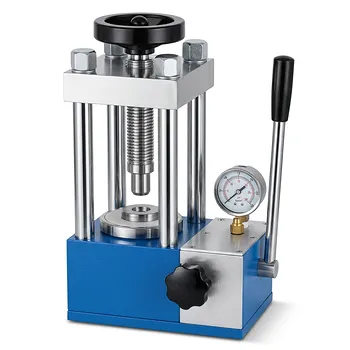
Manual Tablet Press with Dual Scale Pressure Gauge for Pharmaceutical Food Chemical Laboratory Sample Preparation
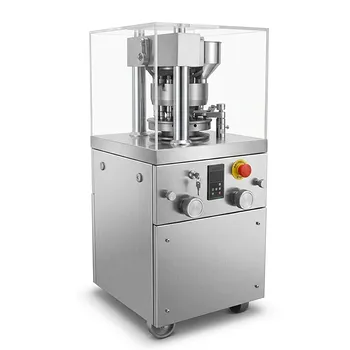
Ordinary Type Rotary Tablet Press for Pharmaceutical Chemical Food Electronic Industries
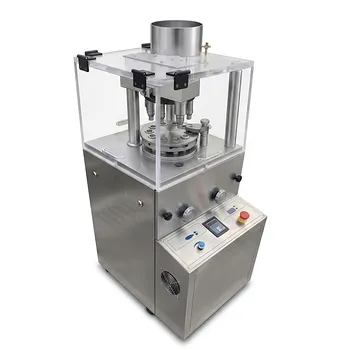
Enhanced 9 Punch Rotary Tablet Press for Powder Compaction
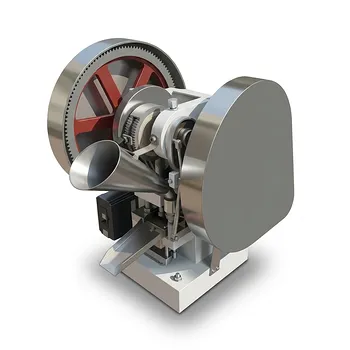
6 Ton Variable Frequency Single Punch Tablet Press