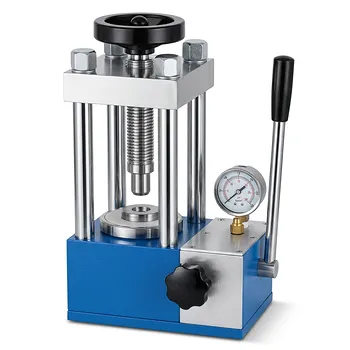
Why are industrial-grade hydraulic presses critical for large-scale YAG ceramics? Ensure Density & Prevent Cracking
Updated 4 months ago
Industrial-grade hydraulic presses are the cornerstone of large-scale YAG transparent ceramic production because they provide the precise pressure control required to ensure density uniformity. In meter-scale thin-plate designs, these systems eliminate internal stress concentrations that would otherwise cause the ceramic to fail during heat treatment. By managing powder distribution and mechanical force at a macro level, they transform fragile raw powder into a robust "green body" capable of surviving the sintering process.
Achieving structural integrity in large-format YAG ceramics requires more than raw force; it demands high-precision molding to eliminate internal density gradients. Without industrial-grade pressure control, internal stresses inevitably lead to catastrophic cracking and deformation during the final sintering stages.
Solving the Uniformity Crisis in Large-Scale Green Bodies
Managing Internal Stress Concentration
In large-scale production, specifically for meter-scale thin plates, the risk of structural failure is exceptionally high. Industrial-grade hydraulic presses use optimized molding processes to ensure that pressure is applied evenly across the entire surface area. This reduces internal stress concentration, which is the primary cause of fractures during the subsequent debinding and sintering stages.
Achieving Density Uniformity
A primary challenge in ceramic engineering is preventing density gradients within the green body. If one area of the plate is denser than another, the material will shrink at different rates when heated. High-precision molding ensures a uniform distribution of powder, leading to consistent shrinkage and preventing the final product from warping.
Establishing Geometric Integrity
The "green body" must possess enough preliminary mechanical strength to be handled and processed. Industrial presses force powder particles into a tight packing arrangement, creating a stable geometric foundation. This initial compaction is critical for maintaining the dimensional accuracy required for sophisticated optical applications.
The Physics of Compaction and Particle Rearrangement
Overcoming Inter-particle Friction
During the molding process, mechanical force is used to help powder particles overcome inter-particle friction. This allows for particle rearrangement and plastic deformation, which are necessary to eliminate large voids. Precise control of this pressure ensures the particles reach the highest possible packing density within the mold.
Reducing Sintering Shrinkage
By maximizing the initial packing density, industrial presses significantly reduce the rate of shrinkage during sintering. Lower shrinkage rates lead to better control over the final dimensions of the YAG ceramic. This is particularly vital for thin-plate geometries where even minor dimensional shifts can lead to structural instability.
Elimination of Micro-cracks
High-precision systems utilize pressure-holding controls to maintain a constant force over a specific duration. This stability prevents the formation of micro-cracks that can occur if pressure is released too quickly or unevenly. Ensuring a defect-free green body is the only way to achieve the high transparency levels required for YAG ceramics.
Understanding the Trade-offs
The Risk of Over-Compaction
While high pressure is necessary for density, excessive force can lead to capping or lamination defects. If the pressure exceeds the material's limits, the green body may expand elastically when released from the mold, causing horizontal cracks. Finding the "sweet spot" between density and mechanical limits is a constant challenge in optimized molding.
Scale vs. Precision
Transitioning from laboratory-scale presses to industrial-grade equipment introduces complexity in pressure distribution. While a laboratory press can easily manage a 12mm sample, maintaining the same level of precision across a meter-scale plate requires significantly more sophisticated hydraulic synchronization. This increased complexity results in higher capital costs and the need for specialized tooling.
Making the Right Choice for Your Project
Strategic Implementation for Ceramic Scaling
To successfully produce large-scale YAG transparent ceramics, the equipment and process must be aligned with the final dimensions and transparency requirements of the part.
- If your primary focus is optical clarity: Prioritize high-precision pressure-holding systems to eliminate the density gradients that cause light-scattering defects.
- If your primary focus is large-format structural integrity: Invest in optimized industrial molds that facilitate even powder distribution to prevent cracking during debinding.
- If your primary focus is dimensional accuracy: Use high-tonnage hydraulic presses that can achieve maximum packing density to minimize sintering shrinkage.
The synergy between industrial-grade hardware and optimized molding is the only reliable path to producing large-scale, high-performance transparent ceramics.
Summary Table:
| Key Feature | Impact on YAG Ceramic | Production Benefit |
|---|---|---|
| Precise Pressure Control | Eliminates density gradients | Prevents warping & uneven shrinkage |
| High-Precision Molding | Minimizes internal stress | Reduces cracking during sintering |
| Optimized Compaction | Enhances particle rearrangement | Achieves maximum green body density |
| Pressure-Holding Stability | Prevents micro-crack formation | Ensures high optical transparency |
| Scalable Synchronization | Maintains uniformity across large areas | Enables meter-scale thin-plate production |
Elevate Your Ceramic Engineering with KINTEK SOLUTION
Achieving optical-grade transparency in large-scale YAG ceramics requires more than just force—it requires precision. At KINTEK SOLUTION, we specialize in providing complete laboratory and industrial sample preparation solutions tailored for advanced material science.
From initial powder preparation using our high-performance crushers, jet mills, and planetary ball mills to achieving perfect green body density with our Cold Isostatic Presses (CIP) and high-tonnage hydraulic presses, our equipment is engineered for excellence. Whether you need standard lab presses, XRF pellet presses, or sophisticated vacuum hot presses, our solutions ensure the structural integrity and dimensional accuracy your projects demand.
Ready to scale your production and eliminate defects? Contact our experts today to discover how our specialized powder processing and compaction equipment can optimize your YAG ceramic workflow.
References
- Dewen WANG, Shiwei Wang. Metre-scale Y<sub>3</sub>Al<sub>5</sub>O<sub>12</sub> (YAG) Transparent Ceramics by Vacuum Reactive Sintering. DOI: 10.15541/jim20230374
Mentioned Products
- Ordinary Type Rotary Tablet Press for Pharmaceutical Chemical Food Electronic Industries
- Hydraulic Double Shaft Disperser for High Viscosity Liquid Mixing and Dispersion
- 6-Ton Small Single-Punch Tablet Press — Laboratory Powder & Granule Tableting Equipment / Tablet Forming Machine
- Enhanced 9 Punch Rotary Tablet Press for Powder Compaction
- 5 Ton Single Punch Tablet Press Laboratory Small Batch Production
People Also Ask
- Why is a laboratory hydraulic press required for FT-IR KBr pellets? Achieve Precise Sample Clarity for ZrC–SiC Analysis
- Why is a laboratory hydraulic press required to compress oyster shell powder before XRF analysis? Improve Data Accuracy.
- Why is vacuum sealing and flexible packaging necessary for Aluminum Titanate powders during CIP? Ensure Peak Density
- What are the advantages of using hardened steel molds and graphite spray for titanium powder? Ensure structural integrity
- What role does a high-strength stainless steel mold kit play in the uniaxial die compaction process? Ensuring Precision

Tech Team · PowderPreparation
Last updated on Jun 03, 2026
Related Products
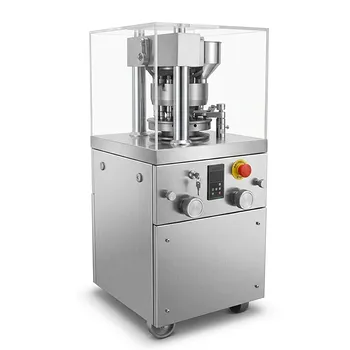
Ordinary Type Rotary Tablet Press for Pharmaceutical Chemical Food Electronic Industries
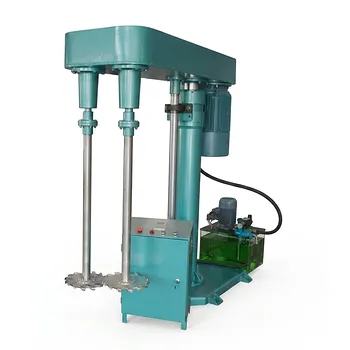
Hydraulic Double Shaft Disperser for High Viscosity Liquid Mixing and Dispersion
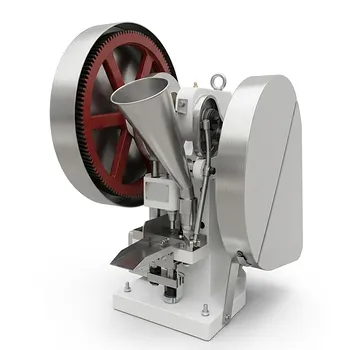
6-Ton Small Single-Punch Tablet Press — Laboratory Powder & Granule Tableting Equipment / Tablet Forming Machine
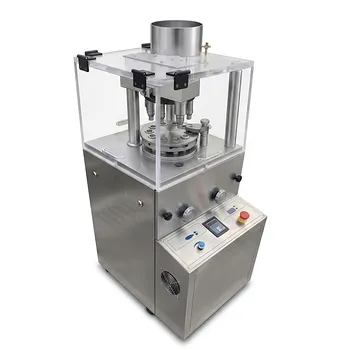
Enhanced 9 Punch Rotary Tablet Press for Powder Compaction
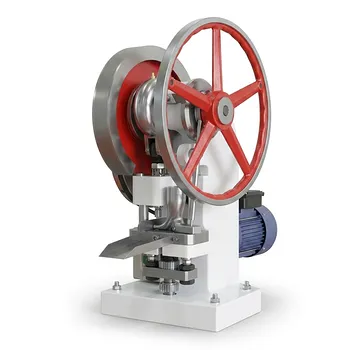
5 Ton Single Punch Tablet Press Laboratory Small Batch Production
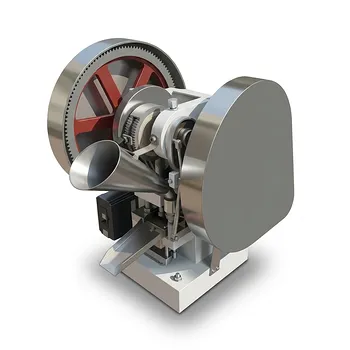
6 Ton Variable Frequency Single Punch Tablet Press