Why are high-purity graphite molds selected for Cr-Ti alloys during vacuum hot pressing? Explore Essential Benefits.
Updated 5 months ago
High-purity graphite molds are selected for Cr-Ti alloy vacuum hot pressing because they function simultaneously as a high-strength container, a pressure transfer medium, and a heating element. This material maintains its structural integrity at temperatures exceeding 1500°C while ensuring that hydraulic pressure is transmitted uniformly to the alloy powder. Its high thermal conductivity eliminates internal temperature gradients, which is essential for achieving a dense, homogenous microstructure in the final alloy.
Core Takeaway: High-purity graphite is the preferred choice because it possesses a rare combination of increasing mechanical strength at high temperatures and excellent thermal-electrical conductivity, ensuring both the physical shape and the chemical purity of Cr-Ti alloys during the sintering process.
Structural Integrity Under Extreme Conditions
High-Temperature Mechanical Strength
Unlike most materials that weaken when heated, graphite’s mechanical strength and creep resistance actually improve at elevated temperatures. This allows the mold to act as a robust forming container that can withstand the high axial pressures required for the diffusion bonding of Cr-Ti components without deforming.
Stable Pressure Transmission
The mold acts as a vital medium for transferring hydraulic system pressure directly to the alloy powder. Because graphite resists deformation under load, it ensures that the mechanical energy is distributed evenly across the specimen, promoting uniform densification and preventing internal voids.
Morphological Stability
By serving as a rigid shaping vessel, high-purity graphite defines the final geometry of the Cr-Ti sample. This structural stability is critical when working with large-sized specimens where maintaining precise dimensions and uniform internal stress distribution is difficult.
Thermal and Electrical Efficiency
Thermal Gradient Homogenization
Graphite’s high thermal conductivity is essential for maintaining a consistent temperature throughout the sample. By minimizing temperature gradients, the mold ensures that the sintering quality remains consistent from the core to the surface of the alloy.
Dual-Function Heating Element
In many vacuum hot pressing setups, the graphite mold itself acts as a resistive heating element. Its excellent electrical conductivity allows it to work efficiently with induction or resistance heating systems, providing the rapid and uniform heat necessary for alloy formation.
Enhanced Sintering Kinetics
The combination of uniform heat and consistent pressure promotes accelerated diffusion between the chromium and titanium particles. This synergy is necessary to achieve full densification at temperatures that would cause other mold materials to fail or react.
Chemical Protection and Demolding
Protective Reducing Atmosphere
At high temperatures, graphite creates a micro-reducing atmosphere within the vacuum chamber. This environment is critical for Cr-Ti alloys as it helps prevent the oxidation of the metal powders, ensuring the chemical purity of the final product.
Chemical Inertness and Contamination Control
High-purity graphite is chosen to prevent secondary contamination of the alloy. Its chemical stability ensures that the mold does not react with the Cr-Ti components under vacuum, preserving the intended material properties of the ceramic-metal system.
Low Friction for Easy Demolding
Graphite possesses a naturally low friction coefficient, which facilitates the removal of the sample after the process is complete. This "self-lubricating" property reduces the risk of cracking the alloy or damaging the mold during the demolding stage.
Understanding the Trade-offs
Sensitivity to Oxidation
The primary limitation of graphite is its vulnerability to oxygen at high temperatures. It must be used strictly within high-vacuum environments or under inert gas protection (like Argon) to prevent the mold from burning or degrading.
Mechanical Fragility and Wear
While strong under compression, graphite is brittle and susceptible to cracking if subjected to uneven mechanical shocks. Repeated high-pressure cycles (often exceeding 60 MPa) will eventually cause mold wear, meaning these components have a finite operational lifespan.
Potential for Carbon Diffusion
In some specific alloy systems, there is a risk of carbon migration from the mold into the sample surface. While often negligible for Cr-Ti, users must monitor for the formation of unwanted carbides at the interface if the sintering time is excessively long.
Applying This to Your Material Processing
Recommendations Based on Your Project Goals
- If your primary focus is maximum densification: Ensure the graphite mold is precision-machined to tight tolerances to allow for optimal pressure transmission without powder leakage.
- If your primary focus is chemical purity: Utilize the highest grade of "isostatically pressed" graphite to minimize impurities and maximize the protective reducing effect during the vacuum cycle.
- If your primary focus is mold longevity: Implement a gradual heating and cooling ramp to minimize thermal shock, which prevents micro-cracking in the graphite structure.
By leveraging the multi-functional properties of high-purity graphite, you can ensure that Cr-Ti alloys achieve the precise mechanical and chemical characteristics required for high-performance applications.
Summary Table:
| Key Property | Functional Role | Impact on Cr-Ti Alloy |
|---|---|---|
| Mechanical Strength | Robust forming container | Maintains structural integrity at >1500°C |
| Pressure Transfer | Uniform load distribution | Ensures dense, homogenous microstructure |
| Thermal Conductivity | Dual-function heating element | Eliminates temperature gradients for quality sintering |
| Chemical Inertness | Protective reducing atmosphere | Prevents oxidation and ensures high material purity |
| Low Friction | Self-lubricating surface | Facilitates easy demolding and prevents cracking |
Elevate Your Material Research with Precision Engineering
Achieving the perfect densification and purity in Cr-Ti alloys requires more than just high-quality graphite; it requires the right equipment. At [Our Brand Name], we provide complete laboratory sample preparation solutions for material science, specializing in advanced powder processing and compaction technology.
Whether you need precision Vacuum Hot Presses, Standard Lab Presses, or Cold/Warm Isostatic Presses (CIP/WIP), our equipment is designed to handle the most demanding sintering environments. We also offer a full range of powder processing tools, including planetary ball mills, jet mills, and vacuum defoaming mixers, ensuring your samples are perfectly prepared before they ever reach the furnace.
Ready to optimize your lab’s efficiency and output quality? Contact our technical experts today to find the ideal solution for your material processing needs!
References
- Shih‐Hsien Chang, Kuo-Tsung Huang. Investigation of Vacuum Hot-Press Sintering Temperatures on the Sintered Characteristics of Cr-31.2 mass% Ti Alloys. DOI: 10.2320/matertrans.m2017048
Mentioned Products
- Dual Cup Vacuum Centrifugal Mixer Planetary Paste Defoaming Machine Industrial Material Processor
- 非介入式材料均质机真空脱泡行星搅拌高粘度混合设备
- High Speed Vacuum Planetary Centrifugal Mixer and Defoamer for Industrial Paste Processing
- High Efficiency Vacuum Planetary Centrifugal Mixer and Defoaming Machine for Industrial Material Research and Precise Laboratory Powder Dispersion
- Industrial Vacuum Kneader for High-Viscosity Silicone, Rubber, and Compound Mixing
People Also Ask
- Why is a vacuum centrifugal defoaming mixer required to process ceramic slurry before 3D printing? Ensure High Density
- Why is a vacuum centrifugal de-foaming mixer required before DIW of PZT ink? Achieve Dense, Bubble-Free Piezo Ceramics
- What are the advantages of centrifugal defoaming mixers for recycled slurries? Achieve Superior Electrode Quality
- Why is centrifugal defoaming necessary for magnetic composite inks? Ensure Void-Free Extrusion for 3D Printing
- Why is vacuum defoaming necessary for PDMS mixtures before microwave irradiation curing? Key to Structural Integrity

Tech Team · PowderPreparation
Last updated on May 14, 2026
Related Products
Dual Cup Vacuum Centrifugal Mixer Planetary Paste Defoaming Machine Industrial Material Processor
非介入式材料均质机真空脱泡行星搅拌高粘度混合设备
High Speed Vacuum Planetary Centrifugal Mixer and Defoamer for Industrial Paste Processing
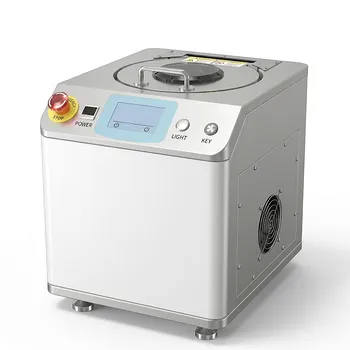
High Efficiency Vacuum Planetary Centrifugal Mixer and Defoaming Machine for Industrial Material Research and Precise Laboratory Powder Dispersion
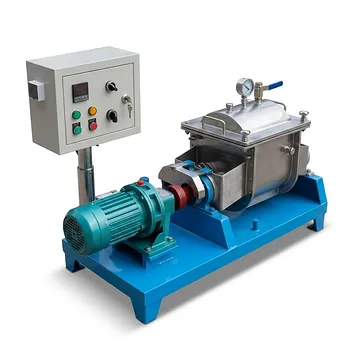
Industrial Vacuum Kneader for High-Viscosity Silicone, Rubber, and Compound Mixing
5 Ton Single Punch Tablet Press Laboratory Small Batch Production
6-Ton Small Single-Punch Tablet Press — Laboratory Powder & Granule Tableting Equipment / Tablet Forming Machine
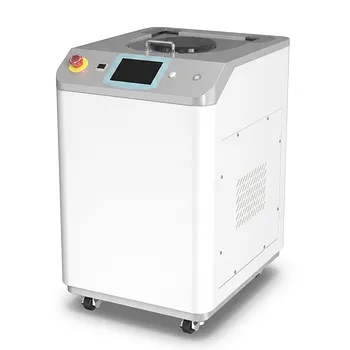
High Viscosity Planetary Centrifugal Mixing and Vacuum Defoaming Machine for Laboratory Material Preparation
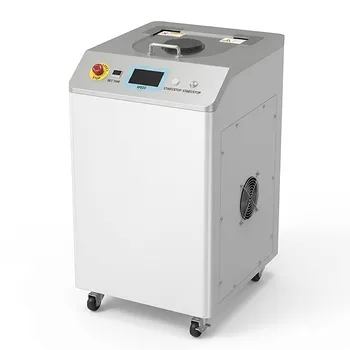
High Viscosity Planetary Centrifugal Vacuum Mixer for Material Defoaming and Uniform Mixing
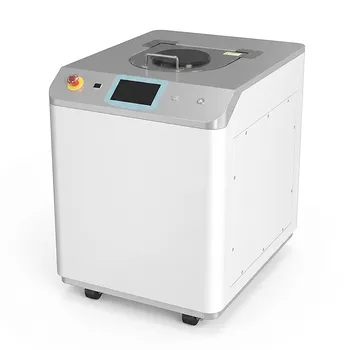
Industrial Planetary Centrifugal Vacuum Defoaming Mixer for High Viscosity Paste and Advanced Material Science
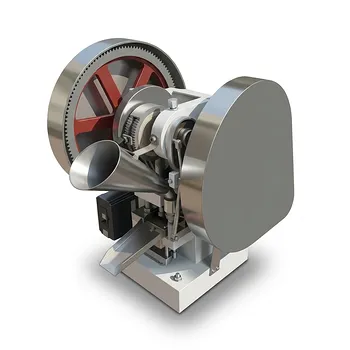
6 Ton Variable Frequency Single Punch Tablet Press
Industrial Planetary Centrifugal Vacuum Defoaming Mixer for High Viscosity Paste and Powder Homogenization