Why are high-precision pressing and temperature control critical for vitrified tiles? Maximize Density and Durability
Updated 4 months ago
The performance of vitrified tiles depends entirely on the elimination of internal voids and the precise fusion of mineral particles. High-precision pressing and temperature control are critical because they dictate the tile's final density and the degree of vitrification achieved during firing. Without these controls, the ceramic body will fail to reach the near-zero water absorption and high wear resistance standards required for industrial-grade applications.
High-precision control over pressure and thermal fields transforms loose mineral mats into dense, non-porous ceramic structures. These variables manage the physical compaction and chemical bonding required to produce tiles with superior durability and dimensional stability.
The Role of High-Precision Pressing
Minimizing Porosity in the Green Body
High-precision pressing equipment is essential for forcing internal air out of the raw material mat. By applying specific, consistent pressure, the bulk density of the "green body" (the unfired tile) is significantly increased.
Eliminating these voids early in the process is the only way to prevent structural defects. If air remains trapped, it can cause delamination or internal cracks during the high-heat phase.
Ensuring Dimensional Accuracy
Standardized geometric dimensions are maintained through the use of precision metal molds and stable hydraulic pressure. This level of control ensures that the final product meets strict thickness tolerances and maintains a consistent Vertical Density Profile (VDP).
Without precise mechanical pressure, tiles are prone to deformation during the sintering process. Proper compaction ensures the material remains stable as it undergoes intense chemical changes.
The Science of Temperature Control
Managing Liquid Phase Formation
Vitrification requires the accurate management of liquid phase formation, where minerals begin to melt and fill the spaces between solid particles. High-precision temperature control in the kiln allows for the exact timing and volume of this melt.
When the temperature is held within a narrow window, mineral particles can fully rearrange and tightly bond. This chemical "welding" is what creates a tile that is nearly impervious to water and wear.
Facilitating Chemical Curing and Bonding
In specialized ceramic production, such as those involving resins or cold sintering, temperature control triggers specific chemical reactions. Precise thermal fields facilitate the dissolution-precipitation mechanism, allowing densification to occur even at lower temperatures.
Stable heat ensures that the bond quality is uniform throughout the tile's cross-section. Inconsistent temperatures lead to "soft spots" or brittle areas that compromise the tile's industrial-grade performance.
Understanding the Trade-offs and Pitfalls
The Risk of Thermal Inconsistency
Even minor fluctuations in temperature can lead to incomplete vitrification or over-firing. Under-firing results in high water absorption and weak structural integrity, while over-firing can cause the tile to bloat or warp.
Mechanical Pressure Limits
Increasing pressure generally improves density, but excessive or uneven pressure can create internal stresses. These stresses often remain invisible until the tile is fired, resulting in unpredictable shrinkage or "warping" that ruins the batch's dimensional consistency.
Applying Precision Control to Your Production
How to Apply This to Your Project
- If your primary focus is industrial wear resistance: Prioritize high-precision pressing to maximize green body density and minimize post-sintering porosity.
- If your primary focus is dimensional consistency: Invest in precision molds and stable hydraulic systems to ensure uniform thickness and minimal deformation.
- If your primary focus is energy efficiency or material innovation: Explore cold sintering techniques that utilize precision thermal fields to bond ceramics with heat-sensitive materials like polymers.
Mastering the interplay between mechanical compaction and thermal fusion is the only path to producing high-performance, vitrified ceramics.
Summary Table:
| Factor | Primary Role | Key Benefit | Risks of Failure |
|---|---|---|---|
| High-Precision Pressing | Minimizes green body porosity | Increases density & dimensional accuracy | Delamination, internal cracks, warping |
| Temperature Control | Manages liquid phase formation | Ensures full vitrification & chemical bonding | High water absorption, bloating, weak spots |
Elevate Your Ceramic Production with Precision Equipment
Achieving industrial-grade vitrification requires equipment that can deliver absolute consistency. At [Company Name], we provide complete laboratory sample preparation solutions for material science, specializing in high-performance powder processing and compaction.
Whether you need to maximize green body density or master thermal fields, our extensive line of hydraulic presses—including Cold/Warm Isostatic Presses (CIP/WIP), vacuum hot presses, and standard lab presses—ensures your materials meet the strictest standards for wear resistance and dimensional stability. We also offer a full suite of crushers, planetary ball mills, and mixers to refine your raw materials before pressing.
Ready to optimize your ceramic manufacturing process? Contact us today to find the perfect solution for your lab!
References
- Jitesh Singh. Socio economic development versus ceramic industry in western Uttar Pradesh. DOI: 10.33545/27068919.2021.v3.i4a.629
Mentioned Products
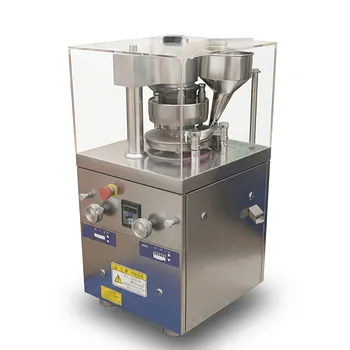
- 实验室旋转式压片机 多冲模单压式自动连续压片
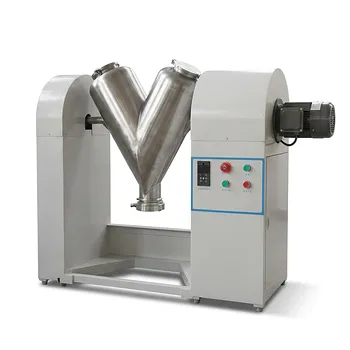
- V-Type Powder Mixer for Uniform Blending of Dry Powders and Granules
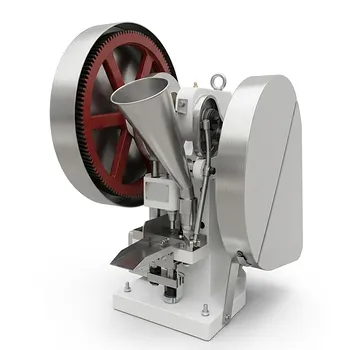
- 6-Ton Small Single-Punch Tablet Press — Laboratory Powder & Granule Tableting Equipment / Tablet Forming Machine
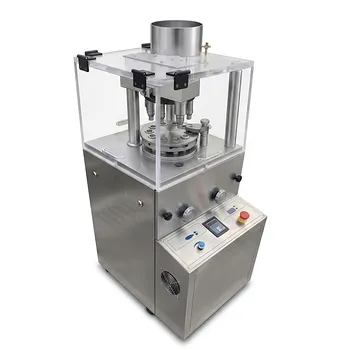
- Enhanced 9 Punch Rotary Tablet Press for Powder Compaction
People Also Ask
- What is the role of a laboratory uniaxial hydraulic press in the preparation of alumina ceramic samples? Key Benefits
- What are the advantages of double-action pressing equipment? Master Uniform Density in High-Aspect-Ratio Ceramics
- What is the function of a laboratory hydraulic forming press in CRSS rubber prep? Ensure Superior Material Integrity
- What role does a laboratory hydraulic press play in the forming of Ce-TZP/Al2O3 green bodies? Maximize Density & Strength
- How does a laboratory hydraulic press ensure the quality of high-entropy cathode H-SOFC single cells? Optimize Performance

Tech Team · PowderPreparation
Last updated on Jun 03, 2026