Why use a lab hydraulic press and precision molds for high-entropy ferrite samples? Achieve Precise Dielectric Results
Updated 4 months ago
Precise sample preparation is the foundation of reliable material characterization. For (Zn,Mg,Ni,Fe,Cd)Fe2O4 high-entropy ferrites, a laboratory hydraulic press and precision molds are essential to transform loose powder into high-density, geometrically uniform discs. This process eliminates internal air pockets and maximizes inter-particle contact, ensuring that subsequent dielectric tests measure the material's intrinsic properties rather than manufacturing flaws.
The combination of high-pressure compaction and precision molding serves to eliminate geometric defects and internal porosity. By creating a dense "green body" with uniform density distribution, researchers can obtain accurate complex permittivity data and ensure structural stability during thermal analysis.
The Role of Compaction in Dielectric Accuracy
Eliminating Air and Internal Porosity
Air trapped between ferrite powder particles acts as a dielectric contaminant with very low permittivity. High-pressure compaction (often reaching 200 MPa) forces powder particles to rearrange and bond closely, effectively purging these air gaps. This ensures the resulting dielectric spectrum reflects the actual high-entropy ferrite rather than a composite of ferrite and air.
Maximizing Inter-particle Contact
For high-entropy oxides, the electrical and magnetic interactions depend on the proximity of diverse metal ions. The hydraulic press provides the stable axial pressure necessary to overcome particle friction and facilitate plastic deformation. This creates a contiguous solid that allows for accurate measurement of complex permittivity and conductivity.
Removing Geometric Defects
Dielectric testing requires samples with precise dimensions, such as a 10 mm diameter and 1.29 mm thickness. Precision molds ensure the sample has perfectly flat surfaces and sharp edges, which are critical for proper fitment in test fixtures. Eliminating these geometric irregularities prevents measurement errors introduced by fringing fields or poor electrode contact.
Engineering Structural Integrity and Consistency
Achieving Uniform Density Distribution
A high-precision hydraulic press provides controlled and uniform pressure across the entire surface of the mold. This is critical for eliminating density gradients within the sample, which can otherwise cause internal stresses. Consistent density is vital for small-sample reliability and ensures a high Weibull modulus, meaning the material's characteristics are predictable and reproducible.
Enhancing Sintering and Atomic Diffusion
The "green body" formed by the press must have a high initial density to facilitate subsequent heat treatments. High green density promotes atomic diffusion during the sintering process, which is necessary to form dense, structurally sound high-entropy ceramic blocks. Without this pre-compaction, the final ceramic would remain porous and fragile, skewing dielectric and magnetic test data.
Ensuring Mechanical Strength for Analysis
Samples often undergo rigorous thermomechanical analysis (TMA) or thermal expansion coefficient measurements. The high-pressure molding process provides the sample with enough mechanical strength to withstand handling and high temperatures. This structural stability ensures that the sample does not crack or deform during the actual testing phase.
Understanding the Trade-offs and Pitfalls
The Risk of Over-Compaction
While high pressure is beneficial, exceeding the material's limits can lead to "capping" or delamination. This occurs when stored elastic energy is released upon exiting the mold, causing the sample to split into horizontal layers. Finding the optimal pressure balance is essential for maintaining structural integrity.
Mold Wall Friction and Density Gradients
Friction between the powder and the precision mold walls can lead to uneven pressure distribution, where the center of the sample is denser than the edges. This can be mitigated using lubricants or specialized pressing techniques, but it remains a common source of experimental error in pellet preparation.
Material Contamination
Precision molds must be made of high-hardness materials to prevent metallic contamination of the ferrite powder during high-pressure cycles. Any foreign particles introduced during the pressing stage can significantly alter the dielectric constant and loss tangent of the high-entropy ferrite.
How to Apply This to Your Research
Implementing Best Practices for Sample Prep
To ensure the highest data quality for high-entropy ferrites, your preparation protocol should be tailored to your specific measurement goals.
- If your primary focus is dielectric constant accuracy: Use high-precision molds to ensure perfectly flat surfaces, minimizing air gaps between the sample and the test electrodes.
- If your primary focus is sintering quality: Prioritize higher compaction pressures (approaching 200 MPa) to maximize green density and promote efficient atomic diffusion.
- If your primary focus is statistical reliability: Utilize a high-precision press with automated pressure control to ensure a uniform density distribution across all samples in a test batch.
Consistent mechanical pre-treatment is the only way to ensure that your experimental results are a true reflection of the material's chemical composition.
Summary Table:
| Key Feature | Functional Role | Impact on Dielectric Testing |
|---|---|---|
| High-Pressure Compaction | Eliminates internal air and porosity | Ensures measurement of intrinsic material properties, not air gaps |
| Precision Molding | Ensures flat surfaces and sharp edges | Prevents measurement errors from fringing fields or poor contact |
| Uniform Pressure | Achieves consistent density distribution | Improves reproducibility and prevents internal stress gradients |
| Green Body Formation | Maximizes inter-particle contact | Facilitates atomic diffusion and structural integrity during sintering |
Elevate Your Material Research with Expert Sample Preparation
Precise data starts with a perfect sample. At [Company Name], we provide complete laboratory sample preparation solutions tailored for material science professionals. Whether you are developing high-entropy ferrites or advanced ceramics, our equipment ensures the structural integrity and uniformity your research demands.
Our Specialized Product Range Includes:
- Powder Processing: Crushers (jaw/roll), liquid nitrogen cryogenic grinders, and advanced mills (planetary ball, jet, sand/bead, disc, rotor).
- Compaction & Pressing: A full spectrum of hydraulic presses, including Cold/Warm Isostatic Presses (CIP/WIP), standard lab presses, XRF pellet presses, and vacuum hot presses.
- Sizing & Mixing: Vibratory/air-jet sieve shakers, test sieves, and high-efficiency powder or defoaming mixers.
Don't let preparation flaws compromise your results. Partner with us for reliable, high-performance equipment designed for precision.
Contact our technical team today to find the right solution for your lab!
References
- Adrian Radoń, P. Włodarczyk. Dielectric and electromagnetic interference shielding properties of high entropy (Zn,Fe,Ni,Mg,Cd)Fe2O4 ferrite. DOI: 10.1038/s41598-019-56586-6
Mentioned Products
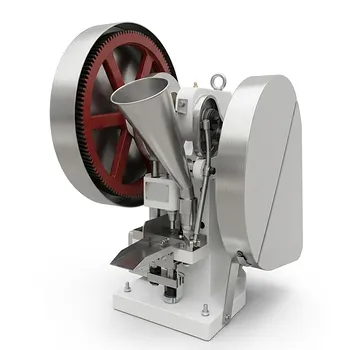
- 6-Ton Small Single-Punch Tablet Press — Laboratory Powder & Granule Tableting Equipment / Tablet Forming Machine
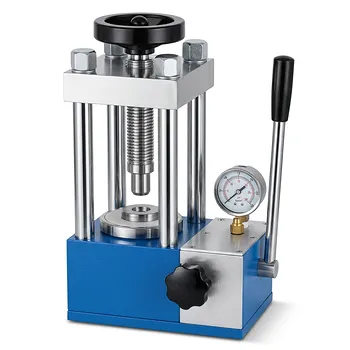
- Manual Tablet Press with Dual Scale Pressure Gauge for Pharmaceutical Food Chemical Laboratory Sample Preparation
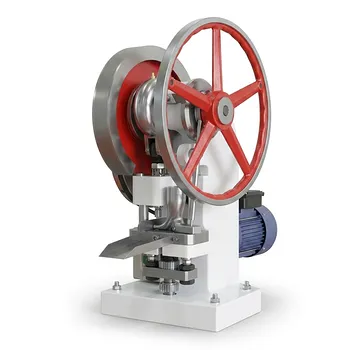
- 5 Ton Single Punch Tablet Press Laboratory Small Batch Production
- 6 Ton Variable Frequency Single Punch Tablet Press
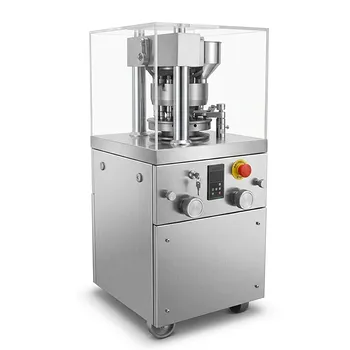
- Enhanced 9 Punch Rotary Tablet Press for Powder Compaction
People Also Ask
- What is the function of a laboratory press in Cr-Ti alloy evaluation? Quantify Fracture Stress & Strength
- What is the function of a laboratory press in assessing the hydrophobic performance of modified vermiculite fillers?
- What is the core function of a laboratory press in the forming of ceramic filter element green bodies? Maximize Density.
- What is the function of a laboratory press in the preparation of ceramic feed rods? Master Density and Precision
- Why is vacuum sealing and flexible packaging necessary for Aluminum Titanate powders during CIP? Ensure Peak Density

Tech Team · PowderPreparation
Last updated on Jun 03, 2026
Related Products
6-Ton Small Single-Punch Tablet Press — Laboratory Powder & Granule Tableting Equipment / Tablet Forming Machine
Manual Tablet Press with Dual Scale Pressure Gauge for Pharmaceutical Food Chemical Laboratory Sample Preparation
5 Ton Single Punch Tablet Press Laboratory Small Batch Production
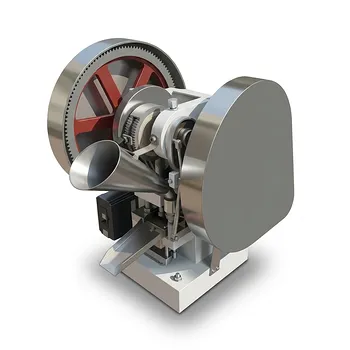
6 Ton Variable Frequency Single Punch Tablet Press
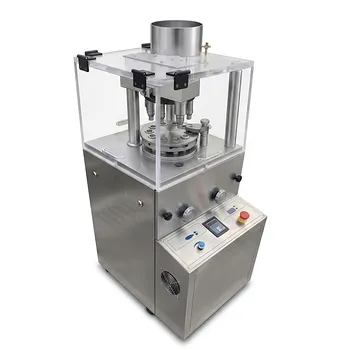
Enhanced 9 Punch Rotary Tablet Press for Powder Compaction