Why are 0.3 mm zirconia (ZrO2) grinding beads selected as the media in the co-grinding process for Meloxicam? High Purity
Updated 4 months ago
0.3 mm zirconia (ZrO2) grinding beads are selected for Meloxicam co-grinding to maximize collision frequency and energy density while ensuring pharmaceutical-grade purity. This specific size and material combination provides the intensive shear forces necessary to reduce drug particles to the nanometer scale without introducing metallic or ceramic contaminants into the final suspension.
The use of 0.3 mm zirconia beads facilitates high-efficiency nanonization by increasing the number of contact points between the media and the drug. This setup optimizes kinetic energy transfer while leveraging zirconia’s extreme wear resistance to maintain a clean, stable Meloxicam formulation.
The Role of Bead Size in Nanonization
Increasing Collision Frequency
Small-diameter 0.3 mm beads significantly increase the number of effective collision points within the grinding chamber. Compared to larger media, these micro-beads provide a much higher specific surface area, allowing for more frequent interactions with Meloxicam particles.
Enhancing Energy Density and Shear Force
The selection of 0.3 mm media ensures a dense collision energy environment required for nanometer-scale pulverization. This creates the refined shear forces necessary to facilitate the fracture of drug crystals and achieve a uniform particle size distribution.
Facilitating the Micron-to-Nano Transition
Using micro-sized beads is critical for moving Meloxicam from the micrometer level to the nanometer level. The smaller beads ensure a more uniform stress distribution, which is essential for consistent particle size reduction in drug nanosuspensions.
Why Zirconia is the Material of Choice
High Density for Kinetic Impact
Zirconia (ZrO2) possesses a high density that provides the necessary impact kinetic energy during high-speed agitation. This mass allows the small 0.3 mm beads to exert enough force to overcome the structural integrity of the drug crystals despite their small size.
Superior Hardness and Wear Resistance
Zirconia is utilized for its exceptional hardness, which minimizes media loss during the high-energy grinding process. This durability is vital for maintaining the mechanical efficiency of the co-grinding process over long durations.
Ensuring Chemical Purity and Stability
The extremely low wear rate of zirconia ensures that the Meloxicam suspension remains free from foreign impurities. Because the media does not degrade easily, the chemical stability and biocompatibility of the pharmaceutical product are preserved.
Understanding the Trade-offs
Balancing Bead Size and Mass
While smaller beads increase contact points, they also have less individual mass; if the beads are too small, they may lack the momentum to break harder crystals. The 0.3 mm size is an optimized middle ground that offers high frequency without sacrificing the kinetic energy required for Meloxicam.
Heat Generation in High-Energy Milling
The high frequency of collisions inherent in using 0.3 mm beads can lead to increased thermal energy within the mill. Precise temperature control is often required during this process to prevent the thermal degradation of the Meloxicam.
Separation Challenges
Using micro-sized media requires specialized separator screens in the grinding equipment to prevent the beads from discharging with the product. The smaller the bead, the more complex and prone to clogging the filtration system can become.
How to Apply This to Your Process
When selecting grinding media for pharmaceutical nanonization, your choice should align with your specific formulation goals and equipment capabilities.
- If your primary focus is maximum particle fineness: Utilize 0.1 mm to 0.3 mm zirconia beads to maximize the specific surface area and collision frequency.
- If your primary focus is maintaining drug purity: Ensure you use high-purity, Yttria-stabilized zirconia to minimize wear-related contamination and chemical reactivity.
- If your primary focus is processing speed: Select higher-density zirconia media to increase the kinetic impact, allowing for shorter milling cycles to reach the target nanometer range.
Selecting 0.3 mm zirconia beads represents a calculated balance between mechanical energy, contact frequency, and the rigorous purity standards required for modern drug delivery.
Summary Table:
| Feature | Specification/Benefit | Impact on Meloxicam Processing |
|---|---|---|
| Bead Size | 0.3 mm Diameter | Maximizes collision frequency for nanonization |
| Material | Zirconia (ZrO2) | Provides high density and kinetic energy |
| Hardness | Superior Wear Resistance | Prevents metallic/ceramic contamination |
| Purity | Low Media Loss | Ensures chemical stability and biocompatibility |
| Objective | Micron-to-Nano Transition | Achieves uniform particle size distribution |
Achieve Precision in Pharmaceutical Nanonization with Our Expertise
At our company, we provide complete laboratory sample preparation solutions tailored for material science and pharmaceutical applications. Whether you are scaling up Meloxicam production or researching new drug delivery systems, we specialize in the high-performance powder processing and compaction equipment you need.
Our extensive product lines include:
- Advanced Milling: Planetary ball mills, jet mills, sand/bead mills, and liquid nitrogen cryogenic grinders for reaching sub-micron scales.
- Size Reduction & Analysis: Jaw/roll crushers, rotor mills, and vibratory/air-jet sieve shakers.
- Powder Compaction: A full spectrum of hydraulic presses, including Cold/Warm Isostatic Presses (CIP/WIP), standard lab presses, XRF pellet presses, and vacuum hot presses.
- Mixing: High-efficiency powder mixers and defoaming mixers for stable formulations.
Ready to optimize your grinding efficiency and ensure pharmaceutical-grade purity? Contact us today to discuss your specific requirements and let our experts help you select the perfect equipment and media for your laboratory.
References
- Csilla Bartos, Rita Ambrus. Study on the Scale-Up Possibility of a Combined Wet Grinding Technique Intended for Oral Administration of Meloxicam Nanosuspension. DOI: 10.3390/pharmaceutics16121512
Mentioned Products
- Horizontal Bead Mill for Nanoscale Grinding and Advanced Material Powder Processing
- Laboratory Horizontal Bead Mill for Nanomaterial Wet Grinding and Material Science Research
- Vertical Nano Bead Mill for Ceramic Materials with Permanent Magnet Motor and High Efficiency Grinding
- Nano Laboratory Bead Mill Desktop Sub Micron Sand Mill Screenless Seal Less Powder Grinder
- Laboratory Small Horizontal Sand Mill for Nano Materials Wet Grinding
People Also Ask
- How does the bead filling rate affect the grinding performance and equipment wear in a bead mill? Optimization Guide
- Why is it necessary to precisely control the grinding media loading ratio? Master Nanosuspension Yield & API Stability
- Why is a ceramic lining preferred over stainless steel for a bead mill? Protect Enzymes and Ensure Biomass Purity
- Why is an external cooling circulation system necessary during the high-speed operation of a bead mill? Protect Integrity
- Why is the filling rate of grinding beads strictly controlled during the material milling process? Optimize Efficiency.

Tech Team · PowderPreparation
Last updated on May 14, 2026
Related Products
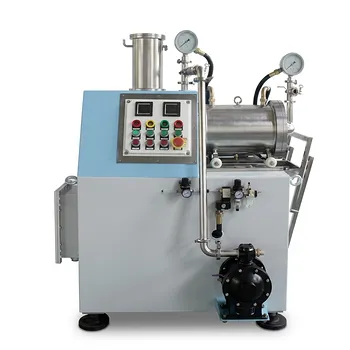
Horizontal Bead Mill for Nanoscale Grinding and Advanced Material Powder Processing
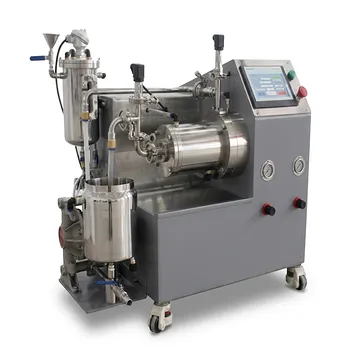
Laboratory Horizontal Bead Mill for Nanomaterial Wet Grinding and Material Science Research
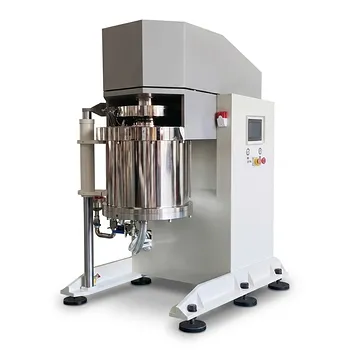
Vertical Nano Bead Mill for Ceramic Materials with Permanent Magnet Motor and High Efficiency Grinding
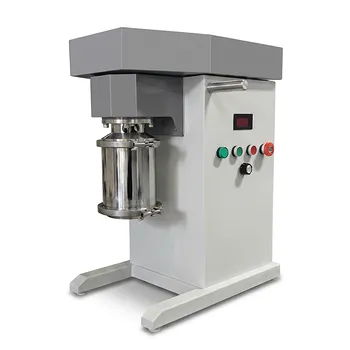
Nano Laboratory Bead Mill Desktop Sub Micron Sand Mill Screenless Seal Less Powder Grinder