What technical advantages does vacuum hot pressing offer over standard sintering? Achieving Near-Theoretical Density
Updated 3 months ago
Vacuum hot pressing (VHP) is the superior method for synthesizing ternary borides because it overcomes the sluggish diffusion and high volatility issues inherent in these materials. By applying uniaxial mechanical pressure simultaneously with high temperatures, VHP achieves near-theoretical density at significantly lower temperatures and shorter durations than standard sintering.
Core Takeaway: Vacuum hot pressing utilizes thermo-mechanical coupling to provide a powerful driving force for densification that standard sintering lacks. This process allows for the creation of fully dense, fine-grained ternary borides while preventing the loss of volatile components and the degradation of mechanical properties.
Overcoming Kinetic Barriers via Thermo-Mechanical Coupling
Accelerated Diffusion and Mass Transfer
Standard sintering relies primarily on capillary forces, which are often insufficient to overcome the strong covalent bonds found in ternary borides. VHP introduces uniaxial mechanical pressure, which acts as an additional driving force to accelerate particle rearrangement and grain boundary diffusion.
Promotion of Creep and Viscous Flow
The simultaneous application of heat and pressure promotes internal creep deformation and viscous flow within the material matrix. This synergy allows the powder to reach near-theoretical density—often exceeding 99% relative density—by filling pores that would remain open during pressureless sintering.
Lowering the Required Sintering Temperature
Because the mechanical pressure assists in the densification process, the required temperature for full compaction is significantly reduced. This reduction is critical for maintaining the chemical stability of the ternary phase and reducing the overall energy consumption of the manufacturing process.
Preserving Material Integrity and Microstructure
Suppressing Boron Volatilization
Ternary boride materials are susceptible to the volatilization of boron components when exposed to the extreme temperatures required for standard sintering. The pressure-assisted nature of VHP allows for complete densification in a shorter timeframe, effectively inhibiting the loss of these critical elements.
Inhibiting Abnormal Grain Growth
High temperatures and long dwell times in standard sintering often lead to abnormal grain growth, which weakens the material's mechanical strength. VHP’s ability to achieve density at lower temperatures ensures a fine-grained structure, which is essential for reaching the superior shear modulus predicted by material theory.
Precision Microstructural Control
The vacuum environment facilitates the removal of interstitial gases and surface oxides that could otherwise contaminate the grain boundaries. This results in a cleaner, more homogenous microstructure with enhanced intermetallic bonding and superior tensile strength.
Understanding the Trade-offs
Geometric and Scalability Constraints
The primary limitation of vacuum hot pressing is its reliance on uniaxial pressure, which restricts the production to relatively simple shapes like discs or plates. Complex geometries are difficult to achieve because the pressure must be applied evenly through a rigid mold or die.
Cost and Equipment Complexity
VHP systems are significantly more expensive to operate and maintain than standard sintering furnaces due to the integration of hydraulic systems and vacuum seals. The process is also typically a batch operation, which may limit high-volume production efficiency compared to continuous sintering methods.
Making the Right Choice for Your Goal
To determine if vacuum hot pressing is the correct approach for your ternary boride application, consider your primary performance requirements:
- If your primary focus is maximum mechanical hardness: Use vacuum hot pressing to ensure a fine-grained microstructure and near-theoretical density.
- If your primary focus is material purity and chemical stability: Choose VHP to leverage the vacuum environment and lower temperatures that prevent oxidation and boron loss.
- If your primary focus is high-volume production of complex parts: Standard sintering or alternative pressureless methods may be more cost-effective, provided the material properties meet minimum specifications.
By integrating mechanical force with thermal energy, vacuum hot pressing transforms the synthesis of ternary borides from a challenge of sluggish kinetics into a controllable, high-precision engineering process.
Summary Table:
| Feature | Standard Sintering | Vacuum Hot Pressing (VHP) |
|---|---|---|
| Driving Force | Capillary forces only | Thermo-mechanical coupling (Heat + Pressure) |
| Relative Density | Often lower/porous | Near-theoretical (>99%) |
| Sintering Temp | Extremely high | Significantly lower |
| Grain Size | Risk of abnormal growth | Fine-grained microstructure |
| Chemical Stability | Risk of boron volatilization | Prevents loss of volatile components |
| Environment | Atmosphere/Inert | Vacuum (removes oxides/gases) |
Elevate Your Material Synthesis with Precision Engineering
Achieving the superior mechanical properties of ternary borides requires equipment that can handle the rigors of thermo-mechanical coupling. At [Company Name], we provide complete laboratory sample preparation solutions tailored for advanced material science.
Whether you are focusing on powder processing or high-pressure compaction, our extensive product line is designed to deliver near-theoretical density and microstructural control. Our expertise includes:
- Advanced Hydraulic Presses: Specialized Cold/Warm Isostatic Presses (CIP/WIP), vacuum hot presses, and standard lab presses for precise material densification.
- Powder Processing: High-efficiency mills (planetary ball, jet, rotor), crushers, and precision sieve shakers.
- Mixing Solutions: Professional powder and defoaming mixers to ensure feedstock homogeneity.
Ready to optimize your lab’s efficiency and material performance? Contact our technical experts today to find the perfect vacuum hot press or preparation solution for your research needs!
References
- Adam Carlsson, Martin Dahlqvist. When Two Becomes Three: Predicting Stable Ternary Boron‐Based Compounds by Populating Unique Lattice Sites in Binary Prototype Structures. DOI: 10.1002/adts.202400759
Mentioned Products
- Dual Cup Vacuum Centrifugal Mixer Planetary Paste Defoaming Machine Industrial Material Processor
- 非介入式材料均质机真空脱泡行星搅拌高粘度混合设备
- High Speed Vacuum Planetary Centrifugal Mixer and Defoamer for Industrial Paste Processing
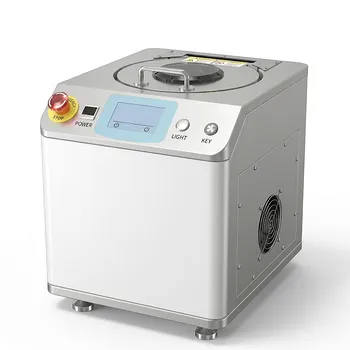
- High Efficiency Vacuum Planetary Centrifugal Mixer and Defoaming Machine for Industrial Material Research and Precise Laboratory Powder Dispersion
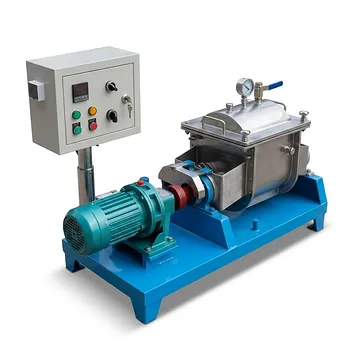
- Industrial Vacuum Kneader for High-Viscosity Silicone, Rubber, and Compound Mixing
People Also Ask
- Why is a vacuum centrifugal defoaming mixer required to process ceramic slurry before 3D printing? Ensure High Density
- Why is a vacuum centrifugal de-foaming mixer required before DIW of PZT ink? Achieve Dense, Bubble-Free Piezo Ceramics
- What are the advantages of centrifugal defoaming mixers for recycled slurries? Achieve Superior Electrode Quality
- Why is centrifugal defoaming necessary for magnetic composite inks? Ensure Void-Free Extrusion for 3D Printing
- Why is vacuum defoaming necessary for PDMS mixtures before microwave irradiation curing? Key to Structural Integrity

Tech Team · PowderPreparation
Last updated on Jun 03, 2026
Related Products
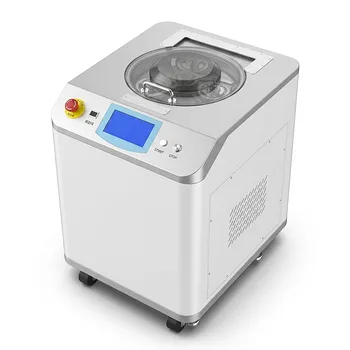
Dual Cup Vacuum Centrifugal Mixer Planetary Paste Defoaming Machine Industrial Material Processor
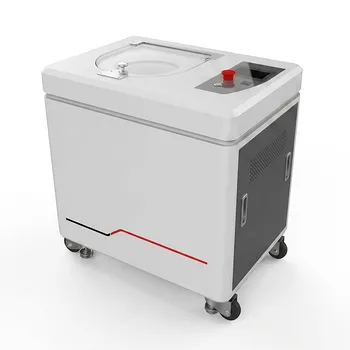
非介入式材料均质机真空脱泡行星搅拌高粘度混合设备
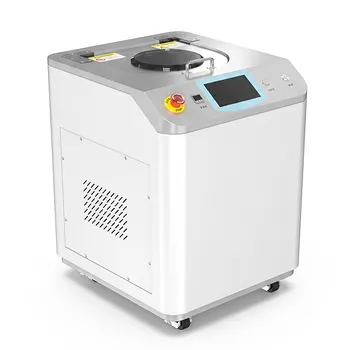
High Speed Vacuum Planetary Centrifugal Mixer and Defoamer for Industrial Paste Processing
High Efficiency Vacuum Planetary Centrifugal Mixer and Defoaming Machine for Industrial Material Research and Precise Laboratory Powder Dispersion
Industrial Vacuum Kneader for High-Viscosity Silicone, Rubber, and Compound Mixing
5 Ton Single Punch Tablet Press Laboratory Small Batch Production
6-Ton Small Single-Punch Tablet Press — Laboratory Powder & Granule Tableting Equipment / Tablet Forming Machine
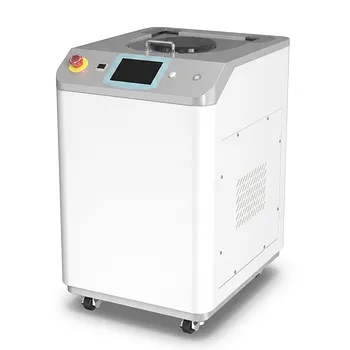
High Viscosity Planetary Centrifugal Mixing and Vacuum Defoaming Machine for Laboratory Material Preparation
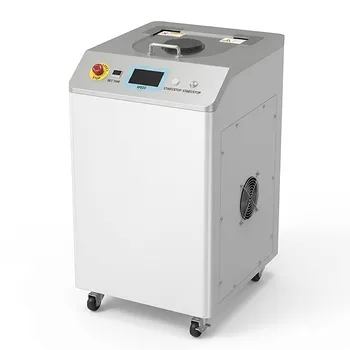
High Viscosity Planetary Centrifugal Vacuum Mixer for Material Defoaming and Uniform Mixing
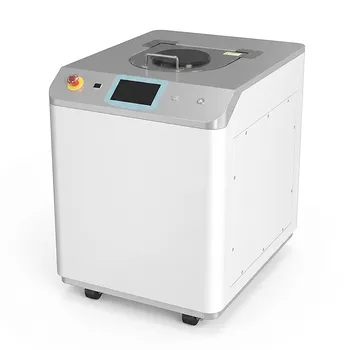
Industrial Planetary Centrifugal Vacuum Defoaming Mixer for High Viscosity Paste and Advanced Material Science
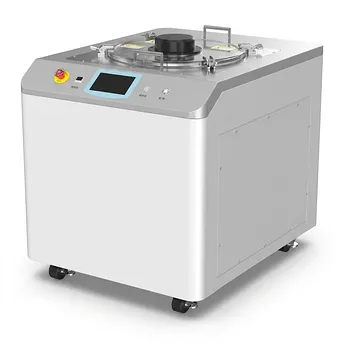
Industrial Planetary Centrifugal Vacuum Defoaming Mixer for High Viscosity Paste and Powder Homogenization
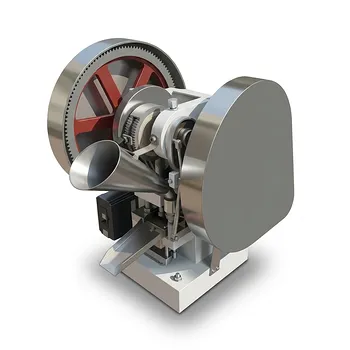
6 Ton Variable Frequency Single Punch Tablet Press