Why is a vacuum centrifugal de-foaming mixer required before DIW of PZT ink? Achieve Dense, Bubble-Free Piezo Ceramics
Updated 4 months ago
The success of Direct Ink Writing (DIW) for piezoelectric PZT components depends entirely on the homogeneity and air-free nature of the precursor ink. A vacuum centrifugal de-foaming mixer is required to eliminate micro-bubbles and optimize the distribution of PZT powder within its viscous resin system. This pre-processing step ensures continuous, uniform extrusion during printing, which is vital for preventing internal voids, cracks, and density failures in the final sintered film.
To achieve high-performance piezoelectric properties, PZT ink must be completely free of trapped air and perfectly dispersed. The combination of centrifugal force and vacuum environment provides a level of degassing and mixing that manual or standard methods cannot match, directly impacting the structural integrity of the printed component.
Eliminating Defects and Ensuring Flow Stability
The Impact of Micro-Bubbles on Extrusion
During the DIW process, ink is forced through a fine nozzle; even a single micro-bubble can cause filament breakage or flow interruptions. These bubbles act as physical barriers that lead to uncontrolled macro-defects or internal voids within the printed layers.
Maintaining Constant Extrusion Pressure
A vacuum de-foaming mixer ensures that the ink possesses a consistent rheology by removing compressible air pockets. This stabilization allows for constant extrusion pressure, which is necessary to maintain the precise width and height of the printed PZT filaments.
Preventing Structural Voids and Cracks
Bubbles trapped during the mixing phase inevitably become holes or cracks once the printed part undergoes drying and sintering. By using centrifugal force to drive bubbles to the surface where they rupture under vacuum, the mixer ensures a high-solid-content structure that remains intact during thermal processing.
Optimizing Material Properties and Density
Achieving Uniform Powder Dispersion
The powerful centrifugal forces generated by simultaneous revolution and rotation optimize the distribution of PZT powder within the resin. This prevents the aggregation of particles, ensuring that the final ceramic component has a uniform microstructure and consistent piezoelectric response.
Maximizing Post-Sintering Density
The density of the "green body" (the printed part before firing) determines the final density of the PZT thin film. Eliminating micro-bubbles at the ink stage is the only way to ensure the material reaches the high density required for mechanical reliability and stable electromagnetic parameters.
Enhancing Mechanical and Functional Reliability
For piezoelectric applications, any internal flaw can lead to premature failure under electrical or mechanical stress. Thorough degassing ensures the structural density and stability of the finished component, making it robust enough for real-world sensor or actuator applications.
Understanding the Trade-offs and Considerations
Impact of Vacuum Levels on Volatile Components
While a high vacuum is effective for degassing, it must be carefully controlled to avoid the evaporation of volatile solvents or binders within the PZT ink. Operating at specific pressures, such as 250 mbar, is often necessary to balance effective de-foaming with the preservation of the ink's chemical composition.
Heat Generation During High-Speed Rotation
The intense centrifugal forces required for molecular-level mixing can generate frictional heat within high-viscosity PZT slurries. If the temperature rises too high, it may trigger premature polymerization or alter the ink’s viscosity, requiring careful monitoring of mixing cycles and cooling periods.
Equipment Complexity and Cost
Vacuum centrifugal mixers are specialized instruments that represent a higher initial investment compared to standard planetary mixers. However, the reduction in print failure rates and the improvement in material performance typically outweigh these costs for precision applications like PZT fabrication.
How to Apply This to Your Project
When preparing PZT or other high-viscosity functional inks for Direct Ink Writing, your mixing strategy should align with your final performance requirements.
- If your primary focus is Maximum Piezoelectric Sensitivity: Prioritize high-vacuum degassing to ensure the highest possible density and uniformity in the sintered PZT film.
- If your primary focus is High-Speed Production: Use a mixer that offers programmable revolution and rotation speeds to minimize processing time while maintaining consistent extrusion stability.
- If your primary focus is Structural Integrity of Complex Geometries: Focus on optimizing the powder-to-binder ratio during the mixing phase to prevent sagging or cracking during the DIW process.
By integrating vacuum centrifugal de-foaming into your workflow, you transform a temperamental slurry into a reliable, high-performance material ready for precision manufacturing.
Summary Table:
| Key Requirement | Mixer Function | Impact on DIW Process |
|---|---|---|
| Bubble Removal | Vacuum environment + Centrifugal force | Prevents nozzle clogging and filament breakage |
| Homogeneity | Simultaneous revolution and rotation | Ensures uniform PZT powder dispersion in resin |
| Flow Stability | Eliminates compressible air pockets | Maintains constant extrusion pressure for precision |
| Sintered Density | Drives high-solid-content packing | Eliminates internal voids for superior piezo response |
| Structural Integrity | Removes micro-defects at the ink stage | Prevents cracks during drying and sintering |
Elevate Your Material Research with Precision Mixing Solutions
Are internal voids or inconsistent extrusion stalling your DIW progress? At [Company Name], we provide complete laboratory sample preparation solutions for material science, specializing in advanced powder processing and compaction equipment.
Our vacuum centrifugal de-foaming mixers and planetary ball mills are specifically engineered to handle high-viscosity functional inks like PZT, ensuring perfect dispersion and zero air entrapment. Beyond mixing, we offer a full spectrum of professional tools to support your entire workflow, including:
- Size Reduction: Jaw/roll crushers and liquid nitrogen cryogenic grinders.
- Sieving & Mixing: Vibratory sieve shakers, powder mixers, and high-speed defoaming mixers.
- Compaction: A full range of hydraulic presses, including Cold/Warm Isostatic Presses (CIP/WIP), vacuum hot presses, and XRF pellet presses.
Ready to achieve high-density, defect-free ceramic components?
Contact our technical experts today to find the perfect equipment for your lab!
References
- Abhinay Sreeram, Edwin Hang Tong Teo. Direct printing of PZT on glass for surface haptics. DOI: 10.1038/s41528-025-00475-8
Mentioned Products
- High Viscosity Planetary Centrifugal Vacuum Mixer for Material Defoaming and Uniform Mixing
- Industrial Planetary Centrifugal Vacuum Defoaming Mixer for High Viscosity Paste and Powder Homogenization
- High Efficiency Vacuum Planetary Centrifugal Mixer and Defoaming Machine for Industrial Material Research and Precise Laboratory Powder Dispersion
- Dual Cup Vacuum Centrifugal Mixer Planetary Paste Defoaming Machine Industrial Material Processor
- Industrial Planetary Centrifugal Vacuum Defoaming Mixer for High Viscosity Paste and Advanced Material Science
People Also Ask
- What core functions does a planetary centrifugal mixer perform? Optimize Hard Carbon Anode Slurry & Degassing
- Why is a planetary centrifugal mixer recommended for geopolymer slurries? Achieve high-shear, air-free homogenization.
- Why is a planetary centrifugal mixer utilized for wood powder and HPMC? Achieve uniform dispersion & rapid defoaming.
- How does a planetary centrifugal mixer address key challenges in Tyr-CDs@EVA optical films? Ensure Optical Clarity.
- What is the role of a planetary centrifugal mixer in UHTC slurry preparation? Achieve Void-Free, High-Viscosity Mixing

Tech Team · PowderPreparation
Last updated on Jun 03, 2026
Related Products
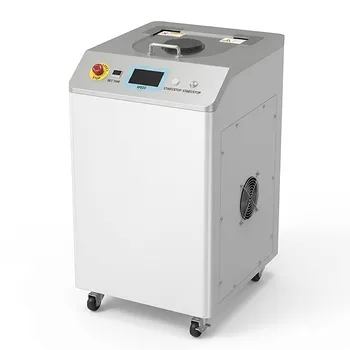
High Viscosity Planetary Centrifugal Vacuum Mixer for Material Defoaming and Uniform Mixing
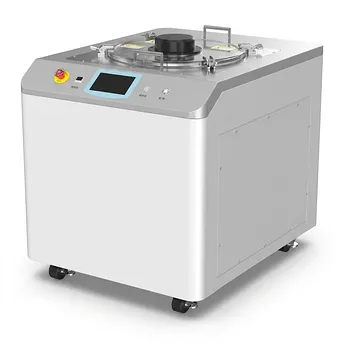
Industrial Planetary Centrifugal Vacuum Defoaming Mixer for High Viscosity Paste and Powder Homogenization
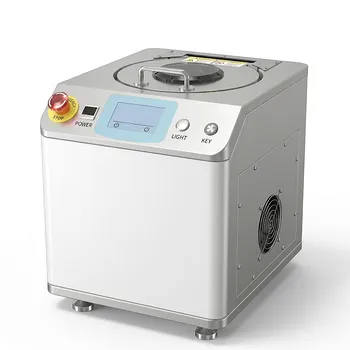
High Efficiency Vacuum Planetary Centrifugal Mixer and Defoaming Machine for Industrial Material Research and Precise Laboratory Powder Dispersion
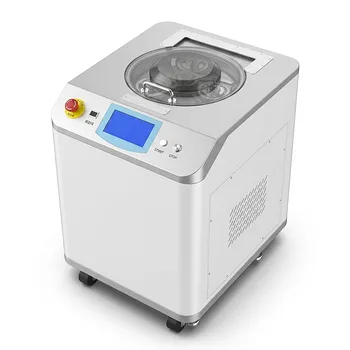
Dual Cup Vacuum Centrifugal Mixer Planetary Paste Defoaming Machine Industrial Material Processor
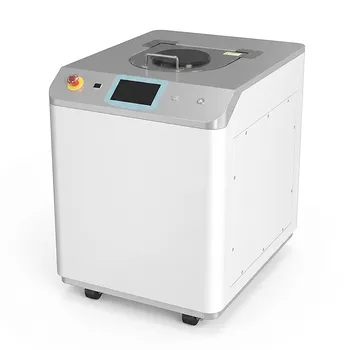
Industrial Planetary Centrifugal Vacuum Defoaming Mixer for High Viscosity Paste and Advanced Material Science
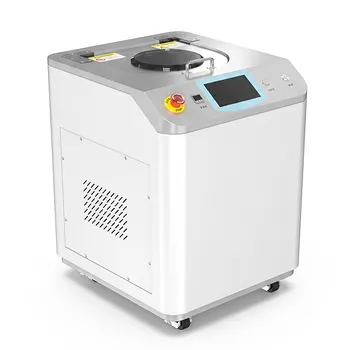
High Speed Vacuum Planetary Centrifugal Mixer and Defoamer for Industrial Paste Processing
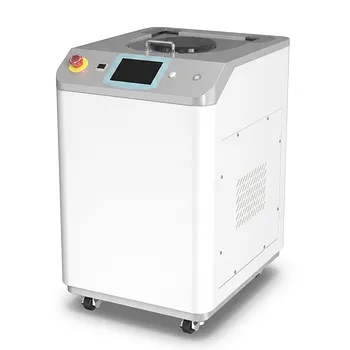
High Viscosity Planetary Centrifugal Mixing and Vacuum Defoaming Machine for Laboratory Material Preparation
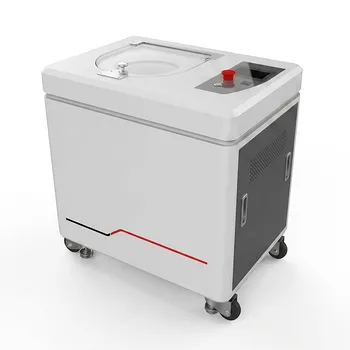
非介入式材料均质机真空脱泡行星搅拌高粘度混合设备
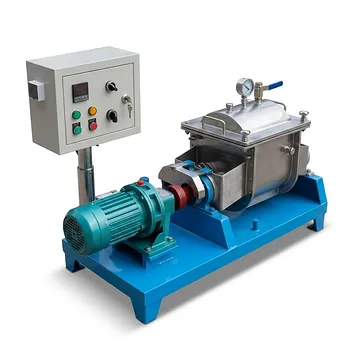
Industrial Vacuum Kneader for High-Viscosity Silicone, Rubber, and Compound Mixing
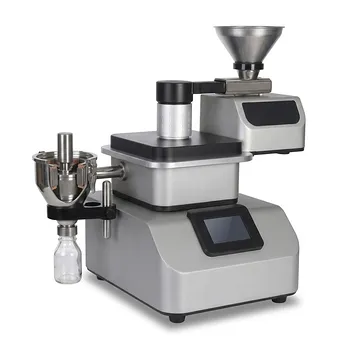
Ultra Centrifugal Mill for Rapid Laboratory Sample Preparation and Fine Powder Grinding
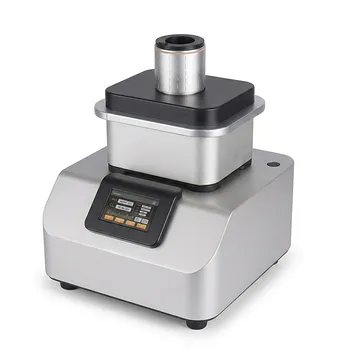
Ultra Centrifugal Mill High Speed Laboratory Grinder for Fibrous and Brittle Sample Preparation
High-Speed Simple Disperser for Efficient Mixing, Dispersion, and Emulsification
Hydraulic Double Shaft Disperser for High Viscosity Liquid Mixing and Dispersion
Inclined Mixer for Homogeneous Powder Blending and Grinding