What technical advantages does a vacuum hot press offer for Si-B-C-N ceramics? Control Microstructure & Maximize Density
Updated 4 months ago
Advanced sintering via vacuum hot pressing overcomes the inherent densification resistance of Si-B-C-N ceramics. It provides simultaneous thermal and mechanical energy, allowing for near-theoretical density at lower temperatures than traditional pressureless heat treatments. This precise control results in a refined microstructure that preserves nanocrystalline phases and inhibits the grain coarsening typical of long-duration sintering.
Vacuum hot pressing transforms Si-B-C-N ceramic production by replacing slow, capillary-driven densification with active thermo-mechanical coupling. This approach achieves superior mechanical properties by suppressing grain growth and maintaining the critical balance between amorphous and nanocrystalline phases.
Enhanced Densification Mechanisms
Overcoming Covalent Bond Resistance
Si-B-C-N ceramics are characterized by strong covalent bonds, which make them inherently difficult to densify through standard heat treatment. A vacuum hot press provides the necessary external driving force to overcome this resistance, facilitating particle rearrangement that simple capillary forces cannot achieve.
Accelerated Diffusion and Mass Transfer
The integration of a high-temperature furnace with a hydraulic system creates thermo-mechanical coupling. This synergy accelerates solid-phase diffusion, viscous flow, and internal creep deformation, significantly reducing the temperature required to reach full densification.
Overcoming Internal Obstacles
In composite variations, such as those containing carbon nanotubes, the forced densification of hot pressing overcomes the shrinkage resistance posed by the additives. This ensures a complete matrix-reinforcement bond without requiring the excessive temperatures that would otherwise degrade the secondary phases.
Precision Microstructural Control
Suppression of Grain Coarsening
Traditional heat treatment often requires extended "soaking" times at high temperatures, which leads to unwanted grain growth. Advanced equipment utilizes extremely high heating rates and precise pressure synchronization to shorten the sintering window, effectively inhibiting grain coarsening during the densification process.
Retention of Nanocrystalline Phases
By controlling the thermal-mechanical cycle, engineers can retain a higher proportion of the amorphous phase or finer nanocrystalline structures. Specifically, this helps maintain the optimal distribution of SiC, Si3N4, and BN(C) composites, which are essential for high-performance mechanical properties.
Elimination of Porosity
The application of uniaxial mechanical pressure under a protective vacuum environment allows for the elimination of internal pores in a relatively short time. This results in large-scale bulk ceramics with near-zero porosity, leading to significantly higher microhardness and fracture toughness compared to pressureless methods.
Understanding the Trade-offs
Geometric and Scalability Constraints
Unlike traditional pressureless sintering, which can accommodate complex, "near-net" shapes, hot pressing is generally restricted to simpler geometries like discs or plates. The reliance on a physical mold and uniaxial pressure limits the complexity of the parts that can be produced in a single cycle.
Equipment and Operational Costs
The requirement for specialized graphite tooling and high-tonnage hydraulic systems increases the initial capital expenditure. Additionally, the wear and tear on molds under high-temperature axial pressure (often between 1800°C and 1900°C) contributes to higher per-unit operational costs compared to standard atmospheric furnaces.
Applying Advanced Sintering to Your Project
When selecting a sintering strategy for Si-B-C-N or similar refractory ceramics, your choice should align with your specific material requirements and production volume.
- If your primary focus is maximum mechanical strength: Utilize a vacuum hot press to ensure near-theoretical density and the preservation of a fine-grained, nanocrystalline microstructure.
- If your primary focus is complex part geometry: Consider traditional heat treatment or alternative pressureless techniques, accepting that you may sacrifice some density and fracture toughness.
- If your primary focus is processing difficult-to-bond composites: Leverage the uniaxial pressure of a hot press to overcome the internal resistance of reinforcements like carbon nanotubes or whiskers.
- If your primary focus is thermal stability at high temperatures: Focus on the precise temperature control of vacuum equipment to maintain the stability of the BN(C) and Si3N4 phases.
Selecting the right sintering technology allows you to engineer the specific microstructural characteristics required for the most demanding aerospace and structural applications.
Summary Table:
| Feature | Vacuum Hot Pressing (VHP) | Traditional Heat Treatment |
|---|---|---|
| Densification | Near-theoretical (Thermo-mechanical) | Lower density (Capillary-driven) |
| Microstructure | Refined, nanocrystalline phases | Coarsened grains due to long soaking |
| Porosity | Near-zero porosity | Significant residual porosity |
| Driving Force | Simultaneous heat and uniaxial pressure | Surface energy/Capillary forces |
| Geometry | Simple shapes (discs, plates) | Complex near-net shapes |
| Efficiency | Lower temperatures, shorter cycles | High temperatures, long durations |
Elevate Your Material Science Research with Precision Engineering
At our core, we provide complete laboratory sample preparation solutions designed for the most demanding applications in material science. If you are aiming for the near-theoretical density and refined microstructures described in this article, our advanced powder processing and compaction equipment can get you there.
We specialize in high-performance equipment for every stage of your workflow:
- Advanced Compaction: A full spectrum of hydraulic presses, including Vacuum Hot Presses, Hot Presses, Cold/Warm Isostatic Presses (CIP/WIP), and XRF pellet presses.
- Powder Processing: High-efficiency crushers (jaw/roll), liquid nitrogen cryogenic grinders, and various mills (planetary ball, jet, sand/bead, disc, rotor).
- Refinement & Mixing: Vibratory and air-jet sieve shakers, along with specialized powder and defoaming mixers for uniform material distribution.
Don't let traditional methods limit your material's potential. Contact us today to discuss your project requirements and discover how our expertise in Si-B-C-N and refractory ceramic processing can enhance your laboratory’s capabilities!
References
- Pengfei Zhang, Yu Zhou. Progress of a novel non-oxide Si-B-C-N ceramic and its matrix composites. DOI: 10.1007/s40145-012-0017-x
Mentioned Products
- Dual Cup Vacuum Centrifugal Mixer Planetary Paste Defoaming Machine Industrial Material Processor
- 非介入式材料均质机真空脱泡行星搅拌高粘度混合设备
- High Speed Vacuum Planetary Centrifugal Mixer and Defoamer for Industrial Paste Processing
- High Efficiency Vacuum Planetary Centrifugal Mixer and Defoaming Machine for Industrial Material Research and Precise Laboratory Powder Dispersion
- Industrial Vacuum Kneader for High-Viscosity Silicone, Rubber, and Compound Mixing
People Also Ask
- Why is a vacuum centrifugal defoaming mixer required to process ceramic slurry before 3D printing? Ensure High Density
- Why is a vacuum centrifugal de-foaming mixer required before DIW of PZT ink? Achieve Dense, Bubble-Free Piezo Ceramics
- What are the advantages of centrifugal defoaming mixers for recycled slurries? Achieve Superior Electrode Quality
- Why is centrifugal defoaming necessary for magnetic composite inks? Ensure Void-Free Extrusion for 3D Printing
- Why is vacuum defoaming necessary for PDMS mixtures before microwave irradiation curing? Key to Structural Integrity

Tech Team · PowderPreparation
Last updated on Jun 03, 2026
Related Products
Dual Cup Vacuum Centrifugal Mixer Planetary Paste Defoaming Machine Industrial Material Processor
非介入式材料均质机真空脱泡行星搅拌高粘度混合设备
High Speed Vacuum Planetary Centrifugal Mixer and Defoamer for Industrial Paste Processing
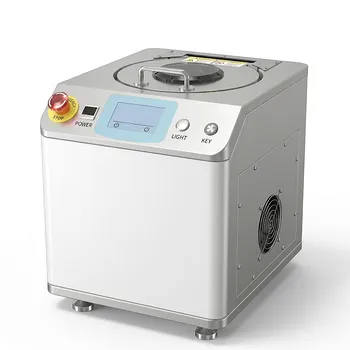
High Efficiency Vacuum Planetary Centrifugal Mixer and Defoaming Machine for Industrial Material Research and Precise Laboratory Powder Dispersion
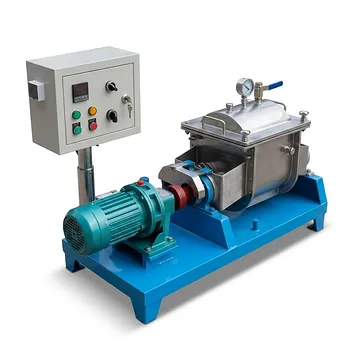
Industrial Vacuum Kneader for High-Viscosity Silicone, Rubber, and Compound Mixing
5 Ton Single Punch Tablet Press Laboratory Small Batch Production
6-Ton Small Single-Punch Tablet Press — Laboratory Powder & Granule Tableting Equipment / Tablet Forming Machine
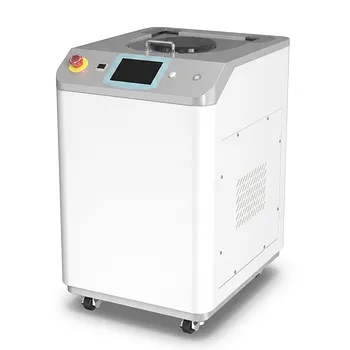
High Viscosity Planetary Centrifugal Mixing and Vacuum Defoaming Machine for Laboratory Material Preparation
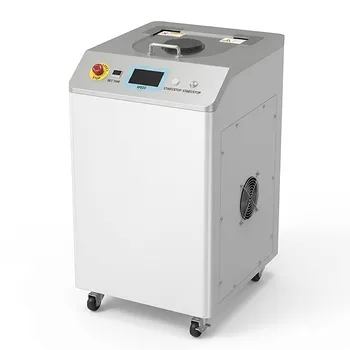
High Viscosity Planetary Centrifugal Vacuum Mixer for Material Defoaming and Uniform Mixing
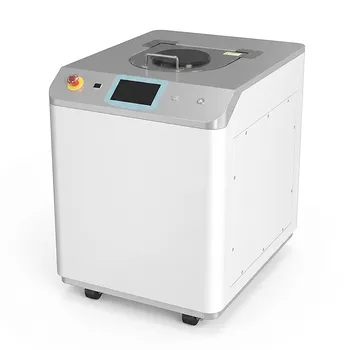
Industrial Planetary Centrifugal Vacuum Defoaming Mixer for High Viscosity Paste and Advanced Material Science
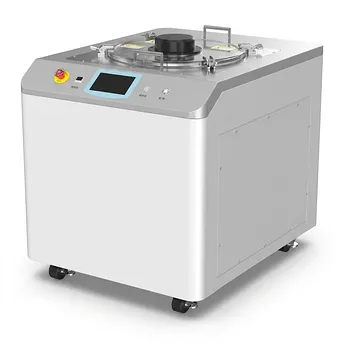
Industrial Planetary Centrifugal Vacuum Defoaming Mixer for High Viscosity Paste and Powder Homogenization
6 Ton Variable Frequency Single Punch Tablet Press