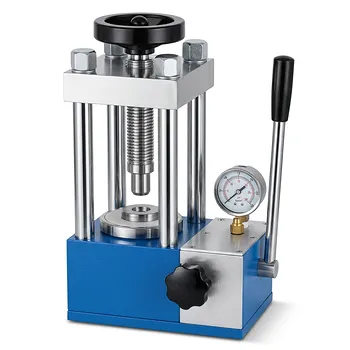
What technical advantages does a precision hydraulic press offer for the pressure curing of sandwich panel core layers?
Updated 5 months ago
The use of a precision hydraulic press in sandwich panel manufacturing ensures superior mechanical properties through uniform pressure application and tight dimensional control. By maintaining a constant force—such as 2.5 kN—throughout the resin curing cycle, the press optimizes the bond between wood particles and the epoxy matrix while eliminating internal structural defects.
A precision hydraulic press transforms core layer curing into a controlled engineering procedure. It simultaneously stabilizes the material's internal matrix and its external dimensions, providing the flatness and stiffness required for high-performance composite bonding.
Achieving Structural Homogeneity
Uniform Bonding of the Matrix
A precision hydraulic press delivers a constant and uniform load across the entire surface area of the core. This stability ensures that the epoxy resin matrix fully saturates and bonds with the wood particles, preventing weak spots caused by pressure fluctuations.
Minimizing Internal Micro-cracks
The controlled application of force during the curing phase helps to minimize internal micro-cracks within the core layer. By preventing these microscopic failures during the solidification of the resin, the press ensures the core maintains its long-term integrity under stress.
Enhancing Core Stiffness
Uniform pressure leads to a more compact and consistent material density. This process significantly enhances the overall stiffness of the core layer, which is critical for the structural performance of the final sandwich panel.
Geometric Precision and Surface Quality
Strict Thickness Tolerances
Precision hydraulic systems allow for maintaining strict control over core layer thickness. This dimensional accuracy is vital when the core must fit into tight assembly tolerances or when weight consistency is a primary design requirement.
Creating a Flat Interface for Bonding
The press creates a flat, uniform interface on the surface of the core layer. This level surface is essential for the subsequent bonding of flax fiber face sheets, as it ensures maximum contact area and bond strength between the core and the skins.
Consistency Across Production Batches
Because the hydraulic pressure can be precisely calibrated and repeated, it removes the variability inherent in manual or vacuum-bagging methods. This results in repeatable mechanical properties across every panel produced in a manufacturing run.
Understanding the Trade-offs
Equipment Complexity and Cost
While a precision hydraulic press offers superior results, it represents a higher initial capital investment compared to simpler clamping methods. The complexity of the hydraulic systems also requires regular maintenance to ensure the pressure sensors remain accurate.
Setup and Calibration Demands
To achieve the technical advantages mentioned, the press must be precisely calibrated for each specific core thickness and resin type. Improper setup can lead to over-compression of the wood particles or insufficient resin flow, potentially compromising the core's structural properties.
How to Apply This to Your Project
Recommendations for Precision Curing
Integrating a hydraulic press into your workflow should be guided by your specific performance requirements for the finished sandwich panel.
- If your primary focus is Maximum Structural Rigidity: Utilize the press to maintain a high, constant pressure that eliminates micro-cracks and maximizes the density of the wood-epoxy matrix.
- If your primary focus is Aesthetic or Aerodynamic Surface Quality: Prioritize the press’s ability to create a perfectly flat interface, ensuring the flax fiber face sheets bond without surface undulations or voids.
- If your primary focus is Mass Production Consistency: Implement automated pressure profiles to ensure every core layer meets strict thickness tolerances and mechanical specifications.
By leveraging the precise control of a hydraulic press, you ensure that the core layer becomes a reliable foundation for high-performance composite structures.
Summary Table:
| Technical Advantage | Description | Impact on Core Layer |
|---|---|---|
| Uniform Pressure | Delivers constant load across the surface | Ensures homogeneous matrix bonding |
| Micro-crack Control | Minimized internal structural failures | Enhances long-term structural integrity |
| Thickness Accuracy | Precise geometric and dimensional control | Meets strict assembly tolerances |
| Surface Flatness | Creates a level bonding interface | Optimizes adhesion for face sheets |
| Process Repeatability | Calibrated, automated pressure cycles | Guarantees consistent batch quality |
Elevate Your Composite Manufacturing Precision
At KINTEK, we provide complete laboratory sample preparation solutions tailored for material science. Whether you are optimizing sandwich panel core curing or processing advanced powders, our equipment is engineered for accuracy and reliability.
Our extensive range of high-performance machinery includes:
- Full Spectrum Hydraulic Presses: From standard lab presses and XRF pellet presses to advanced Cold/Warm Isostatic Presses (CIP/WIP), hot presses, and vacuum hot presses for specialized curing.
- Powder Processing Equipment: Specialized crushers, cryogenic grinders, and various mills (planetary ball, jet, rotor) for superior material preparation.
- Mixing & Sizing: High-efficiency powder mixers, defoaming mixers, and precision sieve shakers.
Ready to achieve superior structural integrity and geometric precision in your projects?
Contact our technical experts today to find the perfect press or processing solution for your laboratory needs.
References
- Sofia Gomes, Tânia M. Lima. Development of Sustainable Composite Sandwich with Wood Waste and Natural Fibers for Circular Economy Applications. DOI: 10.3390/recycling10040131
Mentioned Products
- 6-Ton Small Single-Punch Tablet Press — Laboratory Powder & Granule Tableting Equipment / Tablet Forming Machine
- Enhanced 9 Punch Rotary Tablet Press for Powder Compaction
- 5 Ton Single Punch Tablet Press Laboratory Small Batch Production
- Ordinary Type Rotary Tablet Press for Pharmaceutical Chemical Food Electronic Industries
- 6 Ton Variable Frequency Single Punch Tablet Press
People Also Ask
- What is the function of a laboratory press in Cr-Ti alloy evaluation? Quantify Fracture Stress & Strength
- What is the function of a laboratory press in assessing the hydrophobic performance of modified vermiculite fillers?
- What is the core function of a laboratory press in the forming of ceramic filter element green bodies? Maximize Density.
- What is the function of a laboratory press in the preparation of ceramic feed rods? Master Density and Precision
- Why is vacuum sealing and flexible packaging necessary for Aluminum Titanate powders during CIP? Ensure Peak Density

Tech Team · PowderPreparation
Last updated on May 14, 2026
Related Products
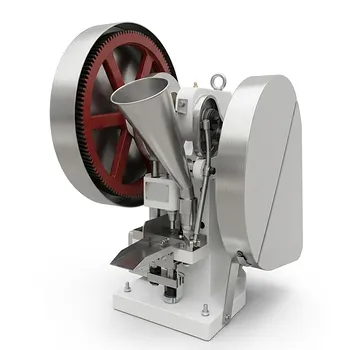
6-Ton Small Single-Punch Tablet Press — Laboratory Powder & Granule Tableting Equipment / Tablet Forming Machine
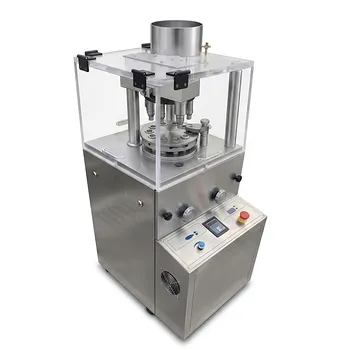
Enhanced 9 Punch Rotary Tablet Press for Powder Compaction
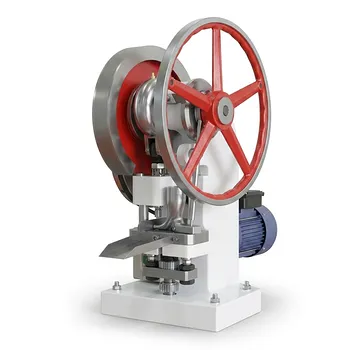
5 Ton Single Punch Tablet Press Laboratory Small Batch Production
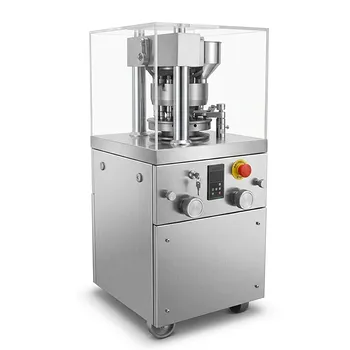
Ordinary Type Rotary Tablet Press for Pharmaceutical Chemical Food Electronic Industries
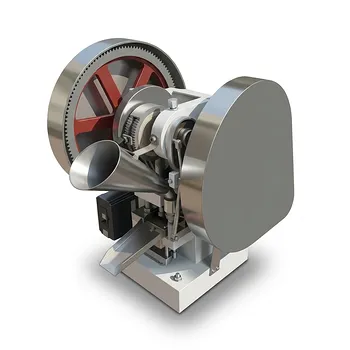
6 Ton Variable Frequency Single Punch Tablet Press